The CTF Pink Star: Analyzing the World’s Most Valuable Auction Jewel
The CTF Pink Star is a 59.60-carat oval-cut diamond, officially recognized as the most expensive jewel ever sold at auction. Originally mined in 1999 and sold at Sotheby’s Hong Kong in 2017 for $71.2 million, it remains the benchmark f...
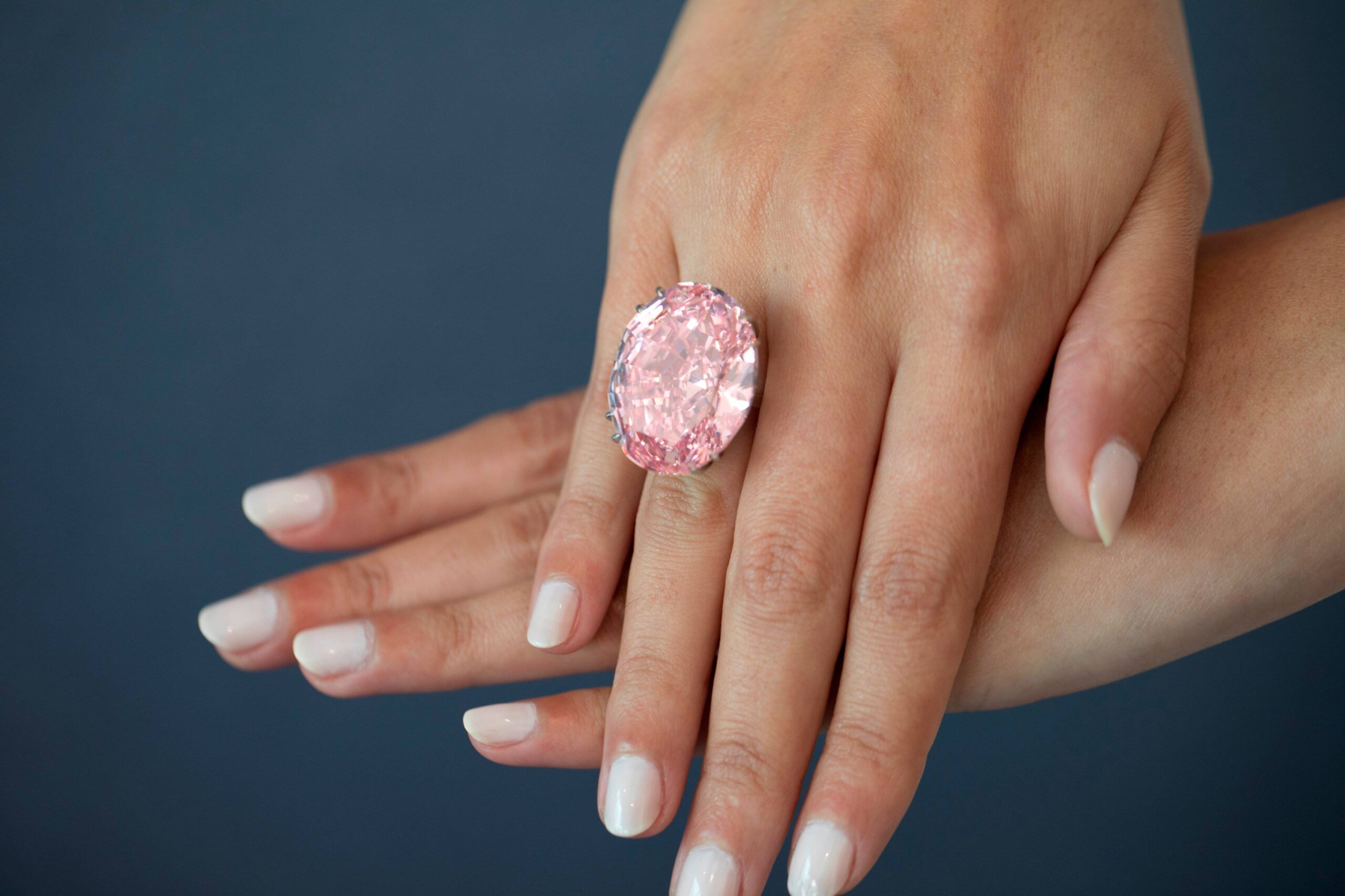
The CTF Pink Star is a 59.60-carat oval-cut diamond, officially recognized as the most expensive jewel ever sold at auction. Originally mined in 1999 and sold at Sotheby’s Hong Kong in 2017 for $71.2 million, it remains the benchmark for gemstone valuation due to its "Fancy Vivid Pink" color and "Internally Flawless" clarity.
Contents
The pursuit of the world’s most valuable jewel is not merely an exercise in luxury; it is a study of geological miracles and extreme market scarcity. As of 2026, the CTF Pink Star continues to hold its crown, representing the pinnacle of the "Fancy Vivid" color grade. To understand why this specific stone commands a price tag exceeding the GDP of some small nations, one must examine its unique chemical composition, its complex history through the hands of master cutters, and the economic shifts that have made pink diamonds the most coveted assets in the alternative investment world.
The Discovery and Cutting of a Legend
The journey of the Pink Star began in 1999 in the diamond mines of South Africa, operated by De Beers. In its rough state, the crystal weighed a staggering 132.5 carats. Even before the first facet was ground, the stone was recognized as an anomaly. Large pink diamonds are rarely found in sizes exceeding five carats; to find one over 130 carats was a once-in-a-generation event.
The Steinmetz Group purchased the rough stone and spent nearly two years determining the optimal cut. Unlike white diamonds, where the goal is often to maximize light return (brilliance), cutting a pink diamond requires a delicate balance between brilliance and color saturation. If the stone is cut too shallow, the pink hue may appear washed out; if cut too deep, the stone may lose its "fire."
The Steinmetz team utilized a specialized oval mixed-cut, featuring a step-cut crown and a brilliant-cut pavilion. This architecture was designed specifically to concentrate the pink hue while maintaining the transparency of the crystal. The process was so fraught with risk that the cutters spent months in "dry runs" using various models before the first strike was made on the actual diamond. By the time the cutting was complete, the stone had been reduced from 132.5 carats to its final 59.60 carats—a loss of over 50% of its mass, sacrificed to achieve the highest possible color and clarity grades.
Technical Specifications: The GIA Standard
The value of the Pink Star is anchored in its official grading by the Gemological Institute of America (GIA). It is not merely "pink"; it is classified as Fancy Vivid Pink, the highest possible color saturation grade for colored diamonds.
Chemical Purity and Type IIa Classification
One of the most critical technical aspects of the Pink Star is its classification as a Type IIa diamond. Only about 1% to 2% of all natural diamonds fall into this category. Type IIa diamonds are chemically the most pure, containing almost no measurable nitrogen or boron impurities in their crystal lattice.
In most diamonds, nitrogen impurities cause a yellowish tint. Because the Pink Star is Type IIa, its pink hue is not the result of trace elements. Instead, the color is believed to be caused by "plastic deformation" in the crystal lattice. During the diamond’s ascent from the Earth’s mantle billions of years ago, extreme heat and pressure caused the carbon atoms to shift, creating structural defects that absorb specific wavelengths of light, reflecting back the vivid pink we see. This structural origin of color makes the Pink Star a literal fossil of the Earth's violent geological history.
Clarity and Proportions
While many colored diamonds suffer from inclusions (internal flaws) due to the intense pressure required to create their color, the Pink Star is graded as Internally Flawless (IF). Achieving an IF grade in a stone of nearly 60 carats is statistically improbable. The combination of its size, Vivid Pink saturation, and IF clarity makes it the largest diamond of its kind ever graded by the GIA.
The Auction History: From Default to Triumph
The Pink Star’s path to its $71.2 million record was not without drama. Its market history serves as a case study for the volatility and high stakes of the "ultra-gem" market.
The 2013 Geneva Auction
In November 2013, the stone was offered at Sotheby’s Geneva. It was then known simply as "The Pink Star." The hammer fell at a record-breaking $83 million (including commissions), bid by New York diamond cutter Isaac Wolf, who renamed the stone "The Pink Dream." However, the sale was never completed. Wolf and his investors defaulted on the payment, forcing Sotheby’s to buy back the stone for its guaranteed price of $60 million. For several years, the diamond remained in Sotheby’s inventory, a reminder of the risks associated with record-shattering valuations.
The 2017 Hong Kong Sale
In April 2017, Sotheby’s brought the diamond back to the auction block, this time in Hong Kong. The choice of location was strategic, targeting the surging demand for rare gemstones among Asian collectors. The bidding lasted only five minutes. The winner was Chow Tai Fook, the Hong Kong-based jewelry conglomerate. The final price of $71.2 million (HK$553 million) was paid in full, and the stone was renamed the CTF Pink Star in honor of the company’s late founder, Dr. Cheng Yu-tung.
As of 2026, this remains the highest price ever achieved at auction for any diamond or gemstone, surpassing the previous record held by the Oppenheimer Blue ($57.5 million).
Why the Pink Star Matters in 2026
The valuation of the CTF Pink Star has only become more significant in the years leading up to 2026. Several macroeconomic and industry factors have cemented its status as an irreplaceable asset.
- The Closure of the Argyle Mine: Historically, the Argyle mine in Western Australia produced over 90% of the world’s pink diamonds. When the mine ceased operations in late 2020, the primary source of new pink stones disappeared. While the Pink Star is of South African origin, the overall supply vacuum in the pink diamond market has driven prices for "Vivid" stones to unprecedented levels.
- Wealth Preservation: In an era of fluctuating fiat currencies and digital assets, "hard assets" like the Pink Star are viewed by family offices and ultra-high-net-worth individuals (UHNWIs) as a stable store of value. The portability of $70+ million in a single stone represents a unique form of concentrated wealth.
- Rarity vs. Size: While larger diamonds exist (such as the Cullinan series), most are white or held in royal collections and museums. The Pink Star represents the rare intersection of "auctionable" status and "museum-grade" quality.
Comparing the Giants: Record-Breaking Gemstones
To understand the Pink Star's dominance, it is helpful to compare it to other historic stones that have defined the market over the last decade.
| Stone Name | Carat Weight | Color Grade | Auction Price | Sale Date |
|---|---|---|---|---|
| CTF Pink Star | 59.60 ct | Fancy Vivid Pink | $71.2 Million | April 2017 |
| Oppenheimer Blue | 14.62 ct | Fancy Vivid Blue | $57.5 Million | May 2016 |
| Blue Moon of Josephine | 12.03 ct | Fancy Vivid Blue | $48.4 Million | Nov 2015 |
| Graff Pink | 24.78 ct | Fancy Intense Pink | $46.2 Million | Nov 2010 |
| Winston Pink Legacy | 18.96 ct | Fancy Vivid Pink | $50.4 Million | Nov 2018 |
The table illustrates that while blue diamonds often command a higher price per carat, the sheer scale of the Pink Star (nearly 60 carats) allows it to maintain the absolute record for total value.
The Science of Appraisal: Beyond the Four Cs
When appraising a jewel of this magnitude in 2026, experts look beyond the traditional "Four Cs" (Carat, Color, Clarity, Cut). For the Pink Star, three additional factors are paramount:
- Provenance: The history of its discovery and its association with major jewelry houses like Steinmetz and Chow Tai Fook adds "intangible value" that a nameless stone would lack.
- Light Performance: Advanced imaging tools now allow gemologists to map the light return of a stone. The Pink Star exhibits a "balanced" pink return, meaning the color is uniform across the entire face of the diamond with no "extinction" (dark spots).
- Type IIa Verification: The confirmation that the stone is nitrogen-free is essential for its "limpid" appearance. Type IIa diamonds have a visual "purity" that appears almost like liquid water, a trait highly prized by collectors.
Frequently Asked Questions
Why is the Pink Star more valuable than the Hope Diamond?
Value is defined differently in this context. The Hope Diamond is considered "priceless" because it is a museum piece (housed in the Smithsonian) and is not for sale. If the Hope Diamond were ever auctioned, it might surpass the Pink Star. However, in terms of realized, documented market transactions, the Pink Star holds the record.
Can the Pink Star be worn as jewelry?
Yes, the CTF Pink Star is currently set in a ring mount. However, due to its size and value, it is rarely worn and is typically kept in high-security vaults or displayed in high-profile exhibitions under armed guard.
Are there any larger pink diamonds?
The Pink Star is the largest "Internally Flawless, Fancy Vivid Pink" diamond ever graded by the GIA. While there have been larger rough pink diamonds found, none have achieved this specific combination of size, color saturation, and clarity after the cutting process.
Is the price of pink diamonds still rising in 2026?
Yes. Following the 2020 closure of the Argyle mine, the market has seen a consistent upward trend. For "investment-grade" pink diamonds (those with Fancy Intense or Fancy Vivid grades), the annual appreciation has historically outperformed many traditional stock market indices.
What happened to the man who defaulted on the first auction?
Isaac Wolf, the bidder who defaulted in 2013, was unable to secure the necessary capital from his investment group. The default served as a cautionary tale for auction houses, leading to stricter vetting processes for bidders in the "ultra-gem" category.
Practical Recommendation for High-Value Gemstone Tracking
For investors or enthusiasts looking to monitor the status of world-class jewels in 2026, the most reliable method is to follow the "Magnificent Jewels" sales held biannually by Sotheby’s and Christie’s in Geneva, Hong Kong, and New York.
Furthermore, the Gemological Institute of America (GIA) provides a searchable database for grading reports, which is the industry standard for verifying the technical specifications of any high-value diamond. When evaluating stones for purchase or study, always insist on a GIA report issued within the last two years to ensure the stone’s condition and grading haven't been affected by wear or new grading technologies.
Image Gallery