Choosing a Wedding Planner in Venice: A Comprehensive Guide for 2026
Hiring a professional wedding planner in Venice is essential for navigating the city’s unique water-based logistics, complex Italian bureaucracy, and exclusive venue requirements. In 2026, a local expert ensures seamless coordination o...
Hiring a professional wedding planner in Venice is essential for navigating the city’s unique water-based logistics, complex Italian bureaucracy, and exclusive venue requirements. In 2026, a local expert ensures seamless coordination of water transport, secures necessary permits for historic sites, and manages the high demand for premium Grand Canal venues.
Contents
The Essential Role of a Venice Wedding Planner in 2026
Venice remains one of the world's most sought-after destination wedding locations, but its architectural beauty masks significant operational challenges. Unlike mainland cities, every aspect of a Venetian wedding—from the delivery of floral arrangements to the arrival of the wedding party—is dictated by the water. A specialized wedding planner serves as the lead architect of these logistics, moving beyond mere aesthetic design to provide critical project management.
In 2026, the local event industry has become more specialized. Planners now manage a network of suppliers who are experts in navigating the narrow "calli" (streets) and managing the specific weight and height restrictions of transport boats. A planner’s role involves securing the "occupazione suolo pubblico" (public land occupation) permits if any part of the celebration spills onto public walkways and ensuring that the event complies with noise ordinances that are strictly enforced in the historic center.
Furthermore, the language barrier and administrative hurdles of the Italian legal system make a local representative indispensable. Whether you are planning a civil ceremony at the Palazzo Cavalli or a grand reception in a private palazzo, the planner acts as your legal liaison, ensuring all documentation is filed within the mandatory windows required by the Prefettura di Venezia.
Legal Framework and Requirements for Marrying in Venice
Marrying in Italy involves specific legal steps that vary depending on your nationality. For 2026, the administrative procedures remain rigorous, and a wedding planner’s primary duty is to ensure the marriage is recognized both in Italy and your home country.
Civil and Religious Ceremonies
Civil ceremonies in Venice are primarily held in the Palazzo Cavalli, a 16th-century building overlooking the Grand Canal. The municipality requires specific fees that vary based on the day of the week and whether the couple consists of residents or non-residents.
Religious ceremonies, particularly Catholic ones, require both civil and ecclesiastical documentation. A planner coordinates with the Patriarchate of Venice to ensure all "pre-cana" requirements are met and that the church selected allows for the marriage of non-parishioners. Many historic churches in Venice, such as the Basilica dei Frari or San Giorgio Maggiore, have specific restrictions regarding decor and photography that a planner must navigate.
The "Nulla Osta" and Atto Notorio
For most foreign nationals, the most critical document is the Nulla Osta (Sworn Declaration). This document states there are no legal impediments to the marriage. U.S. citizens, for example, must also complete an Atto Notorio before an Italian Consul in the U.S. or at a lower court in Italy.
A wedding planner typically manages the appointment schedule for these legal filings. In 2026, many of these appointments must be booked months in advance via the U.S. Embassy and Consulates in Italy portal or the relevant consulate for your specific country.
Navigating Venetian Logistics: The Water Factor
The defining characteristic of Venice is its lack of traditional roads. This affects every single vendor involved in your wedding. A wedding planner must account for:
- Water Taxis and Vaporetti: Transporting guests from their hotels to the ceremony and then to the reception requires a fleet of private water taxis. A planner manages the "transfer plan," ensuring guests are not left waiting at docks and that the boats used are of a high standard.
- Loading and Unloading Permits: Vendors (caterers, florists, musicians) must transport their equipment via "barche da trasporto" (freight boats). There are specific hours during which these boats can operate on the Grand Canal and smaller rii.
- Tide Considerations (Acqua Alta): While less frequent during the traditional wedding season (May to October), planners in 2026 monitor tide forecasts via the Centro Maree della Città di Venezia. They must have "Plan B" routes and boardwalk strategies if high water affects the accessibility of a venue.
Selecting the Right Venue Type
Venice offers a diverse array of venues, each with its own set of logistical constraints. Your planner will help you choose based on capacity, accessibility, and the level of privacy desired.
Grand Canal Palazzos
These are the quintessential Venetian venues, offering historic ballrooms (portego) and private water gates. Venues like the Palazzo Pisani Moretta or the Aman Venice provide a high level of luxury but require significant logistical planning for catering setup, as many do not have modern commercial kitchens.
Island Resorts and Secret Gardens
For couples seeking more space and greenery, islands like San Clemente or Isola delle Rose offer resort-style facilities. These venues are often easier for planners to manage as they have more internal infrastructure, but they require dedicated shuttle services for guests throughout the evening.
Hotel Rooftops (Altane)
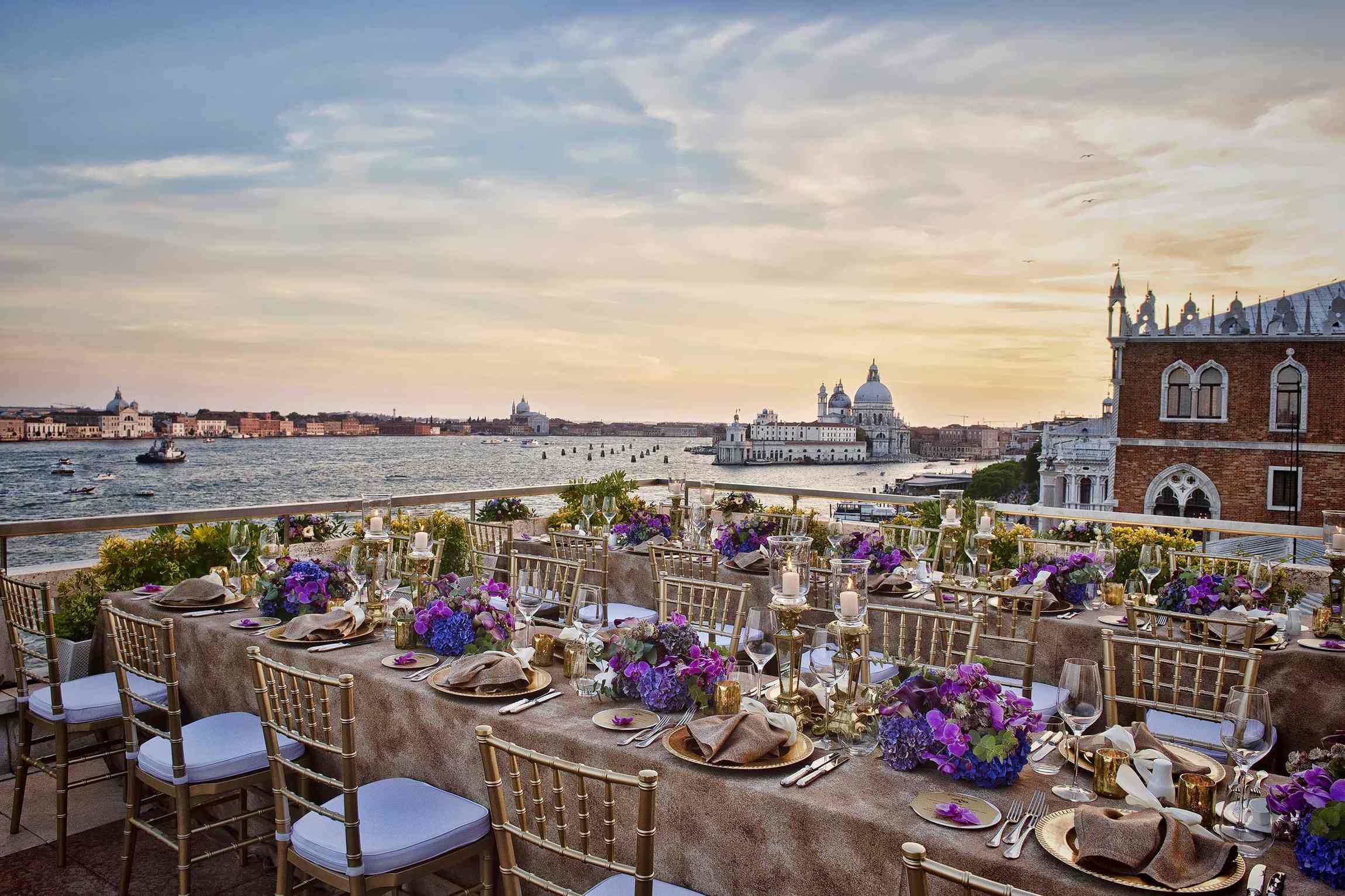
Smaller, more intimate weddings often utilize "altane" or rooftop terraces. These provide panoramic views of the skyline but have strict weight limits and limited elevator access, meaning planners must carefully select decor that can be carried up narrow staircases.
Cost Considerations and Service Tiers in 2026
The cost of a wedding planner in Venice reflects the complexity of the environment. In 2026, most top-tier planners offer three main levels of service.
| Service Tier | Typical Scope | Estimated Fee Range (2026) |
|---|---|---|
| Full Planning | Start-to-finish management, venue sourcing, vendor negotiation, legal assistance, and multi-day coordination. | €8,000 – €15,000+ or 10-15% of budget |
| Partial Planning | Assistance with specific elements (e.g., logistics and legal) after the couple has secured a venue. | €4,000 – €7,000 |
| Day-of Coordination | Management of vendors and timeline on the wedding day only; starts 4-6 weeks prior. | €2,500 – €4,000 |
Note: These fees are for the planner's professional services only and do not include the costs of the venue, catering, or other vendors.
The Planning Timeline: When to Begin
Due to the limited number of weekends in the peak season and the high demand for iconic venues, the planning timeline for a 2026 Venice wedding should ideally begin 12 to 18 months in advance.
- 18 Months Out: Define your budget and hire your planner. Secure your primary venue and the ceremony location.
- 12 Months Out: Book high-demand vendors such as photographers, videographers, and hair/makeup artists. In Venice, the best talent often books out a year in advance.
- 9 Months Out: Begin the legal paperwork process. Consult with your planner on the specific deadlines for your nationality.
- 6 Months Out: Finalize the transport plan. Determine how many water taxis are needed and map out the routes.
- 3 Months Out: Final menu tastings and floral mock-ups. Confirm the backup plan for inclement weather or tides.
Common Pitfalls to Avoid
- Underestimating Transport Costs: Water transport is significantly more expensive than land transport. Many couples fail to budget enough for the multiple boat trips required for guests and vendors.
- Ignoring the "Stairs" Factor: Many historic palazzos do not have elevators. If you have guests with mobility issues, your planner must vet venues specifically for accessibility (ramps, ground-floor access).
- Late Legal Filings: Italian bureaucracy is not flexible. Missing a filing window for a Nulla Osta can result in the inability to have a legally binding ceremony.
- DIY Logistics: Attempting to coordinate water taxi arrivals without a professional can lead to chaos at the docks, as water traffic in Venice is heavily regulated.
Frequently Asked Questions
Can we get married on a gondola?
While you can have a symbolic ceremony or exchange vows on a gondola, it is not a legally recognized venue for a civil or religious wedding in Venice. Most couples use a gondola for a traditional arrival at their venue or for a photo session following the official ceremony at a location like Palazzo Cavalli.
Is Venice too crowded for a summer wedding?
Summer (June through August) is peak tourist season. A wedding planner will manage this by choosing venues with private entrances and timing outdoor photo sessions for early morning or secluded areas of the city to avoid the heaviest crowds in St. Mark’s Square.
How much should we budget for a Venice wedding in 2026?
For a mid-range luxury wedding with 50 guests, budgets typically start at €40,000 to €60,000. This includes venue rental, catering, basic floral design, and planning fees. High-end events at premier palazzos can easily exceed €100,000.
Do planners handle guest accommodation?
Most full-service planners provide room block management or recommend hotels that are strategically located near the wedding venues to minimize transport time and costs.
What happens if there is an "Acqua Alta" on our wedding day?
Professional planners monitor the tides constantly. They ensure that "passerelle" (raised walkways) are available and will coordinate with the venue to ensure entrances are accessible. In 2026, the MOSE barrier system significantly reduces the risk of flooding in the city center, but planners still maintain contingency routes.
Practical Recommendation
If you are planning a wedding in Venice for 2026, prioritize hiring a planner who is physically based in Venice or the Veneto region. While international planners offer great design services, a local expert has the direct relationships with the "motoscafisti" (boat drivers) and city officials that are required to solve real-time logistical issues. Ensure your contract clearly outlines their responsibility for legal paperwork and "Plan B" logistics for water-related disruptions.
Image Gallery