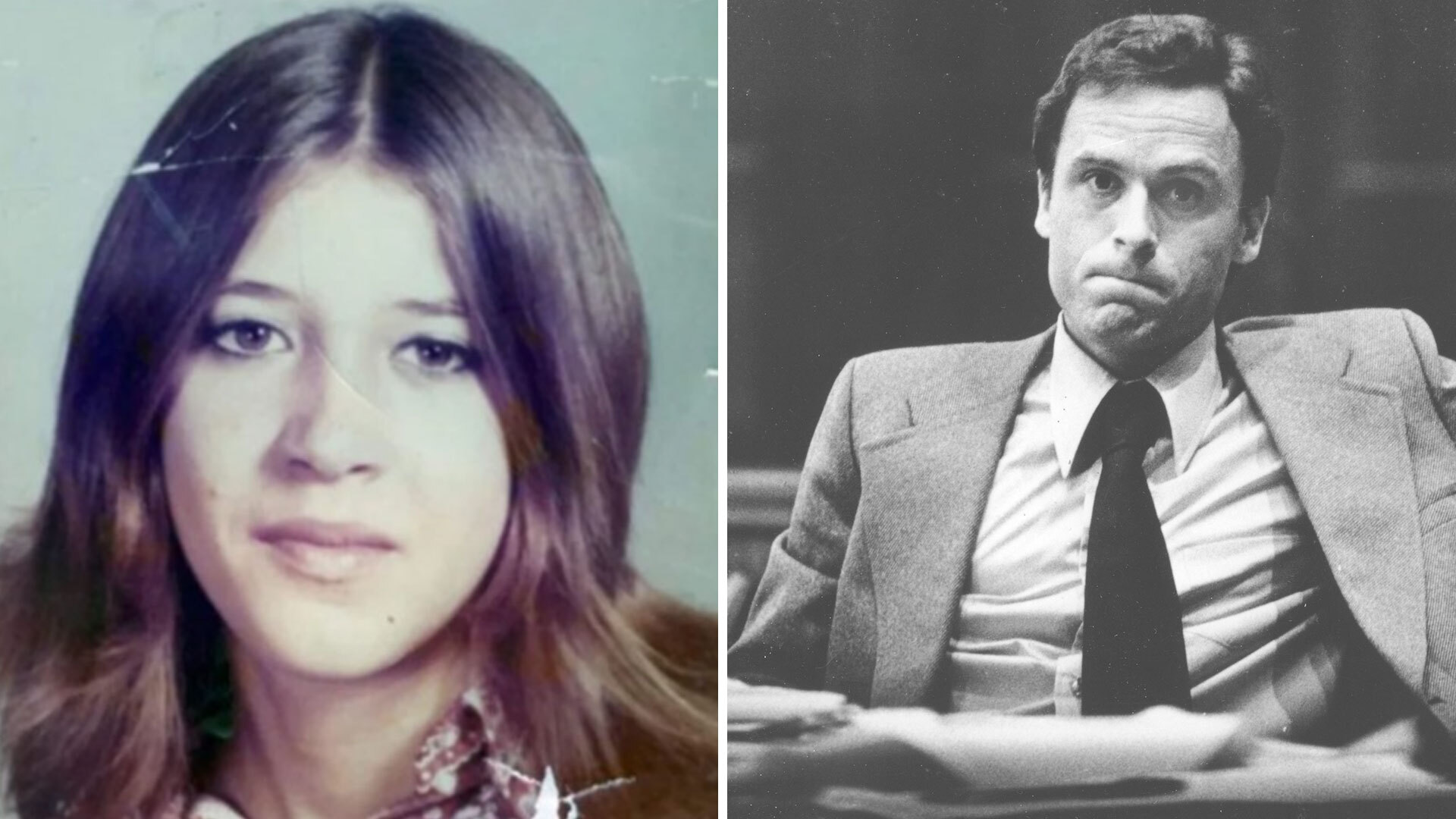
Ted Bundy's Adult Life: Timeline, Career, Law Studies, and Criminal History
Ted Bundy’s adult life was defined by a stark duality: publicly, he presented himself as an articulate academic, political operative, and law student, while privately operating as one of the most prolific serial killers in American his...
Ted Bundy’s adult life was defined by a stark duality: publicly, he presented himself as an articulate academic, political operative, and law student, while privately operating as one of the most prolific serial killers in American history. From his university years in the late 1960s to his execution in 1989, his adult trajectory combined high-level social integration with horrific hidden violence across multiple states.
Contents
Early Adulthood, Higher Education, and Political Ambitions
Ted Bundy’s adulthood began to take shape in the late 1960s in Washington State. After graduating from Woodrow Wilson High School in Tacoma in 1965, he briefly attended the University of Puget Sound before transferring to the University of Washington (UW) in Seattle. Although he initially struggled academically and suffered an emotional setback following the end of a relationship with a wealthy California classmate, Bundy restructured his academic focus, enrolling deeply into psychology coursework.
By 1972, Bundy graduated from the University of Washington with a Bachelor of Science degree in psychology. Professors viewed him as an exemplary student, and he secured strong letters of recommendation for law school. During this period, Bundy engaged actively in local politics, aligning himself with the Republican Party. He worked on the gubernatorial campaign of Washington Governor Daniel J. Evans and served as an assistant to Ross Davis, chairman of the Washington State Republican Party.
| Academic Credentials | Political Campaigning | Legal Ambitions |
|---|---|---|
| - B.S. Psychology (UW 1972)- Crisis Clinic Volunteer | - Evans Campaign Worker- WA State GOP Assistant | - UPS Law School- Univ. of Utah Law |
Bundy’s public profile during his mid-twenties reflected civic responsibility. He took a position with the Seattle Crime Prevention Advisory Commission and even authored a pamphlet on rape prevention for women. He also volunteered at the Seattle Crisis Clinic, a suicide prevention hotline, where he worked alongside Ann Rule, a former police officer who later wrote The Stranger Beside Me, detailing her experience working with Bundy without realizing his hidden violent nature.
In 1973, Bundy secured admission to the University of Puget Sound School of Law in Tacoma before transferring to the University of Utah College of Law in Salt Lake City for the fall 1974 term. His legal studies served both as an ambition for social mobility and as a facade that masked his criminal activity.
Personal Life, Relationships, and Social Masking
Throughout his adult life, Bundy maintained long-term personal relationships that shielded him from initial suspicion. In 1969, he met Elizabeth Kloepfer (often referred to in literature under her pseudonym, Elizabeth Kendall), a divorced mother and university secretary. Their relationship lasted for six years, during which Bundy acted as a father figure to her young daughter. Kloepfer was largely unaware of his criminal activities, though she eventually contacted law enforcement after noticing suspicious behavior, including finding unusual items such as plaster of Paris, surgical gloves, and a meat cleaver in his apartment.
Later in his adult life, during his incarceration and subsequent trials in Florida, Bundy cultivated a relationship with Carole Ann Boone, a former colleague from the Washington State Department of Emergency Services. Boone moved to Florida to assist with his legal defense team. In 1980, during the penalty phase of his trial for the murder of Kimberly Leach, Bundy used an obscure Florida law allowing a marriage declaration in open court before a judge, marrying Boone while she took the witness stand. Boone gave birth to a daughter in 1982 while Bundy remained on death row.
Bundy’s ability to project intelligence, charm, and conventional attractiveness allowed him to navigate middle-class political and social circles. This psychological camouflage, combined with his deliberate exploitation of societal trust, enabled him to evade law enforcement for years while committing crimes across state lines.
Chronology of Criminal Activity Across the United States
Bundy’s violent crimes began in earnest during the early 1970s. Criminologists and law enforcement agencies, including the FBI Records Vault, note that while his documented murders began in early 1974, investigators suspect earlier involvement in missing persons cases dating back to his late adolescence.
- 1974 (WA & OR)
- UW Murders
- Lake Sammamish
- 1974-1975 (Utah & CO)
- Law School move
- Pitkin Escapes
- 1978 (Florida)
- Chi Omega House
- Kimberly Leach
Pacific Northwest (1974)
In early 1974, young women began disappearing from university campuses in Washington State and Oregon. Victims such as Lynda Ann Healy, Donna Gail Manson, and Susan Rancourt disappeared from dormitories and surrounding neighborhoods. Bundy frequently faked physical injuries—wearing an arm sling or using crutches—to ask young women for assistance loading items into his 1968 Volkswagen Beetle, exploiting their willingness to help.
On July 14, 1974, Bundy abducted two women, Janice Ott and Denise Naslund, in broad daylight from Lake Sammamish State Park near Seattle. Witnesses described a handsome man calling himself "Ted" asking for assistance with a sailboat. These high-profile disappearances launched an extensive multi-agency investigation.
Utah and Colorado (1974–1975)
In August 1974, Bundy moved to Salt Lake City to attend law school. Shortly after his arrival, disappearances began in Utah and neighboring Colorado. Victims included Nancy Wilcox, Melissa Smith (daughter of the Midvale police chief), Laura Aime, and Debra Kent. In early 1975, Bundy expanded his radius into Colorado ski towns, abducting Caryn Campbell, Julie Cunningham, and Denise Oliverson.
Florida (1978)
After escaping from custody in Colorado in late 1977, Bundy fled to Tallahassee, Florida, assuming the alias Chris Hagen. On January 15, 1978, he breached the Chi Omega sorority house at Florida State University, murdering Margaret Bowman and Lisa Levy, and severely injuring two other students. Hours later, he attacked Cheryl Thomas in her nearby apartment. On February 9, 1978, he abducted and murdered 12-year-old Kimberly Leach in Lake City, Florida, marking his final murder before his final arrest six days later.
Detailed Chronology of Ted Bundy's Adult Life
| Year / Period | Geographic Location | Public Status & Career | Criminal History & Legal Developments |
|---|---|---|---|
| 1965–1968 | Washington State | Student at UPS and UW; studied Chinese and urban planning. | Early behavioral warning signs; unconfirmed suspect in early regional disappearances. |
| 1969–1972 | Seattle, WA | Earned B.S. in Psychology at UW; volunteered at Crisis Clinic. | Relationship with Elizabeth Kloepfer began; hidden preparation for criminal activity. |
| 1972–1973 | Seattle, WA | Assistant on GOP gubernatorial campaign; worked for WA Crime Prevention Advisory Commission. | Documented criminal escalation begins; suspected violent assaults in late 1973. |
| 1974 (Jan–Jul) | Washington & Oregon | Enrolled at UPS School of Law; socialized in local political circles. | Systemic serial abductions and murders (Healy, Rancourt, Ott, Naslund, among others). |
| 1974–1975 | Utah & Colorado | Transferred to University of Utah College of Law. | Abductions in Salt Lake City and Colorado; arrested August 1975 in Utah for fleeing police. |
| 1976–1977 | Utah & Colorado | Convicted of aggravated kidnapping in Utah (1976); extradited to Aspen, CO for murder trial. | Escaped Pitkin County Courthouse (June 1977); escaped Glenwood Springs jail cell (Dec 1977). |
| 1978 | Tallahassee, FL | Living under alias Chris Hagen near Florida State University. | Chi Omega sorority house murders; abduction/murder of Kimberly Leach; arrested Feb 15, 1978. |
| 1979–1980 | Miami & Orlando, FL | Represented himself in court; married Carole Ann Boone during 1980 trial. | Convicted of Chi Omega murders (1979) and Leach murder (1980); received three death sentences. |
| 1981–1989 | Florida State Prison | Inmate on Death Row; provided interviews to criminologists and FBI behavioral analysts. | Confessed to 30 murders across 7 states prior to execution; executed Jan 24, 1989. |
Arrests, Court Escapes, and Legal Proceedings
Bundy’s initial capture occurred on August 16, 1975, in Granger, Utah, when Utah Highway Patrol Trooper Bob Hayward pulled over Bundy’s Volkswagen Beetle for fleeing a patrol vehicle. A search of the vehicle revealed burglary tools, including a ski mask, pantyhose mask, crowbar, ice pick, handcuffs, and garbage bags. Law enforcement linked these items to the attempted abduction of Carol DaRonch, who had survived an attack by Bundy in November 1974.
- AUG 1975: Arrested in Utah (Prowler tools found)
- JUN 1977: Escaped Pitkin County Courthouse Window (6 days free)
- DEC 1977: Escaped Glenwood Springs Cell Ceiling (Fled to FL)
- FEB 1978: Final Arrest in Pensacola, Florida
In March 1976, Bundy was convicted of aggravated kidnapping in Utah and sentenced to one to 15 years in prison. Meanwhile, forensic evidence linked him to the murder of Caryn Campbell in Colorado, leading to his extradition to Garfield County, Colorado, to face capital murder charges.
The Escapes
Bundy staged two high-profile escapes while in Colorado custody:
- Pitkin County Courthouse Escape (June 1977): Serving as his own defense attorney, Bundy was granted access to the courthouse law library in Aspen without handcuffs or leg irons. During a recess, he jumped from a second-story window and fled into the surrounding mountains. He remained at large for six days before being recaptured while driving a stolen vehicle.
- Glenwood Springs Jail Escape (December 1977): Over several months, Bundy acquired a hacksaw blade and cut an opening in the ceiling duct of his cell. Having lost significant weight, he crawled through the ductwork on December 30, 1977, into the jailer’s apartment, dressed in civilian clothes, and escaped. He boarded a bus to Denver, flew to Chicago, and eventually traveled by train to Florida.
Florida Trials and Defense Strategy
Following his final arrest in Pensacola on February 15, 1978, Bundy stood trial in Florida for the Chi Omega attacks (Miami, 1979) and the murder of Kimberly Leach (Orlando, 1980). The 1979 trial was among the first national court proceedings broadcast on television. Bundy actively sabotaged his defense attorneys, acting as co-counsel, cross-examining witnesses, and delivering dramatic legal arguments.
Despite his legal maneuvering, physical and forensic evidence proved decisive. In the Chi Omega trial, forensic odontologists matched bite mark impressions found on victim Lisa Levy’s body directly to Bundy’s irregular dentition. He was convicted in both trials and received three separate death sentences.
Incarceration, Confessions, and Execution
Bundy spent his remaining years (1980–1989) housed in the death row unit at Florida State Prison in Raiford. During his incarceration, he filed numerous legal appeals, challenging the admissibility of forensic evidence, court procedures, and his own competency to serve as legal counsel.
In his final years, Bundy sought to postpone his pending execution date by offering detailed confessions to investigators. He cooperated with behavioral analysts from the FBI's Behavioral Science Unit, including Robert Ressler and John Douglas, offering insights into criminal psychology that helped refine law enforcement strategies regarding serial violent crime.
- 1980-1988: Death Row Appeals & Interviews
- JAN 1989: 30 Confirmed Confessions
- JAN 24, 1989: Execution via Electric Chair
In the days preceding his execution, Bundy formally admitted to at least 30 murders committed across seven states between 1974 and 1978:
- Washington: 11 victims
- Utah: 8 victims
- Colorado: 3 victims
- Florida: 3 victims
- Oregon: 2 victims
- Idaho: 2 victims
- California: 1 victim
Criminologists and federal investigators suspect the actual total exceeded his admissions. On January 24, 1989, Ted Bundy was executed via the electric chair at Florida State Prison at the age of 42.
Historical Impact on Forensic Science and Criminology
Bundy's adult life and criminal record substantially altered law enforcement protocols across the United States. His ability to move across state jurisdictions exposed critical communication gaps between municipal and state police departments—a phenomenon criminologists later termed "linkage blindness."
The investigation into Bundy contributed directly to the development of centralized multi-jurisdictional databases:
- VICAP (Violent Criminal Apprehension Program): Established by the FBI in 1985 to aggregate and cross-reference violent crimes across different law enforcement agencies.
- Forensic Odontology: The court acceptance of bite-mark evidence during the 1979 trial set precedent for forensic bite-mark identification in capital murder cases, though modern forensic science now applies stricter validation protocols to such evidence.
- Behavioral Profiling: Insights gained from Bundy's post-conviction interviews provided empirical data for the FBI's criminal profiling framework.
Frequently Asked Questions
What degree did Ted Bundy hold in his adult life?
Ted Bundy graduated from the University of Washington in 1972 with a Bachelor of Science degree in psychology. He later attended the University of Puget Sound School of Law and transferred to the University of Utah College of Law, though he did not complete his law degree prior to his 1975 arrest.
How did Ted Bundy escape from custody during his trials?
Bundy escaped twice from Colorado custody in 1977. His first escape occurred in June 1977, when he jumped from a second-story law library window at the Pitkin County Courthouse in Aspen. His second escape occurred on December 30, 1977, when he carved a hole in the ceiling ductwork of his cell at the Glenwood Springs jail, permitting him to reach Tallahassee, Florida.
What evidence ultimately led to Ted Bundy's conviction in Florida?
The primary piece of physical evidence in Bundy's 1979 Miami trial was forensic odontological analysis. Dentists matched unique alignment patterns and chipped teeth from Bundy's dental impressions directly to bite marks left on victim Lisa Levy. Fiber evidence and survivor testimony from Carol DaRonch and Chi Omega victim Nita Neary also supported his convictions.
How many victims did Ted Bundy officially confess to?
Before his execution in January 1989, Ted Bundy formally confessed to 30 homicides committed between 1974 and 1978 across Washington, Utah, Colorado, Florida, Oregon, Idaho, and California. Law enforcement officials and criminologists suspect his actual victim count was higher.
Did Ted Bundy ever practice law professionally?
No. Although Bundy served as an assistant to political campaigns and worked for the Seattle Crime Prevention Advisory Commission, he was never admitted to the bar. However, during his capital murder trials in Florida, he utilized court rules permitting self-representation to act as co-counsel alongside his public defenders.
Key Takeaway and Next Actions
Understanding Ted Bundy's adult life offers critical insights into criminological history, the evolution of forensic science, and the psychological mechanisms of criminal deception. Researchers, students, and true-crime analysts reviewing this case should focus on primary sources such as verified trial transcripts, archived appellate court rulings, and official criminal history files maintained by state archives and federal law enforcement databases.
For further factual examination, consult official archival collections including the Washington State Digital Archives, Utah State Archives, and official public records available via the FBI Records Vault.
Image Gallery