Hearth Screen Overview: Types, Safety Features, and Selection Guide
A hearth screen—commonly referred to as a fireplace screen—serves as a crucial protective barrier that contains burning embers, prevents hot sparks from escaping into living spaces, and guards children and pets against direct flame exp...
A hearth screen—commonly referred to as a fireplace screen—serves as a crucial protective barrier that contains burning embers, prevents hot sparks from escaping into living spaces, and guards children and pets against direct flame exposure. Beyond safety, a well-chosen hearth screen improves draft control, enhances room aesthetics, and complements overall fireplace architecture.
Contents
Understanding the Role of a Hearth Screen
A fireplace is a central design feature and a powerful source of ambient heat, but open wood-burning fires inherently produce flying sparks, popping embers, and intense radiant heat. A hearth screen acts as the first line of defense against home fire hazards. When firewood burns, pockets of trapped moisture and sap heat up rapidly, creating micro-explosions that launch glowing embers into the room. Without a functional mesh barrier or glass shield, these sparks land on flammable carpets, rug fibers, hardwood floors, or upholstery, presenting a serious fire hazard.
In addition to spark containment, a hearth screen establishes a physical boundary around the hearth. Fireplace openings can reach temperatures well above 500°F (260°C), making unshielded fireboxes hazardous for toddlers, pets, and nearby decor. Installing a high-quality screen helps moderate heat intensity immediately adjacent to the opening, reducing the risk of accidental contact burns.
Organizations like the National Fire Protection Association emphasize proper hearth maintenance and barrier placement under NFPA 211 standards to reduce residential heating fire risks. Whether paired with a traditional masonry fireplace, a factory-built zero-clearance unit, or a modern gas appliance, selecting the right screen requires balancing safety, heat circulation, physical dimensions, and architectural style.
Primary Types of Hearth Screens
Hearth screens come in several distinct structural configurations. Selecting the ideal type depends on how frequently the fireplace is used, the available hearth depth, whether fire tending requires frequent access, and personal visual preferences.
| Freestanding (Flat/Folded) | Attached Door (Cabinet Style) | Hanging Mesh (Curtains/Sliding Panels) |
|---|
1. Flat Hearth Screens
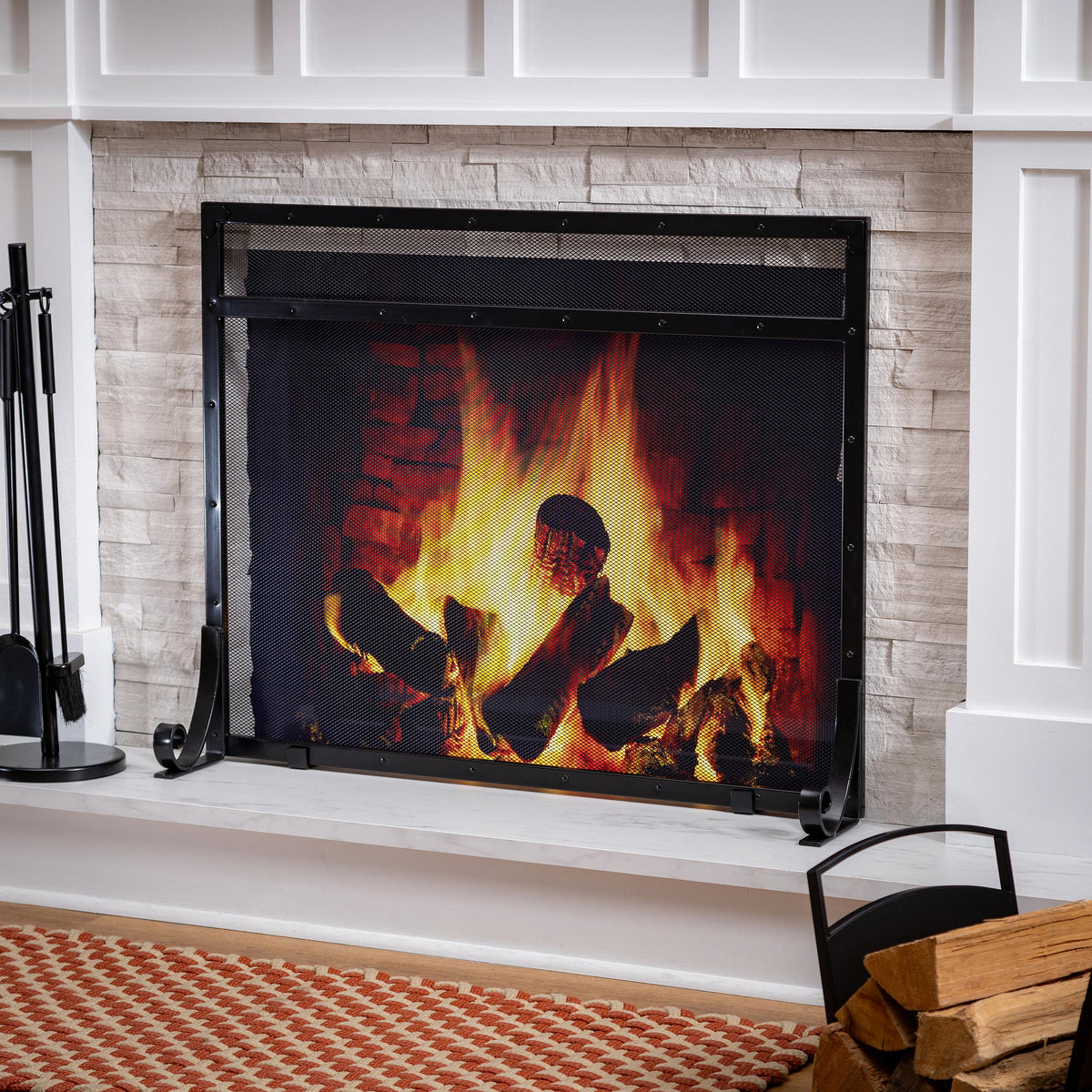
Flat screens rest directly flush against the surround of the fireplace opening. Supported by stable, heavy foot bases, they offer a sleek, space-saving design ideal for shallow hearths or rooms where foot traffic passes close to the fireplace.
- Pros: Minimal footprint, clean visual profile, unobstructed view of the firebox.
- Cons: Must be pulled away completely from the fireplace surround whenever adding wood or using fire irons.
2. Multi-Panel and Folding Screens
Multi-panel screens—most commonly tri-fold or four-panel designs—consist of hinged sections that articulate to stand independently. They can be adjusted to fit openings of varying widths and folded flat for off-season storage.
- Pros: Highly adjustable, self-standing without prominent front feet, easy to fold away.
- Cons: Hinges can loosen over time; side gaps may form if panels are angled too steeply.
3. Cabinet-Style Door Screens
Cabinet screens anchor securely to the fireplace face or inside the masonry opening. Featuring two hinged doors with handles and magnetic closures, they allow users to tend the fire simply by swinging the doors open rather than moving a heavy structure.
- Pros: Exceptional convenience, maximum stability, superior spark protection around edges.
- Cons: Requires permanent or semi-permanent mounting; precise measurements of the opening are required.
4. Hanging Mesh Curtains
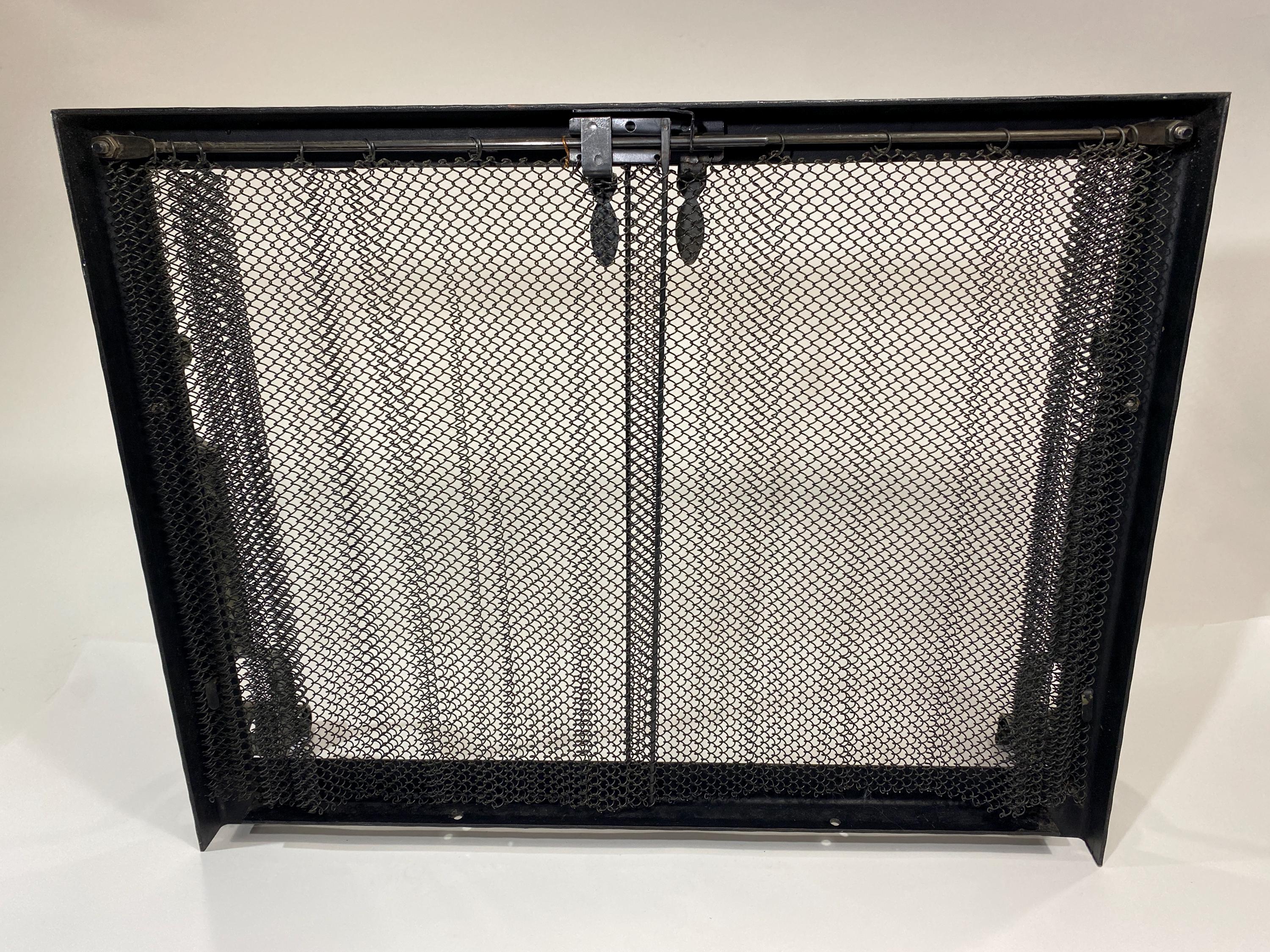
Hanging mesh screens consist of two woven wire mesh drapes hung on an upper slide rod installed inside the firebox lintel. They open and close horizontally using draw chains or ring handles.
- Pros: Budget-friendly, unobtrusive, stays in place permanently inside the frame.
- Cons: Provides basic spark protection but lacks a rigid outer barrier to keep pets or children away from the hot hearth.
5. Tempered Glass Fireplace Screens and Doors
Glass barriers feature thermal-shock-resistant glass panels housed in a metal frame. While solid glass panels block airflow when completely closed during active burning (unless engineered for dual-operation with inner mesh doors), they excel at preventing conditioned indoor air from escaping up the chimney when the fireplace is cold.
- Pros: Excellent draft control, modern visual appeal, prevents room heat loss when inactive.
- Cons: Traps radiant heat inside the firebox if closed while burning heavy wood fires; requires frequent cleaning to clear soot buildup.
Key Materials and Construction Standards
The durability, safety performance, and thermal resistance of a hearth screen depend on its construction materials and hardware quality.
[HEARTH SCREEN MATERIAL MATRIX]
| Material | Durability | Heat Resistance | Maintenance |
|---|---|---|---|
| Wrought Iron | Very High | High (Heavy Duty) | Low-Medium |
| Stainless Steel | High | High (Corrosion) | Low |
| Solid Brass | Medium-High | Moderate | Medium (Polishing) |
| Tempered Glass | Moderate | High (Thermal) | High (Soot Cleaning) |
- Wrought Iron: Hand-forged wrought iron provides exceptional weight, stability, and classic aesthetic value. Its heavy weight keeps freestanding screens firmly anchored, making it difficult for children or pets to knock over.
- Heavy-Gauge Steel: Modern screens frequently utilize tubular or solid steel frames coated with high-temperature powder-coated finishes. Steel delivers high structural rigidity and withstands repeated thermal expansion without warping.
- Woven Mesh Density: The protective screen mesh itself should be tightly woven from steel wire. A high mesh density (typically 8 to 10 strands per inch) stops micro-sparks while allowing ideal radiant heat transfer and visual flame visibility.
- Solid Brass: Decorative screens crafted from solid brass or brass-plated steel add traditional elegance. While durable, raw polished brass requires routine metal polishing to prevent oxidation and heat discoloration.
- Tempered and Ceramic Glass: Tempered glass panels can withstand thermal shifts up to approximately 400°F (204°C), whereas specialized ceramic glass (often used in high-efficiency fireplace doors) handles continuous operating temperatures exceeding 1,200°F (649°C).
Refer to guidelines published by the Consumer Product Safety Commission for recommendations on household thermal protection and barrier safety around heating appliances.
Hearth Screen Specification Comparison
The table below compares the primary hearth screen categories across practical performance metrics to aid selection based on living space requirements:
| Screen Category | Installation Type | Spark Protection Level | Barrier Security (Child/Pet) | Airflow & Radiant Heat | Primary Best-Use Case |
|---|---|---|---|---|---|
| Flat Screen | Freestanding | High | Moderate | Excellent | Small hearths, modern low-profile living rooms |
| Tri-Fold Screen | Freestanding | High | High (when angled correctly) | Excellent | Wide masonry openings, seasonal fireplace use |
| Cabinet/Single-Door | Surface/Masonry Mount | Maximum | High | Excellent (Mesh) / Variable (Glass) | Frequent wood burners, high-traffic living spaces |
| Hanging Mesh Drape | Internal Mount | Moderate | Low | Excellent | Built-in zero-clearance or budget setups |
| Solid Glass Panel | Freestanding/Mounted | Complete Spark Block | High | Reduced (Blocks direct airflow) | Energy efficiency when idle, gas fireplaces |
How to Properly Measure and Size a Hearth Screen
Achieving proper safety coverage requires accurate measurements of your fireplace opening. An incorrectly sized screen leaves dangerous gaps for sparks to escape or easily tips over.
- Firebox Opening
- Width
- Height
- Hearth Extension
1. Measuring for Freestanding Screens (Flat & Multi-Panel)
- Width: Measure the full width of the firebox opening from outer edge to outer edge. Add 2 to 4 inches to the total width measurement so the screen extends past the opening on both sides.
- Height: Measure from the hearth floor to the top edge of the firebox lintel. Add 1 to 3 inches of height so sparks cannot fly over the top frame.
- Hearth Depth: Ensure the hearth floor (the non-combustible floor space in front of the fireplace) extends at least 16 to 20 inches outward, providing a flat surface for screen legs or panel footprints, consistent with guidelines from the Chimney Safety Institute of America.
2. Measuring for Mounted Doors or Built-In Cabinet Screens
- Opening Dimensions: Measure the precise inner width at the top, middle, and bottom of the opening. Record the narrowest figure.
- Height Dimensions: Measure the precise inner height on both the left and right sides. Record the shortest figure.
- Masonry vs. Prefabricated: Confirm whether your fireplace is custom masonry (brick/stone) or a factory-built metal zero-clearance unit. Factory-built fireplaces require zero-clearance-rated doors that preserve manufacturer intake vents.
Essential Safety and Performance Features
When reviewing hearth screen options, evaluate these specific design and functional features:
- Heavy Weight & Low Center of Gravity: A lightweight screen poses a tip-over hazard. Look for solid steel or iron frames with weighted rear or front feet to prevent accidental displacement.
- Handles and Heat Shields: Ensure handles on cabinet doors or freestanding units are positioned to stay cool, or utilize heat-resistant silicone/wooden inserts.
- High-Temperature Powder Coating: Quality screens use electrostatically applied, heat-resistant coatings designed to withstand elevated temperatures without off-gassing, peeling, or blistering.
- Child Safety Locks: If cabinet-style doors are used, integrated magnetic latches or mechanical safety clasps prevent curious toddlers from pulling doors open while fires are active.
Maintenance, Cleaning, and Care
Routine upkeep preserves both the appearance and structural integrity of your hearth screen over years of thermal exposure.
- Soot and Ash Removal: Vacuum mesh panels regularly using a soft brush attachment to clear fine ash deposits that impede ventilation.
- Cleaning Metal Frames: Wipe down cold iron or steel frames using a damp microfiber cloth with mild dish soap. Avoid harsh chemical cleaners or abrasive scouring pads, which scratch protective powder coatings and accelerate metal oxidation.
- Clearing Soot from Glass Screens: Apply specialized fireplace glass cleaner or a damp cloth dipped in fine hardwood ash to gently scrub away creosote buildup on glass panels. Rinse with clean water and dry thoroughly.
- Rust Prevention & Touch-Ups: If rust spots appear on iron or steel due to ambient humidity, lightly sand the affected spot with fine-grit steel wool and apply a high-heat aerosol touch-up paint rated for stove and fireplace applications.
Frequently Asked Questions
Can I burn a fire with cabinet screen doors fully closed?
If the cabinet screen features wire mesh doors, yes, they should remain closed to stop sparks. However, if the screen contains solid glass doors without mesh inserts, keep the glass doors wide open while a wood fire is actively burning to ensure sufficient combustion air draft and prevent thermal stress damage to the glass.
What is the difference between a hearth screen and a fireplace insert?
A hearth screen is a standalone or surface-mounted safety barrier designed primarily to block embers and provide decorative framing. A fireplace insert is a sealed, high-efficiency heating appliance placed inside an existing firebox to generate controlled warmth and boost heating performance.
Do gas fireplaces require a hearth screen?
Yes. Modern safety regulations require micro-mesh safety barrier screens over direct-vent gas fireplaces to prevent direct contact with the glass panel, which can reach severe burn temperatures (exceeding 400°F) during operation.
How far in front of the fireplace should a freestanding screen stand?
Freestanding flat screens should sit flush against the fireplace face. Multi-panel screens should be positioned so their side panels angle outward, creating a stable base, typically sitting within 1 to 3 inches of the masonry opening without blocking room airflow.
Final Recommendation and Next Steps
Choosing the right hearth screen depends on balancing safety requirements, spatial constraints, and fire-tending habits. For maximum convenience and safety around children and pets, choose a cabinet-style door screen attached directly to the surround. If you prefer versatile placement or seasonal storage, a heavy-gauge wrought iron tri-fold or flat screen provides dependable protection and easy access.
Before purchasing, take precise measurements of your firebox width, height, and hearth depth, ensuring any freestanding unit adds several inches of coverage beyond the firebox opening. Prioritize dense woven steel mesh and heat-resistant powder coatings to ensure long-term durability and safety for your home.
Image Gallery