How to Style Book Titles: A Comprehensive Guide to Modern Formatting Standards
To style a book title correctly, you must generally use italics for the full work in most academic and literary formats, including MLA, APA, and Chicago styles. In contrast, the AP Stylebook requires quotation marks for book titles. Al...
To style a book title correctly, you must generally use italics for the full work in most academic and literary formats, including MLA, APA, and Chicago styles. In contrast, the AP Stylebook requires quotation marks for book titles. Always use title case capitalization, ensuring the first and last words, as well as all major words, are capitalized.
Contents
Properly styling book titles is more than a matter of aesthetic preference; it is a critical component of professional communication, academic integrity, and editorial precision. As we navigate the publishing landscape in 2026, the distinction between various style guides remains firm, though digital platforms have slightly influenced how we treat these titles in informal settings. Whether you are drafting a manuscript, a legal brief, or a journalistic piece, understanding the specific requirements of your chosen style guide ensures your work remains credible and easy to navigate.
The Core Philosophy: Italics vs. Quotation Marks
The fundamental rule of thumb in English grammar is that "large" or "complete" works are italicized, while "small" works or "parts" of a larger work are enclosed in quotation marks. Since a book is considered a standalone, complete work, it almost always falls into the category of italics.
When to Use Italics
Most formal writing styles—including the Modern Language Association (MLA), the American Psychological Association (APA), and the Chicago Manual of Style (CMOS)—dictate that book titles must be italicized. This applies to:
- Novels and non-fiction books.
- Play scripts and long-form poems (like The Odyssey).
- Anthologies and collections.
- Textbooks and technical manuals.
The use of italics helps the reader’s eye immediately distinguish the title from the surrounding prose. For example: "I recently finished reading The Great Gatsby for the third time." Without italics, the sentence loses its visual "anchor," and the title could potentially be confused with a descriptive phrase.
When to Use Quotation Marks
The notable exception to the italics rule is the Associated Press (AP) Stylebook. Used primarily by journalists and news organizations, AP style eschews italics entirely because, historically, news wire services could not transmit italicized text. Although modern technology has solved this technical limitation, the tradition persists for the sake of consistency and readability in narrow newspaper columns.
In AP style, you would write: "The author discussed his new book, 'The Midnight Library,' during the interview." This rule also applies to movies, plays, and songs in AP style, making it a "one-size-fits-all" approach for titles of creative works.
Style Guide Specifics for 2026
While the basic rules are straightforward, each major style guide has nuances that can trip up even experienced writers. Below is a detailed breakdown of how the most common guides handle book titles as of current 2026 standards.
The Chicago Manual of Style (CMOS)
The Chicago Manual is the gold standard for the book publishing industry. It mandates italics for book titles and quotation marks for chapters or internal sections.
- Example: "The chapter 'A Long-Expected Party' in The Fellowship of the Ring sets the tone for the entire trilogy."
- Nuance: Chicago requires that all words in a title be capitalized except for internal articles (a, an, the), prepositions (regardless of length), and coordinating conjunctions (and, but, for, or, nor), unless they are the first or last word of the title.
Modern Language Association (MLA)
Widely used in the humanities and liberal arts, MLA follows the "container" theory. A book is a container, and therefore it is italicized.
- Example: Beloved by Toni Morrison.
- Nuance: If you are mentioning a book title within a title (e.g., a book of literary criticism about a novel), the internal book title should not be italicized but rather kept in standard type or placed in quotation marks, depending on the specific edition's guidance.
American Psychological Association (APA)
APA style is common in the social sciences. It uses italics for book titles in both the body of the paper and the reference list.
- In-Text Example: In A Promised Land (2020), Obama describes...
- Reference List Example: Obama, B. (2020). A promised land. Crown.
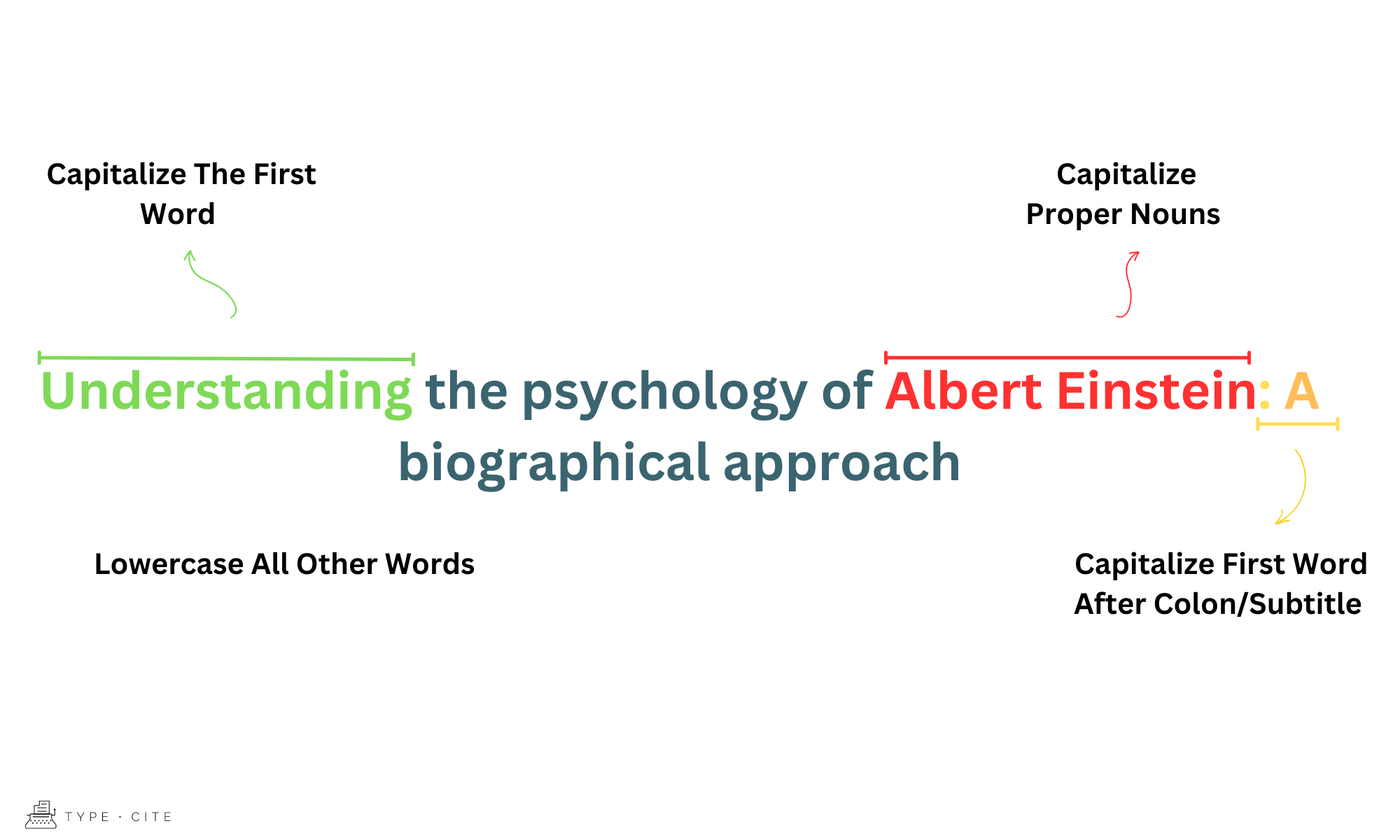
- The "Sentence Case" Trap: A critical distinction in APA style is that while titles in the body of the text use Title Case, titles in the Reference List use Sentence Case (only the first word, the first word of a subtitle, and proper nouns are capitalized).
Associated Press (AP) Style
As mentioned, AP style is the outlier. It uses quotation marks for almost all book titles.
- Example: She recommended "The 7 Habits of Highly Effective People."
- Exceptions: AP does not use quotation marks for the Bible, the Quran, or other holy books, nor for reference books like dictionaries or encyclopedias.
Summary Table: Book Title Styling by Guide
| Style Guide | Formatting Method | Capitalization Style | Primary Use Case |
|---|---|---|---|
| Chicago (CMOS) | Italics | Title Case | Book Publishing, History |
| MLA | Italics | Title Case | Literature, Humanities |
| APA | Italics | Sentence Case (Ref List) | Social Sciences, Psychology |
| AP Style | Quotation Marks | Title Case | Journalism, PR, News |
| Bluebook | Italics or Underline | Title Case | Legal Documents |
The Mechanics of Title Case Capitalization
Regardless of whether you use italics or quotes, you must apply Title Case correctly. This is one of the most frequent areas of error in professional writing.
What to Capitalize
- The first and last word: Always capitalize these, no matter what part of speech they are (e.g., To Be or Not to Be).
- Nouns and Pronouns: The Catcher in the Rye.
- Verbs: This includes short verbs like is, are, and was.
- Adjectives and Adverbs: The Fast and the Furious.
- Subordinating Conjunctions: Words like because, as, and if.
What Not to Capitalize (Lowercase)
- Articles: a, an, the (unless they are the first word).
- Coordinating Conjunctions: and, but, for, or, nor, so, yet.
- Prepositions: In Chicago style, all prepositions are lowercased (e.g., The Girl with the Dragon Tattoo). However, some styles (like APA) capitalize prepositions that are four letters or longer (e.g., Between, With, From).
Handling Punctuation and Subtitles
Subtitles are an integral part of a book's identity, especially in non-fiction. The standard way to style a subtitle is to separate it from the main title with a colon and a space.
- Example: Atomic Habits: An Easy & Proven Way to Build Good Habits & Break Bad Ones.
Both the main title and the subtitle should be italicized. The first word of the subtitle must always be capitalized, even if it is an article like "a" or "the."
Punctuation at the End of a Title
If a book title ends in a question mark or an exclamation point, that punctuation stays italicized as part of the title. If the title appears at the end of a sentence, you do not need an additional period.
- Correct: Have you read Who Moved My Cheese?
- Incorrect: Have you read Who Moved My Cheese?.
Special Cases: Series, Holy Books, and Manuscripts
Not every "book" follows the standard italics rule. Understanding these exceptions prevents over-correction.
Book Series
While individual book titles are italicized, the name of a series is typically not. It is written in standard roman type.
- Correct: The Sorcerer's Stone is the first book in the Harry Potter series.
- Correct: I am reading The Gunslinger from the Dark Tower series.
Religious Texts
The titles of sacred scriptures are generally not italicized or placed in quotation marks. They are treated as proper nouns.
- Example: The Bible, the Torah, the Quran, the Bhagavad Gita, the Book of Mormon.
- Nuance: Individual books within the Bible are also not italicized (e.g., Genesis, Psalms, the Gospel of John).
Unpublished Manuscripts
If you are referring to a manuscript that has not yet been published, it is traditionally placed in quotation marks rather than italics. Once it is published as a bound book, it graduates to italics.
Digital Styling: HTML and CSS Considerations
In the digital publishing world of 2026, styling often involves code. For web content, the standard practice is to use the (emphasis) or (italic) tags. However, the most semantically correct tag for a book title is the tag.
I am reading The Martian by Andy Weir.
Search engines and screen readers use these semantic tags to understand that the text is a citation of a creative work, which can slightly benefit your SEO and significantly improve accessibility for visually impaired readers.
Frequently Asked Questions
Should I underline book titles if I am writing by hand?
Yes. In handwritten work, where italics are difficult to distinguish, the standard convention is to underline the title. Underlining is the physical equivalent of italics. However, you should never both underline and italicize a title.
Do I italicize the word "the" at the start of a title?
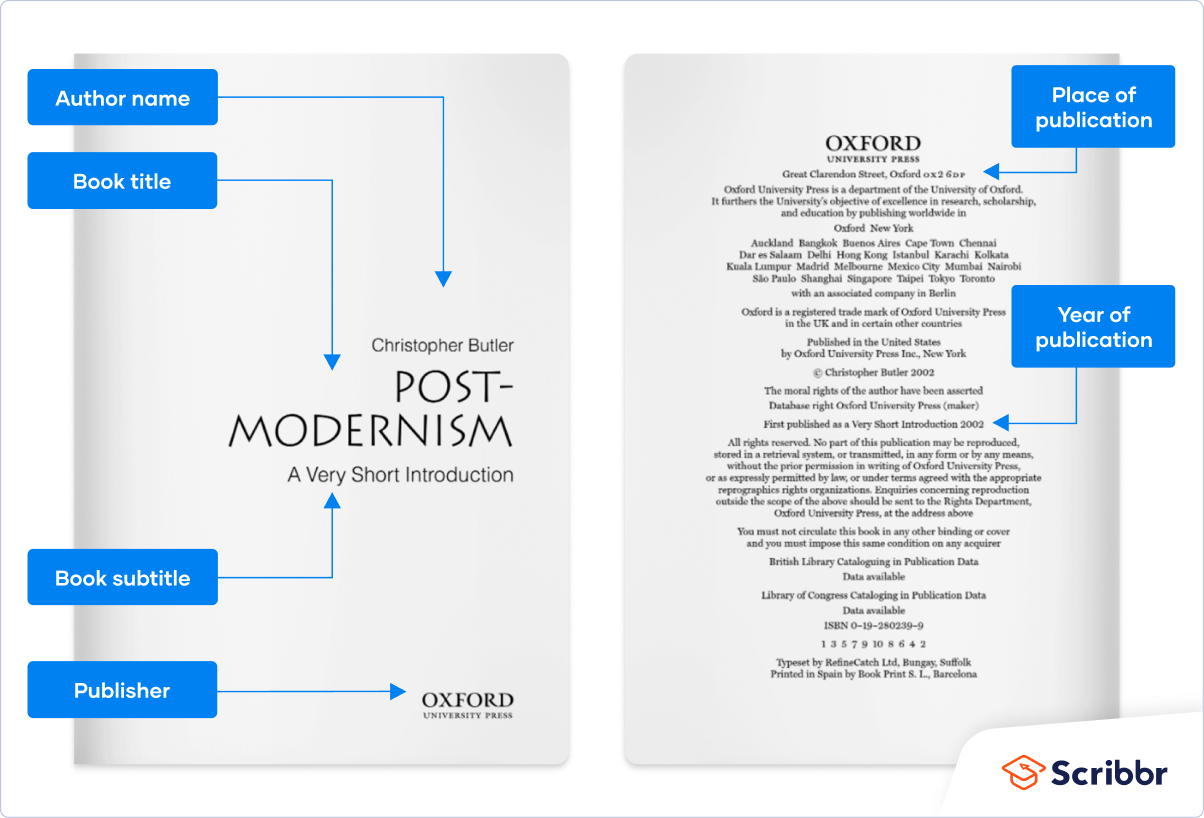
Only if it is part of the official title. For example, the official title of Ralph Ellison's novel is Invisible Man, not The Invisible Man. However, the official title of Charles Dickens's book is A Tale of Two Cities. You should check the book's title page (not just the cover) to verify the official wording.
How do I style a book title that appears within another book title?
This is common in academic titles. The rule is to "flip" the formatting. If the main title is italicized, the internal book title should be in roman (standard) type.
- Example: Finding Meaning in "The Great Gatsby": A Modern Critique.
Are "ebook" and "audiobook" titles styled differently?
No. Whether the book is a physical hardcover, an ebook on a Kindle, or an audiobook on Audible, the styling remains the same: italics (or quotes for AP style). The medium does not change the status of the work as a standalone "book."
Final Recommendation for 2026
When in doubt, default to italics. In the vast majority of professional, academic, and creative contexts, italics remain the standard for book titles. If you are writing for a newspaper, a press release, or a platform that specifically follows the AP Stylebook, switch to quotation marks. Always verify the "official" title on the copyright page to ensure your capitalization and articles (like "A" vs. "The") are factually accurate. For long-term projects, create a small "style sheet" to remain consistent in how you handle prepositions and subtitles throughout your document.
Image Gallery