Understanding Workers' Compensation Law Section 2, Subdivision 3 Amendments: Legal Scope and Statutory Impacts
Amending Section 2, Subdivision 3 of the Workers' Compensation Law directly alters the statutory definition of an employer, reshaping legal liability, insurance mandates, and worker protections. These statutory updates determine which...
Amending Section 2, Subdivision 3 of the Workers' Compensation Law directly alters the statutory definition of an employer, reshaping legal liability, insurance mandates, and worker protections. These statutory updates determine which entities, corporate structures, municipal bodies, or hiring parties are legally obligated to provide workers' compensation coverage and shoulder statutory injury claims.
Contents
The Statutory Framework of Workers' Compensation Law Section 2(3)
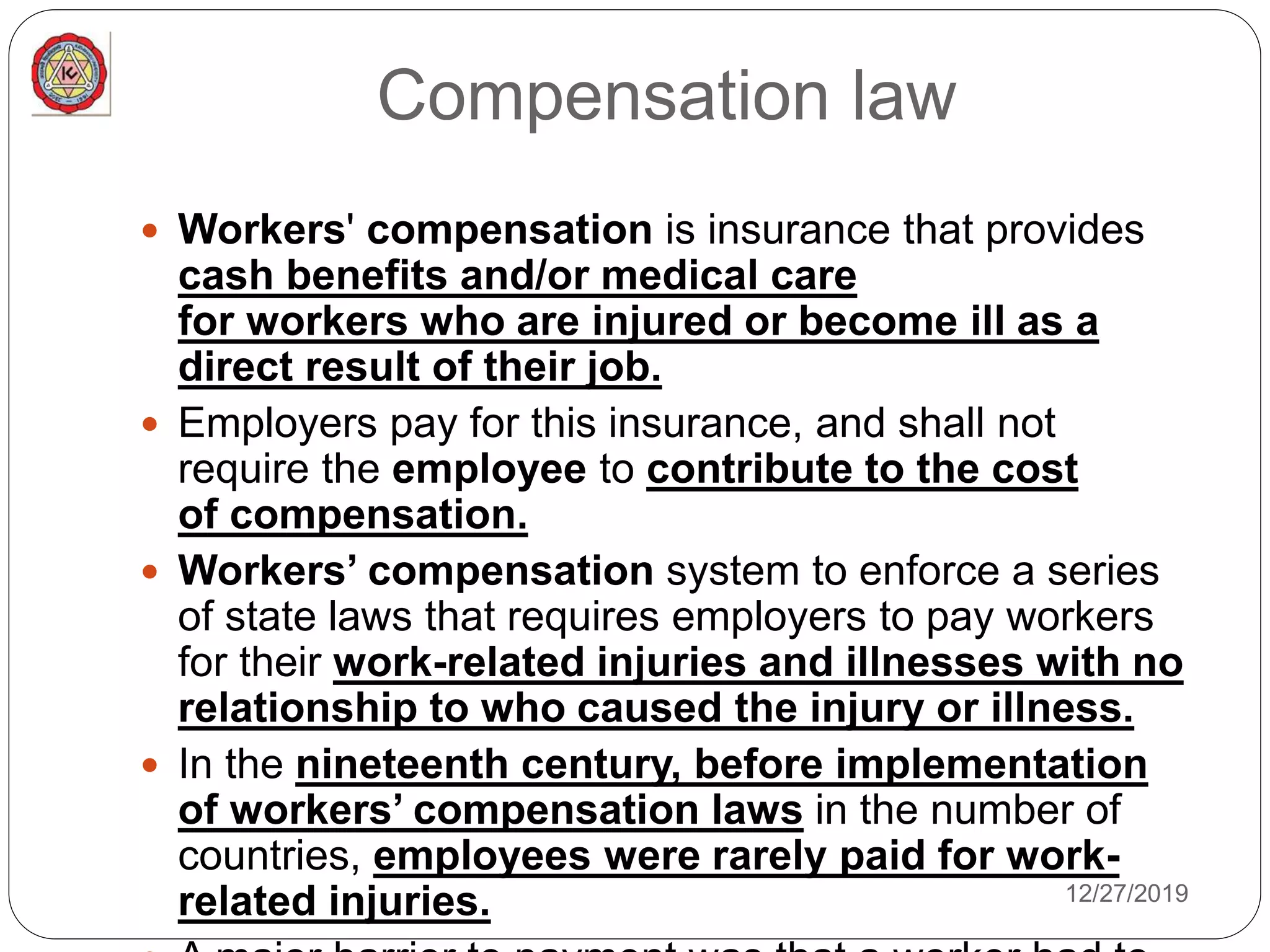
In workers' compensation jurisprudence—most prominently codified within state frameworks such as the New York Workers' Compensation Law (WCL)—Section 2 acts as the statutory dictionary for the entire legislative act. While Section 2, Subdivision 4 defines an "employee" and Subdivision 7 defines "injury," Section 2, Subdivision 3 explicitly establishes the legal definition of an employer.
Under standard statutory language, an employer is defined as any individual, partnership, association, corporation, legal representative, receiver, or trustee who employs one or more persons in a covered employment. This definition extends to state agencies, municipal corporations, fire districts, and political subdivisions.
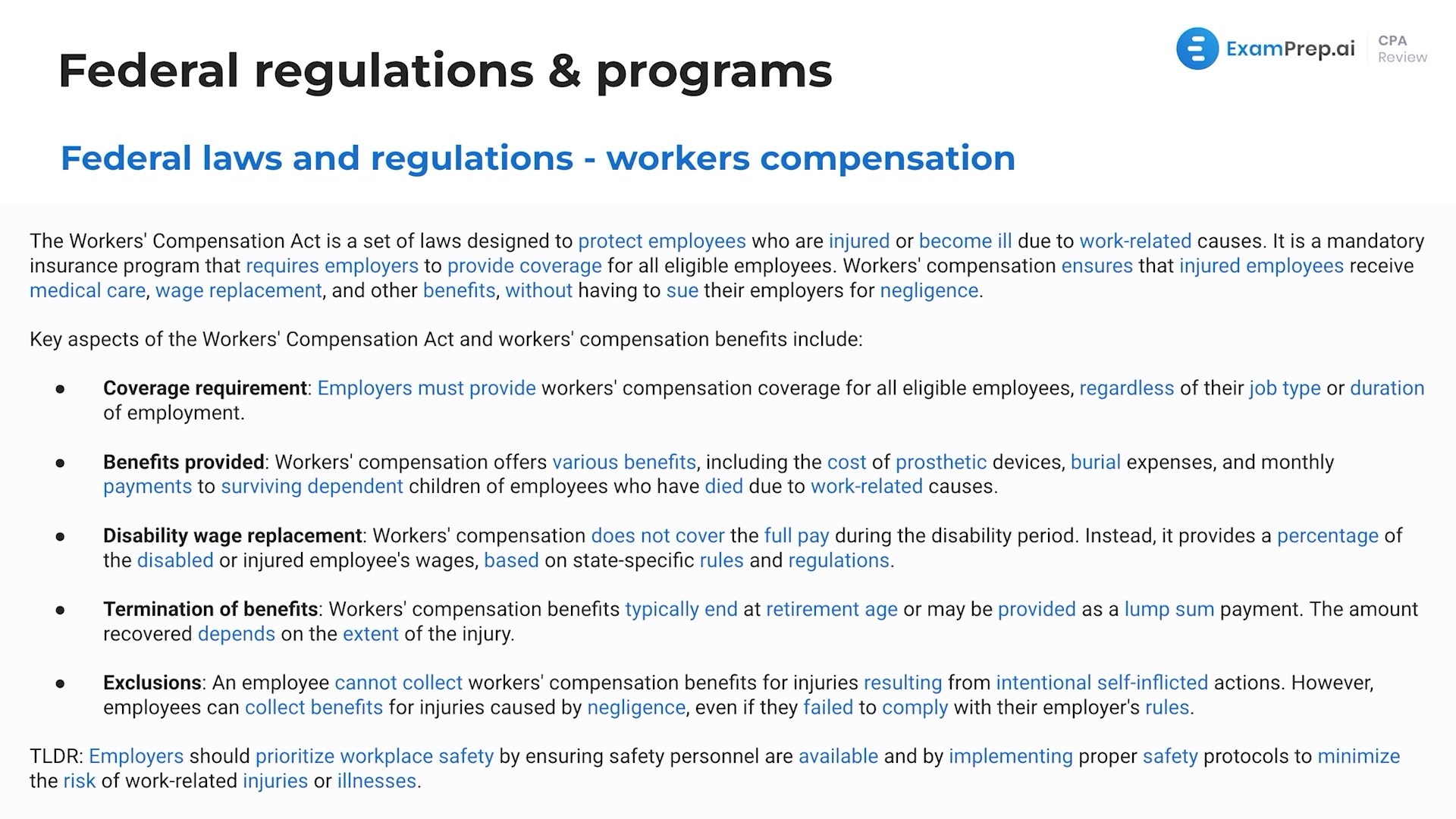
When state legislatures introduce an act stating that "subdivision 3 of section 2 of the workers' compensation law is amended," the primary objective is to alter the statutory scope of who holds legal responsibility for workplace injuries. Because workers' compensation is a strict liability statutory scheme, any shift in the definition of an employer under Section 2(3) directly expands or contracts the universe of entities that must maintain mandatory compensation coverage.
| Statutory Scheme of WCL Section 2 | Description |
|---|---|
| Subdivision 3: EMPLOYER | Legislative Amendments Modify Coverage |
| Subdivision 4: EMPLOYEE | Defines Covered Individuals |
| Subdivision 5: EMPLOYMENT | Establishes Trade, Business, or Occupation |
| Subdivision 7: INJURY / DISEASE | Establishes Compensable Medical Conditions |
Statutory Construction and Legislative Intent
Courts interpret amendments to Section 2(3) through the lens of remedial statutory construction. Workers' compensation statutes are broadly construed to protect injured workers. Consequently, legislative updates to Subdivision 3 are generally drafted to close statutory loopholes, eliminate coverage evasions, or respond to emerging labor models.
Disclaimer: Workers' compensation statutes vary by jurisdiction. While this analysis focuses on statutory frameworks utilizing this legislative structure (such as New York State WCL § 2(3)), specific claim outcomes depend on local statutory text, administrative board rulings, and state court precedents. This material is provided for educational and legal research purposes and does not constitute formal legal advice.
Key Legislative Drivers behind Section 2(3) Amendments
Legislative bodies amend Section 2(3) to address evolving economic realities, business restructuring, and emerging workforce models. Understanding the driver behind a specific legislative amendment helps practitioners interpret statutory intent and apply the law effectively.
1. Inclusion of Domestic and Household Workers
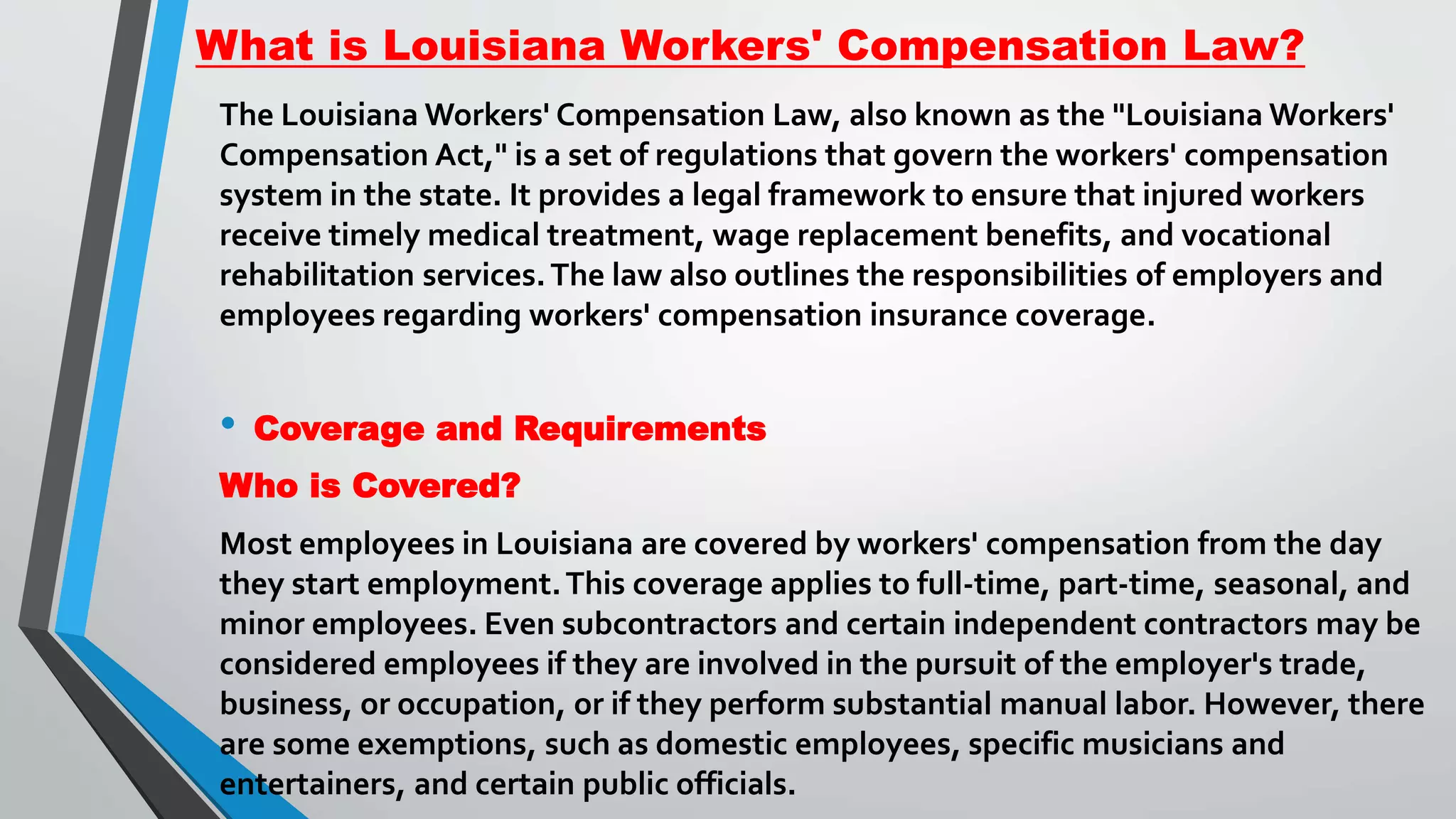
Historically, many state workers' compensation statutes excluded personal, private, or domestic household workers (such as nannies, home health aides, and housekeepers) from the mandatory definition of covered employment unless they met high hourly thresholds. Modern amendments to Section 2(3) frequently broaden the definition of an employer to encompass household hiring parties, establishing clear coverage requirements based on weekly hours worked or payroll thresholds.
2. Digital Platforms and Gig Economy Reclassification
The growth of platform-based work has strained traditional common-law definitions of employment. Legislative amendments often update Section 2(3) to clarify whether technology platforms, delivery aggregators, or dispatch entities qualify as statutory employers. By expanding Subdivision 3, lawmakers prevent hiring entities from shifting the financial burden of occupational injuries onto public safety nets or uninsured funding mechanisms.
3. General Contractors and Subcontractor Pass-Through Liability
Amendments to Section 2(3) regularly intersect with general contractor liability. Where an uninsured subcontractor hires workers, statutory updates often define the general contractor or primary business entity as the deemed or statutory employer for compensation purposes. This ensures that an injured worker retains direct access to medical care and indemnity payments regardless of an immediate employer's insurance default.
4. Municipal, Fire District, and Volunteer Protection Amendments
Section 2(3) explicitly includes governmental and political subdivisions. Amendments frequently refine how municipal entities, public benefit corporations, volunteer fire departments, and emergency service districts are categorized as employers. These updates clarify which municipal entity bears financial responsibility when an emergency responder is injured across jurisdictional boundaries or during multi-agency operations.
Legal Impacts of Section 2(3) Amendments on Injury Claims
An amendment to Section 2, Subdivision 3 generates immediate downstream legal consequences for injured workers, corporate entities, insurance carriers, and the Workers' Compensation Board.
- Legislative Amendment to WCL Section 2(3)
- Impact on Employer Obligations
- Mandatory Coverage Purchase
- Statutory Penalty Risk (§ 52)
- Loss of Common-Law Defenses
- Strict Liability Exposure
- Impact on Worker Rights
- Statutory Compensation Access
- Medical Treatment Entitlement
- Loss of Personal Injury Suit (Exclusive Remedy Bar)
- Impact on Employer Obligations
Expanding Mandatory Insurance Requirements
When an amendment brings previously exempt entities under Section 2(3), those entities must secure an active workers' compensation insurance policy through a commercial carrier, a state insurance fund, or approved self-insurance status. Failure to comply after an amendment takes effect opens the employer to severe administrative penalties, stop-work orders, and potential criminal misdemeanor charges under statutory enforcement provisions (such as WCL § 52).
The Dual Edges of the Exclusive Remedy Doctrine
Under standard workers' compensation principles, qualifying as an "employer" under Section 2(3) grants an entity protection under the Exclusive Remedy Doctrine.
- For the Worker: Inclusion under Section 2(3) guarantees access to no-fault medical treatment and statutory wage replacement without requiring proof of employer negligence.
- For the Employer: Inclusion under Section 2(3) shields the employer from common-law personal injury lawsuits filed by the employee for workplace accidents.
When a statutory amendment expands Section 2(3) to include a new class of hiring entities, those entities lose immunity from mandatory coverage penalties but gain immunity from personal injury tort litigation, restricting the injured worker's recovery to statutory compensation benefits.
Impact on Uninsured Employers Fund (UEF) Exposure
When Section 2(3) expands the definition of an employer, claims involving non-compliant entities are diverted to state-administered Uninsured Employers Funds. The UEF pays medical and indemnity benefits to the injured worker and subsequently initiates aggressive subrogation and penalty enforcement actions directly against the uninsured entity's officers and corporate assets.
Statutory Comparison: Impact of Section 2(3) Revisions
The following table outlines how amendments to Section 2, Subdivision 3 alter legal rights, compliance obligations, and dispute resolution paths across key employment operational scenarios:
| Operational Dimension | Standard Pre-Amendment Rule | Post-Amendment Standard Framework | Practical Legal Consequence |
|---|---|---|---|
| Household & Domestic Work | Coverage excluded or limited to high-hour thresholds (e.g., 40+ hours/week). | Employer defined to include households employing workers for specified lower thresholds (e.g., 16+ hours). | Hiring individuals must purchase residential compensation riders; failure triggers uninsured penalties. |
| Joint / Special Employment | Liability defaulted strictly to direct payroll employer under common law. | Statutory employer status assigned jointly or secondarily to supervising entity under § 2(3). | Injured staffing workers can claim benefits against either entity; both entities receive tort immunity. |
| Corporate Officer Exposure | Executive officers frequently opted out or lacked clear statutory employer definitions. | Officers and managing members explicitly defined as statutory employers for compliance enforcement. | Personal financial liability attached to corporate officers for failing to secure compensation coverage. |
| Independent Contractors | Entities categorized contract partners as non-employers under common-law control tests. | Strict statutory employer tests limit independent contractor exceptions under § 2(3). | Reclassifies purported independent contractors as covered employees; shifts benefit obligations to hiring entity. |
| Municipal & Volunteer Bodies | Jurisdictional disputes between overlapping towns, villages, and fire districts. | Statutory employer assignment fixed to specific responding district or administrative entity. | Eliminates procedural delays in benefit delivery to injured emergency services personnel. |
Evaluating Worker Classification Under Amended Section 2(3)
Courts and administrative law judges do not rely solely on written contracts to determine if an entity is an employer under Section 2(3). Even after a statutory amendment, administrative tribunals apply established legal tests to evaluate whether an entity meets the amended criteria of Subdivision 3.
- Evidentiary Evaluation of Employer Status Under Section 2(3)
- Right of Control
- Direct supervision
- Scheduling authority
- Disciplinary power
- Economic Reality
- Payment method
- Tool ownership
- Profit/Loss risk
- Relative Nature of the Work
- Integration in core business
- Specialized skill requirement
- Dependence on hiring principal
- Right of Control
1. The Right of Control Test
The primary factor in establishing employer status under Section 2(3) is the degree of control the hiring entity exercises over the worker. Key evidentiary factors include:
- Controlling work hours, locations, and mandatory performance steps.
- Providing specialized equipment, uniforms, or direct technical tools.
- Exercising direct supervisory oversight and imposing performance discipline.
2. Relative Nature of the Work Test
In cases where direct supervision is minimal (such as remote or highly technical work), tribunals apply the relative nature of the work test. This standard evaluates:
- How closely the worker’s tasks align with the hiring entity's core business operations.
- Whether the work constitutes a continuous, ongoing economic relationship rather than a single, isolated contract.
- Whether the worker maintains a genuinely independent business enterprise with separate tax filings, commercial liability insurance, and public client offerings.
3. Payment Structure and Method of Compensation
Under amended Section 2(3) standards, issuing a Form 1099 instead of a W-2 does not prevent a finding of an employer-employee relationship. Administrative boards look past tax designations to examine whether payment was rendered on an hourly, weekly, or piecework basis under terms dictated by the hiring entity.
Procedural Steps for Handling Section 2(3) Employer Status Disputes
When a workers' compensation claim involves an amended or contested application of Section 2, Subdivision 3, claims examiners, attorneys, and risk managers must follow a structured evidentiary process:
Step 1: Verify Effective Dates and Statutory Applicability
Determine the exact date of injury (or date of disablement for occupational diseases) and compare it against the legislative effective date of the Section 2(3) amendment.
- Prospective Application: Amendments expanding statutory liability generally apply only to injuries occurring on or after the effective date specified in the enacted bill.
- Retrospective Interpretation: Clarifying amendments designed to correct statutory ambiguities may apply to pending claims if explicitly mandated by the legislature.
Step 2: Establish Corporate and Policy Identity
Obtain certified coverage records from state insurance rating boards or compensation databases. Verify the legal identity of all potential employers, including parent corporations, general contractors, staffing agencies, and joint ventures.
Step 3: Conduct a Fact-Finding Investigation
Gather evidence to satisfy or challenge the statutory criteria established under the amended Section 2(3):
- Collect written contracts, master service agreements (MSAs), and statements of work (SOWs).
- Review dispatch logs, timecards, electronic logging device (ELD) entries, and communication records.
- Audit payroll disbursements, banking records, and tax filings for the preceding 52 weeks.
Step 4: File Appropriate Administrative Forms
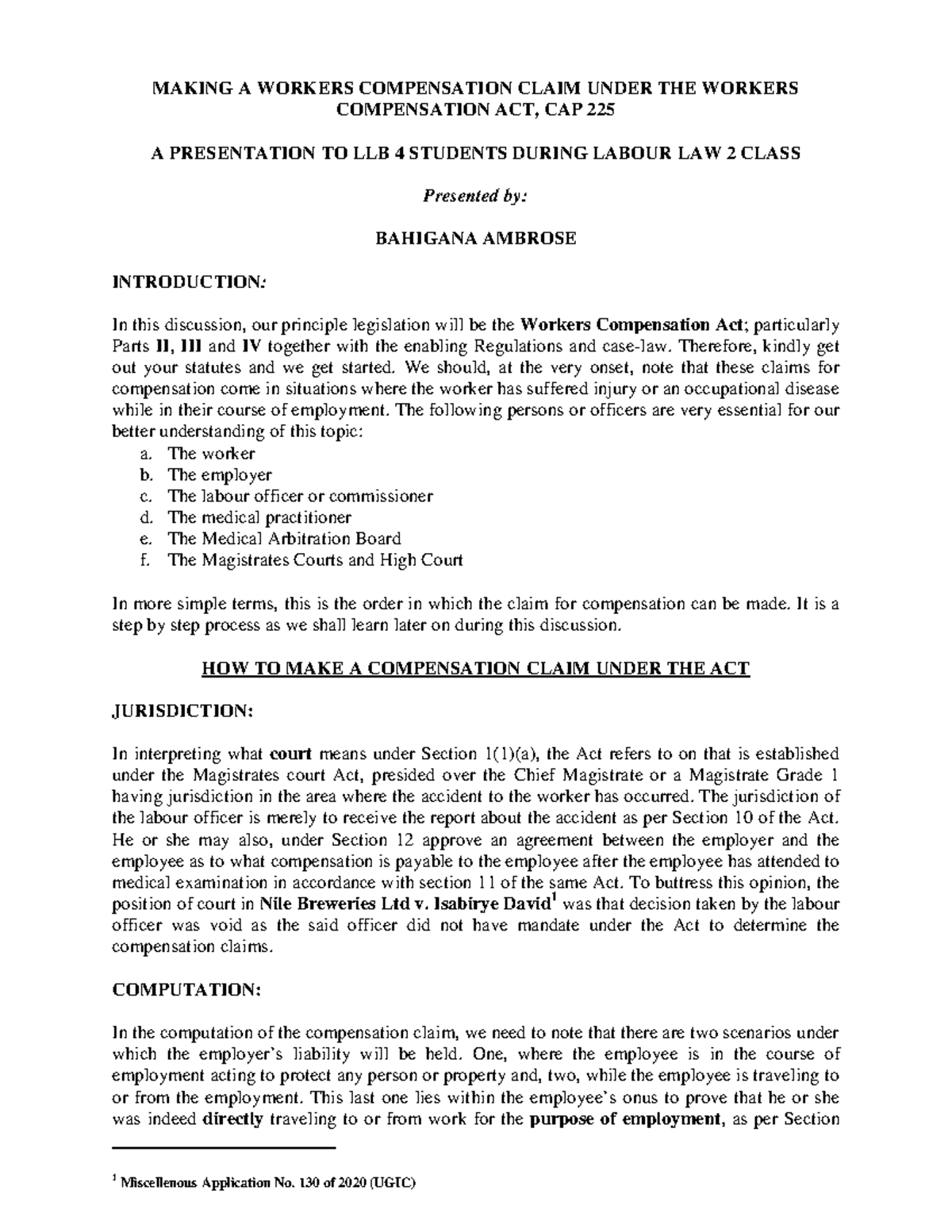
If employer status is contested under Section 2(3), file the appropriate notice of controversy with the administrative board. Request formal indexing of the claim against all potential primary, joint, or statutory employers, as well as the state Uninsured Employers Fund, to prevent statute of limitations bars.
Step 5: Request Pre-Trial Resolution of Employer Threshold Issues
In contested proceedings, request a preliminary hearing restricted exclusively to the issue of statutory employer status under Section 2(3). Resolving employer identity early avoids unnecessary litigation over medical degree of disability or loss of wage-earning capacity before basic coverage liability is established.
Frequently Asked Questions
What is the core purpose of Section 2, Subdivision 3 in workers' compensation law?
Section 2, Subdivision 3 establishes the statutory definition of an "employer." It defines which individuals, corporations, partnerships, municipalities, and legal entities are legally bound by the obligations of the Workers' Compensation Law, including the requirement to secure compensation insurance and pay statutory injury benefits.
How does an amendment to Section 2(3) affect an employer's personal injury liability?
If an amendment expands Section 2(3) to include an entity as a statutory employer, that entity becomes subject to mandatory workers' compensation requirements. However, it also gains immunity from common-law personal injury lawsuits filed by injured employees under the Exclusive Remedy Doctrine.
Does an amendment to Section 2(3) apply retroactively to past injuries?
As a general rule of statutory construction, amendments that alter substantive rights or expand financial liability apply prospectively to injuries occurring on or after the enactment date. Amendments apply retroactively only if the legislature included explicit statutory language mandating retroactive application.
What happens if an entity newly defined as an employer under Section 2(3) fails to carry insurance?
Failure to maintain required workers' compensation insurance after a statutory amendment brings an entity into Section 2(3) constitutes a statutory violation. The non-compliant employer faces administrative fines, stop-work orders, potential criminal prosecution, personal financial liability for claim costs, and civil lawsuits where statutory common-law defenses are stripped.
How does Section 2(3) address joint employment or staffing agency scenarios?
Section 2(3), when read alongside judicial precedent and related statutory subdivisions, recognizes dual and special employment relationships. In staffing or leased worker arrangements, both the general employer (the staffing agency) and the special employer (the client company supervising the work) can be categorized as statutory employers under Subdivision 3.
Practical Guidance for Employers, Workers, and Counsel
- Conduct Regular Coverage Audits: Corporate risk managers and business owners should review statutory amendments to Section 2(3) annually to ensure that all operational business units, subsidiaries, sub-contractors, and domestic/gig workers are properly insured under active policies.
- Preserve Contemporaneous Work Records: When employer status under Section 2(3) is ambiguous, maintain clear records of supervisory oversight, equipment provision, and direct financial payments. These documents are critical evidence during board hearings.
- Report Claims Promptly: Injured workers facing uncertainty regarding their direct employer's legal status should name both direct hiring entities and principal contractors on preliminary claim forms to ensure statutory notice deadlines are satisfied.
Image Gallery