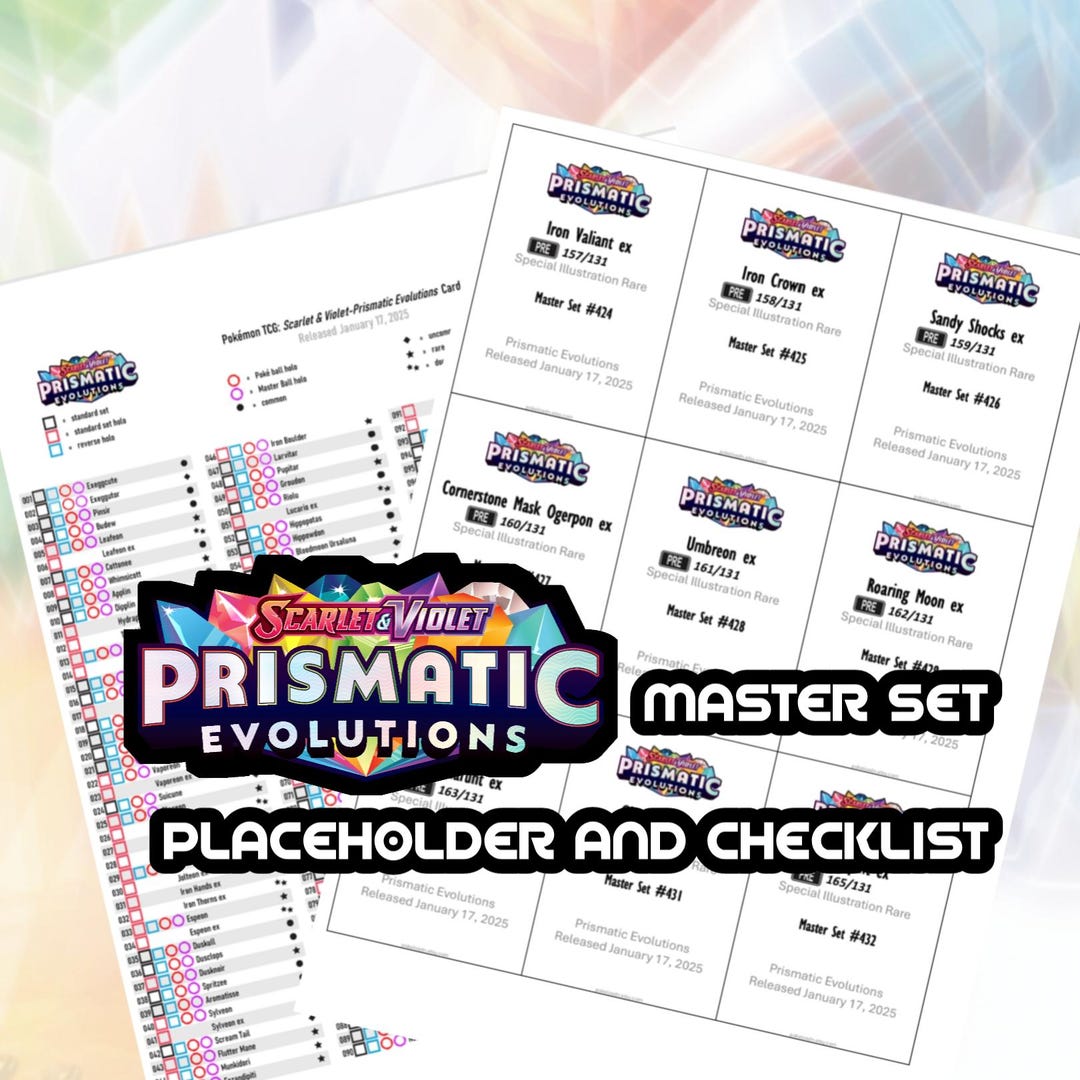
A Practical Guide to Using the Prismatic Evolutions Checklist
The Prismatic Evolutions checklist is a specialized tool designed to track, audit, and manage the complex phases of multi-dimensional character or asset development within specific digital and role-playing ecosystems. By systematically...
The Prismatic Evolutions checklist is a specialized tool designed to track, audit, and manage the complex phases of multi-dimensional character or asset development within specific digital and role-playing ecosystems. By systematically documenting growth milestones, stat allocations, and aesthetic shifts, users ensure that no critical optimization step is overlooked during the evolution process.
Contents
Understanding the Role of the Prismatic Evolutions Checklist
The Prismatic Evolutions checklist serves as a roadmap for users navigating systems where "evolution" implies more than simple linear progression. In many complex digital environments, particularly in gaming, creative asset management, and simulated character design, an entity may shift through several distinct, color-coded, or elemental states. Each state—often referred to as a "prism"—requires specific prerequisites before the transition can occur.
Without a structured checklist, users frequently encounter "bottlenecking," where they reach a potential evolution milestone only to discover they lack the necessary currency, attribute points, or prerequisite environmental conditions. This checklist mitigates that risk by breaking down the transformation into granular, actionable tasks. It acts as a bridge between the current baseline status of an asset and its idealized final state, ensuring that every prerequisite is met in the correct sequence to prevent irreversible errors or lost progress.
Core Components of the Checklist
To effectively use the Prismatic Evolutions checklist, you must first familiarize yourself with the structure of the document. Most standardized versions of this tool are divided into four primary segments:
- Baseline Verification: This section focuses on the entity’s current state. It requires you to record current experience levels, current elemental affinity, and existing item modifiers. You cannot progress if the baseline is miscalculated, as this will lead to flawed stat distribution in later stages.
- Resource Requisition: Here, you list the items, tokens, or currency required for each evolution tier. This section is often the most critical because it prevents premature attempts at evolution that could deplete your resources without yielding a successful transition.
- Milestone Sequencing: This is the heart of the checklist. It outlines the chronological order of events. For instance, in many systems, you must reach a specific "Attunement Level" before you can apply "Prismatic Shards." This section ensures you follow the logic of the engine, preventing skipped steps.
- Verification of Outcome: Once an evolution step is complete, this section provides criteria to verify that the shift occurred correctly. This includes checking new stat caps, visual assets, or ability unlocks.
Steps to Implement the Checklist in Your Workflow
To derive the most value from the checklist, follow a disciplined implementation strategy.
Step 1: Audit Your Current State Before checking any boxes, perform a full inventory. Log your current attributes against the "Minimum Requirements" column on your checklist. If your baseline is below the requirement, your priority is to grind for the missing stat points before attempting to engage with the evolution process.
Step 2: Map the Required Resources The checklist will generally indicate specific materials for each "prism" or stage. Gather these in a centralized location. If you are working within a digital interface, use a separate spreadsheet or note-taking application to track your resource stockpile alongside the checklist to avoid wasting time.
Step 3: Execute in Increments Never attempt to skip tiers. Even if you have the resources for a "Level 3" evolution, the system may require a "Level 1" to "Level 2" transition to unlock the necessary pathways. Use the checklist to confirm that each specific tier is marked as "Completed" before moving to the next.
Step 4: Troubleshoot Verification Failures If an evolution fails or results in unexpected statistics, return to your checklist. Review the "Pre-condition" column. Frequently, failures occur because a player forgot to unequip a specific item or failed to verify an elemental affinity before the activation sequence.
Comparative Analysis of Evolution Strategies
When using the Prismatic Evolutions checklist, you will often find that there are multiple pathways to reach the same destination. Understanding the difference between these pathways can save time and resources.
| Pathway Strategy | Resource Cost | Time Commitment | Complexity |
|---|---|---|---|
| Direct Path | High | Low | Simple |
| Incremental Path | Low | High | Moderate |
| Hybrid Approach | Moderate | Moderate | High |
- Direct Path: This involves using premium resources to bypass minor evolution requirements. The checklist will usually have a "shortcut" section for this.
- Incremental Path: This is the standard method, requiring the user to build every prerequisite manually. It is the most reliable way to ensure you do not encounter bugs or system crashes.
- Hybrid Approach: Often used by power-users, this involves mixing manual grinds with specific resource injections at high-stakes milestones.
Common Pitfalls and How to Avoid Them
Even with a comprehensive checklist, users often fall into traps that hinder progress.
One common mistake is the failure to account for "Cooldowns." Many systems implement a delay between evolutions. If you attempt an evolution too soon after a previous one, the system may lock, leading to a "failed trigger." Your checklist should be marked with a timestamp for each successful evolution to ensure you adhere to the necessary waiting periods.
Another frequent error involves "Stat Cap Mismanagement." During an evolution, there is often a temporary cap on how many points you can reallocate. If you attempt to exceed this cap, the system will discard your points. Experienced users annotate their checklists with the specific cap values for each tier to ensure they do not lose progress during the redistribution phase.
Finally, ignore the temptation to "guess" your way through. The Prismatic Evolutions process is often sensitive to strict, syntax-like requirements. If the checklist dictates that you must be in a specific "environment" or "zone" to evolve, do not attempt to bypass this. The system check will detect the location discrepancy and often reset the current evolution tier, forcing you to start the sequence over.
Managing System Updates and Versioning
In 2026, many digital systems undergo periodic patches that alter the mechanics of evolution. It is vital that your checklist remains aligned with the current software version. Before beginning your session, verify that the version number on your checklist matches the live version of the software.
If the checklist is outdated, specific resource costs or stat modifiers may have changed. In such cases, prioritize data from the most recent "Patch Notes" over the printed or static checklist. If you are using a collaborative digital checklist, ensure that the moderator has updated the document to reflect the 2026 balance adjustments.
Frequently Asked Questions
1. Does the Prismatic Evolutions checklist apply to all character types? No, it is highly specific to the architectural framework of the specific system or game engine you are using. Always ensure you are using the version of the checklist designed for your specific class or asset category.
2. What happens if I miss a step on the checklist? Missing a step often leads to a "soft-lock" where the evolution fails to progress. You will usually need to reset the progress or use a "reversion token" to return to the previous state, which can be costly in terms of both time and currency.
3. Is it possible to use the checklist for multiple assets simultaneously? While you can manage multiple assets, it is highly recommended to focus on one "Prismatic Evolution" at a time. Trying to juggle multiple sequences leads to resource misallocation and human error in tracking the requirements.
4. How often should I re-verify the requirements? Re-verify your checklist requirements at the start of every session. Even if you believe your status is correct, temporary environmental debuffs or server-side changes can alter the requirements between sessions.
5. Are there automated versions of this checklist? Yes, there are third-party trackers that integrate directly with game APIs to automate the checking of requirements. However, ensure these are compatible with current 2026 security policies to avoid account flagging.
Final Recommendations
To achieve the best results, treat the Prismatic Evolutions checklist as a mandatory operational document rather than a suggestion. Maintain your checklist in a format that allows for real-time updates—such as a mobile-friendly spreadsheet or a dedicated task manager—to ensure you can update your status as you progress through each milestone.
Prior to initiating any major evolution, perform a "pre-flight" check by matching your inventory one last time against the resource requirements column. By following these structured, methodical steps, you will significantly reduce the likelihood of failed evolutions and maximize the efficiency of your developmental journey.
Image Gallery