Robert Kiyosaki’s Guide to Cash Flow Mastery: Principles for Financial Independence
Robert Kiyosaki’s guide to cash flow mastery defines financial freedom as the point where your monthly passive income from assets exceeds your monthly living expenses. This mastery requires transitioning from an employee mindset to tha...
Robert Kiyosaki’s guide to cash flow mastery defines financial freedom as the point where your monthly passive income from assets exceeds your monthly living expenses. This mastery requires transitioning from an employee mindset to that of a business owner or investor, focusing on acquiring assets that generate consistent, recurring revenue.
Contents
The Foundation of Cash Flow Mastery: The Cashflow Quadrant
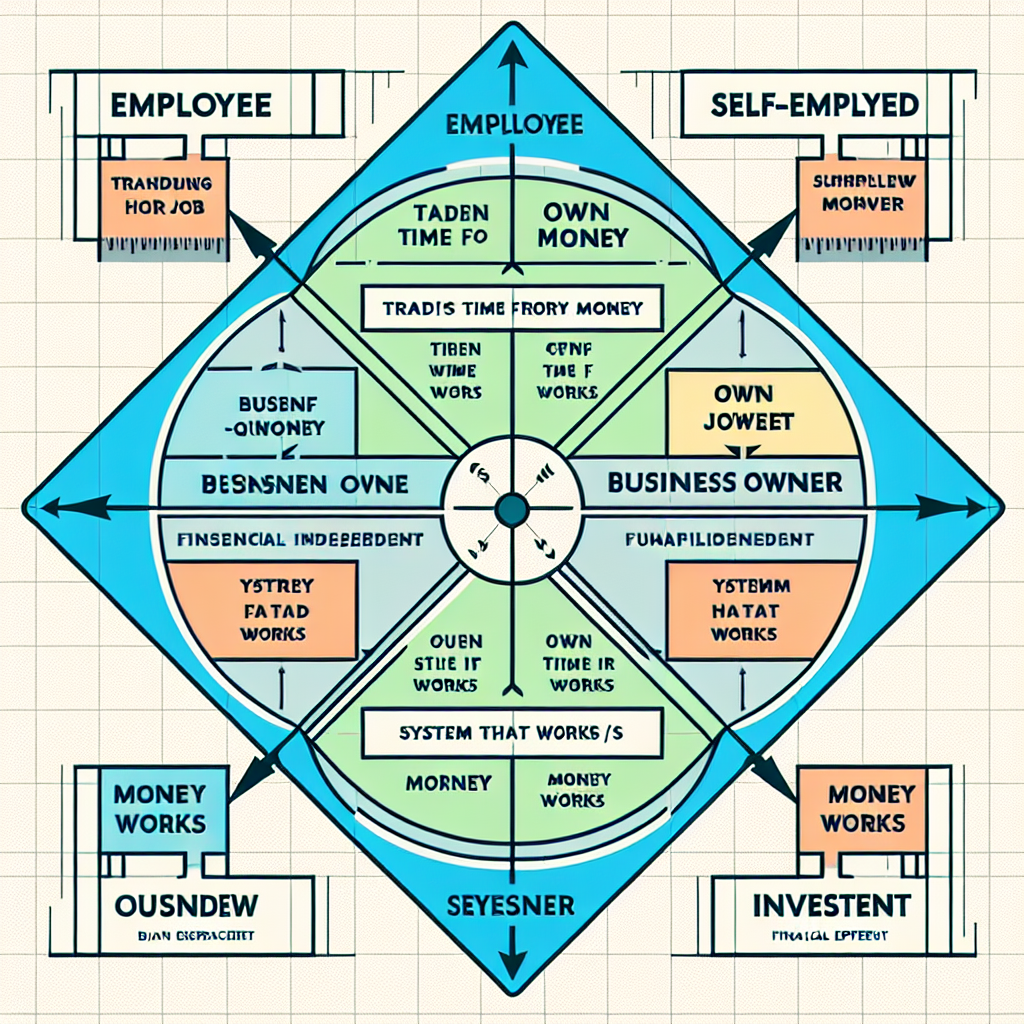
To understand Robert Kiyosaki’s approach to wealth, one must first grasp the Cashflow Quadrant. This conceptual framework divides the world of income earners into four distinct categories based on where their money originates. Each quadrant represents a different mindset, tax structure, and level of financial risk.
The left side of the quadrant consists of E (Employees) and S (Self-employed). Employees trade their time for a paycheck and typically seek security and benefits. The self-employed, while appearing to have more freedom, often "own a job" rather than a business; if they stop working, their income stops. These two quadrants are heavily taxed and offer the least amount of leverage because the individual is the primary engine of production.
The right side of the quadrant consists of B (Business Owners) and I (Investors). Business owners build systems and hire talented people to run them, allowing the owner to earn income even when they are not physically present. Investors put money into assets that work for them, such as real estate, stocks, or private equity. Mastery of cash flow involves a deliberate migration from the left side to the right side, where income is decoupled from time and taxes are significantly lower due to government incentives for job creators and providers of housing or energy.
Redefining Assets and Liabilities
A cornerstone of the "Rich Dad" philosophy is the unconventional definition of assets and liabilities. In traditional accounting, a home is often listed as an asset. However, Kiyosaki argues that if a "thing" takes money out of your pocket every month, it is a liability. If it puts money into your pocket, it is an asset.
As we look at the financial landscape in 2026, this distinction is more critical than ever. Many middle-class individuals struggle because they collect "doodads"—luxuries and liabilities that lose value and drain cash flow—under the impression that they are building net worth. Cash flow mastery requires a strict adherence to buying or building income-producing assets first. Only after the cash flow from those assets is sufficient should one use the surplus to purchase luxuries. This delayed gratification ensures that the asset, not the individual’s labor, pays for the lifestyle.
Common examples of assets in the Kiyosaki model include:
- Rental Real Estate: Properties that generate monthly rent exceeding the mortgage, taxes, and maintenance.
- Business Ownership: Interests in companies where you do not need to be involved in daily operations.
- Paper Assets: Dividend-paying stocks, bonds, or private lending notes.
- Commodities: Silver, gold, or oil interests that provide hedges against currency devaluation.
The Strategic Use of Debt and Taxes
Perhaps the most controversial aspect of Robert Kiyosaki’s guide to cash flow mastery is his stance on debt. While many financial gurus advocate for a "debt-free" lifestyle, Kiyosaki differentiates between Bad Debt and Good Debt. Bad debt is used to purchase liabilities (like credit cards for clothes or loans for personal cars). Good debt is used to acquire assets.
Mastering cash flow involves using leverage—using other people's money (OPM) to increase your return on investment. For example, by using a bank loan to cover 80% of a property's purchase price, an investor can control a larger asset with less of their own capital. If the rental income covers the debt service and leaves a profit, the debt is "good" because it accelerated the acquisition of a cash-flowing asset.
Tax strategy is the second "hidden" pillar of cash flow. In the United States and many other developed nations, the tax code is essentially a set of incentives. The government wants citizens to provide housing, create jobs, and produce energy. Therefore, Business Owners and Investors (the B and I quadrants) receive significant tax breaks, such as depreciation and capital gains treatment, that are unavailable to Employees. Mastering cash flow means understanding how to use these legal loopholes to keep more of what you earn, reinvesting the tax savings into more assets.
Comparison of the Four Quadrants
The following table summarizes the differences in financial dynamics across the Cashflow Quadrant as of 2026 standards.
| Feature | E (Employee) | S (Self-Employed) | B (Business Owner) | I (Investor) |
|---|---|---|---|---|
| Primary Income Type | Earned / Active | Active / Commission | Passive / Systems-based | Passive / Portfolio |
| Tax Rate (Typical) | Highest (W-2/PAYE) | High (Self-employment) | Low (Corporate/Incentives) | Lowest (Cap Gains/Depletion) |
| Leverage | None (Own labor only) | Limited (Personal skill) | High (Other People's Time) | High (Other People's Money) |
| Control | Low (Boss/Company) | High (Self) | High (Systems/Team) | Moderate to High |
| Scalability | Low (Time is finite) | Moderate (Higher rates) | Very High | Unlimited |
Practical Steps to Achieving Cash Flow Mastery
Mastery is not achieved overnight; it is a process of education and incremental action. Robert Kiyosaki often emphasizes that "your mind is your greatest asset." In 2026, with the rapid evolution of digital assets and shifting real estate markets, staying educated is paramount.
- Financial Education: Start by reading core texts like Rich Dad Poor Dad and The Cashflow Quadrant. Attend seminars, listen to podcasts, and understand how to read financial statements. You must be able to look at a balance sheet and see the story it tells about where money is flowing.
- Simulation: Use tools like the CASHFLOW 101 board game. These simulations allow you to practice making investment decisions, using leverage, and navigating market fluctuations without risking real capital. The goal is to train your brain to recognize opportunities that others miss.
- Start Small: Do not attempt to buy a 100-unit apartment complex as your first investment. Start with a small rental property, a side business, or a small portfolio of dividend stocks. The goal is to gain experience in managing an asset and seeing the "green" of positive cash flow on your own monthly statement.
- Build a Team: Wealth is a team sport. To master cash flow, you need a competent accountant, an attorney, a real estate broker, and a mentor. These professionals help you navigate legal and tax complexities that would otherwise stall your progress.
Common Obstacles and Mindset Shifts
The biggest hurdle to cash flow mastery is often psychological. Most people are raised with the "Poor Dad" advice: "Go to school, get a good job, and save money." In an era of inflation and currency devaluation, saving money can actually be a losing strategy. Mastering cash flow requires shifting from a "saver" mindset to an "investor" mindset.
Fear of debt and fear of losing money keep most people trapped in the Rat Race. Kiyosaki teaches that failure is part of the learning process. The key is to manage risk rather than avoid it. By focusing on cash flow rather than capital gains (the hope that an asset will go up in value), an investor creates a "margin of safety." If the market price of an asset drops, but it continues to produce a monthly check, the investor is still winning.
Frequently Asked Questions
Can I achieve cash flow mastery if I have no starting capital? Yes, but it requires a heavier focus on the "B" quadrant initially. You can start a business that requires low overhead (such as a digital service or an intellectual property-based business) to generate the initial cash flow needed to invest in larger assets. Many successful investors also use "wholesaling" in real estate to build capital without putting their own money at risk.
Why does Kiyosaki say a house is a liability? From a cash flow perspective, a primary residence takes money out of your pocket every month through mortgage payments, property taxes, insurance, and maintenance. While it may appreciate in value over decades, it does not provide income to pay for your daily life while you live in it. It only becomes an asset if it is sold for a profit or rented out to generate more income than its expenses.
Is cash flow mastery still possible with high interest rates in 2026? High interest rates make "Good Debt" more expensive, but they often lead to lower asset prices and less competition in the market. Cash flow mastery involves adjusting your "buy" criteria to ensure the math still works. In a high-interest environment, investors focus on finding deeper discounts or using creative financing (like seller financing) to maintain positive cash flow.
What is the "Rat Race" exactly? The Rat Race is the cycle of working hard for a paycheck, using that money to pay for expenses and liabilities, and then having to work even harder because the liabilities increased. People in the Rat Race are one or two missed paychecks away from financial disaster because they have no assets providing income independent of their labor.
How much passive income do I need to be "Free"? Financial freedom is a personal number. It is the total of your monthly recurring expenses (housing, food, transport, taxes). Once your passive cash flow from assets equals or exceeds this number, you are technically free from the requirement to work for a paycheck, regardless of the total dollar amount.
Final Recommendation for Next Actions
To begin your journey toward cash flow mastery in 2026, perform a Financial Audit. Map out your current income and expenses onto a simple personal income statement and balance sheet. Identify which items in your "Asset" column are actually liabilities that drain your cash. Your first goal should be to eliminate one high-interest liability (bad debt) and replace it with a small, monthly cash-producing asset. Continuous education through reputable financial programs and networking with individuals already in the "B" and "I" quadrants will accelerate your transition out of the Rat Race.
Disclaimer: This information is for educational purposes only and does not constitute professional financial, legal, or tax advice. Always consult with a qualified professional before making significant investment decisions.
Image Gallery