How Much is a Ted Williams Autographed Baseball Worth?
As of 2026, a Ted Williams autographed baseball typically ranges in value from $450 to $1,200 for standard examples with reputable authentication. Premium specimens, such as those featuring high-grade signatures on "Official American L...
As of 2026, a Ted Williams autographed baseball typically ranges in value from $450 to $1,200 for standard examples with reputable authentication. Premium specimens, such as those featuring high-grade signatures on "Official American League" baseballs or rare inscriptions, can command prices between $2,500 and $5,000 at major sports memorabilia auctions.
Contents
Ted Williams, often referred to as "The Splendid Splinter," remains a titan of the sports collectibles industry. Because he was the last Major League Baseball player to hit over .400 in a single season (.406 in 1941) and a decorated war hero, his signature is considered a "blue-chip" investment in the memorabilia market. However, determining the exact value of a specific ball requires a nuanced understanding of authentication, physical condition, and the historical context of the item itself.
Understanding the Market for Ted Williams Memorabilia in 2026
The market for vintage baseball autographs has remained remarkably resilient. While modern "shiny" cards and ultra-rare rookie cards often experience volatile price swings, the autographs of the "500 Home Run Club" members—of which Williams is a cornerstone—function more like stable commodities.
In 2026, collectors prioritize "eye appeal" and provenance. A Ted Williams signature is not rare in the absolute sense; Williams was a prolific signer during his retirement years and through various hobby shows in the 1980s and 1990s. He also had an exclusive deal with Upper Deck Authenticated (UDA) later in life, which flooded the market with high-quality, verified signatures. Because the supply is relatively high compared to a contemporary like Joe DiMaggio, the value of a Ted Williams ball is driven almost entirely by its specific grade and the reputation of its certifying body.
Key Factors Influencing the Value of a Ted Williams Signed Baseball
The difference between a $300 ball and a $3,000 ball often comes down to details that are invisible to the untrained eye. To accurately value your item, you must evaluate these four pillars:
1. Authentication (The "Big Three")
In the 2026 hobby landscape, a signature without a Certificate of Authenticity (COA) or Letter of Authenticity (LOA) from a top-tier firm is essentially valued at the cost of the raw baseball. The three industry leaders are:
- PSA/DNA (Professional Sports Authenticator): Generally considered the gold standard for resale value.
- JSA (James Spence Authentication): Highly respected, particularly for vintage and "lived-in" signatures.
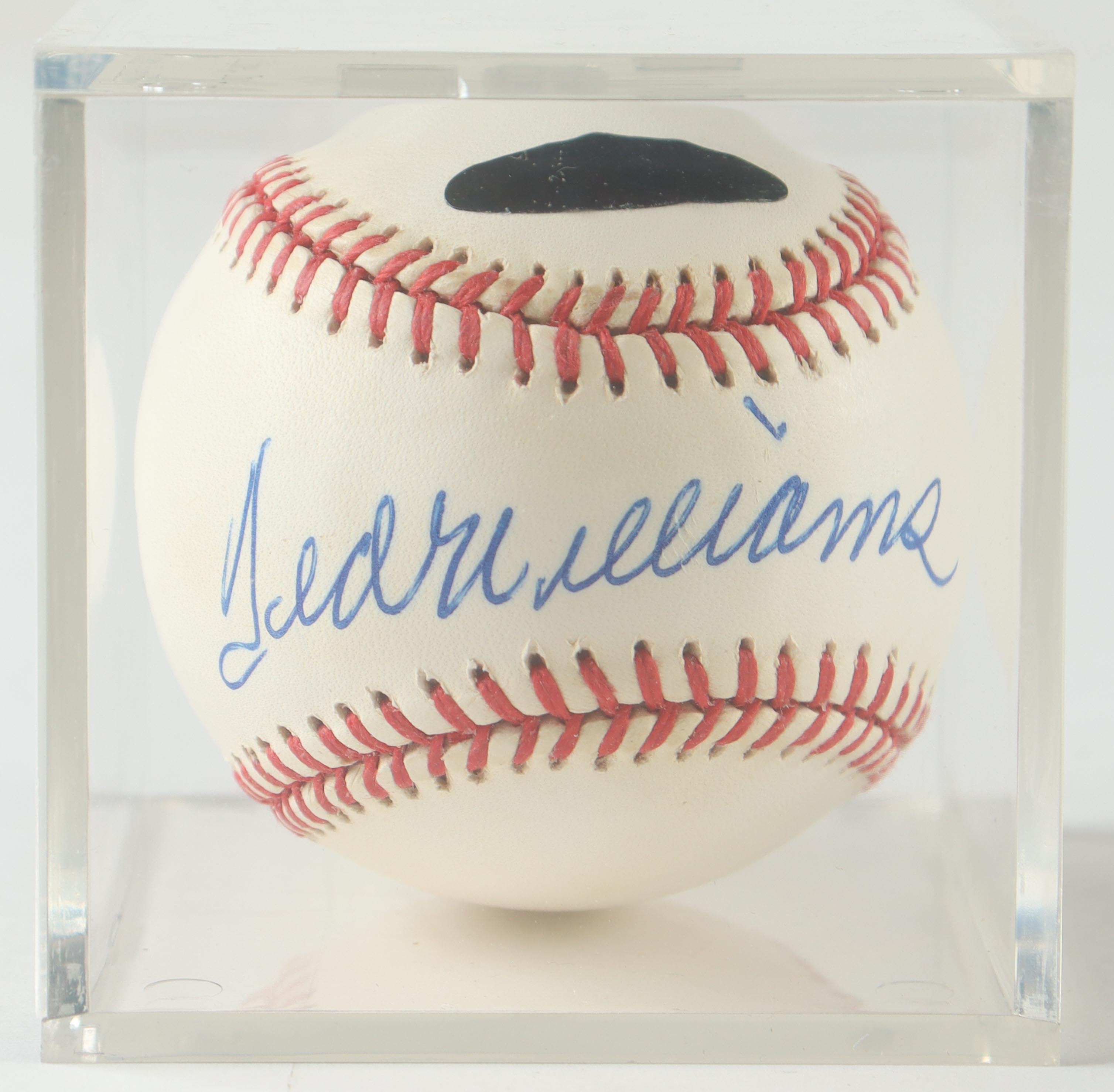
- Beckett Authentication Services (BAS): Known for rigorous technical standards and high-quality "slabbing" (encasing the ball in a protective UV-resistant plastic cube).
If your ball has a "Green Diamond" hologram or an Upper Deck Authenticated (UDA) sticker, it carries a premium. Williams had a personal business relationship with Green Diamond (run by his son, John Henry Williams), making these items the most "official" sources of his autograph.
2. The Type of Baseball
The "canvas" matters as much as the ink.
- Official American League (OAL): Since Williams played his entire career with the Boston Red Sox, his signature is most desirable on an OAL baseball, specifically those from the Bobby Brown or Gene Budig eras.
- Official Major League (OML): These are standard post-2000 baseballs. They are acceptable but often seen as "hobby" balls rather than "period-correct" items.
- Souvenir/Synthetic Baseballs: If the ball is made of synthetic leather or is a "China-made" souvenir ball, the value can drop by 50% or more. The ink often "bleeds" into synthetic fibers over time, ruining the signature's clarity.
3. Condition and Grading
Most professional authenticators now offer a dual grading service: one grade for the signature (1–10) and one grade for the ball itself (1–10).
- The Signature: A "10" is a bold, dark blue or black ink signature with no skips, fading, or smudges.
- The Ball: A "10" is a snowy white ball with no "toning" (yellowing), "foxing" (brown spots), or scuffs. A "high-grade" ball (8 or higher for both) will frequently sell for double the price of an average-grade ball.
4. Placement and Inscriptions
The most valuable signatures are located on the "Sweet Spot"—the narrow area between the seams where they are closest together. If Williams signed on a "side panel," the value decreases. Furthermore, inscriptions add historical weight. Common inscriptions include:
- "The Splendid Splinter"
- ".406"
- "1966 HOF" (Hall of Fame)
- "MVP 46, 49"
2026 Estimated Pricing Table
The following table reflects current market trends for Ted Williams autographed baseballs based on condition and authentication status.
| Item Description | Authentication | Estimated Value (2026) |
|---|---|---|
| Low-Grade Single-Signed (Faded ink, toned ball) | Generic/Unknown | $200 - $350 |
| Average Single-Signed (OAL Ball, Clear Signature) | JSA / PSA / BAS | $500 - $750 |
| High-Grade Single-Signed (White Ball, Bold Ink) | PSA 8 or Higher | $1,200 - $1,800 |
| Upper Deck Authenticated (UDA) (With Box/Paperwork) | UDA / Green Diamond | $850 - $1,300 |
| Inscribed Ball (e.g., ".406" or "1966 HOF") | PSA / JSA / BAS | $1,500 - $2,500 |
| Multi-Signed (With Joe DiMaggio or Mickey Mantle) | JSA / PSA / BAS | $2,000 - $5,500 |
| Museum Quality (PSA 10 Gem Mint) | PSA / DNA | $5,000+ |
The Difference Between Single-Signed and Multi-Signed Baseballs
Collectors often wonder if a ball signed by Ted Williams and other players is worth more than a ball signed only by Williams. In the world of high-end memorabilia, the "Single-Signed" ball is usually the most sought after. A single-signed Ted Williams ball is a clean, focused tribute to his career.
However, "Theme Balls" can exceed the value of single-signed items. A ball signed by Williams and Joe DiMaggio is a classic "rivalry" piece that consistently fetches over $2,000. A "500 Home Run Club" ball featuring Williams alongside Willie Mays, Mickey Mantle, and Hank Aaron can reach $5,000 to $10,000 depending on the number of signatures and their clarity.
Conversely, if a Ted Williams signature is on a ball with several "common" players or unrelated teammates, it may actually be worth less than a single-signed ball, as collectors find the extra signatures distracting.
Authentication: Why "Letter of Authenticity" Matters
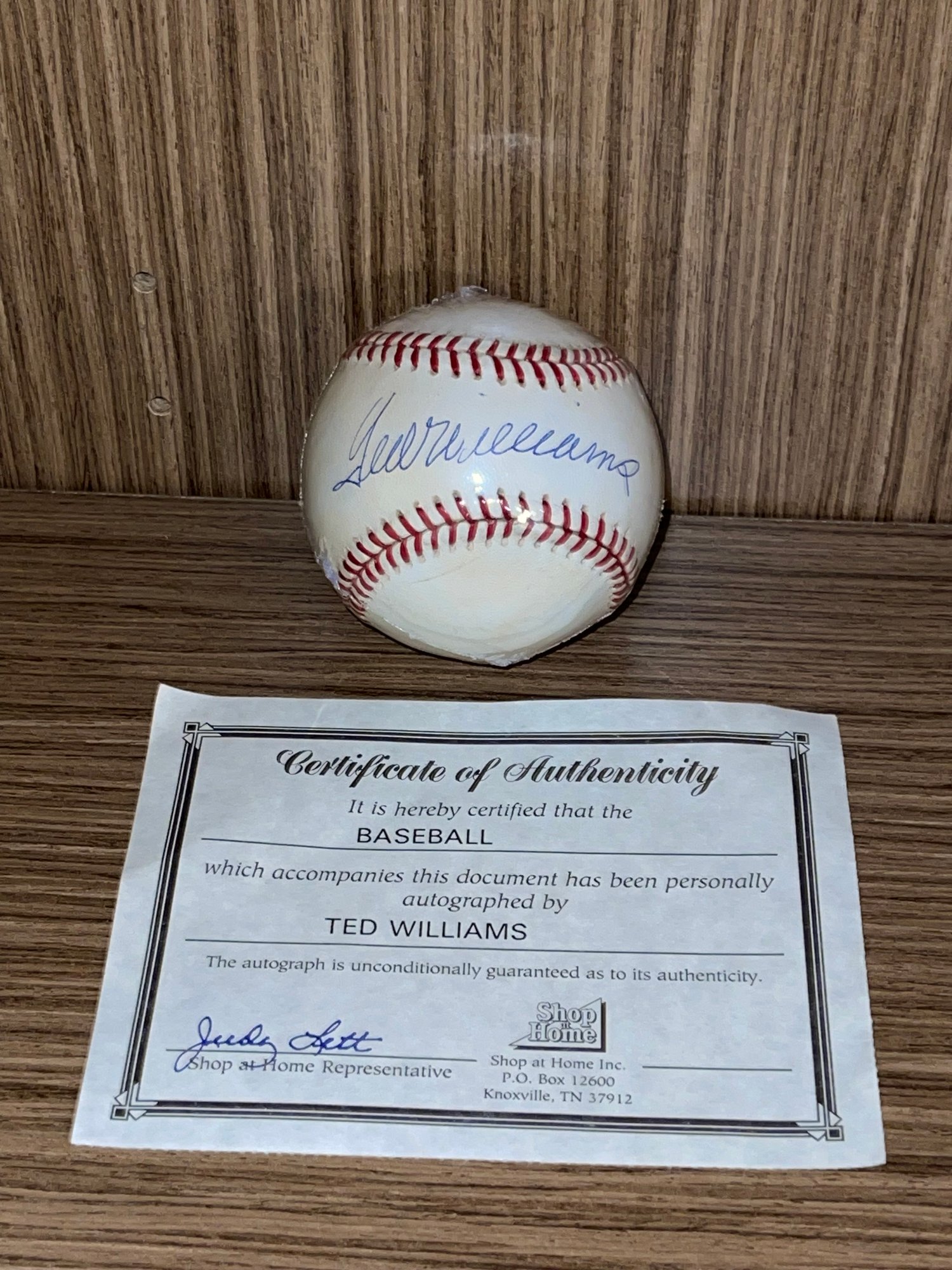
When dealing with items valued over $500, a simple "Certificate of Authenticity" (a small 3x5 card) is often insufficient for high-value auctions. Serious buyers in 2026 look for a Full Letter of Authenticity (LOA).
An LOA includes a high-resolution photograph of the ball, a detailed description of the signature's characteristics, and a unique serial number that can be verified in a digital database. If you are selling a Ted Williams ball, investing $100–$150 to upgrade from a COA to a full LOA from PSA/DNA or JSA can often result in a $300–$500 increase in the final sale price.
Tips for Buying and Selling in the 2026 Market
If you are looking to acquire or liquidate a Ted Williams signed baseball, follow these expert guidelines to ensure you receive fair market value:
- Check for "Secretarial" Signatures: In his later years, particularly when he was in failing health, some items were signed by others on his behalf. Top-tier authenticators are adept at spotting these, which is why professional verification is non-negotiable.
- Beware of "Enhanced" Signatures: Sometimes owners try to "trace" over a fading signature with a fresh pen to make it look better. This completely destroys the value of the item, rendering it worthless to collectors.
- Storage is Value: UV light is the enemy of an autograph. If you own a ball, store it in a UV-protected glass or acrylic cube. Avoid "gold-colored" ink signatures, as they are prone to flaking and fading faster than traditional blue ink.
- The "Sweet Spot" Rule: Always verify that the signature is on the sweet spot. If it is on a side panel, you should expect to pay (or receive) at least 20% less than the standard market rate.
How to Store and Preserve Your Investment
The value of sports memorabilia is tied directly to its physical preservation. A Ted Williams ball that is "Snowy White" today can turn yellow and lose 40% of its value in five years if stored incorrectly.
- Avoid Direct Sunlight: Never display a signed baseball in a room with significant natural light. Even UV-protected cases cannot block 100% of the harmful rays over long periods.
- Control Humidity: Leather is organic. High humidity can lead to mold or "toning," while ultra-low humidity can cause the leather to crack. Aim for a stable 40-50% humidity level.
- O-Ring Caution: If using a plastic display cube, ensure the ball is resting on a neutral, acid-free stand. Some cheap plastic rings can "burn" a circle into the leather over several years.
Frequently Asked Questions
Does a personalized inscription like "To Bill" hurt the value? Yes, generally. Personalizations usually reduce the value by 15% to 25%. Most collectors want a "clean" signature. However, if the personalization is to a famous figure or a teammate, it could actually increase the value.
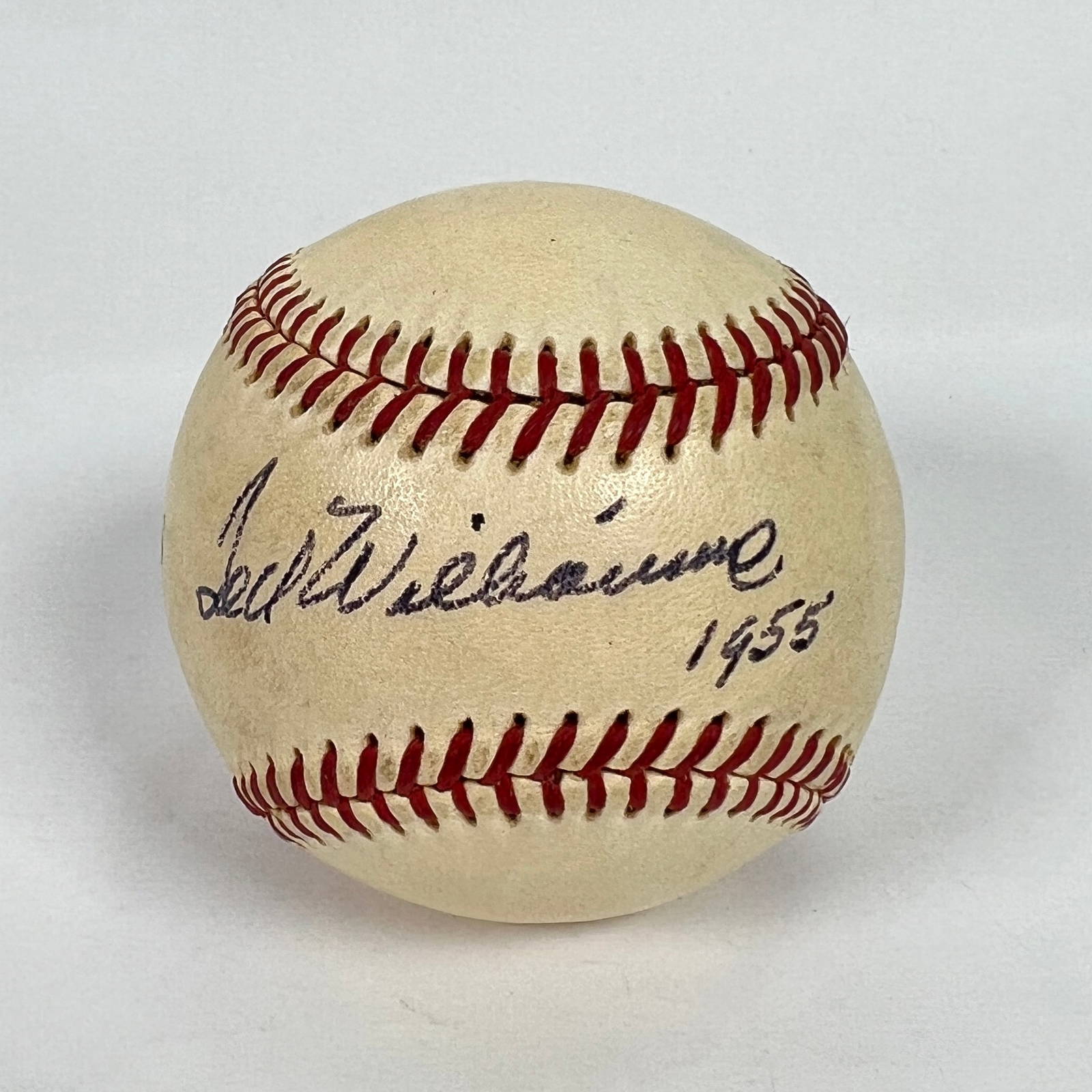
Is a Ted Williams ball from his playing days worth more? Signatures from his actual playing career (1939–1960) are significantly rarer than his retirement signatures. A ball verified to have been signed during his Triple Crown years or his .406 season can easily exceed $10,000, provided the provenance is impeccable.
What ink color is best for a Ted Williams signature? Blue ballpoint pen is the industry preferred standard. It tends to hold its color better over decades compared to black ink, which can sometimes turn greenish or fade into the leather. Sharpie or felt-tip signatures from his later years are common but often sell for slightly less than classic ballpoint signatures.
Are "Green Diamond" baseballs the most reliable? Yes. Because Green Diamond was the Williams family's own memorabilia company, these items have a direct line of custody. In 2026, a Green Diamond hologram is considered as good as, if not better than, a third-party LOA for many Red Sox specialists.
Final Recommendation
If you are holding a Ted Williams autographed baseball and are unsure of its value, your first step should be to compare it against the "Big Three" authentication databases. If it is unauthenticated, send it to PSA/DNA or JSA immediately. The cost of authentication is a minor investment compared to the hundreds of dollars in "added value" that a formal certification provides. For those looking to buy, 2026 is an excellent time to acquire a "mid-grade" Williams ball; with the supply of high-quality vintage signatures slowly being tucked away into permanent private collections, these assets are likely to maintain their prestige for decades to come.
Image Gallery