Arnold Schwarzenegger's Governorship of California: A Political Legacy Analysis
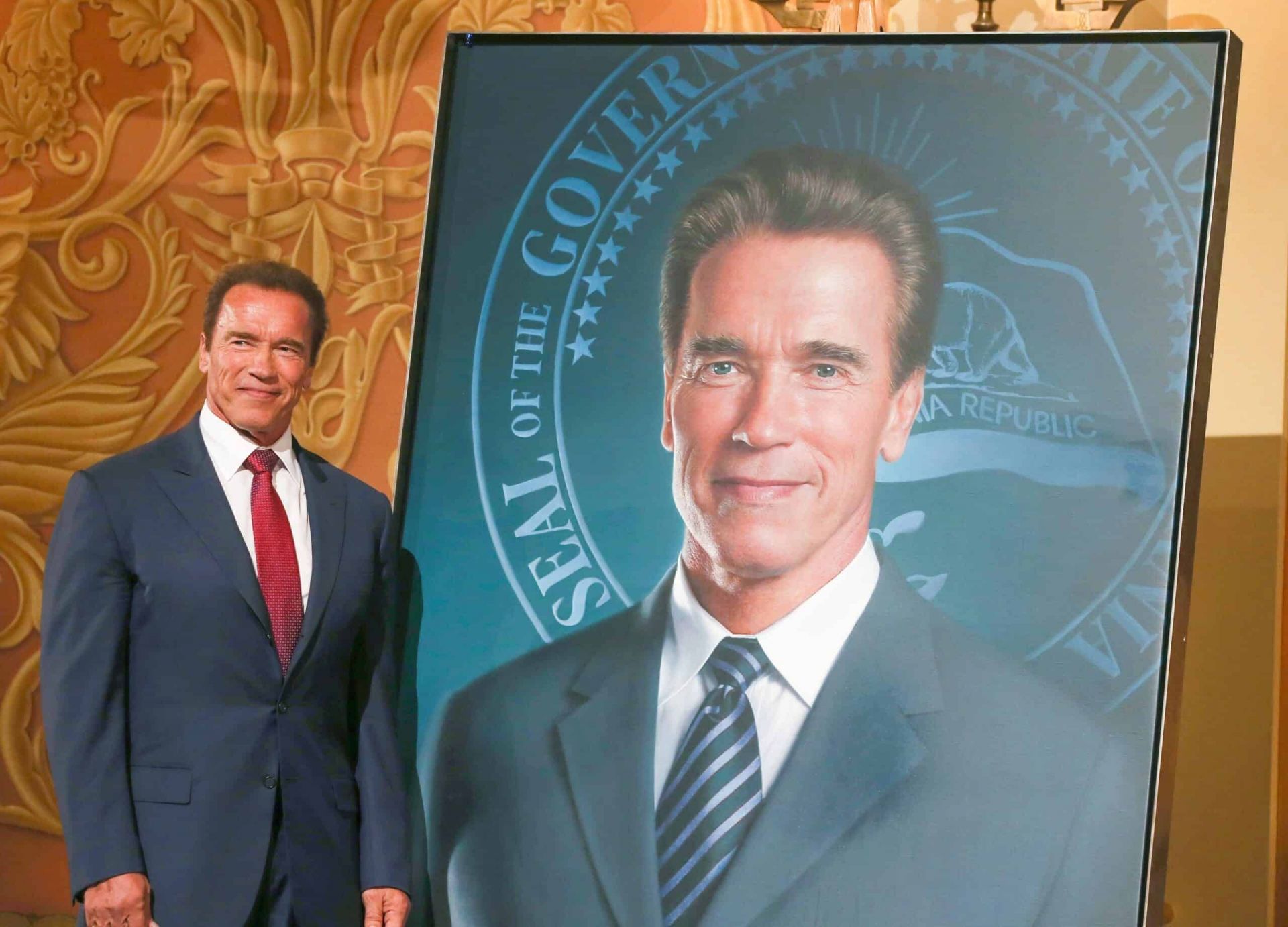
Arnold Schwarzenegger served as the 38th governor of California from 2003 to 2011, entering office through a historic recall election. His tenure was defined by a shift from "action hero" populism to centrist reform, marked by landmark...
Arnold Schwarzenegger served as the 38th governor of California from 2003 to 2011, entering office through a historic recall election. His tenure was defined by a shift from "action hero" populism to centrist reform, marked by landmark environmental legislation, significant structural changes to the state's election system, and complex fiscal struggles during the Great Recession.
Contents
The Road to Sacramento: The 2003 Recall Election
The governorship of Arnold Schwarzenegger began under extraordinary circumstances. In 2003, California was grappling with a massive budget deficit, a lingering energy crisis characterized by rolling blackouts, and widespread dissatisfaction with incumbent Governor Gray Davis. This climate birthed the first successful recall of a California governor in history.
Schwarzenegger, running as a moderate Republican, leveraged his global celebrity to bypass traditional political machinery. His campaign, "Join Arnold," focused on "cleaning house" in Sacramento and ending the influence of special interests. On October 7, 2003, voters removed Davis and selected Schwarzenegger from a crowded field of 135 candidates. He received approximately 48.6% of the vote in the replacement contest, a decisive mandate that bypassed the typical partisan primary process.
His early months were characterized by a "superstar" aura. He successfully negotiated a massive bond measure (Proposition 57) to consolidate state debt and reached a deal with tribal casinos to increase state revenue. This period, often called the "honeymoon phase," saw Schwarzenegger using his physical presence and charisma to bully or charm the legislature into cooperation, famously referring to Democratic lawmakers who opposed his budget as "girly men."
The 2005 Special Election and the "Post-Partisan" Pivot
By 2005, the initial momentum had stalled. Schwarzenegger attempted to circumvent the Democratic-controlled legislature by calling a Special Election to pass a suite of initiatives. These included proposals for teacher tenure reform, state spending caps, and redistricting reform.
The campaign was a political disaster for the governor. Labor unions, particularly teachers and nurses, launched a massive counter-offensive, spending tens of millions to frame the initiatives as an attack on public workers. All four of Schwarzenegger's ballot measures were defeated. His approval ratings plummeted, and many political analysts predicted he would be a one-term governor.
However, the 2005 defeat triggered a significant ideological shift. Schwarzenegger moved toward the center, hiring Susan Kennedy, a former aide to Gray Davis and a prominent Democrat, as his Chief of Staff. This "post-partisan" approach allowed him to work across the aisle, setting the stage for his most significant legislative achievements and ensuring his landslide re-election in 2006 against Phil Angelides.
Environmental Stewardship: The Global Warming Solutions Act
Perhaps the most enduring aspect of Arnold Schwarzenegger's governorship of California is his leadership on climate change. In 2006, he signed Assembly Bill 32 (AB 32), the Global Warming Solutions Act. This landmark legislation made California a global leader in environmental policy by mandating a reduction in greenhouse gas emissions to 1990 levels by the year 2020.
Schwarzenegger’s environmental policy was built on several key pillars:
- The Hydrogen Highway: An ambitious plan to create a network of hydrogen fueling stations to support zero-emission vehicles.
- Million Solar Roofs: An initiative (SB 1) aimed at installing 3,000 megawatts of new solar energy capacity on homes and businesses.
- Low Carbon Fuel Standard: An executive order requiring a reduction in the carbon intensity of transportation fuels.
By framing environmentalism as an economic opportunity—what he called "green-tech"—Schwarzenegger successfully decoupled economic growth from carbon emissions. This approach allowed California to attract significant venture capital in the renewable energy sector, even as the federal government remained largely inactive on climate policy during that era.
The Fiscal Challenge: The Great Recession and the "Wall of Debt"
While his environmental record was celebrated, Schwarzenegger’s fiscal management remains a subject of intense debate. He entered office promising to "tear up the credit cards," yet he struggled to balance the budget without systemic borrowing.
The Great Recession of 2008 hit California particularly hard. The state’s heavy reliance on capital gains taxes from high-income earners meant that when the stock and housing markets crashed, state revenues evaporated. By 2009, California faced a $40 billion budget gap. The governor was forced to oversee deep cuts to social services, higher education, and infrastructure.
The fiscal legacy of this era includes:
- Furlough Fridays: To save money, Schwarzenegger ordered tens of thousands of state employees to take unpaid days off, leading to significant legal battles and labor friction.
- Budget Impasses: Several years saw the state budget delayed for months, forcing the state to issue IOUs (Registered Warrants) to vendors and taxpayers.
- The "Wall of Debt": Schwarzenegger relied on internal borrowing and accounting maneuvers to bridge gaps, a practice his successor, Jerry Brown, would later spend years dismantling.
Political Reform: Changing the Rules of the Game
Schwarzenegger believed that the hyper-partisanship in Sacramento was a result of the way districts were drawn and how primaries were conducted. He championed two major structural reforms that fundamentally changed California's political landscape:
Independent Redistricting
Before 2008, California legislators drew their own district boundaries, often resulting in "safe" seats that protected incumbents. Schwarzenegger backed Proposition 11 (2008), which stripped the legislature of this power and handed it to the California Citizens Redistricting Commission. This move was intended to create more competitive districts and reduce ideological extremism.
The "Top-Two" Primary System
In 2010, Schwarzenegger supported Proposition 14, which replaced partisan primaries with a single "Top-Two" ballot. Under this system, the two candidates receiving the most votes in the primary advance to the general election, regardless of party affiliation. This was designed to encourage candidates to appeal to moderate and independent voters rather than just their party's base.
| Reform Initiative | Year Passed | Primary Goal | Long-term Impact |
|---|---|---|---|
| Proposition 11 | 2008 | Eliminate Gerrymandering | Created more competitive legislative districts. |
| Proposition 14 | 2010 | "Top-Two" Primary | Increased the number of moderate representatives. |
| Proposition 57 | 2004 | Debt Consolidation | Allowed for $15 billion in "Economic Recovery Bonds." |
| Proposition 1A | 2008 | High-Speed Rail | Authorized $9.95 billion for the rail project. |
Infrastructure and Public Works: The Strategic Growth Plan
Schwarzenegger often spoke of his desire to build for the future, much like his predecessor Pat Brown. In 2006, he successfully lobbied for a massive bond package—the Strategic Growth Plan—which authorized tens of billions of dollars for transportation, housing, and levee repairs.
He was also a vocal proponent of the California High-Speed Rail project, arguing that a modern state required a modern transit system to reduce highway congestion and carbon emissions. While the project has faced significant delays and cost overruns in the years since, Schwarzenegger’s advocacy was instrumental in securing the initial voter approval and federal funding necessary to begin construction.
Prison Reform and Judicial Challenges
During his tenure, California’s prison system reached a breaking point. Overcrowding was so severe that federal courts eventually intervened, ruling that the lack of adequate medical and mental health care constituted "cruel and unusual punishment."
The case of Plate v. Schwarzenegger (later Brown v. Plata) forced the administration to address the fact that prisons were at nearly 200% capacity. Schwarzenegger attempted to solve this through "realignment"—shifting non-violent offenders from state prisons to county jails—and by building new facilities. However, the crisis remained largely unresolved when he left office, leaving a significant legal and financial burden for the next administration.
Looking Back from 2026: The Legacy of the "Governator"
As we evaluate Arnold Schwarzenegger’s governorship of California from the vantage point of 2026, his impact appears more nuanced than the tabloid headlines of the early 2000s suggested. He did not "fix" Sacramento's fiscal problems; in fact, the state's credit rating was among the lowest in the nation when he departed in 2011.
However, his environmental policies provided the blueprint for current global climate action. The "California Model" proved that a sub-national government could set standards that influence international markets. Furthermore, his political reforms have largely succeeded in reducing the number of extremist candidates in the state legislature, moving California toward a more functional, albeit still complex, governance model.
Schwarzenegger's transition from a celebrity outsider to a policy-oriented executive serves as a case study in the evolution of American leadership. While he struggled with the grueling realities of the state budget, his ability to use the "bully pulpit" to advance long-term environmental and structural goals remains his most significant contribution to the state.
Frequently Asked Questions
Was Arnold Schwarzenegger a successful governor?
Success is subjective and depends on the metrics used. Fiscally, his tenure was difficult due to the 2008 recession and continued borrowing. However, in terms of policy innovation, particularly regarding the environment and political reform, he is often cited as one of California's most consequential governors.
What was Schwarzenegger's political party?
Arnold Schwarzenegger was a Republican. However, his "post-partisan" approach after 2005 often put him at odds with the conservative wing of his party, particularly on issues of climate change, healthcare, and tax increases.
Did Schwarzenegger really improve California's environment?
Yes, his signing of AB 32 in 2006 established California as a global leader in carbon reduction. His policies led to a significant increase in renewable energy production and set the stage for the state's current goal of carbon neutrality.
Why was he called "The Governator"?
The nickname is a portmanteau of "Governor" and "The Terminator," his most famous film role. It was used throughout his campaign and tenure to describe his larger-than-life persona and his attempt to bring "action" to the legislative process.
What was the result of the 2003 recall?
The recall was successful. Governor Gray Davis was removed from office, and Arnold Schwarzenegger won the replacement election with nearly 49% of the vote, defeating his closest rival, Cruz Bustamante.
Practical Recommendation for Researchers
For those studying Arnold Schwarzenegger's governorship of California, it is essential to look beyond his public speeches and examine the Executive Orders and Legislative Blue Books from the 2003–2011 period. These documents reveal the granular details of his "Realignment" plans and the technical underpinnings of AB 32. Researchers should also consult the California Secretary of State's archives for a full breakdown of the 2005 Special Election results, which serve as the primary turning point in his political evolution.
Image Gallery