Does Ice Have Thermal Energy? Understanding Molecular Heat in Solids
Yes, ice possesses thermal energy. While we perceive ice as cold, its molecules are in a constant state of vibration. Thermal energy is the total kinetic energy of particles within a substance; since ice exists at temperatures above ab...
Yes, ice possesses thermal energy. While we perceive ice as cold, its molecules are in a constant state of vibration. Thermal energy is the total kinetic energy of particles within a substance; since ice exists at temperatures above absolute zero, its atoms maintain motion and, therefore, energy that can be measured and transferred.
Contents
Defining Thermal Energy in the Context of Matter
To understand why ice has thermal energy, we must first define what thermal energy actually represents in the realm of physics and thermodynamics. In 2026, our understanding of molecular dynamics remains rooted in the Kinetic Molecular Theory, which states that all matter is composed of particles that are in constant, random motion.
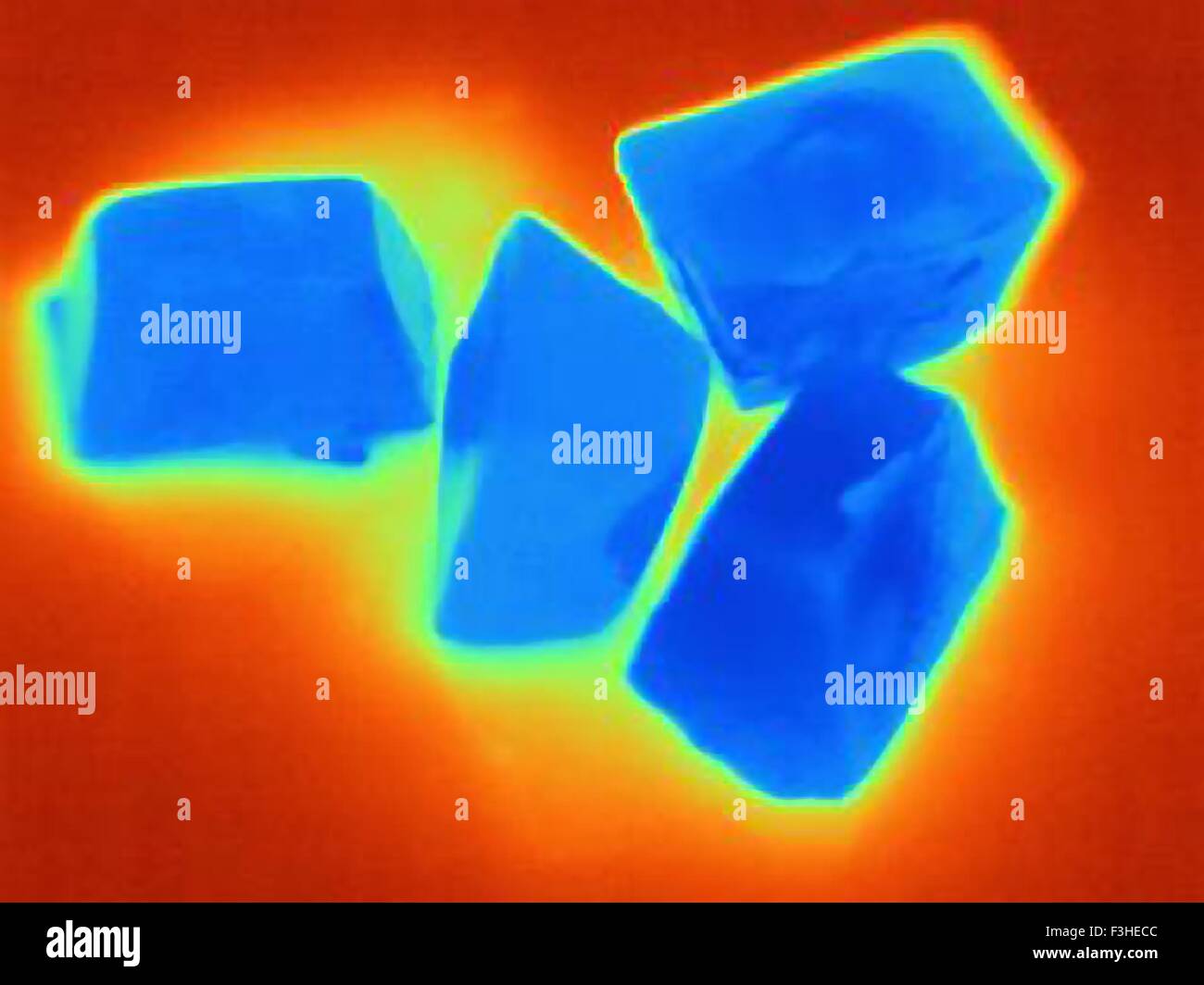
Thermal energy is the internal energy of an object due to the kinetic energy of its atoms and molecules. When you touch a piece of ice, it feels cold because heat (the transfer of thermal energy) is moving from your relatively warm hand into the ice. However, the ice itself is not "energy-free." If you were to look at ice under a hypothetical microscope capable of seeing molecular vibrations, you would see water molecules ($H_2O$) jiggling and oscillating within a rigid crystal lattice.
The total thermal energy of a block of ice depends on three primary factors: its mass, its temperature, and its specific heat capacity. A large iceberg at $-10^\circ\text{C}$ actually contains significantly more total thermal energy than a cup of boiling water, simply because the iceberg has vastly more molecules in motion, even if those molecules are moving more slowly on average.
The Role of Absolute Zero
The most common misconception about thermal energy is the belief that "cold" is a substance or a state of zero energy. In science, cold is merely the absence of heat, but total absence only occurs at absolute zero.
Absolute zero is defined as $0$ Kelvin ($-273.15^\circ\text{C}$ or $-459.67^\circ\text{F}$). At this theoretical temperature, all molecular motion would cease, and the thermal energy of a system would be zero. However, under the laws of quantum mechanics—specifically the Heisenberg Uncertainty Principle—even at absolute zero, particles retain a "zero-point energy."
Since most ice we encounter on Earth exists between $-20^\circ\text{C}$ and $0^\circ\text{C}$, it is several hundred degrees warmer than absolute zero. Consequently, ice is brimming with thermal energy relative to the coldest possible state of the universe. This energy is stored in the vibrational modes of the hydrogen-bonded lattice that gives ice its solid structure.
Temperature vs. Thermal Energy: Key Differences
It is easy to conflate temperature with thermal energy, but they describe different physical properties. Distinguishing between them is essential for understanding how ice functions as a thermal reservoir.
- Temperature: This is a measure of the average kinetic energy of the particles in a substance. It does not depend on how much of the substance you have. A single ice cube and a glacier can be at the same temperature.
- Thermal Energy: This is the total internal energy of all particles in a substance. It is an extensive property, meaning it increases as the mass of the object increases.
Imagine two containers: one holding a single gram of ice at $-1^\circ\text{C}$ and another holding a ton of ice at $-1^\circ\text{C}$. Both have the same temperature, but the ton of ice has a much higher thermal energy because it contains more moving particles. This distinction explains why large bodies of ice can influence global climate patterns; they represent massive "heat sinks" that can absorb or release enormous amounts of energy.
The Molecular Structure of Ice and Energy Storage
Ice is a unique solid because of the way water molecules interact. When water freezes, the molecules arrange themselves into a hexagonal lattice held together by hydrogen bonds. These bonds are strong enough to keep the water in a solid state but flexible enough to allow for vibration.
Within this lattice, molecules can undergo several types of motion that contribute to their thermal energy:
- Vibrational Motion: Molecules oscillate back and forth around a fixed point in the lattice.
- Rotational Motion: While restricted in a solid, molecules can still experience "hindered rotations" or librations.
- Translational Motion: This is largely absent in solids compared to liquids and gases, but atomic-level shifts still occur.
As you add thermal energy to ice (by heating it), these vibrations become more violent. Eventually, the vibrations become energetic enough to overcome the hydrogen bonds holding the lattice together, leading to a phase change: melting.
Phase Changes and Latent Heat of Fusion
One of the most fascinating aspects of thermal energy in ice occurs during the transition from solid to liquid. If you apply heat to a block of ice at $0^\circ\text{C}$, the temperature of the ice will not rise until every last bit of it has melted.
Where does that energy go? It becomes latent heat of fusion. This is the energy required to change the state of a substance without changing its temperature. For ice, this value is remarkably high—approximately $334\text{ Joules}$ of energy are required to melt just one gram of ice.
During this process, the thermal energy being added is used exclusively to break the hydrogen bonds of the crystal lattice. This is why ice is so effective at keeping drinks cold; it doesn't just "share" its coldness, it actively absorbs a massive amount of thermal energy from the liquid to facilitate its own phase change.
Comparing States of Water: Thermal Energy and Density
The following table illustrates the differences in thermal energy characteristics between the three common states of water at standard atmospheric pressure.
| Property | Ice (at $0^\circ\text{C}$) | Liquid Water (at $20^\circ\text{C}$) | Water Vapor (at $100^\circ\text{C}$) |
|---|---|---|---|
| Molecular Motion | Vibrational (Fixed) | Translational & Rotational | High-velocity Random Motion |
| Relative Thermal Energy | Lowest | Moderate | Highest |
| Specific Heat Capacity | $2.09\text{ J/g}^\circ\text{C}$ | $4.18\text{ J/g}^\circ\text{C}$ | $1.99\text{ J/g}^\circ\text{C}$ |
| Density | $\approx 917\text{ kg/m}^3$ | $\approx 998\text{ kg/m}^3$ | $\approx 0.6\text{ kg/m}^3$ |
| Primary Energy Use | Maintaining Lattice | Particle Collisions | Rapid Translation/Expansion |
Notice that the specific heat capacity of ice is about half that of liquid water. This means it takes less energy to raise the temperature of ice by $1^\circ\text{C}$ than it does to raise the temperature of liquid water by the same amount.
Real-World Implications of Thermal Energy in Ice
Understanding that ice contains and interacts with thermal energy is not just a laboratory exercise; it has profound implications for Earth science and technology in 2026.
Glaciology and Climate Change
Glaciers and polar ice caps act as the Earth's "thermostat." Because ice has high thermal energy requirements for melting (latent heat), it absorbs significant solar radiation that would otherwise heat the atmosphere or the oceans. However, as global temperatures rise, the thermal energy balance shifts. When ice melts into the ocean, the resulting liquid water has a lower albedo (reflectivity), meaning it absorbs even more thermal energy, creating a feedback loop that accelerates warming.
Industrial Refrigeration
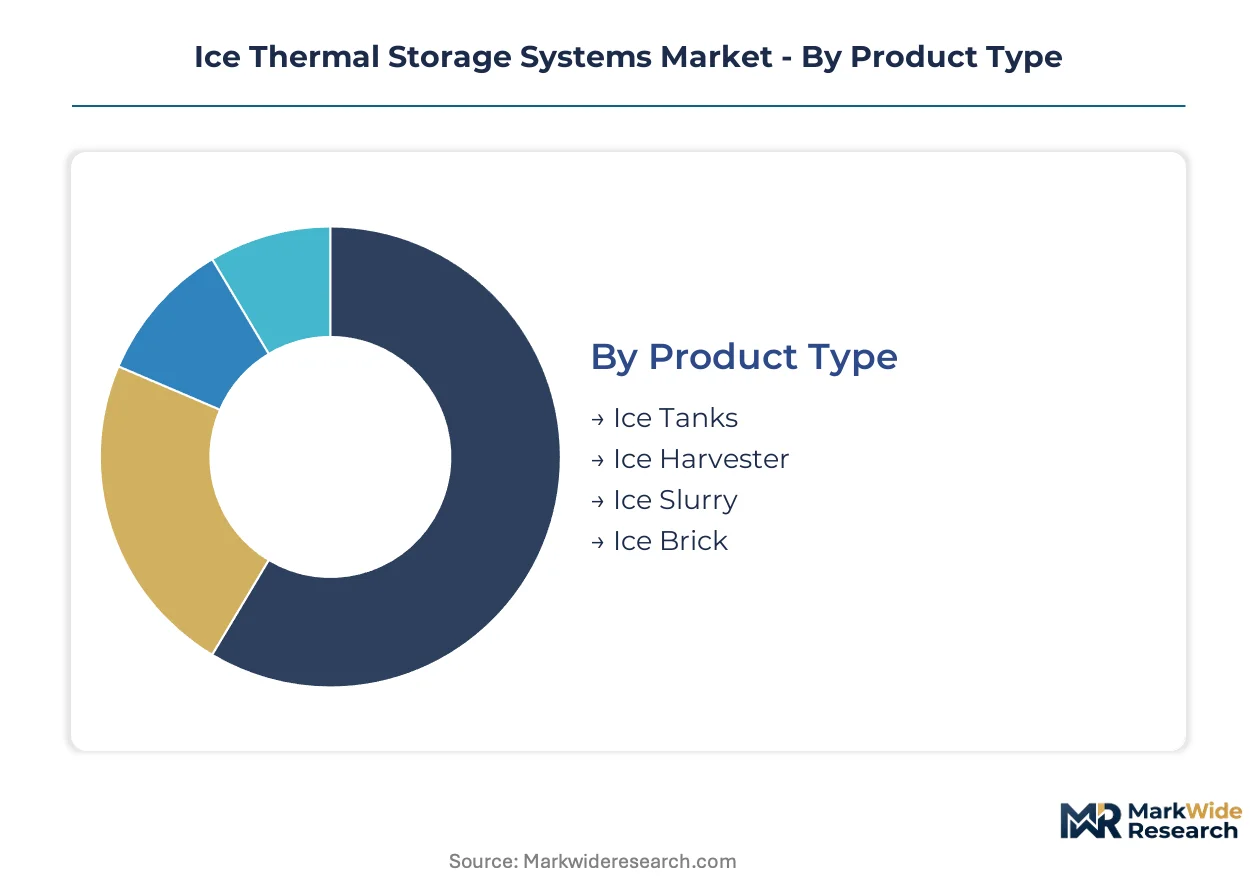
In industrial settings, ice is used as a medium for thermal energy storage (TES). Some 2026 "green" buildings use "ice storage air conditioning." These systems use electricity during off-peak night hours to freeze large tanks of water. During the day, the thermal energy from the building is pumped into the ice tanks to melt the ice, cooling the building without taxing the power grid during peak hours. This process relies entirely on the principle of ice absorbing thermal energy during its phase change.
Space Exploration
NASA and other space agencies, such as the European Space Agency (ESA), study the thermal energy of ice on moons like Europa and Enceladus. By measuring the temperature and "jiggling" of surface ice, scientists can estimate the amount of thermal energy being generated by tidal forces from the parent planet. This energy is what keeps subsurface oceans liquid, potentially providing a habitat for life.
Common Myths About Ice and Energy
There are several persistent myths regarding ice and heat that often confuse students and enthusiasts:
- Myth: Ice cannot radiate heat.
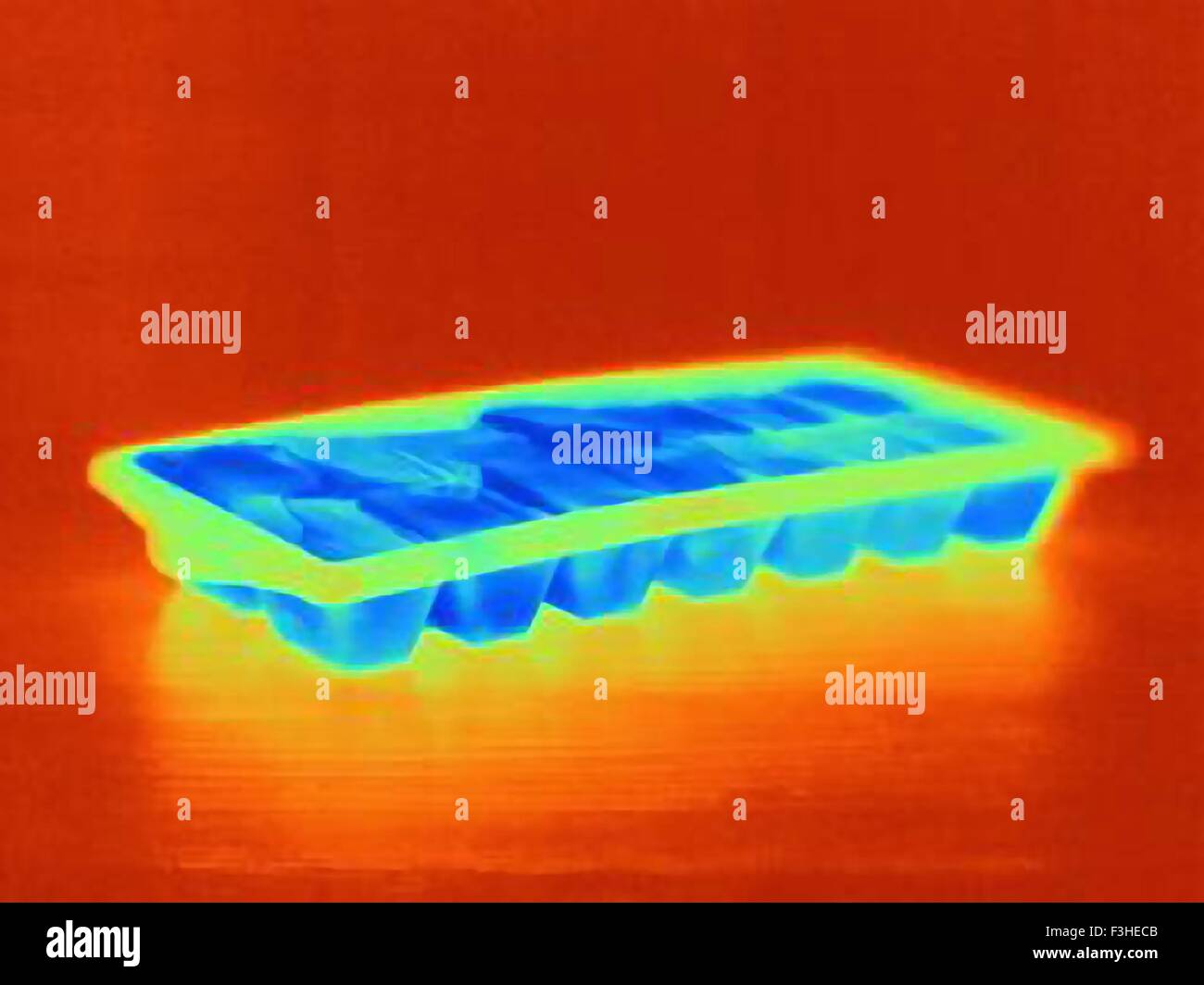
- Fact: All objects with a temperature above absolute zero emit infrared radiation. Ice radiates energy constantly, though at a lower frequency and intensity than a warm stove.
- Myth: Adding heat to ice always makes it warmer.
- Fact: As discussed with latent heat, adding heat to ice at its melting point ($0^\circ\text{C}$) changes its state, not its temperature.
- Myth: Cold is the opposite of energy.
- Fact: Cold is a relative term. In physics, there is only "energy" and "less energy."
Frequently Asked Questions
Does ice have more thermal energy than liquid water?
Generally, no. At the same mass, liquid water has more thermal energy than ice because water molecules move more freely (translational motion) and have already absorbed the latent heat of fusion required to break the solid bonds. However, a massive block of ice can have more total thermal energy than a small amount of water if the mass difference is large enough.
Can you measure the thermal energy of ice?
You cannot measure total thermal energy directly with a single tool, but you can calculate it. By knowing the mass of the ice, its temperature relative to absolute zero, and its specific heat capacity, you can use the formula $Q = mc\Delta T$ (for temperature changes) and add the internal energy at the starting point to determine the energy content.
What happens to the thermal energy when ice melts?
When ice melts, it absorbs thermal energy from its surroundings. This energy is used to increase the potential energy of the molecules by breaking the hydrogen bonds of the crystal lattice. Once the ice becomes liquid, the energy continues to increase the kinetic energy (temperature) of the molecules.
Why does ice feel "colder" than cold air at the same temperature?
This is due to thermal conductivity. Ice is a much better conductor of heat than air. When you touch ice, it strips thermal energy away from your skin much faster than air does, leading your nervous system to perceive it as significantly colder, even if both are at $0^\circ\text{C}$.
Does the type of ice affect its thermal energy?
Yes. There are at least 19 known crystalline phases of ice (such as Ice II, Ice III, etc.) that form under different pressures and temperatures. Each phase has a different molecular arrangement, which affects how it stores and transfers thermal energy. On Earth, we almost exclusively encounter "Ice Ih."
Practical Recommendation for Further Learning
To truly grasp the concept of thermal energy in solids, it is helpful to experiment with the Method of Mixtures. By placing a known mass of ice at a known temperature into a known mass of warm water, you can observe the final equilibrium temperature. Using the laws of thermodynamics, you can calculate exactly how much thermal energy was transferred. This practical application bridges the gap between abstract physics and the physical reality of the world around us. For those interested in the rigorous mathematical foundations of these concepts, the National Institute of Standards and Technology (NIST) provides comprehensive thermophysical property tables for water and ice across all phases.
Image Gallery