How Business Support Systems Are Reshaping Telecom Operations
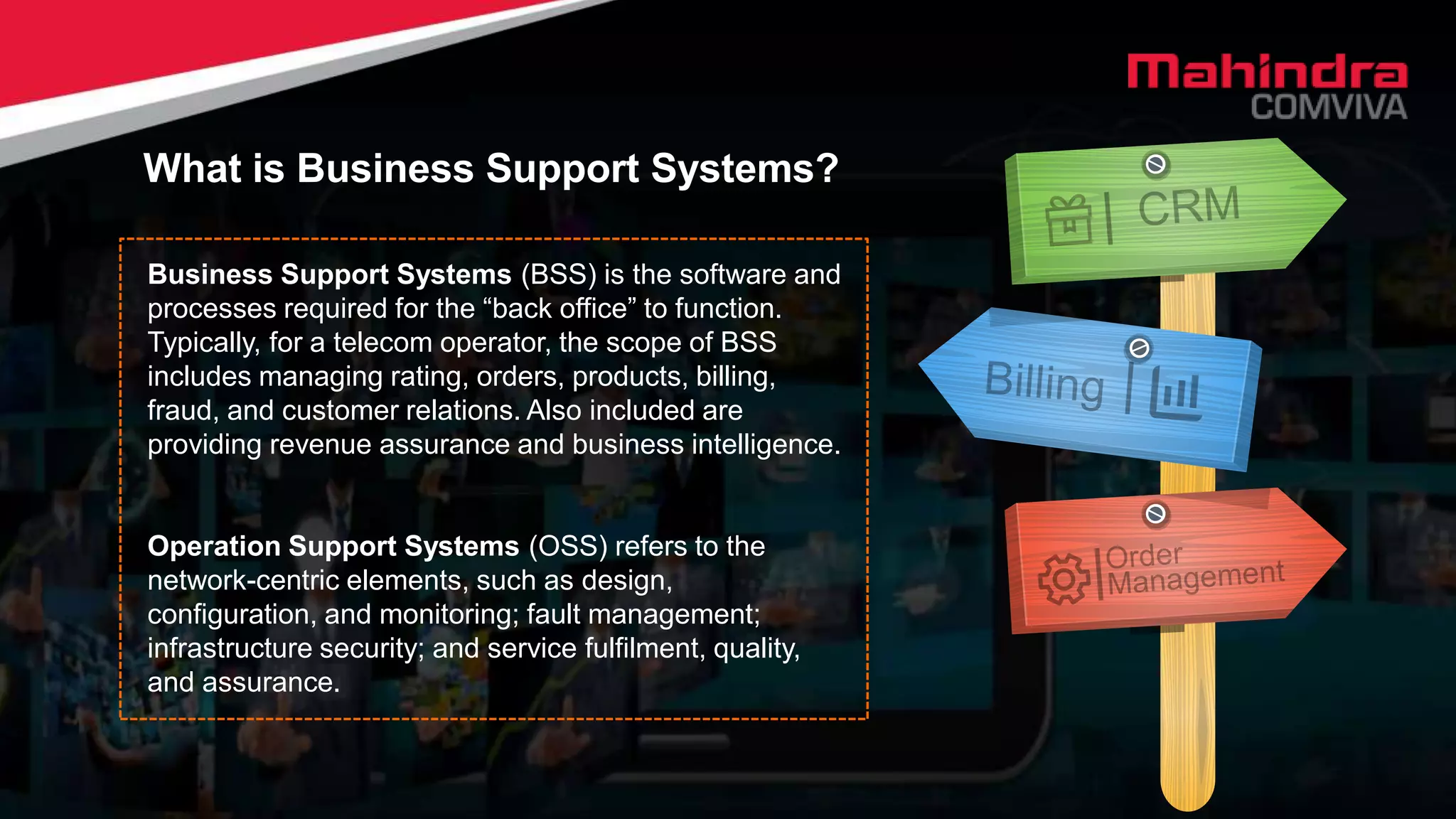
Business Support Systems (BSS) are evolving from static billing tools into agile, cloud-native engines that drive telecom automation. In 2026, modern BSS enable real-time 5G monetization, AI-driven customer experiences, and seamless pa...
Business Support Systems (BSS) are evolving from static billing tools into agile, cloud-native engines that drive telecom automation. In 2026, modern BSS enable real-time 5G monetization, AI-driven customer experiences, and seamless partner ecosystems, allowing operators to transition from connectivity providers to sophisticated digital service enablers with unprecedented operational efficiency.
Contents
The Architectural Shift: From Monolithic to Cloud-Native BSS
For decades, Telecommunications Service Providers (TSPs) relied on monolithic, highly customized Business Support Systems. These legacy frameworks were often siloed, with separate engines for prepaid billing, postpaid billing, and customer relationship management (CRM). This architecture created "data graveyards" where information was difficult to sync, leading to slow time-to-market for new products.
In 2026, the industry has largely migrated toward cloud-native BSS architectures. This shift is characterized by the adoption of microservices, where complex functions are broken down into smaller, independent components that communicate via APIs. According to the TM Forum Open Digital Architecture (ODA), this modularity allows operators to upgrade specific functions—such as a payment gateway or a product catalog—without risking the stability of the entire system.
The benefits of this architectural reshaping include:
- Scalability: Systems can automatically scale resources up or down based on traffic spikes (e.g., during a major sporting event or a holiday sales surge).
- Resilience: If one microservice fails, the entire BSS does not crash, ensuring continuous service for the subscriber.
- Agility: Operators can launch new service plans or promotional offers in hours rather than months, a critical capability in the highly competitive 5G-Advanced market.
Monetizing 5G-Advanced and Network Slicing
One of the most significant ways BSS is reshaping operations is through the complexity of 5G and 5G-Advanced monetization. Unlike 4G, which primarily billed for data volume and voice minutes, 5G introduces variables like latency, reliability, and device density.
Modern BSS platforms now incorporate the Converged Charging Function (CHF). This allows for real-time rating and charging across all types of traffic. As of 2026, network slicing has become a mainstream enterprise offering. BSS is the "brain" that manages the commercial aspect of these slices. For example, a hospital may require a dedicated slice with ultra-low latency for robotic surgery, while a logistics company may need a slice optimized for millions of low-power IoT sensors.
The BSS must handle the dynamic nature of these slices, including:
- On-demand Provisioning: Automating the billing triggers when a slice is activated.
- SLA-Based Charging: Adjusting costs in real-time if the network performance drops below the promised Service Level Agreement (SLA).
- Tiered Quality of Service (QoS): Offering "turbo buttons" or temporary speed boosts that users can purchase directly through an app, requiring immediate BSS synchronization.
AI and Machine Learning: The Intelligence Layer
In 2026, Business Support Systems are no longer just systems of record; they are systems of intelligence. The integration of Artificial Intelligence (AI) and Machine Learning (ML) within the BSS stack has transformed several operational pillars.
Predictive Churn Management
By analyzing vast datasets—including call drop rates, billing disputes, and social media sentiment—AI-enhanced BSS can predict which customers are likely to switch providers. Operations teams now receive proactive alerts, allowing them to offer personalized retention packages automatically before the customer even considers leaving.
Revenue Assurance and Fraud Detection
Legacy revenue assurance was often a reactive process, identifying leakages weeks after they occurred. Modern BSS utilizes ML algorithms to monitor transaction streams in real-time. This allows for the immediate detection of anomalies, such as SIM-box fraud or roaming bypass, saving operators billions in potential lost revenue.
Intent-Based Orchestration
With the rise of Generative AI, BSS interfaces have become more intuitive. CSRs (Customer Service Representatives) or even customers themselves can use natural language to configure complex business rules. For instance, a manager can state, "Increase data limits for all corporate accounts in the manufacturing sector for the next 48 hours," and the BSS autonomously translates this "intent" into the necessary configuration changes across the billing and policy engines.
The Rise of B2B2X and Partner Ecosystems
The traditional linear relationship between a telco and a subscriber is being replaced by a multi-party ecosystem known as B2B2X (Business-to-Business-to-Everything). In this model, the telecom operator acts as a platform, bundling its connectivity with third-party services like cloud gaming, cybersecurity, or streaming media.
Reshaped BSS platforms facilitate this by providing robust Partner Relationship Management (PRM) modules. These modules handle:
- Multi-Party Settlement: Automatically calculating and distributing revenue shares between the telco and its partners (e.g., a gaming studio and a cloud provider).
- Unified Product Catalog: Allowing third-party products to be onboarded and bundled with connectivity in a single, coherent storefront.
- Zero-Touch Onboarding: Providing APIs that allow partners to integrate their services into the telco’s ecosystem without manual intervention from the operator’s IT staff.
This evolution turns the BSS into a marketplace engine, similar to those used by major e-commerce platforms, enabling telcos to capture a larger share of the digital value chain.
Enhancing Customer Experience (CX) Through Hyper-Personalization
The primary goal of modernizing BSS is often to improve the Customer Experience (CX). In the 2026 landscape, customers expect the same level of digital fluency from their mobile provider that they receive from Big Tech firms.
Modern BSS supports a 360-degree customer view, aggregating data from every touchpoint—website visits, retail store interactions, technical support calls, and app usage. This unified profile enables "hyper-personalization." Instead of generic "one-size-fits-all" marketing, the BSS can trigger a specific offer based on a user's behavior. If a subscriber frequently exhausts their data limit while traveling, the system can automatically offer a temporary "Roaming Pro" pass at the exact moment they cross a border.
Furthermore, the "zero-touch" philosophy aims to eliminate friction. Whether it is self-service SIM activation via eSIM or automated dispute resolution for billing errors, the reshaped BSS empowers customers to solve their problems without human intervention, significantly reducing operational overhead for the TSP.
Comparison: Legacy BSS vs. Modern Cloud-Native BSS (2026)
| Feature | Legacy BSS (Pre-2020) | Modern Cloud-Native BSS (2026) |
|---|---|---|
| Architecture | Monolithic / On-premise | Microservices / Cloud-native |
| Deployment Time | 6–18 Months | Days or Weeks |
| Scaling | Vertical (Hardware-dependent) | Horizontal (Auto-scaling containers) |
| Data Handling | Batch processing (Delay) | Real-time streaming data |
| Partner Support | Manual integration | Open APIs (TMF-compliant) |
| Monetization | Volume-based (GB/Minutes) | Value-based (Latency/Slicing/IoT) |
| AI Integration | Bolt-on / Offline analytics | Embedded / Real-time intelligence |
Implementation Challenges and Strategic Considerations
While the benefits are clear, the transition to a modern BSS is fraught with operational challenges. Many operators are still tethered to "zombie" legacy systems that are too risky to shut down but too expensive to maintain.
Data Migration remains the most significant hurdle. Moving decades of customer records, billing history, and complex discount logic into a new cloud environment requires meticulous planning to avoid "bill shock" or service interruptions. TSPs are increasingly adopting a "Greenfield" approach, where they build a new, parallel digital stack for 5G services while slowly migrating 4G customers over time.
Additionally, the shift to cloud-native systems requires a cultural change within the organization. Telecom engineers must adopt DevOps and CI/CD (Continuous Integration/Continuous Deployment) practices, moving away from traditional "waterfall" project management. This cultural shift is often more difficult than the technical migration itself.
FAQ
What is the difference between OSS and BSS in 2026?
Historically, OSS (Operations Support Systems) managed the network hardware, while BSS (Business Support Systems) managed the customer and billing. In 2026, these two are converging. With the rise of Software-Defined Networking (SDN), the BSS now directly triggers network configurations (like provisioning a slice), blurring the lines into what is often called "O-BSS."
How does BSS help with 5G ROI?
5G requires massive capital expenditure. Modern BSS helps achieve a Return on Investment (ROI) by enabling granular monetization. It allows operators to charge for specific "outcomes"—such as guaranteed uptime for an autonomous factory—rather than just selling generic data buckets.
Is security a concern with cloud-native BSS?
Yes, the move to microservices and APIs increases the "attack surface." However, modern BSS platforms utilize "Zero Trust" security models, where every API call and microservice interaction is authenticated and encrypted. Centralized security orchestration within the cloud environment often provides better protection than fragmented legacy hardware.
How does BSS impact the "Circular Economy" in telecom?
In 2026, many BSS platforms have integrated sustainability tracking. They can manage "Device-as-a-Service" models, tracking the lifecycle of a smartphone or IoT device from initial sale to trade-in and recycling, helping operators meet ESG (Environmental, Social, and Governance) targets.
Can legacy BSS be upgraded, or must it be replaced?
While some modular upgrades are possible, most industry leaders recommend a "wrap and transcend" strategy. This involves wrapping the legacy system in an API layer to keep it functional while building the new, agile BSS layers on top, eventually phasing out the old core.
Practical Recommendation
For telecom operators looking to remain competitive in 2026, the priority should be API standardization. Adopting the TM Forum Open APIs is the first step toward breaking down silos and enabling the partner-driven ecosystems that define the 5G-Advanced era. Start by modernizing the Product Catalog and Converged Charging functions, as these are the primary drivers of new revenue streams. By focusing on a "cloud-first" strategy, operators can reduce their physical data center footprint while gaining the agility needed to respond to market shifts in real-time.
Image Gallery