Understanding the "When You Find My Body" Documentary: The Story of Geraldine Largay on Netflix
The documentary "When You Find My Body" chronicles the harrowing true story of Geraldine Largay, a 66-year-old hiker who vanished on the Appalachian Trail in 2013. The film explores her final 26 days of survival, the massive search eff...
The documentary "When You Find My Body" chronicles the harrowing true story of Geraldine Largay, a 66-year-old hiker who vanished on the Appalachian Trail in 2013. The film explores her final 26 days of survival, the massive search effort that followed, and the heartbreaking journal she left behind for her family. As of 2026, the documentary is available on major streaming platforms, including Netflix in select regions, serving as a poignant study in wilderness survival and human endurance.
Contents
The Narrative Core: Who was Geraldine Largay?
Geraldine "Gerry" Largay, known by her trail name "Inchworm," was an experienced hiker who set out to complete the northern section of the Appalachian Trail (AT). Her journey began with a friend, but after her companion had to leave due to a family emergency, Largay decided to continue the trek solo through the rugged terrain of Maine.
The documentary focuses not just on the tragedy of her disappearance, but on the person she was: a determined, resilient woman who loved the outdoors. By 2026, her story has become a foundational case study for both search-and-rescue (SAR) professionals and recreational hikers. The film utilizes interviews with family members, hiking experts, and the wardens who led the search to paint a comprehensive picture of her life and her final weeks in the Maine wilderness.
The Disappearance: What Went Wrong?
On July 22, 2013, Largay left the trail to relieve herself and became disoriented. While this seems like a minor mistake, the dense "puckerbrush" and heavy canopy of the Maine woods can make it nearly impossible to regain one’s bearings without a compass or clear landmarks.
The Failed Communication
Largay attempted to text her husband, George, for help shortly after realizing she was lost. However, the remote area near Mount Abraham and Redington Mountain had virtually no cellular service. The documentary highlights the tragic reality that her distress signals were never received until it was too late.
The Search Efforts
The search for "Inchworm" was the largest in Maine’s history. It involved hundreds of volunteers, K-9 units, aircraft, and federal agencies. Despite these efforts, Largay’s remains were not discovered until October 2015—more than two years after she vanished. The documentary examines why the search failed, noting that she was located in a restricted Navy training area that, while searched, was so densely wooded that she remained invisible to searchers just hundreds of yards away.
Analysis of the "When You Find My Body" Journal
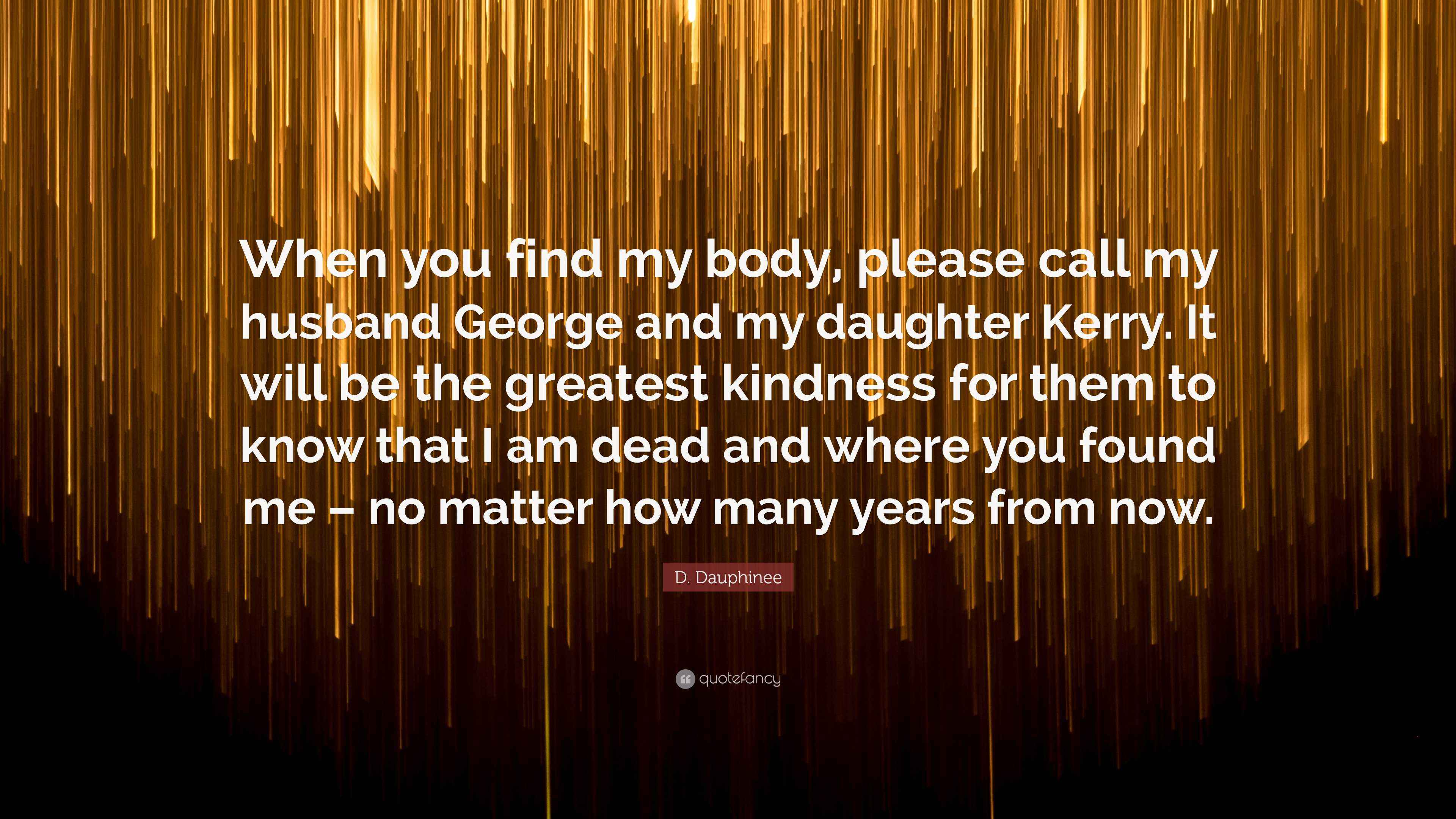
The most profound element of the documentary is the inclusion of Largay’s journal. For 26 days, she recorded her thoughts, her prayers, and her struggle to survive. The film’s title comes directly from the note she wrote to her husband:
"When you find my body, please call my husband George and my daughter Kerry. It will be the greatest kindness for them to know that I am dead and where you found me—no matter how many years from now."
This journal provides a rare, minute-by-minute look at the psychology of a person lost in the wilderness. It reveals that she did everything she could to be found: she built a makeshift camp, attempted to start fires, and stayed in one place to increase her chances of being spotted. The documentary uses these entries to structure its narrative, creating a deeply personal connection between the viewer and Largay’s experience.
Viewing Guide: How to Watch in 2026
As of 2026, streaming rights for independent documentaries like "When You Find My Body" (often associated with the title The Girl Who Loved Wild Horses or similar survival-focused titles in various markets) frequently shift between platforms.
| Feature | Details |
|---|---|
| Primary Platform | Netflix (availability varies by region) |
| Alternative Platforms | Amazon Prime Video, Apple TV, YouTube Movies |
| Director | Tom DePoto |
| Runtime | Approximately 88 Minutes |
| Genre | True Crime / Survival Documentary |
| Primary Focus | The disappearance of Geraldine Largay (2013) |
To access the documentary on Netflix, users should search for "When You Find My Body" or "Geraldine Largay." If the title is not appearing in your specific region due to licensing agreements, it is often available via educational streaming services or specialized true-crime hubs.
Technical Survival Insights from the Film
For the hiking community, "When You Find My Body" is more than just a tragic story; it is an essential piece of safety education. The documentary highlights several technical failures and survival "best practices" that have since been integrated into AT hiker orientations.
- Navigation Equipment: Largay relied primarily on a cell phone for communication and potentially for navigation. In 2026, experts emphasize that a dedicated Personal Locator Beacon (PLB) or a satellite messenger (like a Garmin inReach) is mandatory for solo hikers in "dead zones."
- The "Stay Put" Rule: Largay followed the correct protocol by staying in one place once she realized she was truly lost. However, her location was in a "low probability" area for searchers due to the extreme density of the forest.
- Visibility: The documentary points out that her tent and clothing were dark or earth-toned. Modern survival guides now strongly recommend "high-visibility" gear (blaze orange or neon) to help aerial search teams.
- Psychological Resilience: The film explores "woods shock"—the panic that sets in when a hiker loses the trail. Largay’s ability to maintain her journal for 26 days demonstrates incredible mental fortitude, even as her physical strength waned.
The Legacy of the Geraldine Largay Case
The impact of this documentary and the case it covers continues to be felt in 2026. The Maine Warden Service has updated its search protocols, and the Appalachian Trail Conservancy has increased its efforts to educate hikers on the dangers of the "100-Mile Wilderness."
The film also addresses the closure—or lack thereof—for the Largay family. The discovery of her remains in 2015 brought an end to the mystery, but the documentary raises difficult questions about how close she was to safety and the thin margin between life and death in the wild.
Frequently Asked Questions
Is "When You Find My Body" a Netflix Original?
No, it is an independent documentary directed by Tom DePoto. While it has been licensed by Netflix for various periods, it was produced independently to document the specific investigation into the Geraldine Largay case.
How long did Geraldine Largay survive after getting lost?
According to the forensic evidence and her journal entries analyzed in the film, she survived for at least 26 days after her last known contact. She passed away from inanition (starvation and exposure).
Where exactly was her body found?
Her remains were found in a wooded area on Redington Mountain, specifically within a section of land used by the U.S. Navy for SERE (Survival, Evasion, Resistance, and Escape) training. She was approximately 3,000 feet from the Appalachian Trail.
What are the main survival lessons from the documentary?
The primary lessons include the importance of carrying a satellite-based communication device, the necessity of having a compass and knowing how to use it, and the importance of wearing bright colors. The film also underscores that even experienced hikers can become disoriented in seconds.
Are there other documentaries about this case?
While "When You Find My Body" is the most comprehensive film focused specifically on her journal and the search, the case has been featured in several true-crime series and survival podcasts, such as North Woods Law.
Practical Recommendations for Viewers
If you are planning to hike the Appalachian Trail or any remote wilderness area, watching this documentary is highly recommended. It provides a sobering look at the reality of the Maine woods. Before heading out:
- Ensure you have a satellite messenger with an active subscription.
- Leave a detailed trip plan with someone reliable.
- Study the "Line of Sight" rules for navigation in dense forests.
- Carry a "survival whistle" and a signal mirror, which are lighter and more reliable than a cell phone in deep valleys.
Image Gallery