How to Build a Castle in Valheim: A Comprehensive Structural Guide
Building a castle in Valheim requires more than just piling up stone and wood; it demands a thorough understanding of the game's unique structural integrity mechanics, careful resource gathering, and strategic foundation planning to pr...
Building a castle in Valheim requires more than just piling up stone and wood; it demands a thorough understanding of the game's unique structural integrity mechanics, careful resource gathering, and strategic foundation planning to prevent your grand fortress from collapsing under its own weight.
Contents
Constructing a magnificent castle in Iron Gate Studio’s survival exploration game is one of the most rewarding end-game projects available to Vikings. Whether you want an imposing medieval fortress to fend off raid events or a sprawling stone keep to house your portals and treasure, the process requires careful planning. Because Valheim features a sophisticated physics engine that calculates structural load, weight, and material limits, building tall or expansive structures requires more than simple creativity—it demands engineering discipline.
Understanding Valheim's Structural Integrity System
Before placing your first foundation stone, you must understand how Valheim calculates structural stability. Every building piece has a maximum load capacity, and every material reacts differently to gravity and support. If a piece exceeds its maximum stress threshold, it will break, potentially triggering a catastrophic chain reaction that brings down your entire wall or tower.
The game uses a color-coded system when you equip the Hammer tool and hover your cursor over building pieces. Green indicates maximum structural stability, yellow, orange, and red show increasing stress levels, and pieces flashing blue have direct contact with the ground. If a piece turns red, it is on the verge of collapsing.
Material Support Comparison
Different building materials possess vastly different load-bearing capacities. Wood can only support a few pieces away from a grounded anchor before breaking, whereas core wood and iron beams extend your reach significantly.
| Material Type | Ground Contact Support | Maximum Height/Reach from Anchor | Best Primary Use |
|---|---|---|---|
| Standard Wood | Moderate | Low (approx. 4-5 walls high) | Early-game shelters, roofs, scaffolding |
| Core Wood (Logs) | High | Moderate (approx. 8-9 logs high) | Framing, rustic pillars, initial support |
| Stone | Very High | High (massive weight capacity, moderate height) | Castle walls, curtain walls, heavy foundations |
| Iron Beams | Exceptional | Maximum (ties into stone foundations) | High towers, large open great halls |
Phase 1: Resource Gathering and Preparation
Building a castle requires vast quantities of raw materials. Attempting to build a massive fortress without a dedicated supply chain will lead to frustrating interruptions. You will need to establish efficient mining and harvesting operations before construction begins.
Essential Resources
- Stone: Gathered in massive quantities from the Black Forest, Plains, or by using a pickaxe on stone deposits and ancient ruins.
- Core Wood: Harvested by cutting down Pine trees in the Black Forest. Essential for internal scaffolding and tall supports.
- Iron: Smelted from scrap iron found in the Swamp Biome's Sunken Crypts. Iron is non-negotiable if you plan to build soaring castle towers or wide-span throne rooms.
- Wood: Standard wood remains useful for scaffolding, temporary staircases, and roof tiling.
Setting up a dedicated resource depot near your building site with multiple chests and a portal back to your main base will save you countless hours of sailing and running.
Phase 2: Site Selection and Foundation Laying
The stability of your castle relies entirely on its foundation. Building on unlevel terrain or directly on bare soil without proper leveling will cause structural weakness.
Leveling and Raising Earth
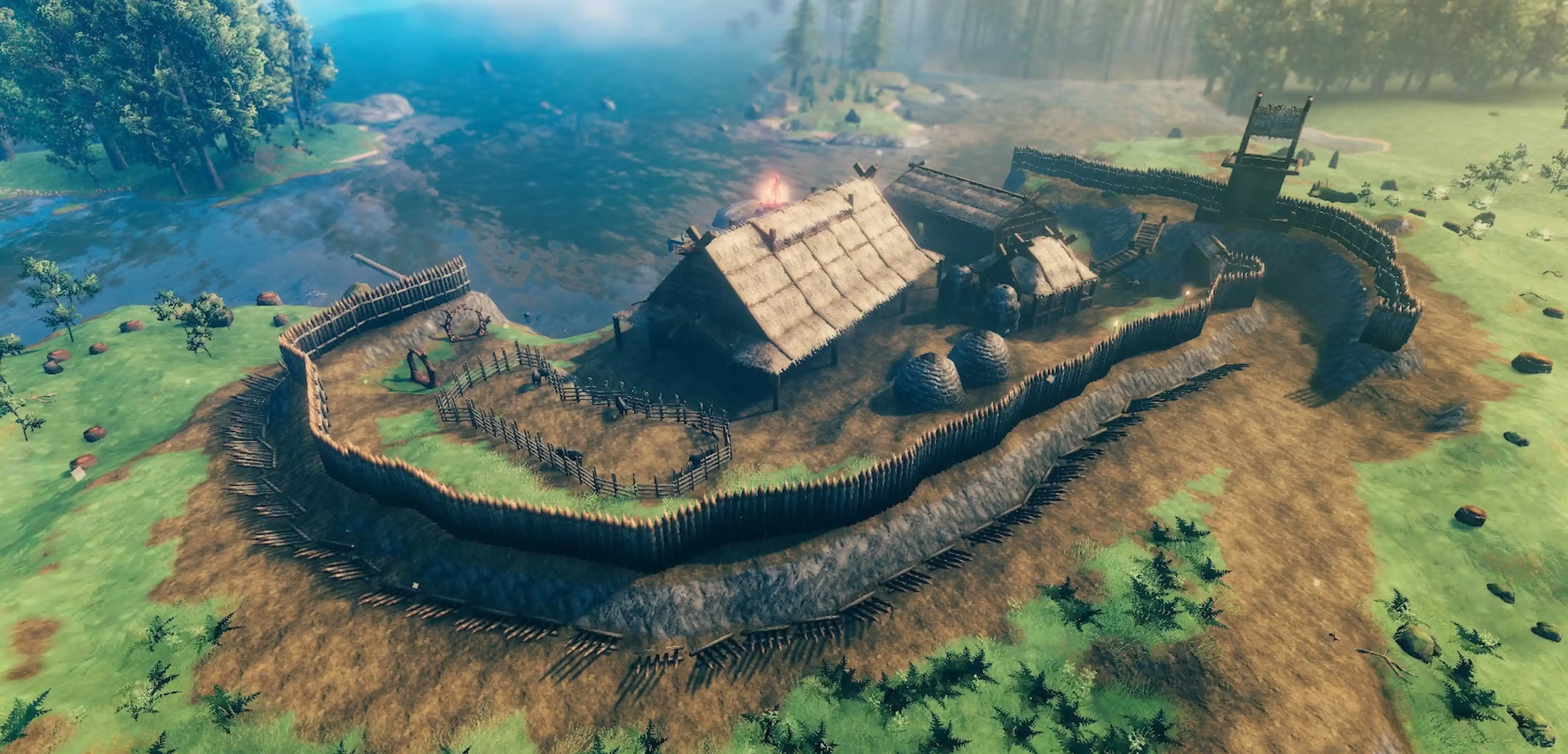
Equip your hoe and keep a large stack of stone handy. Use the Raise Ground function to build massive stone walls or earthen ramparts. Earthen walls are entirely indestructible to enemy raids and provide the ultimate defensive perimeter for your castle. Once your earthworks are shaped, use the stone cutter workbench to snap stone flooring and walls directly onto the leveled ground or raised stone.
The Iron Beam Reinforcement Technique
To build higher than stone normally allows, you must weave iron beams through your stone blocks. Iron reinforced wood poles can be hidden inside stone walls. Because iron chains up to other iron pieces with minimal structural loss, anchoring iron beams deep into the ground and running them up through your stone pillars allows you to build staggering multi-story keeps that defy normal physics limits.
Phase 3: Constructing Walls, Towers, and Defenses
Once your foundation is secure, you can focus on the architectural layout of your castle. A classic medieval design typically incorporates a curtain wall, corner guard towers, a central keep, and a secure courtyard.
Building the Curtain Wall
Construct thick double-layered stone walls around your perimeter. Interlock the stone blocks so there are no gaps. Place battlements along the top rim by alternating stone floor tiles and half-walls, creating firing positions for your bows and crossbows.
Erecting Guard Towers
Circular or square corner towers add verticality and defensive capability to your castle. Use core wood framing or iron poles in the center of the tower to maintain stability as you spiral upwards with stone walls and wooden staircases. Ensure you build a roof over the top to prevent weather damage to indoor furnishings.
Phase 4: Weather Damage, Maintenance, and Interiors
Exposed wood and iron in Valheim suffer from rain damage, which degrades their health down to 50%. While stone is immune to rain, any wooden beam, floor, or roof tile exposed to the elements will weather to a grey color.
- Weather Protection: Always run roofs over wooden elements. Weather damage cannot destroy a piece completely—it stops at 50% health—but it leaves your structures looking weathered and weaker against enemy attacks.
- Interior Comfort: Castles can feel cold and cavernous. Utilize hanging braziers, stone hearths, banners, and throne chairs to increase your Comfort level, ensuring you get a well-rested buff whenever you sleep inside your castle.
Frequently Asked Questions
Can enemies destroy castle stone walls during raids?
Yes. Troll raids, bat raids, and high-level creature attacks in later biomes can damage stone structures. However, raised earth walls (created with the hoe) are completely immune to enemy damage and make the best outer defensive perimeter.
How do I build higher than the standard stone limit?
To exceed normal stone height limits, you must embed iron wood poles inside your stone pillars. The iron anchors into the ground or lower stone layers and carries the structural load upward, allowing you to build much taller towers.
Do I need a workbench to maintain my castle?
You do not need a workbench to keep your castle standing once built, but you do need workbenches, stone cutters, and forge stations nearby to repair damaged pieces with your hammer.
Why do my castle walls keep collapsing randomly?
Walls usually collapse because they lack a direct connection to a grounded anchor or because they have exceeded their weight capacity. Check your support beams for red coloration, and ensure every piece traces a logical load path down to the terrain or a reinforced pillar.
Final Recommendation
Start your castle project small by building a fortified stone lodge, then expand outward into full curtain walls and towers once your iron supply is secure. Taking the time to plan your foundation and master iron-reinforced pillars will save you from the heartbreak of watching your grand fortress collapse halfway through construction.
Image Gallery