Strategies to Secure the Lowest Commercial Auto Insurance Rates
To obtain the lowest commercial auto insurance rates, business owners must prioritize robust risk management, maintain a spotless driving record for all employees, and optimize policy deductibles. By leveraging telematics, bundling cov...
To obtain the lowest commercial auto insurance rates, business owners must prioritize robust risk management, maintain a spotless driving record for all employees, and optimize policy deductibles. By leveraging telematics, bundling coverage, and periodically auditing fleet safety protocols, companies can significantly reduce their loss exposure, which is the primary factor insurers use to determine premiums.
Contents
Understanding the Factors Behind Commercial Auto Premiums
Commercial auto insurance is fundamentally different from personal coverage because it reflects the higher liability associated with business operations. Insurers evaluate risk based on the specific nature of your business, the types of vehicles used, the radius of travel, and the history of claims. As of 2026, insurance underwriters focus heavily on predictive modeling. They examine not just the value of the vehicles, but the likelihood of litigation involving your business assets.
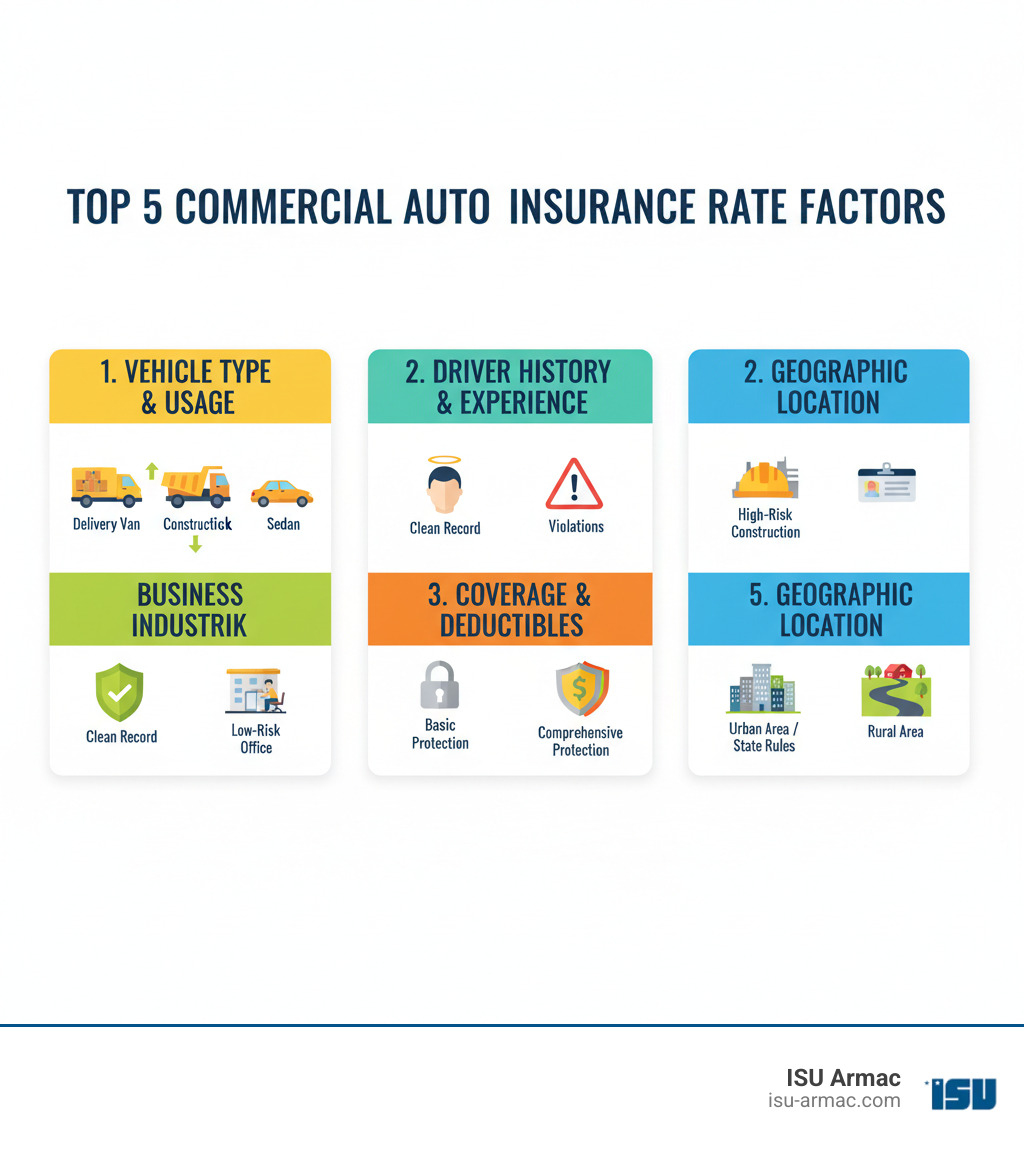
The following components are the most significant drivers of your premium:
- Vehicle Usage and Classification: A vehicle used for local deliveries poses a different risk profile than one used for long-haul transport or hazardous material hauling.
- Driver Qualification: The most effective way to lower rates is to hire drivers with clean MVRs (Motor Vehicle Records). In 2026, many carriers require documented, ongoing safety training as a prerequisite for standard market pricing.
- Radius of Operation: The further your fleet travels from your business headquarters, the higher your premium will be due to the increased probability of accidents in unfamiliar jurisdictions.
- Loss History: A high frequency of small claims is often viewed more negatively by underwriters than a single large claim, as it indicates a systemic issue with fleet maintenance or driver behavior.
Proactive Risk Management Strategies
Lowering premiums requires more than just searching for a cheaper quote; it requires changing the data underwriters see when they view your business profile. Proactive safety measures are not just operational best practices; they are financial tools.
Implementing Telematics
Telematics systems—which track speed, braking patterns, and idling time—have become a standard expectation for commercial fleets. By installing telematics devices, you provide the insurer with verified data demonstrating that your drivers are operating safely. This "hard evidence" can lead to immediate premium credits or future rate reductions as your safety scores improve.
Enhancing Driver Screening and Training
Establish a formal hiring policy that excludes candidates with recent moving violations or DUI convictions. Beyond hiring, implement a recurring defensive driving certification program. Many insurance companies offer "safety discounts" if you can verify that your entire driving staff has completed an accredited safety course within the last 12 months.
Optimizing Your Policy Structure
Once risk is minimized, the next step is to ensure your policy structure is lean and efficient. Carrying unnecessary coverage or failing to optimize your deductibles can lead to inflated costs.
| Coverage Element | Strategy for Cost Reduction | Potential Impact |
|---|---|---|
| Deductibles | Increase deductible amounts to the highest level the business can afford. | Significant premium reduction. |
| Fleet Size | Remove inactive or rarely used vehicles from the policy immediately. | Proportional reduction in base premium. |
| Coverage Limits | Align liability limits with actual exposure rather than arbitrary defaults. | Moderate cost savings. |
| Bundling | Combine commercial auto with general liability or property insurance. | Cumulative multi-policy discounts. |
Conducting Regular Market Comparisons
The insurance market is cyclical. What constitutes a "competitive rate" in 2026 may be different than it was two years ago. Do not default to automatic renewals without performing a market review at least 60 days before your policy expiration date.
When comparing quotes, ensure you are comparing "apples to apples." A lower quote is rarely a better deal if it reduces your liability limits or excludes essential components like "hired and non-owned auto" coverage. Always consult with a licensed commercial insurance broker who has access to multiple carriers, as they can explain why one carrier may offer a lower rate based on their specific risk appetite for your industry.
Common Pitfalls to Avoid
Even with the best intentions, business owners often make mistakes that lead to higher-than-necessary premiums.
- Misclassifying Vehicles: Ensure every vehicle is registered for its actual use. If a vehicle is listed as "occasional use" but is used daily, the insurer may deny claims or retroactively hike premiums.
- Neglecting Maintenance Logs: Insurers may offer discounts for fleets that keep rigorous, verifiable maintenance logs. If an accident occurs due to mechanical failure, your lack of documentation will likely result in increased premiums at renewal.
- Failing to Report Changes: If your business radius shrinks or you sell older, high-risk vehicles, notify your agent immediately. Do not wait for the policy renewal date to reconcile your fleet inventory.
Frequently Asked Questions
Does a clean driving record for me, the owner, affect my commercial auto rate? Yes. In many small businesses, the owner is a primary operator of the vehicles. Insurers will run an MVR check on all listed drivers. If the owner has a history of accidents or traffic violations, it will significantly impact the risk score of the entire policy.
What is the benefit of "hired and non-owned" auto insurance? This coverage protects the business if an employee uses their personal vehicle for company tasks. It is often much cheaper to add this as an endorsement than to try to insure every potential scenario individually. Including it shows insurers that you have a comprehensive risk management strategy.
Why does the age of my fleet matter for my insurance rate? Newer vehicles are often equipped with advanced safety features like collision mitigation and lane-keep assist, which lower accident frequency. Conversely, older vehicles might lack modern safety tech, but they are also cheaper to replace, which can lower physical damage premiums. Ask your agent how the specific age and safety features of your fleet affect your physical damage coverage.
Is it better to file a small claim to use my insurance? Generally, no. For minor accidents, the long-term impact of a rate increase (surcharge) over the next three to five years often exceeds the cost of paying for the repairs out of pocket. Evaluate the cost of the repair against your deductible and the potential premium hike before filing a claim.
Do insurance companies require a specific type of telematics? Some carriers have preferred partners or proprietary apps they require you to use to qualify for specific safety discounts. Always confirm which hardware or software providers your insurer recognizes before purchasing equipment for your fleet.
Next Steps for Your Business
To secure the lowest rates, start by reviewing your current policy declarations page to identify your exact liability limits and deductibles. Reach out to at least three different brokers to request quotes, ensuring you provide a detailed list of all safety protocols, telematics usage, and driver training programs currently in place. If your current rates are high, ask your insurer specifically: "What loss control measures would make our company eligible for a lower tier of pricing?" Use their response to create a roadmap for your next renewal cycle.
Image Gallery