Hugh Douglas Jets Career: Stats, Impact, and Legacy in New York
Hugh Douglas launched his NFL journey with the New York Jets after being selected in the first round of the 1995 NFL Draft. During his three seasons in New York (1995–1997), Douglas earned AP Defensive Rookie of the Year honors, record...
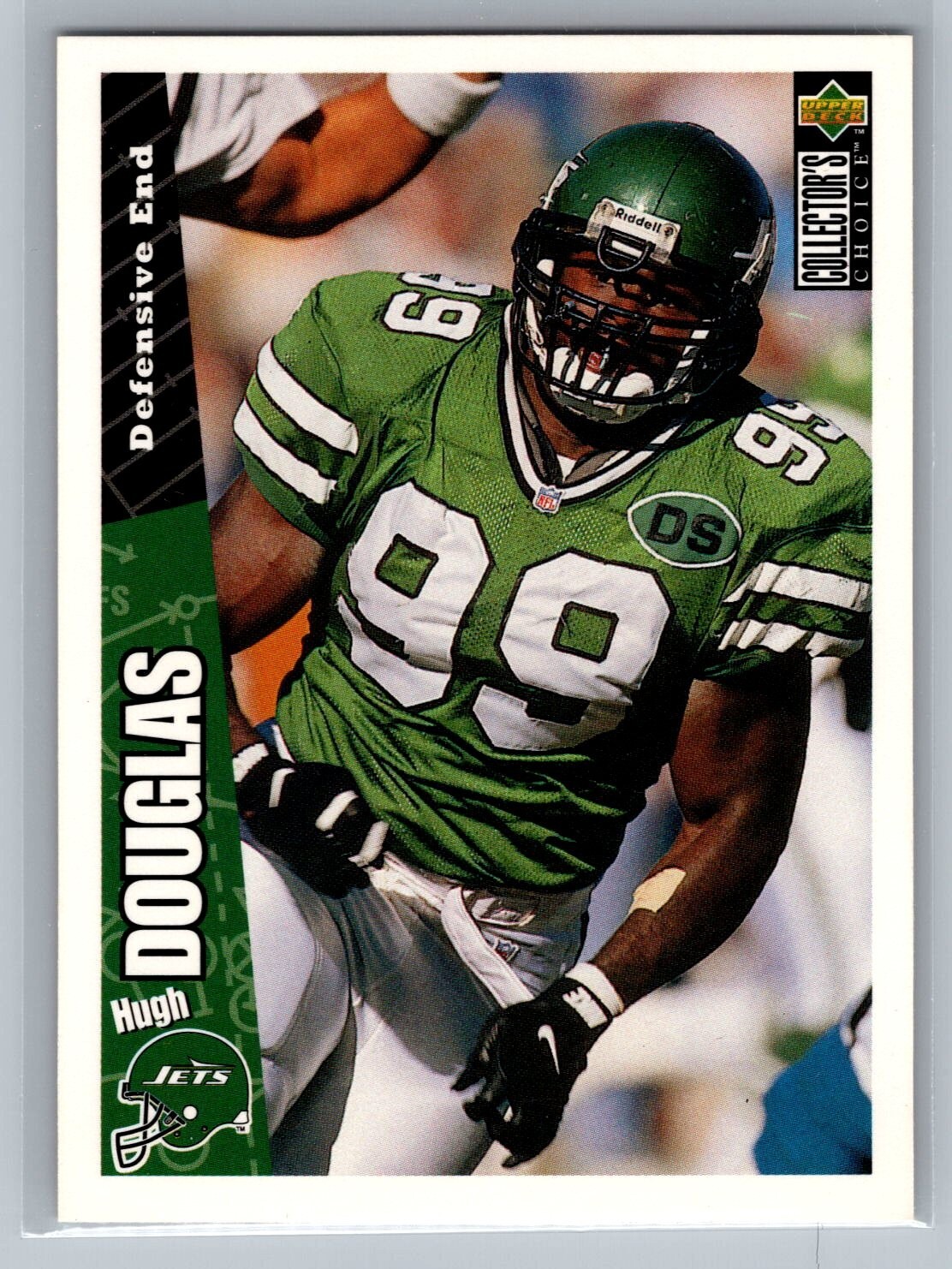
Hugh Douglas launched his NFL journey with the New York Jets after being selected in the first round of the 1995 NFL Draft. During his three seasons in New York (1995–1997), Douglas earned AP Defensive Rookie of the Year honors, recorded 22.5 sacks in 40 games, and established himself as one of the league's most explosive young edge rushers before a high-profile 1998 trade sent him to the Philadelphia Eagles.
Contents
Central State to the Big Apple: The 1995 NFL Draft
Before entering the NFL, Hugh Douglas played college football at Central State University in Wilberforce, Ohio, a dominant program in NAIA football at the time. Despite playing outside the NCAA Division I Football Bowl Subdivision (FBS), Douglas caught the attention of NFL scouts with his unusual combination of initial explosive speed, low center of gravity, and high-motor relentless pursuit off the edge.
In the 1995 NFL Draft, the New York Jets selected Douglas in the first round with the 16th overall pick. Drafted during a period of transition for the franchise under head coach Rich Kotite, Douglas was tasked with solidifying a pass-rush unit that had struggled to consistently pressure opposing quarterbacks in the competitive AFC East.
1995 NFL Draft - 1st Round, Pick 16 Selection: Hugh Douglas, Defensive End College: Central State Marauders (OH) Franchise: New York Jets
Transitioning from NAIA competition to the NFL presented steep tactical challenges. Douglas had to adapt quickly to advanced offensive line protections, complex blocking schemes, and the sheer physical power of NFL offensive tackles. However, his natural physical attributes—specifically his quick first step off the snap and powerful leverage—allowed him to make an immediate impact during his rookie training camp.
1995 Rookie Season: AP Defensive Rookie of the Year
Hugh Douglas delivered one of the most productive rookie defensive seasons in New York Jets franchise history during the 1995 campaign. Playing in 16 games and quickly earning a starting role at defensive end, Douglas harassed opposing quarterbacks throughout the season despite the team's overall operational struggles.
Key Highlights of the 1995 Campaign
- Dominant Pass Rush: Douglas recorded 10.0 sacks in his debut season, leading all NFL rookies in quarterback takedowns.
- Consistent Run Defense: In addition to his pass-rushing success, he logged 48 combined tackles and forced a fumble, showing that he was not merely a situational pass rusher.
- National Recognition: Douglas was named the 1995 Associated Press (AP) NFL Defensive Rookie of the Year, becoming one of the few players from an NAIA institution to capture a major NFL postseason award.
His breakout performance provided a rare bright spot during a challenging 3–13 season for New York. Douglas demonstrated an ability to beat offensive tackles both speed-wise on the outside edge and with a powerful bull-rush move inside, forcing coordinators across the league to account for his alignment on every down.
1996–1997 Seasons: Production, Scheme Shifts, and Injury
Following his award-winning rookie campaign, Douglas returned in 1996 as the focal point of the Jets' defensive line. Opposing offensive coordinators routinely assigned double-teams and chip blocks from tight ends or running backs to slow his edge rush.
The 1996 Season
Despite increased attention from blocking schemes, Douglas remained a highly effective edge defender in 1996:
- Games Played: 16 games (16 starts)
- Sacks: 8.0 sacks
- Tackles: 51 combined tackles
- Forced Fumbles: 1 forced fumble
While the Jets suffered through a 1–15 season in 1996, Douglas maintained high individual performance standards, bringing his career sack total to 18.0 through his first two professional seasons.
The 1997 Season Under Bill Parcells
In 1997, legendary head coach Bill Parcells took control of the Jets organization as head coach and general manager, initiating a massive cultural and tactical overhaul. Parcells installed stricter positional requirements and altered defensive front responsibilities.
Douglas started the 1997 season in strong fashion, recording 4.5 sacks in just 8 games. However, his campaign was cut short due to a severe pectoral muscle injury that required surgery and forced him onto injured reserve for the remainder of the schedule. Despite missing the second half of the year, his early-season efficiency helped the Jets improve to 9–7, narrowly missing the postseason and laying the groundwork for the franchise's late-1990s turnaround.
The 1998 Trade to the Philadelphia Eagles
Prior to the 1998 NFL season, Bill Parcells made several roster restructuring moves to fit his specific defensive scheme and long-term salary structure. Because Parcells preferred heavier, two-gap defensive linemen who suited his traditional 3-4 front or heavy 4-3 alignments, Douglas was viewed as a pure edge rusher who possessed higher trade value than positional fit in New York's evolving system.
In March 1998, the New York Jets traded Hugh Douglas to the Philadelphia Eagles in exchange for two draft selections:
- 1998 Second-Round Draft Pick (No. 43 overall, which the Jets used to select defensive end Dorian Boose).
- 1998 Fifth-Round Draft Pick (No. 145 overall).
TRADE SUMMARY (March 1998) New York Jets Receive: - 1998 2nd-Round Pick (#43 overall) - 1998 5th-Round Pick (#145 overall) Philadelphia Eagles Receive: - Defensive End Hugh Douglas
The trade marked the end of Douglas's tenure in New York after just three seasons. While the move disappointed many Jets fans who had embraced the young pass rusher, it unlocked the next phase of Douglas's career in Philadelphia, where he became a three-time Pro Bowler (2000–2002) and First-Team All-Pro selection under Jim Johnson's aggressive defensive system.
Hugh Douglas: New York Jets Career Statistics Breakdown
During his three years with the New York Jets, Douglas demonstrated remarkable efficiency as a pass rusher, averaging over 0.5 sacks per game across 40 career appearances.
| Season | Games Played | Games Started | Combined Tackles | Solo Tackles | Sacks | Forced Fumbles | Fumble Recoveries |
|---|---|---|---|---|---|---|---|
| 1995 | 16 | 8 | 48 | 34 | 10.0 | 1 | 0 |
| 1996 | 16 | 16 | 51 | 38 | 8.0 | 1 | 0 |
| 1997 | 8 | 8 | 25 | 17 | 4.5 | 1 | 1 |
| Jets Total | 40 | 32 | 124 | 89 | 22.5 | 3 | 1 |
Statistical Comparison: Jets vs. Subsequent NFL Career
To understand the trajectory of Douglas's career, it is helpful to examine how his New York production laid the foundation for his full 10-year NFL career:
- Total NFL Seasons: 10 (Jets: 1995–1997; Eagles: 1998–2002, 2004; Jaguars: 2003)
- Career NFL Sacks: 80.0 total sacks (22.5 with New York Jets, representing 28.1% of his career total)
- Career Pro Bowl Selections: 3 (all with Philadelphia)
- All-Pro Selections: 1 (First-Team, 2000 with Philadelphia)
Tactical Analysis of Douglas’s Play Style with New York
Hugh Douglas brought a distinctive physical toolset to the New York Jets defensive line during the mid-1990s. At 6-foot-2 and approximately 280 pounds, he did not possess the traditional towering height of 1990s prototype defensive ends, but he leveraged his frame to gain distinct mechanical advantages against taller offensive tackles.
Key Technical Attributes
- Explosive Get-Off: Douglas consistently anticipated the snap count, allowing him to establish outside shoulder leverage against offensive tackles before they could set their hips.
- Low Center of Gravity: Because he stood lower than most 6-foot-5 tackles, Douglas excelled at dipping his inside shoulder under the tackle's reach, bending around the edge toward the quarterback.
- Power Conversion: Opposing tackles who cheated outside to block his speed rush were frequently caught off-balance by his powerful bull-rush and club moves, which allowed him to collapse the pocket directly into the quarterback's step-up area.
These tactical attributes made Douglas an ideal end in a classic 4-3 front where he was allowed to rush freely from a 9-technique or 7-technique position, a freedom he maximized during his rookie and second seasons in New York.
Legacy and Impact on the New York Jets Organization
Although Hugh Douglas played only three seasons in New York, his tenure remains memorable in Jets franchise history for several reasons:
- Draft Success from Non-FBS Schools: Douglas proved that elite pass-rushing talent could be scouted and developed from NAIA and lower-division programs, setting a precedent for future small-school draft evaluations.
- Defensive Rookie Benchmark: His 10.0 sacks in 1995 stood for decades as one of the finest rookie defensive performances in team history, demonstrating that an elite edge rusher could transform a defensive unit's front seven immediately.
- The "What-If" Era: Douglas's departure in 1998 remains a prominent topic of discussion among Jets historians. Fans frequently speculate how formidable the Jets' late-1990s defense—which reached the AFC Championship Game in 1998 under Bill Parcells—might have been had Douglas remained on the roster alongside stars like Mo Lewis, Bryan Cox, and Marvin Jones.
After retiring from the NFL following the 2004 season, Douglas transitioned into a successful sports broadcasting career, serving as an analyst and sports radio personality on major regional and national networks. Nevertheless, his foundational NFL success began on the field at Giants Stadium in East Rutherford, where his explosive sack celebrations first introduced him to national football audiences.
Frequently Asked Questions
What draft pick was Hugh Douglas in the NFL Draft?
Hugh Douglas was selected by the New York Jets in the first round with the 16th overall pick in the 1995 NFL Draft out of Central State University (Ohio).
Did Hugh Douglas win Defensive Rookie of the Year with the Jets?
Yes. Hugh Douglas won the 1995 Associated Press (AP) NFL Defensive Rookie of the Year award after recording 10.0 sacks, 48 tackles, and 1 forced fumble during his debut season with New York.
How many sacks did Hugh Douglas record during his Jets career?
Hugh Douglas recorded 22.5 total sacks in 40 regular-season games during his three seasons with the New York Jets (10.0 in 1995, 8.0 in 1996, and 4.5 in 1997).
Why did the Jets trade Hugh Douglas to the Eagles in 1998?
The Jets traded Douglas to the Philadelphia Eagles in March 1998 primarily due to defensive scheme adjustments and roster rebuilding under head coach and general manager Bill Parcells. Parcells sought draft compensation and preferred different player profiles for his defensive front scheme, while Douglas was entering the final phase of his initial contract.
What did the Jets receive in exchange for Hugh Douglas?
The New York Jets received two 1998 draft picks from the Philadelphia Eagles: a second-round pick (No. 43 overall), which they used to select defensive end Dorian Boose, and a fifth-round pick (No. 145 overall).
Practical Takeaway: Evaluating Historical Player Performance
When analyzing historical NFL player tenures such as Hugh Douglas's career with the New York Jets, researchers and sports analysts should evaluate performance across three distinct lenses:
- Individual Production Metrics: Review game-by-game sack rates, tackle efficiency, and durability (e.g., Douglas's 22.5 sacks across 40 appearances).
- Scheme and Tactical Alignment: Consider how coaching transitions (such as the shift from Rich Kotite to Bill Parcells) affect a player's role, snap distribution, and roster fit.
- Transaction Context: Examine trade compensations and draft pick returns to understand how front offices balance short-term player talent against long-term salary cap management and asset accumulation.
Image Gallery