Understanding the Auto Insurance Declaration Page: A Comprehensive Guide
An auto insurance declaration page, often called a "dec page," is a concise summary of your insurance policy that outlines who is covered, what vehicles are insured, the specific types of coverage purchased, and the associated costs. I...
An auto insurance declaration page, often called a "dec page," is a concise summary of your insurance policy that outlines who is covered, what vehicles are insured, the specific types of coverage purchased, and the associated costs. It serves as the primary reference document for understanding your legal protections and financial obligations.
Contents
While an insurance policy can span dozens of pages filled with complex legal definitions and exclusions, the declaration page acts as the "executive summary." It is typically the first page of your policy or renewal packet. In 2026, as digital-first insurance platforms become the standard, the declaration page remains the most critical document for verifying coverage for vehicle registration, financing requirements, and claims processing. Understanding how to interpret this document ensures that you are neither underinsured nor paying for redundant protections.
The Purpose and Legal Weight of the Declaration Page
The declaration page is more than just a summary; it is a legally binding component of your insurance contract. It personalizes the generic policy language to your specific situation. While the "Policy Booklet" explains the general terms and conditions that apply to all customers, the declaration page specifies exactly which of those terms apply to you and to what financial extent.
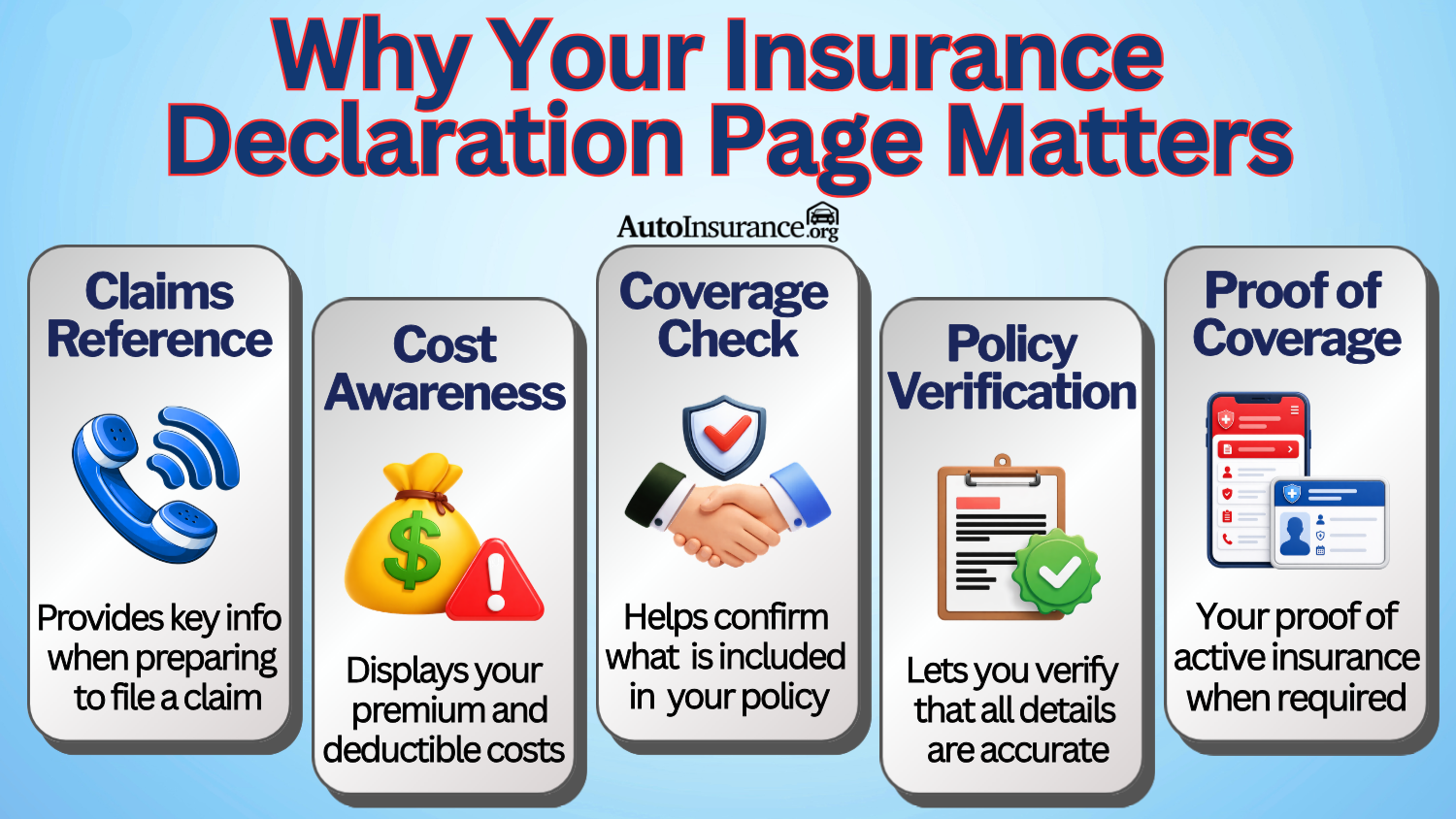
For most drivers, the declaration page is the document requested by leasing companies, banks, and Department of Motor Vehicles (DMV) offices. It provides immediate proof that you meet state-mandated financial responsibility laws. If there is a discrepancy between what an agent promised you and what is written on the declaration page, the written document generally prevails in legal disputes. Therefore, verifying its accuracy immediately upon receipt is a fundamental step in proactive risk management.
Key Components of the Declaration Page
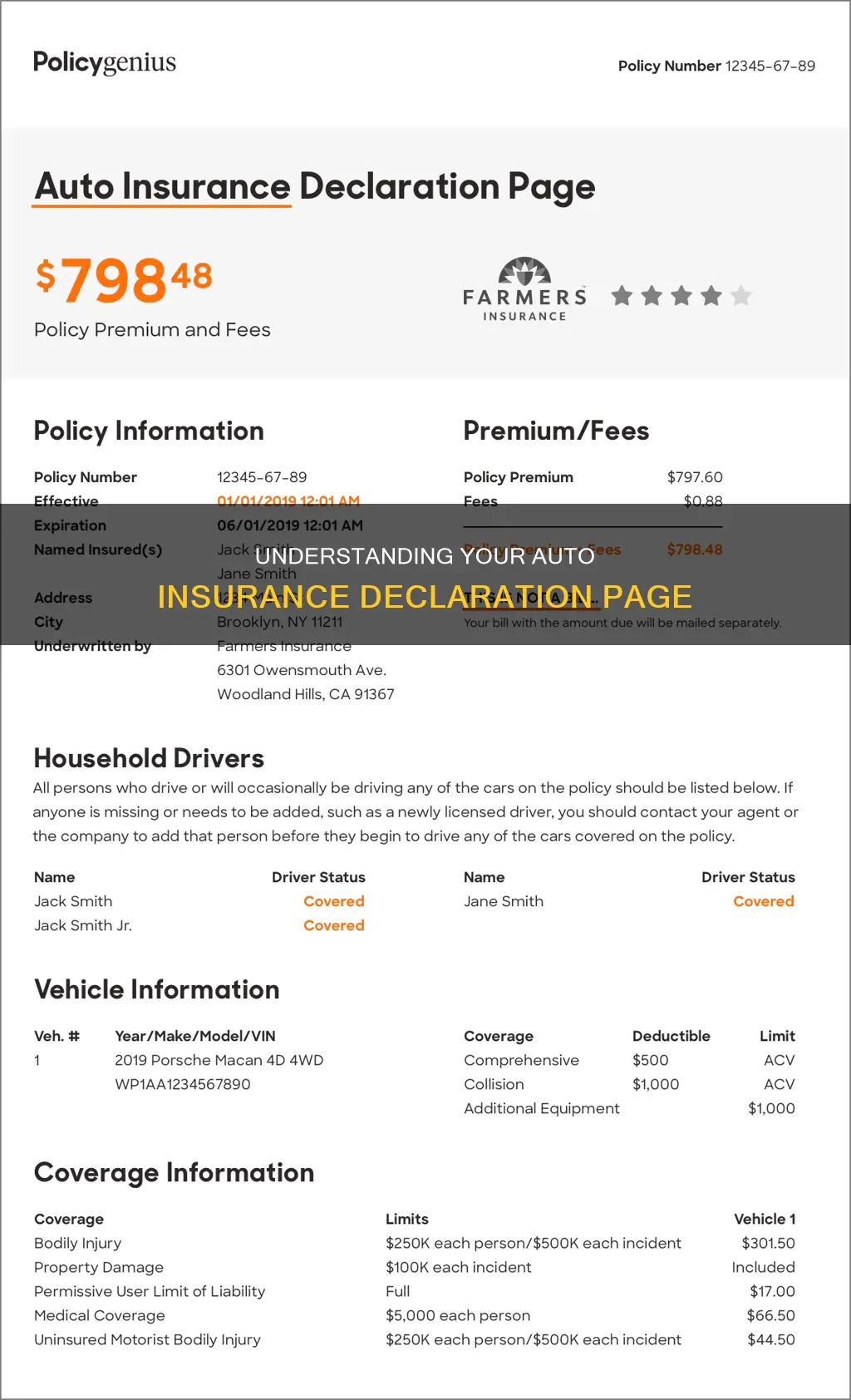
To fully understand your auto insurance declaration, you must be able to navigate its various sections. Most insurers follow a standardized layout, though the terminology may vary slightly between providers.
1. Administrative Information and Policy Period
The top of the page usually contains the "Policy Number," which is your unique identifier for all communications with the insurer. This section also specifies the Policy Period, which dictates the exact date and time (usually 12:01 a.m.) that your coverage begins and ends. In 2026, many policies are issued for six-month intervals, though annual policies remain common for high-tier preferred providers.
2. Named Insureds and Rated Drivers
This section lists the "Named Insured"—the primary person or persons who "own" the policy. It also lists "Rated Drivers," who are the individuals the insurance company has accounted for when calculating your premium.
- Named Insured: Usually the person who owns or leases the vehicle.
- Additional Insureds: Other household members or frequent drivers who are covered.
- Excluded Drivers: In some jurisdictions, you may specifically list individuals who are not covered under any circumstances.
3. Insured Vehicles and VINs
Each vehicle covered by the policy will be listed with its year, make, model, and Vehicle Identification Number (VIN). It is vital to cross-reference the VIN on your declaration page with the VIN on your vehicle’s dashboard or door jamb. An error in even one digit can lead to significant complications during a claim or when the DMV attempts to verify your insurance status.
4. Loss Payees and Lienholders
If you have a car loan or a lease, the financial institution will be listed as a Lienholder or Loss Payee. This ensures that in the event of a total loss, the insurance company pays the lender first to satisfy the remaining balance of the loan before any funds are released to you.
Decoding the Coverage Table
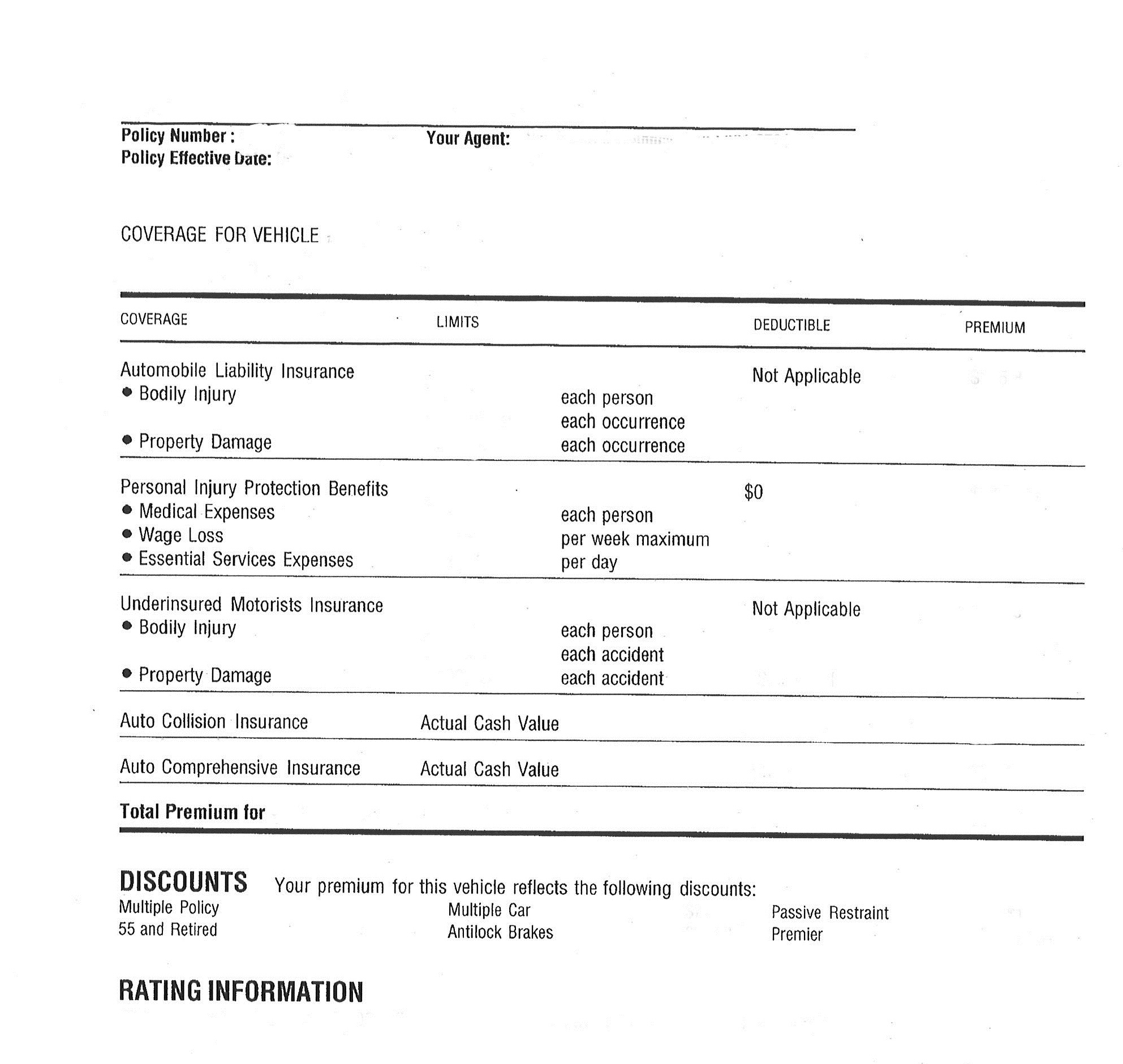
The heart of the declaration page is the coverage table. This section breaks down the specific protections you have purchased for each vehicle. Understanding the difference between these coverages is essential for determining your level of financial protection.
| Coverage Type | Description | Common Limits (2026) |
|---|---|---|
| Bodily Injury Liability | Pays for injuries to others when you are at fault. | $100,000/$300,000 |
| Property Damage Liability | Pays for damage to someone else's property (cars, fences). | $50,000 - $100,000 |
| Uninsured Motorist (UM) | Covers your injuries if hit by a driver without insurance. | Matches Liability Limits |
| Personal Injury Protection | Covers medical expenses for you and your passengers. | $10,000 - $50,000 |
| Collision | Covers damage to your car from an accident with another object. | Actual Cash Value |
| Comprehensive | Covers "Acts of God," theft, fire, or animal strikes. | Actual Cash Value |
Liability Limits: Split vs. Combined
You will likely see numbers formatted like 100/300/50. These are "Split Limits."
- 100 ($100,000): The maximum the insurer will pay for bodily injury per person.
- 300 ($300,000): The maximum the insurer will pay for bodily injury per accident (regardless of the number of people).
- 50 ($50,000): The maximum the insurer will pay for property damage per accident.
With the rising costs of medical care and vehicle repairs in 2026, many experts recommend limits higher than the state minimums to protect personal assets from lawsuits. Information on state-specific minimums can be verified through the National Association of Insurance Commissioners (NAIC).
Understanding Deductibles and Their Impact
For "Physical Damage" coverages like Collision and Comprehensive, the declaration page will list a Deductible. This is the amount you agree to pay out-of-pocket before the insurance company covers the remainder of a claim.
Choosing a higher deductible (e.g., $1,000 instead of $500) will lower your monthly premium because you are assuming more of the financial risk. Conversely, a lower deductible increases your premium. In 2026, many modern policies include "disappearing deductibles" or "deductible rewards," which may be noted in the endorsements section of the dec page if you have maintained a clean driving record.
Premiums, Credits, and Discounts
The declaration page provides a line-item breakdown of how much each specific coverage costs. This transparency allows you to see exactly where your money is going. Following the coverage costs, you will typically see a list of applied discounts or credits.
Common discounts found on a 2026 declaration page include:
- Telematics/Usage-Based Discount: Credits for safe driving habits tracked via a mobile app or vehicle plug-in.
- Multi-Policy/Bundling: Reductions for having homeowners or renters insurance with the same carrier.
- Safety Features: Discounts for vehicles equipped with advanced driver-assistance systems (ADAS).
- Good Student: For young drivers maintaining a certain GPA.
Reviewing this section is the best way to ensure you are receiving all the savings you are entitled to. If you recently installed a home security system or your child's grades improved, these changes might not be reflected until you notify the insurer and receive an updated declaration page.
Endorsements and Exclusions
At the bottom of the page or on a secondary sheet, you will find a list of Endorsements (also called "Riders"). These are amendments that add, delete, or change the standard policy coverage.
Common endorsements include:
- Gap Insurance: Covers the "gap" between what you owe on a loan and the car's actual cash value if it is totaled.
- Rental Reimbursement: Pays for a rental car while your vehicle is being repaired after a covered loss.
- Roadside Assistance: Coverage for towing, flat tires, and lockouts.
- New Car Replacement: Ensures you get a brand-new model if your car is totaled within the first year or two of ownership.
While endorsements add value, they also add to the premium. Conversely, the declaration page may list Exclusions, which are specific scenarios where coverage does not apply, such as using your personal vehicle for commercial delivery services (like Uber or DoorDash) without a specific business endorsement.
How to Use Your Declaration Page in 2026
In the current landscape, the declaration page is almost always available through your insurer's mobile app. However, keeping a digital PDF or a physical copy is still recommended.
- Annual Review: You should review your dec page at every renewal. Life changes—such as a new job with a shorter commute or a paid-off car loan—should be reflected here to ensure accurate pricing.
- Comparison Shopping: When looking for new insurance, use your current declaration page as a "spec sheet." This allows you to get "apples-to-apples" quotes from competitors.
- Post-Accident: After a collision, the dec page tells you immediately what your deductible is and whether you have rental car coverage, allowing you to plan your finances before even calling a repair shop.
- Verification for Lenders: If you refinance your auto loan, your new lender will require an updated declaration page listing them as the loss payee.
Common Mistakes to Audit
Because the declaration page is generated by software, errors can occur. An incorrect address can lead to higher rates if the system thinks you live in a higher-risk zip code. An incorrect "garaging location" can even be flagged as insurance fraud if not corrected. Always check that the driver classifications are correct; for example, ensuring a driver is listed as "pleasure use" rather than "commute" if their driving habits have changed can save significant money.
Professional Advice Limitation
This guide provides general information regarding auto insurance documents and does not constitute legal, financial, or insurance advice. Insurance laws vary significantly by state and jurisdiction. For specific questions regarding your policy or legal obligations, consult with a licensed insurance agent or a qualified legal professional in your area.
Frequently Asked Questions
Is the declaration page the same as an insurance card?
No. An insurance card is a small document intended to be kept in the vehicle or on a smartphone to show police or other drivers during an accident. The declaration page is a detailed multi-page summary of all coverages, limits, and costs. While the card proves you have insurance, the declaration page proves what that insurance actually covers.
How do I get a copy of my declaration page?
Most insurers allow you to download a PDF of your declaration page instantly through their online portal or mobile app. You can also request a copy by calling your insurance agent or the company’s customer service line. In 2026, most companies have moved to paperless delivery by default, so check your email archives for a "Renewal Package" or "Policy Documents" notification.
Does the declaration page show every exclusion in my policy?
No. The declaration page lists the coverages you have and any specific endorsements or major exclusions added to your plan. To see the full list of "General Exclusions" (situations never covered by the policy, like intentional acts of damage), you must refer to the full Policy Booklet.
Why did my premium change if I didn't change my coverage?
Premiums can fluctuate due to external factors even if your declaration page looks identical to the previous year. Factors include regional inflation in repair costs, increased medical expenses, or a change in the insurance company’s overall risk assessment for your vehicle model. Always check the "Discounts" section to see if a previously applied credit has expired.
What should I do if I find an error on my declaration page?
Contact your insurance provider immediately. Most errors, such as a misspelled name or an incorrect VIN, can be corrected with a simple "endorsement" that generates a revised declaration page. Do not wait until you need to file a claim to fix these errors, as discrepancies can lead to delays in claim processing or even denial of coverage.
Next Steps for Policyholders
Your immediate next action should be to log into your insurance portal and download your most recent declaration page. Compare the "Limits of Liability" to your current net worth; if your assets have grown, your liability limits should likely grow with them. Finally, verify that all drivers in your household are correctly listed to ensure there are no gaps in protection during an emergency.
Image Gallery