Why Homecoming Mums Matter for School Spirit
Homecoming mums are a powerful visual catalyst for school spirit, acting as a wearable archive of a student’s identity, achievements, and community ties. These elaborate floral arrangements foster a sense of belonging by utilizing scho...
Homecoming mums are a powerful visual catalyst for school spirit, acting as a wearable archive of a student’s identity, achievements, and community ties. These elaborate floral arrangements foster a sense of belonging by utilizing school colors and personalized charms to celebrate collective pride, transforming a decades-old tradition into a modern rite of passage.
Contents
The Cultural Significance of the Homecoming Mum
While the homecoming mum began as a simple floral gesture, it has evolved into a cornerstone of high school culture, particularly across the Southern United States. To understand why these oversized ornaments matter for school spirit, one must first recognize them as more than just accessories. They are social signals that communicate a student’s involvement in their school ecosystem.
In the current 2026 landscape, the homecoming mum represents a unique intersection of folk art and institutional pride. When a student wears a mum or a garter (the smaller version worn on the arm), they are participating in a visual dialogue with their peers. The sheer visibility of hundreds of students wearing their school colors in such a grand fashion creates an atmosphere of unity that a simple spirit t-shirt cannot replicate.
The tradition reinforces the "homecoming" concept itself—the idea that alumni, students, and faculty are part of a continuous lineage. By wearing these items to the game and the pep rally, students are not just supporting a football team; they are validating their membership in a specific community. This shared experience is vital for building a positive school climate, which has been linked to better academic outcomes and higher levels of student engagement.
A Texas Tradition Born from Natural Roots
The history of the homecoming mum provides essential context for its modern-day importance. The tradition is widely believed to have originated in Texas during the early 20th century. Originally, the "mum" was a real chrysanthemum—a hardy, autumnal flower—adorned with a few simple ribbons. These were given as corsages by boys to their dates for the homecoming dance or game.
The transition from natural flowers to silk versions occurred primarily in the 1970s and 1980s. This shift was practical; real chrysanthemums are heavy, prone to wilting, and easily damaged in the heat of a Texas September or October. Silk flowers allowed for greater durability and, crucially, for the "bigger is better" aesthetic to take hold. Once the flowers were no longer limited by the weight of water-filled stems, they grew in size and complexity.
By the turn of the century, the mum had become a structural marvel. In 2026, it is common to see "mega-mums" that cover a student’s entire torso, featuring multiple flower heads, battery-operated LED lights, and even sound-emitting devices. This evolution reflects the growing desire for self-expression within the framework of school tradition. The history of the mum is a history of local adaptation, showing how a community can take a generic custom and turn it into a specific, cherished cultural hallmark.
Fostering School Identity Through Visual Symbolism
At its core, school spirit is about identity. The homecoming mum serves as a personalized billboard for that identity. Every element added to a mum serves a specific purpose in telling the story of the wearer’s high school journey.
Color Coding Loyalty
The most immediate impact on school spirit comes from the color palette. Mums are strictly designed around school colors—maroon and white, orange and black, or navy and gold. This creates a powerful visual "sea of color" in the hallways. Interestingly, a specific sub-tradition has emerged where seniors wear all-white or white-and-gold mums. This distinction serves as a visual hierarchy, celebrating the seniority of the graduating class and giving younger students something to look forward to, thereby reinforcing the school’s social structure.
Personalization and the Narrative of Achievement
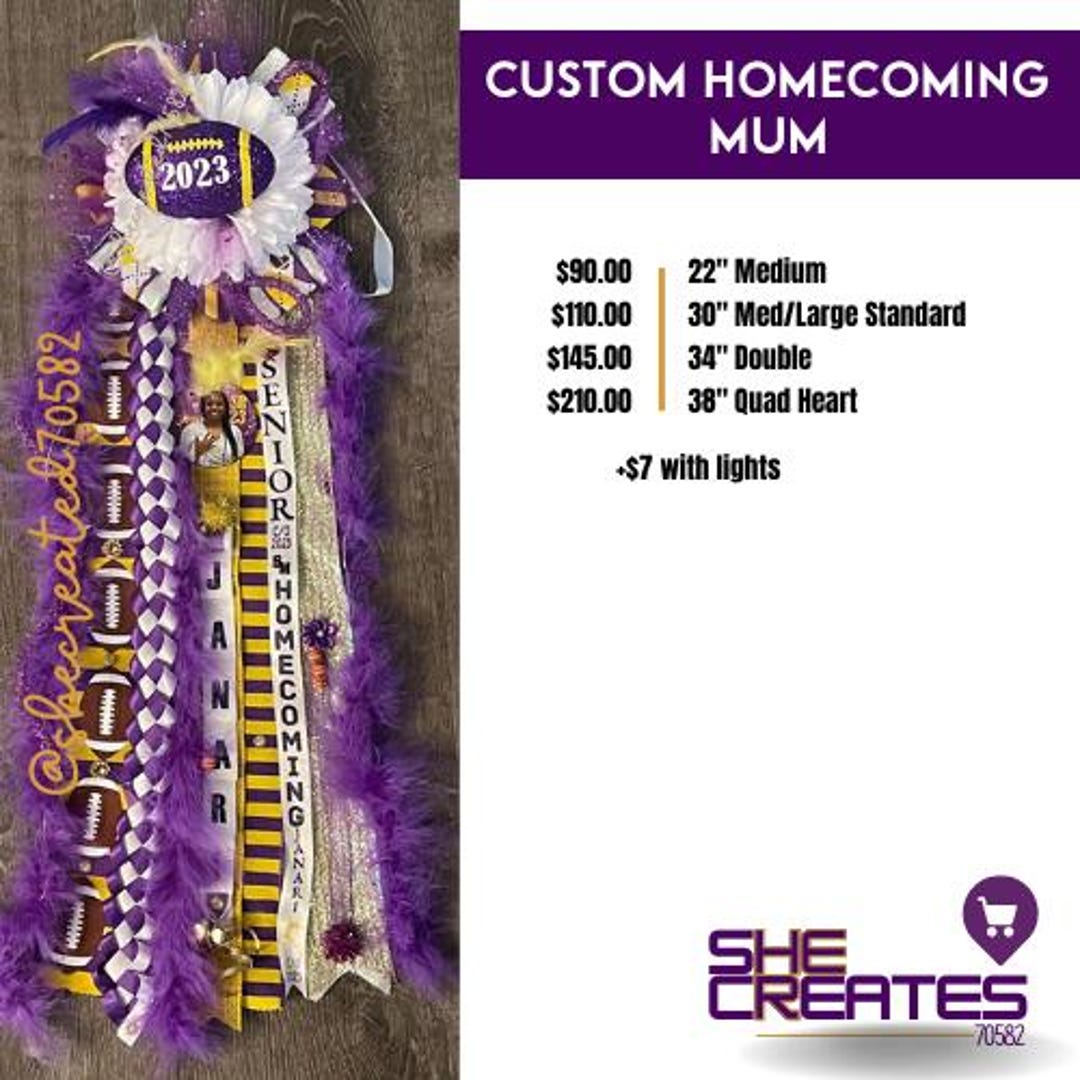
Beyond the base colors, mums are decorated with "trinkets" and "charms" that represent the student’s specific contributions to the school. A student might include:
- Plastic musical notes for band members.
- Miniature footballs or cheerleading megaphones for athletes.
- Academic symbols like graduation caps or books.
- Customized ribbons printed with the student’s name, their jersey number, or their graduation year.
When students see these details on each other’s mums, it fosters mutual respect and recognition. It allows a student who might not be a star athlete to be celebrated for their role in the chess club or the theater department. This inclusivity is the engine of genuine school spirit, as it ensures that "spirit" isn't reserved only for the most popular or visible groups.
The Economics and Community Impact of the Mum Industry
The importance of mums for school spirit extends beyond the school walls and into the local economy. In many towns, "Mum Season" is a significant economic driver for local florists, craft stores, and independent makers.
Local businesses often partner with school booster clubs to provide supplies or finished products. This partnership strengthens the bond between the town and the school. When local shops display mum supplies in the window, it signals to the community that the homecoming event is a town-wide priority. According to reports from the Texas State Historical Association, traditions like these are vital for maintaining the social fabric of smaller communities where the high school is the central hub of activity.
Furthermore, the DIY nature of many mums creates "mum-making parties" among parents and friends. These gatherings are an informal but essential part of the school spirit ecosystem. They provide a space for parents to connect, share stories about their own high school experiences, and invest their time and labor into their children’s school lives. This parental involvement is a key indicator of a healthy school community.
Psychological and Social Benefits for Students
From a psychological perspective, homecoming mums function as a form of "social glue." High school can be a fragmented experience, with students divided by grades, cliques, and interests. The homecoming mum acts as a unifying agent.
Inclusion and the "Mum for Everyone" Movement
One of the most positive developments in the 2026 school year is the continued expansion of the "Mum for Everyone" movement. Traditionally, mums were exchanged between romantic partners. However, to foster better school spirit and inclusivity, the focus has shifted toward "friendship mums" and "family mums."
Teachers and administrators often encourage this shift to ensure that no student feels left out of the celebration. Many schools now have programs where booster clubs or student councils provide basic mums or garters for students who might not have the means to purchase one. By removing the romantic and financial barriers to participation, schools ensure that the spirit of homecoming is truly universal.
The Rite of Passage
Psychologists often note the importance of "rites of passage" in adolescent development. The homecoming mum serves this role perfectly. The transition from a small freshman garter to a massive senior mum marks the passage of time and the accumulation of experiences. This ritualized growth helps students process their transition into adulthood while remaining tethered to their community’s traditions.
Technical Anatomy of a Modern 2026 Homecoming Mum
To understand the complexity and the effort involved in these symbols of spirit, one must look at the technical components. A modern mum is an engineered piece of wearable art.
| Component | Material/Type | Purpose |
|---|---|---|
| The Backer | Heavy-duty cardboard or plastic | Provides the structural foundation for the entire assembly. |
| The Flower | High-quality silk Chrysanthemum | The central focal point; often 6.5 to 9 inches in diameter. |
| Ribbons | Acetate, Satin, and Glitter | Create length and movement; usually 18 to 36 inches long. |
| Braids | Military, Diamond, or Spiral | Intricate hand-woven ribbons that demonstrate craftsmanship and "extra" spirit. |
| Electronics | Battery-powered LED strings | Enhances visibility during night games and pep rallies. |
| Trinkets | Injection-molded plastic | Represents specific sports, clubs, and personal hobbies. |
| Bells | Chrome or Gold-plated cowbells | Provides an auditory element to the school spirit (the "jingle" of the hallways). |
Common Challenges and Ethical Considerations
While homecoming mums are overwhelmingly positive for school spirit, they are not without challenges. Addressing these issues is part of maintaining a healthy tradition.
The Cost Barrier
The most significant criticism of the mum tradition is the cost. A professional, custom-made "mega-mum" in 2026 can cost anywhere from $150 to over $500. For families with multiple children, this can be a financial burden. Schools that successfully leverage mums for spirit are those that actively work to mitigate these costs. DIY workshops, "ribbon swaps," and donation programs for recycled mums are excellent ways to keep the tradition accessible.
Sustainability
As environmental awareness grows, some students have raised concerns about the plastic and synthetic materials used in mums. In response, 2026 has seen a rise in "eco-mums" made from recycled paper, biodegradable ribbons, and natural dried flowers. This adaptation shows that school spirit can evolve to match the values of the current generation without losing its core identity.
How to Participate: A Guide for Families
For families new to a school district where mums are a major tradition, the process can seem overwhelming. Here are the practical steps to engaging with this aspect of school spirit:
- Check the Calendar: Identify the homecoming date early. Professional mum makers often stop taking orders 3-4 weeks before the event.
- Determine the Type: Decide if you are making or buying a "mum" (worn around the neck or pinned to the shoulder) or a "garter" (worn on the arm).
- Incorporate the "Big Three": Ensure the design includes the school colors, the student’s name, and their graduation year.
- Consider Comfort: A large mum can be heavy. Ensure the "backbone" of the mum includes a comfortable neck strap or heavy-duty safety pins that won't damage school uniforms or clothing.
- Embrace the Sound: Don't forget the bells. The sound of bells in the hallway is the quintessential "soundtrack" of homecoming week.
Frequently Asked Questions
Why do people wear homecoming mums?
People wear homecoming mums to display school pride, celebrate their involvement in extracurricular activities, and participate in a long-standing community tradition. It is a visual way to support the football team and the school during one of the most important social weeks of the academic year.
Are homecoming mums only a Texas thing?
While the tradition is most prominent in Texas, it has spread significantly to neighboring states like Oklahoma, Louisiana, New Mexico, and even parts of Arkansas. While schools in other states may have homecoming traditions, the "mega-mum" style is uniquely Southwestern.
What is the difference between a mum and a garter?
Traditionally, a "mum" is a larger arrangement worn by girls, either pinned to the chest or hung around the neck with a ribbon. A "garter" is a smaller version attached to an elastic band and worn around the arm by boys. However, in 2026, these gender roles are increasingly fluid, with many students choosing the style they prefer regardless of tradition.
Can you reuse a homecoming mum?
Yes, many families choose to reuse the base elements of a mum (like the flower and backer) and simply update the ribbons with the new year and current interests. This is an excellent way to save money and reduce waste while still participating in the tradition.
Why are senior mums white?
Senior mums are traditionally white and gold (or white and silver) to signify the student’s final year of high school. It acts as a badge of honor and a visual "graduation" before the actual ceremony, distinguishing the senior class from underclassmen who wear the standard school colors.
Recommendations for Enhancing Spirit
To maximize the impact of homecoming mums on school spirit, schools should focus on accessibility and inclusion. Organizing a "spirit workshop" where students can assemble their own garters or mums using donated or low-cost materials ensures that everyone can participate. By shifting the focus from the price tag to the creativity and personal meaning behind the ribbons, schools can ensure that the homecoming mum remains a vibrant, unifying symbol for generations to come.
Image Gallery