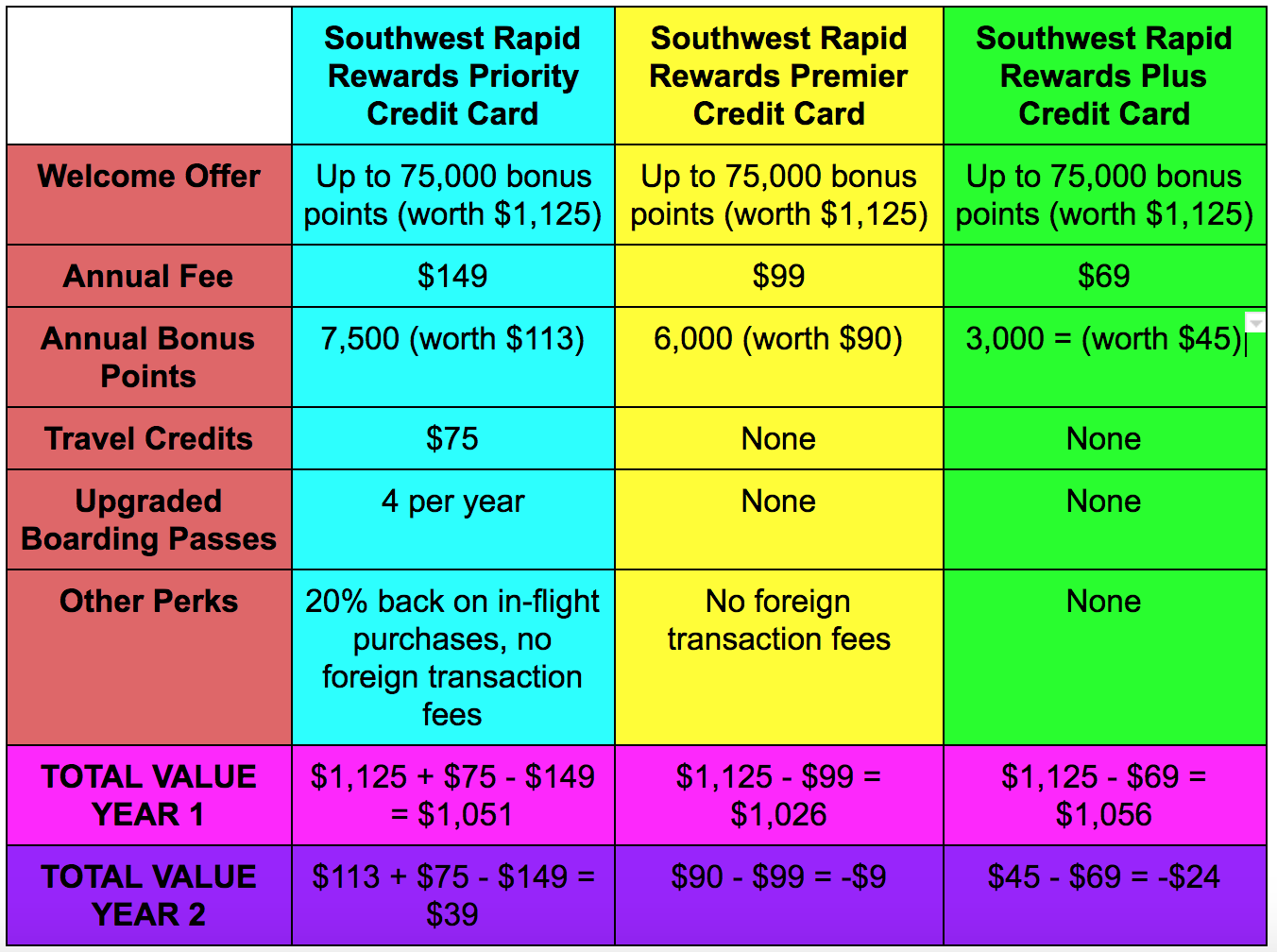
Why Credit Card Points Offers Aren't Always the Best Deal
Credit card offers promising massive point balances are not always the best deal because high annual fees, point devaluation, restrictive redemption rules, and inflated point valuations frequently erode their real-world purchasing powe...
Credit card offers promising massive point balances are not always the best deal because high annual fees, point devaluation, restrictive redemption rules, and inflated point valuations frequently erode their real-world purchasing power. Straightforward cash back or lower-fee cards often deliver superior net financial returns without requiring complex redemption strategies or forced spending.
Contents
Disclaimer: The financial information provided in this guide is for educational purposes only and does not constitute individual legal, tax, or financial advisory advice. Credit card terms, annual fees, and reward valuations fluctuate based on market conditions and individual credit profiles.
The Illusion of High Point Totals: Valuation vs. Headline Numbers
Marketing campaigns from major credit card issuers frequently headline eye-popping figures—such as "100,000 Bonus Points"—to capture consumer attention. To the untrained eye, 100,000 units of currency sound like a major windfall. However, in the credit card industry, a point is not equal to a dollar, nor is it equal across different credit card programs.
The baseline standard for credit card rewards is the cash-equivalent value, typically calculated as 1 cent per point ($0.01). At this baseline, a 100,000-point welcome bonus is worth $1,000 in straightforward statement credits or bank deposits. However, many points programs restrict redemption rates for cash equivalents to 0.5 to 0.7 cents per point. In those cases, that impressive 100,000-point headline offer yields only $500 to $700 in actual spending power unless the cardholder books specific travel arrangements through designated portals or transfer partners.
Headline Point Value × Redemptive Cents-Per-Point (CPP) = Real Cash Value Example: 80,000 Points × $0.007 (Cash Back Rate) = $560 True Value
Furthermore, points are proprietary currencies controlled entirely by the issuing bank or loyalty program. Unlike government-backed fiat currency, points carry no guaranteed monetary backing, pay no interest, and can be unilaterally revalued or altered by the issuing company at any time. Evaluating a card solely based on the raw count of points offered ignores the fundamental math of redemptive value.
High Annual Fees Eat Into Net Rewards Value
One of the primary reasons point-heavy credit cards fail to deliver the best value is the heavy burden of annual fees. Premium rewards cards often carry annual fees ranging from $250 to over $695. While these cards advertise high reward rates on specific categories, the annual fee acts as an immediate drag on your overall return.
To determine whether a points offer outperforms a simpler alternative, cardholders must calculate their net financial gain, which subtracts the annual fee and non-essential expenditures from the gross value of the rewards earned.
Net Financial Gain Formula
$$\text{Net Gain} = (\text{Rewards Earned in Dollars}) - (\text{Annual Fee}) - (\text{Induced Spending})$$
Consider a scenario comparing a premium points card with a basic, zero-annual-fee cash-back card:
- The Premium Points Card: Carries a $550 annual fee. The cardholder spends $20,000 in a year and earns points equivalent to $800 in travel value. After subtracting the $550 annual fee, the cardholder’s net gain is $250.
- The Flat-Rate Cash Back Card: Carries a $0 annual fee and pays a simple 2% cash back on all purchases. The same $20,000 in spending yields a net cash gain of $400.
Despite the premium card offering complex travel perks and an impressive-sounding points earnings rate, the zero-fee cash-back card puts $150 more cash into the consumer’s pocket.
Card issuers attempt to offset these high annual fees by offering "statement credits" for specific services, such as ride-sharing apps, streaming platforms, or resort hotels. However, unless you were already spending money on those exact merchants prior to acquiring the card, using those credits does not save you money—it simply justifies an inflated fee structure while forcing you into specific consumption habits.
Inflation and Devaluation: Points Are a Depreciating Asset
Unlike funds deposited in a high-yield savings account or invested in financial markets, credit card points do not earn interest or appreciate over time. In fact, points are subject to severe inflation controlled entirely by airlines, hotel chains, and bank loyalty programs. This process is known as rewards devaluation.
Issuers and loyalty partners regularly modify their redemption schedules. A hotel room that costs 25,000 points per night today might require 40,000 points next year after a program "re-categorization." Similarly, airlines frequently abandon fixed award charts in favor of dynamic pricing models, tying the point cost directly to the fluctuating cash price of a ticket.
When dynamic pricing is introduced, the high valuation of points drops significantly during peak travel seasons—the exact times most consumers want to use their rewards. Holding a large stockpile of points for future use exposes consumer capital to constant loss of purchasing power. The longer you hold points, the less valuable they generally become. Cash, by contrast, provides immediate liquidity and flexibility, allowing consumers to earn interest, pay off debt, or invest directly.
The Minimum Spend Trap: Induced Spending & Friction
To unlock lucrative welcome bonuses, credit card issuers usually require cardholders to meet a minimum spending threshold—such as spending $4,000 to $6,000 within the first three to four months of account opening. This requirement introduces a behavioral economics trap known as induced spending.
When consumers shift their spending habits or make unnecessary purchases simply to reach a minimum spend requirement, the financial benefit of the bonus is substantially reduced or entirely erased.
- Scenario A (Organic Spending): A consumer who naturally spends $1,500 per month on routine living expenses (groceries, utilities, insurance) meets a $4,000 requirement over three months effortlessly. The welcome bonus represents a pure profit margin.
- Scenario B (Induced Spending): A consumer who typically spends $800 per month manufactures an extra $1,600 in unnecessary discretionary purchases over three months to hit the $4,000 threshold. If they receive a $600 point bonus, they have spent $1,600 extra cash to "save" $600, resulting in a net loss of $1,000.
Furthermore, points programs carry high operational friction. Redeeming points for peak value requires significant time, effort, and flexibility. Cardholders must navigate blackout dates, limited award seat availability, portal booking markups, and complex transfer partner structures. If an individual lacks the schedule flexibility or time required to optimize these redemptions, the real-world value of those points drops dramatically.
Interest Charges Negate Point Values Instantly
The profitability model of credit card rewards relies heavily on consumer revolvers—cardholders who carry a balance from month to month. Credit card annual percentage rates (APRs) frequently range between 20% and 30%. High-interest rates easily wipe out the monetary value of any point system.
Monthly Balance Carried: $3,000 Average Annual Percentage Rate (APR): 24% Annual Interest Paid: ~$720 Points Value Earned on $3,000 Spend (at 2% equivalent rate): $60 Net Result: -$660 Loss
If a cardholder carries a balance while pursuing points, the math fails immediately. Earning 2% to 5% in rewards value while paying 20%+ in compound annual interest is an unsustainable financial trade-off. For anyone who carries a monthly balance, the interest rate, fee structure, and introductory 0% APR terms are exponentially more critical than any point offer on the market.
Comparing Rewards Models: Points vs. Cash Back vs. Low-Interest Cards
Choosing the right credit card requires comparing points systems against alternative card structures based on fees, flexibility, and risk factors.
| Metric / Feature | Premium Points-Based Cards | Flat-Rate Cash-Back Cards | Low-Interest / 0% APR Cards |
|---|---|---|---|
| Primary Incentive | High headline bonuses, travel perks | Fixed cash-equivalent return (e.g., 2%) | Interest mitigation, balance transfers |
| Typical Annual Fee | $95 to $695+ | $0 | $0 |
| Redemption Flexibility | Low to Moderate (Restricted to portals/partners) | High (Direct statement credit or bank deposit) | N/A (Focus is on debt management) |
| Risk of Devaluation | High (Controlled by issuer rules) | None (Dollar values remain fixed) | None |
| Management Effort | High (Award charts, transfer research) | Very Low (Automated cash back) | Low |
| Best Suited For | Frequent travelers, award optimizers | Everyday spenders wanting simplicity | Those carrying a balance or financing purchases |
How to Calculate If a Credit Card Offer Is Right for You
Before applying for a credit card based on an attractive points promotion, run the offer through a simple financial screening process to evaluate its true value.
Step 1: Calculate Real Cash Value of Points Step 2: Subtract the Annual Fee Step 3: Subtract Any Induced Spending Costs Step 4: Compare Against Baseline Zero-Fee 2% Cash-Back Card Result = Decision (Accept or Reject Offer)
1. Determine the Baseline Valuation
Convert the advertised point total into a cash baseline. Assign a minimum baseline value of 1 cent per point ($0.01) unless the issuer explicitly restricts cash redemptions below that threshold. If 60,000 points can only be redeemed for cash at 0.6 cents per point, treat the real baseline value of the bonus as $360, not $600.
2. Audit Your Normal Spending Patterns
Examine your bank and credit statements from the past six months. Calculate your average monthly spend on non-discretionary categories. If meeting the card's minimum spend requirement requires you to spend more than your established budget, the offer presents a high risk of induced spending.
3. Evaluate the Ongoing Earn Rate Against Annual Fees
Look past the initial sign-up bonus to determine long-term value. Calculate what you will earn in Year 2 and beyond after the bonus has been spent. Multiply your annual category spending by the card’s earn multipliers, subtract the annual fee, and compare that final number to a simple zero-fee 2% cash-back card.
4. Assess Redemption Friction vs. Personal Time
Be honest about your willingness to manage complex points systems. If you prefer to book travel directly through search engines or hotel sites without dealing with transfer rules, blackouts, or portal price markups, point-based cards will likely underperform cash back in practical execution.
Frequently Asked Questions
Are travel points worth more than cash back?
Travel points can yield a higher theoretical value per point when redeemed for premium-cabin international flights or high-end hotel stays via transfer partners. However, for everyday purchases, domestic economy flights, or standard hotel stays, cash back often provides equal or superior value without annual fees or redemption restrictions.
Why do banks push points credit cards so aggressively over cash back?
Banks aggressively market points cards because high annual fees and complex points systems generate substantial revenue. Additionally, breakage—the percentage of points that consumers earn but never actually redeem—allows issuers to reduce their overall rewards liabilities while keeping headline promotional numbers high.
Can a credit card issuer change the value of my points after I earn them?
Yes. Credit card rewards program terms and conditions explicitly state that the issuer reserves the right to modify point values, change redemption options, add fees, or alter program rules at any time without prior notice. Points are not consumer property; they are contractual privileges.
What is the "opportunity cost" of holding credit card points?
The opportunity cost of holding points is the missed financial value you could have obtained by choosing cash instead. Cash can be saved in an interest-bearing account, invested in equities, or used to pay off high-interest debt immediately. Points sit dormant, earn zero interest, and gradually lose purchasing power due to program devaluations.
When does a high-annual-fee points card actually make sense?
A high-annual-fee points card makes financial sense when a consumer travels frequently, organically spends enough in bonus categories to exceed the annual fee, and routinely utilizes built-in card perks (such as lounge access, primary rental car insurance, or hotel credits) that they would have paid cash for anyway.
Practical Action Plan: Evaluating Your Next Credit Card Offer
When considering a new credit card offer, follow these concrete steps to ensure you select the card that maximizes your actual financial net worth:
- Establish your cash baseline: Calculate the immediate, non-travel cash redemption value of the welcome offer.
- Subtract compulsory costs: Deduct the annual fee from the cash baseline to establish Year 1 Net Profit.
- Run the Year 2 test: Calculate your expected rewards earnings for Year 2 without a welcome bonus. If Year 2 Net Profit is lower than a 2% zero-fee cash-back card, the offer is only beneficial as a short-term acquisition, not a long-term financial tool.
- Enforce a zero-balance policy: Never open a rewards card if you carry a monthly balance. Pay off all statement balances in full every month to ensure interest charges do not neutralize your rewards.
EDITORIAL CATEGORY METADATA:
Image Gallery