Comprehensive Guide to Colorado Springs Warrant Checks and Legal Resolution in 2026
To perform a Colorado Springs warrant check in 2026, you should utilize the El Paso County Sheriff’s Office online warrant search tool or the Colorado Judicial Branch’s statewide database. For city-specific municipal violations, contac...
To perform a Colorado Springs warrant check in 2026, you should utilize the El Paso County Sheriff’s Office online warrant search tool or the Colorado Judicial Branch’s statewide database. For city-specific municipal violations, contact the Colorado Springs Police Department (CSPD) Records Division directly. This guide outlines the precise steps to identify active warrants while maintaining your legal rights and navigating the jurisdictional differences between municipal and county systems.
Contents
Understanding the Legal Jurisdictions in Colorado Springs
Before beginning a warrant search, it is critical to understand that Colorado Springs operates under multiple layers of law enforcement jurisdiction. Depending on the alleged offense, a warrant could be issued by the City of Colorado Springs (Municipal), El Paso County (District/County), or the State of Colorado.
Warrants are legal authorizations issued by a judge or magistrate that allow law enforcement to perform a specific action—usually an arrest or a search. In 2026, the digital integration of these records has improved, but specific databases remain separate based on the level of the court.
Municipal vs. County Warrants
- Municipal Warrants: These are issued by the Colorado Springs Municipal Court. They typically involve city ordinance violations, such as minor traffic infractions, animal control issues, or low-level public disturbances within city limits.
- County and District Warrants: Issued by the 4th Judicial District Court, these cover more serious offenses, including misdemeanors and felonies committed anywhere in El Paso County, including the city of Colorado Springs.
- Bench Warrants: These are issued directly from the bench by a judge, usually because an individual failed to appear (FTA) for a scheduled court date or failed to comply with a court order (such as paying a fine or completing community service).
Primary Methods for Conducting a Warrant Check in 2026
There are three primary avenues to verify the existence of a warrant in the Colorado Springs area. Each serves a different purpose and provides different levels of detail.
1. El Paso County Sheriff’s Office (EPSO) Search
The EPSO maintains the most comprehensive local database for warrants related to state-level crimes (misdemeanors and felonies). In 2026, their online portal remains the first point of contact for residents.
Expert Protocol for EPSO Searches
When using the Sheriff’s database, searches are typically conducted by last name. It is important to note that the public-facing database may have a delay of 24 to 48 hours from the time a warrant is signed by a judge to the time it appears online. If you suspect an active warrant for a violent felony, the information may be temporarily withheld from public view to protect law enforcement during the apprehension process.
2. Colorado Springs Police Department (CSPD) Records
For city-specific violations, the CSPD Records Division is the authoritative source. While the Sheriff's Office handles county-wide arrests, the CSPD manages warrants originating from the Municipal Court.
- Location: 705 S. Nevada Ave, Colorado Springs, CO 80903.
- Phone Inquiry: You can call the records department, but be advised that staff may be limited in what they can disclose over the phone for security and privacy reasons.
- Online Portal: As of 2026, the City of Colorado Springs has streamlined its municipal records portal, allowing users to search for active municipal cases by name and date of birth.
3. Colorado Judicial Branch (Statewide)
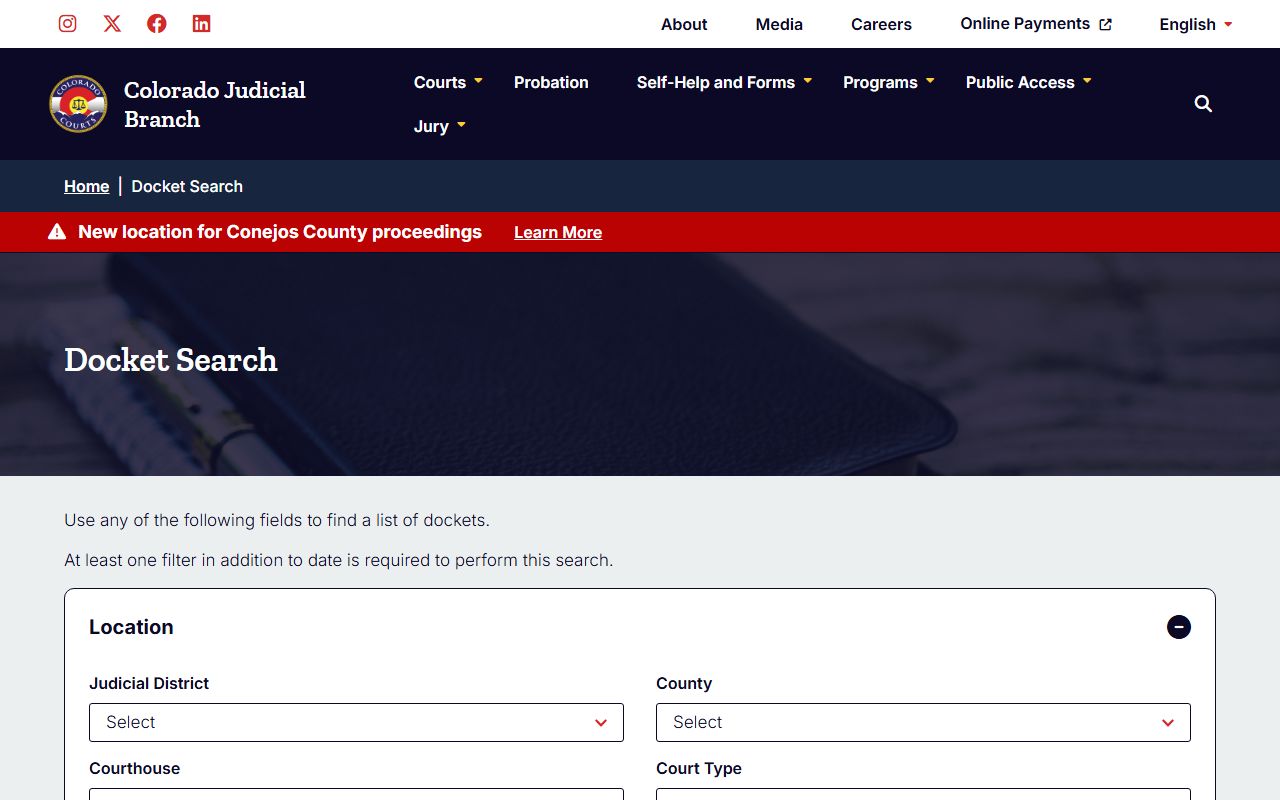
If you believe a warrant exists but cannot find it locally, the Colorado Judicial Branch provides a "Docket Search" and a "Public Access to Court Records" system. This is particularly useful for finding "Failure to Appear" warrants issued by district courts across the state.
Detailed Comparison of Search Resources
| Resource Provider | Jurisdiction | Data Sensitivity | Recommended Use Case |
|---|---|---|---|
| El Paso County Sheriff | County / State | High (Includes Felonies) | Serious criminal charges and misdemeanors. |
| CSPD Municipal Court | City Limits | Moderate (Ordinances) | Traffic tickets, local code violations, FTAs. |
| CO Bureau of Investigation | Statewide | Full Criminal History | Background checks and cross-county warrants. |
| 4th Judicial District | Regional | Court Specific | Verifying bench warrants for missed hearings. |
| Private Search Services | National | Variable Accuracy | Preliminary research (not for legal verification). |
The Risks of Self-Checking and the "Walk-In" Hazard
A common mistake individuals make is walking into a police station or the El Paso County CJC (Criminal Justice Center) to "see if they have a warrant."
In 2026, law enforcement protocols remain strict: if a clerk identifies an active "No Bond" or "Must See Judge" warrant while you are standing at the window, they are often legally obligated to detain you immediately.
Safer Alternatives to Physical Inquiry
- Legal Representation: An attorney can contact the court or the warrant division on your behalf. This is protected by attorney-client privilege, and the attorney can often negotiate a "walk-through" bond (where you turn yourself in and are released immediately after processing) before you even arrive at the jail.
- Bail Bondsmen: In Colorado Springs, many reputable bail bond agencies have access to specialized databases. They can confirm a warrant and provide you with the exact bond amount required for release, allowing you to secure the funds before facing the court.
- Online Third-Party Verifiers: While less official, these can provide a layer of anonymity, though they often charge fees for information that is technically public record.
Technical Specifications: Types of Warrants in the 4th Judicial District
The technical nature of a warrant dictates how it can be resolved. Not all warrants result in immediate jail time if handled correctly.
Arrest Warrants
These are issued after a law enforcement officer presents an affidavit to a judge establishing probable cause that a crime was committed. In Colorado Springs, these are common in domestic violence cases, theft, and drug-related offenses.
Bench Warrants
Usually the result of a "Failure to Appear" (FTA) or "Failure to Comply" (FTC). If you missed a court date at the courthouse on S. Tejon St., a bench warrant was likely issued. These often have a pre-set bond amount.
Fugitive Warrants (Extradition)
If you have an active warrant in another state and are contacted by CSPD, you may be held on a fugitive warrant. Colorado law in 2026 allows for a 30-to-90-day hold while the demanding state decides whether to extradite.
Step-by-Step Guide to Resolving an Active Warrant
If your check reveals an active warrant in Colorado Springs, follow this professional framework to mitigate the impact on your life and freedom.
- Confirm the Bond Type: Determine if it is a "Cash/Surety" bond, "Personal Recognizance" (PR) bond, or "No Bond."
- Contact a Criminal Defense Attorney: This is the most critical step. In the 4th Judicial District, an attorney can file a "Motion to Quash" the warrant. If the warrant is for a minor offense or a first-time FTA, a judge may retract the warrant and set a new court date without requiring jail time.
- Arrange Finances: If a motion to quash is denied, you will need to pay the bond. Contact a local Colorado Springs bondsman to understand the 10% premium requirements and any collateral needed.
- The "Turn-In" Strategy: Never wait to be pulled over for a broken taillight to discover your warrant. Coordinate a time to turn yourself in—usually Tuesday through Thursday mornings are best, as judges are on the bench and can see you for a bond hearing within 24 hours. Avoid turning yourself in on Friday afternoons, as you may spend the entire weekend in the El Paso County Jail.
Impact of Warrants on Employment and Housing in 2026
In the 2026 labor market, most Colorado Springs employers (especially in the defense contracting and tech sectors prevalent near Peterson Space Force Base and Fort Carson) utilize continuous background monitoring.
An active warrant, even for a minor misdemeanor, can trigger:
- Immediate Suspension: If your role requires a security clearance or access to federal property.
- Housing Denial: Property managers in El Paso County frequently check for active warrants during the application process, viewing them as a high-risk indicator for lease non-compliance.
- Driver's License Suspension: The Colorado DMV is electronically linked to the court system. An unresolved traffic warrant will eventually lead to the suspension of your driving privileges.
Frequently Asked Questions
Can I check for warrants anonymously in Colorado Springs? Yes, using the El Paso County Sheriff’s online search tool does not typically require you to log in or provide your own identifying information. However, your IP address may be logged by government servers. For total anonymity, many individuals use a legal representative or a public library computer.
How long does a warrant stay active in Colorado? In Colorado, warrants do not "expire." A warrant issued in 2010 for a missed court date remains active in 2026 unless it is quashed by a judge, the individual is arrested, or the individual passes away. Statute of limitations applies to the filing of charges, not the validity of an issued warrant.
What is the cost of a warrant check? Searching the EPSO and CSPD online databases is free. However, if you require a certified criminal history background check through the Colorado Bureau of Investigation (CBI) via the Internet Criminal History Check (ICHC) system, there is a nominal fee (typically around $5.00 to $10.00 in 2026).
Will a Colorado Springs warrant show up in other states? Yes. Most warrants are entered into the National Crime Information Center (NCIC) database. While minor municipal warrants might have a "limited extradition" radius (meaning they won't bring you back from Florida for a littering charge), felony warrants are visible to law enforcement nationwide.
Can a warrant be issued without me knowing? Absolutely. If the court sends a summons to an outdated address or if a law enforcement agency completes an investigation and a judge signs an affidavit, a warrant can exist without the individual being served personally. This is why regular checks are recommended if you have any pending legal matters.
Professional Recommendations for Residents
The legal landscape in Colorado Springs is rigorous but navigable. If you discover a warrant, the worst action is inaction. The 4th Judicial District courts favor those who proactively attempt to resolve their status.
Utilize official channels like the El Paso County Sheriff’s Office for your initial search. If a warrant is found, immediately pivot to a legal professional who understands the local nuances of the Colorado Springs Municipal Court and the El Paso County District Court. Resolving the matter through a "Motion to Quash" or a scheduled "Walk-Through" is significantly less disruptive than an unexpected arrest during a routine traffic stop or workplace inspection.
Image Gallery