Who is the Writer of the Bhagavad Gita: Historical and Literary Perspectives
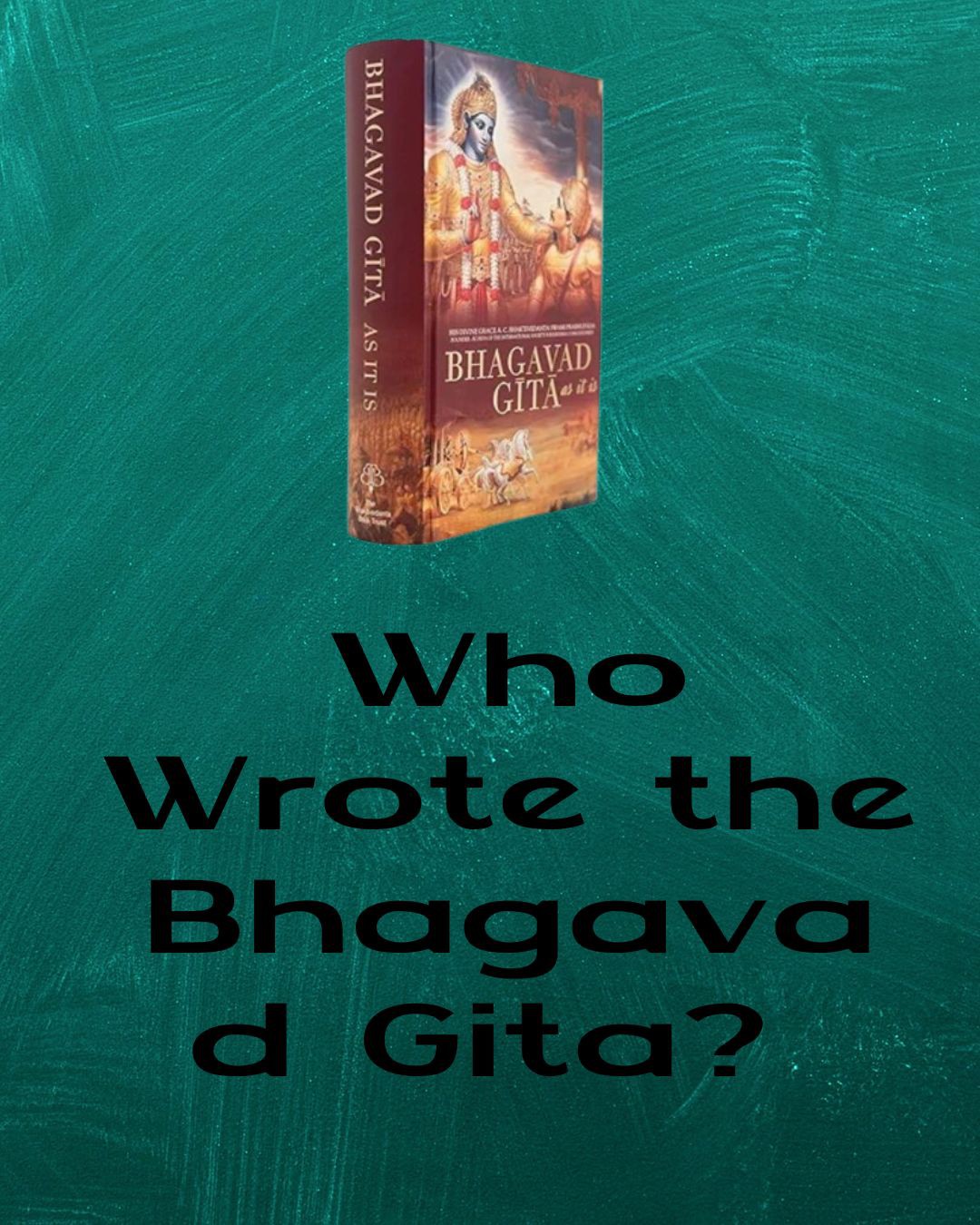
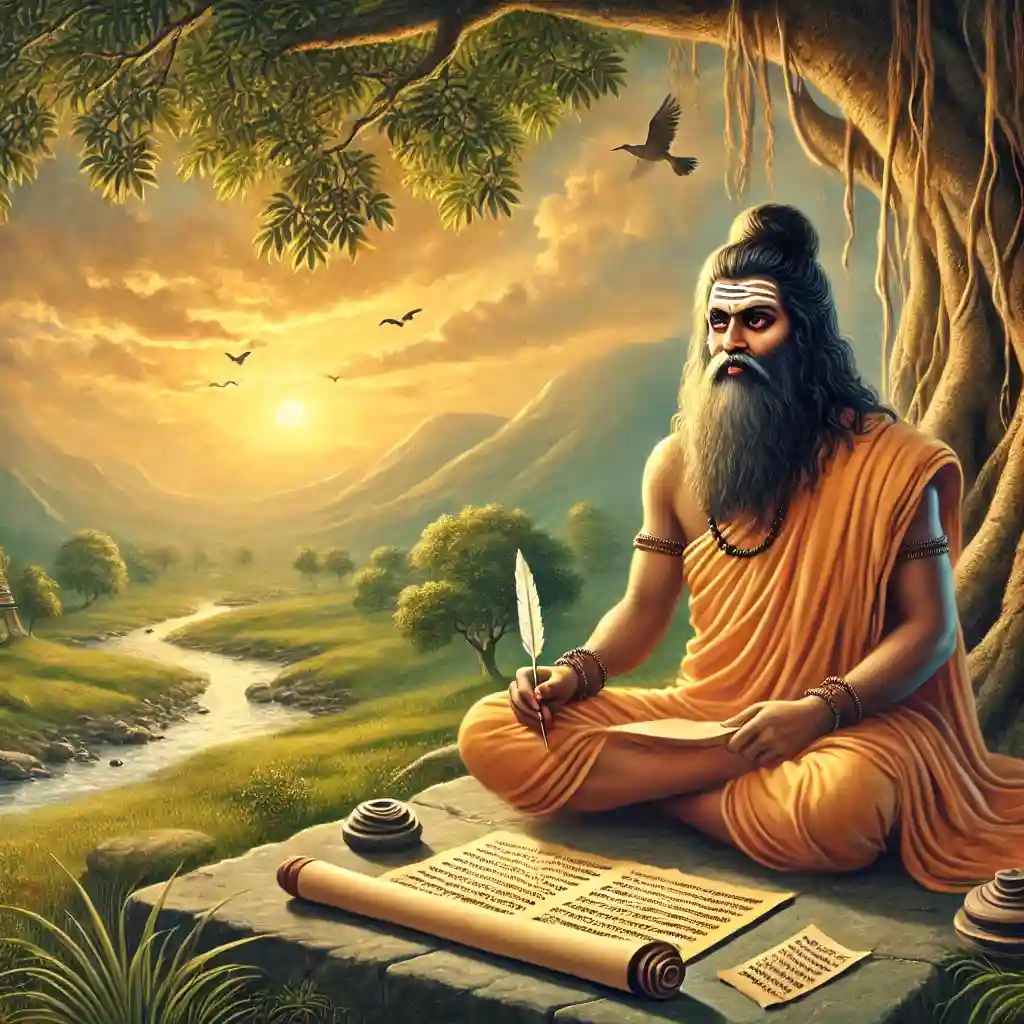
The Bhagavad Gita, a seminal text of ancient Indian philosophy, is traditionally attributed to the sage Vyasa. Within the narrative framework of the Mahabharata, Vyasa serves as both a pivotal character and the compiler of the epic. Wh...
The Bhagavad Gita, a seminal text of ancient Indian philosophy, is traditionally attributed to the sage Vyasa. Within the narrative framework of the Mahabharata, Vyasa serves as both a pivotal character and the compiler of the epic. While modern scholars view the text as a multi-layered compilation developed over several centuries, Vyasa remains the canonical authorial figure in Hindu tradition.
Contents
Understanding the Authorship of the Bhagavad Gita
In the context of Vedic literature and historical studies, the question of authorship requires a distinction between traditional belief and analytical scholarship. The text is not considered a work of a single human hand in the modern sense of a solitary novel, but rather a profound dialogue integrated into a larger epic tradition.
The Traditional Attribution to Sage Vyasa
The name Vyasa literally means the "compiler" or "arranger." Tradition holds that Vyasa divided the Vedas into four parts and composed the Mahabharata, the massive epic within which the Bhagavad Gita resides.
- Role as Compiler: According to the Puranic tradition, Vyasa did not merely invent the verses but acted as the transcriber and organizer of the eternal wisdom imparted by Krishna.
- The Divine Connection: In the narrative, Vyasa possesses divine foresight, allowing him to document the conversation between Arjuna and Krishna on the battlefield of Kurukshetra.
- Literary Significance: The attribution to Vyasa serves to establish the text within the lineage of Rishi (seer) literature, granting it the authority of Shruti (that which is heard) or Smriti (that which is remembered).
Scholarly and Critical Perspectives on Composition
Historians and linguists often approach the text through textual criticism and stylistic analysis. By examining the Sanskrit meter, vocabulary, and philosophical development, researchers have established a timeline for the text's evolution.
- Multiple Strata: Academic consensus suggests that the Bhagavad Gita was likely inserted into the Mahabharata. It shows signs of different philosophical layers, suggesting the work was refined over a period spanning from 400 BCE to 200 CE.
- Anonymous Compilation: From an archaeological or historical standpoint, the specific individual "Vyasa" is often viewed as a representative title for a school of thought or a succession of compilers rather than a singular historical personage from a fixed timeframe.
- Philosophical Synthesis: The text functions as a bridge between early Upanishadic thought and later Bhakti (devotional) movements, reflecting the shifting theological landscape of ancient India.
Comparative Analysis of Authorship Theories
The following table delineates the differences between the traditional religious perspective and the modern historical-critical approach regarding the authorship of the Gita.
| Perspective | Primary Author | Nature of Composition | Historical Context |
|---|---|---|---|
| Traditional | Sage Vyasa | Divine revelation and direct transcription | Set during the Dvapara Yuga, thousands of years ago |
| Academic | Unknown Sages | Evolution of multi-layered philosophical verse | Developed roughly between 400 BCE and 200 CE |
| Literary | Epic Poet(s) | Oral tradition integrated into the Mahabharata | Stylistic evolution consistent with Sanskrit epic poetry |
The Philosophical Structure and Narrative Role
Understanding the authorial intent requires examining how the Gita is situated within the Mahabharata. It is not an independent treatise but a corrective moment occurring at the height of a familial and political crisis.
The Setting as a Catalyst for Wisdom
The Gita occurs at the Kurukshetra battlefield. This setting is essential to the authorship; it provides the urgency required for the dialogue. Without the impending war and Arjuna's existential crisis, the systematic exposition of Karma, Jnana, and Bhakti yoga by Krishna would not have the same dramatic or philosophical weight.
Linguistic Characteristics
The Sanskrit used in the Bhagavad Gita is classified as Epic Sanskrit. This style differs from the more complex, rigid Vedic Sanskrit and the later Classical Sanskrit. The clarity of the verse structure allows for widespread memorization and oral transmission, which historically supported the attribution of the work to a central figure like Vyasa, who is credited with the preservation of oral knowledge.
Common Questions Regarding the Gita's Origin
Did Krishna write the Bhagavad Gita?
Krishna is the speaker of the Bhagavad Gita, not the writer. According to the epic, the dialogue was witnessed by Sanjaya, who possessed divine sight, and was later recorded by Vyasa as part of the narrative of the Mahabharata.
Is the Bhagavad Gita part of the Vedas?
Technically, the Bhagavad Gita is classified as Smriti, specifically an Itihasa (history). While it draws heavily from the philosophy found in the Upanishads (which are part of the Vedas), it is distinct from the four foundational Vedas.
Why is Vyasa credited with so many texts?
In ancient Indian tradition, "Vyasa" is often considered a title representing the individual responsible for categorizing, editing, and systematizing the vast corpus of oral traditions. It denotes the role of an editor-in-chief of the foundational literature.
Can the date of the Gita be pinpointed?
No single date exists. Historians generally agree on a window of growth, suggesting that the core text was solidified during the Maurya or early Gupta periods, though its philosophical roots are much older.
Does the authorship change the meaning of the text?
For practitioners, the divine or sage-inspired origin confirms the text's legitimacy and spiritual authority. For scholars, focusing on the historical development allows for a deeper understanding of how Indian philosophy adapted to meet the social and intellectual challenges of antiquity.
Evaluating the Impact of Oral Tradition
The transmission of the Bhagavad Gita was primarily oral for centuries. This explains the stability of the verses despite the lack of a single physical "original manuscript" signed by a specific author. The tradition of Guru-Shishya parampara (teacher-disciple lineage) ensured that the text remained intact, protecting it from significant alteration even as it was passed down through generations.
When engaging with the Bhagavad Gita, it is most productive to view the authorship not as a barrier to understanding, but as an invitation to explore the synthesis of ancient wisdom. Whether viewed as the work of the legendary sage Vyasa or as a collective masterpiece of ancient Indian thought, the text continues to function as a primary document for understanding ethical, spiritual, and existential dilemmas.
For those interested in further study, reviewing critical editions provided by reputable academic institutions or established philosophical foundations will offer the most rigorous insights into the text's provenance. Utilizing commentaries from various philosophical schools of thought—such as those by Shankara, Ramanuja, or Madhva—can also clarify how the authorship and the message have been interpreted throughout history.
Image Gallery