Ghost Sightings Photos Reveal Mysterious Patterns: Analyzing Technical and Supernatural Evidence
Recent analysis of ghost sighting photographs in 2026 indicates that recurring visual patterns often stem from a complex intersection of atmospheric conditions, advanced sensor anomalies, and psychological phenomena. While enthusiasts...
Recent analysis of ghost sighting photographs in 2026 indicates that recurring visual patterns often stem from a complex intersection of atmospheric conditions, advanced sensor anomalies, and psychological phenomena. While enthusiasts point to geometric consistencies as evidence of sentient energy, technical experts emphasize the role of lens flare, digital interpolation, and AI-driven image reconstruction in creating these mysterious artifacts.
Contents
For over a century, the quest to capture proof of the afterlife has transitioned from the darkrooms of the 19th century to the sophisticated computational photography of 2026. As hardware has evolved, so too have the "ghosts" within the frame. Today, the patterns revealed in these photos are more detailed than ever, prompting a rigorous debate between those who see a spiritual breakthrough and those who see the limitations of modern optics.
The Evolution of Patterns in Ghost Photography
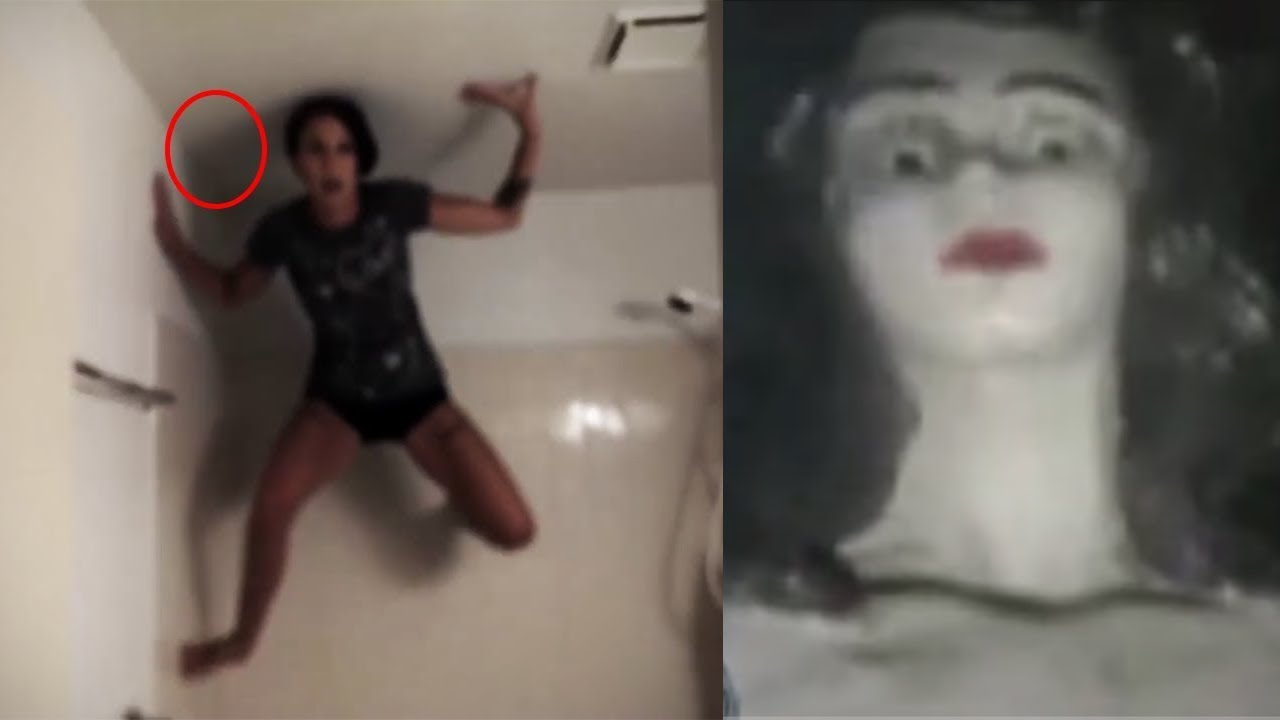
In the early days of spirit photography, patterns were often the result of double exposures or chemical smears on glass plates. As we move through 2026, the "mysterious patterns" observed in ghost sightings have become increasingly complex. These patterns generally fall into three categories: geometric orbs, translucent figures with consistent "grid" structures, and environmental distortions that repeat across different geographical locations.
The shift from film to digital and now to AI-augmented imaging has changed the nature of these anomalies. In 2026, most smartphone cameras utilize aggressive post-processing algorithms. These algorithms are trained to recognize shapes and "fill in" missing data in low-light environments. This has led to a surge in sightings where the "ghost" appears to have a repeating, almost algorithmic texture—a pattern that researchers are still struggling to categorize definitively.
Geometric Orbs and the Physics of Light
One of the most frequently reported patterns in ghost photos is the "orb." These are circular or hexagonal spots of light that appear where no light source was visible to the naked eye. In 2026, high-resolution sensors have revealed that these orbs are rarely simple circles; they often contain intricate, concentric rings or honeycomb patterns.
The Role of the Aperture
The geometric shape of an orb is almost always a direct reflection of the camera's internal hardware. When a point source of light—such as a dust mote or a microscopic water droplet—is out of focus and positioned close to the lens, it takes on the shape of the camera's aperture.
- Hexagonal Orbs: These occur in cameras with six aperture blades.
- Circular Orbs: These are common in modern smartphones that use fixed, circular apertures.
- Concentric Rings: These patterns, often mistaken for "energy fields," are usually the result of Newton's rings or diffraction patterns caused by light bouncing between the lens elements.
Atmospheric Interference
The "mysterious patterns" often correlate with specific environmental factors. In 2026, portable LIDAR and environmental sensors used by paranormal investigators have shown that "orb clusters" appear most frequently when humidity is above 70% or when there is a high concentration of particulate matter (dust, pollen, or smoke) in the air. The consistency of these patterns across different sightings suggests a physical rather than metaphysical origin for the vast majority of orb-based photos.
The Grid Effect: Sensor Noise and AI Reconstruction
As camera technology has advanced toward 2026, a new type of pattern has emerged: the "grid ghost." These sightings involve translucent figures that, upon extreme magnification, reveal a distinct, repeating geometric grid. To the untrained eye, this looks like a "matrix" or a sign of a digital soul. However, the technical explanation is rooted in the architecture of modern CMOS (Complementary Metal-Oxide-Semiconductor) sensors.
Pixel Binning and Interpolation
Most 2026 mobile sensors use high-resolution pixel binning (e.g., 200MP sensors binning down to 12.5MP). When shooting in the dark—the preferred time for ghost hunting—the sensor produces significant "noise." To clean this up, the camera’s software uses interpolation to guess what the image should look like. If the software encounters a vague shape in the shadows, it may apply a sharpening filter that highlights the underlying pixel grid, creating a "patterned" appearance in the supposed ghost.
Generative AI Hallucinations
A significant development in 2026 is the integration of generative AI into the standard "Night Mode" of consumer cameras. These systems don't just brighten a photo; they reconstruct it based on billions of reference images. When a camera "sees" a shadow that vaguely resembles a human form, the AI may inadvertently "hallucinate" human-like details—clothing folds, facial features, or hair patterns—into the noise. This creates a highly convincing but entirely artificial "ghost" that exhibits patterns consistent with AI training data.
Pareidolia and the Psychology of Pattern Recognition
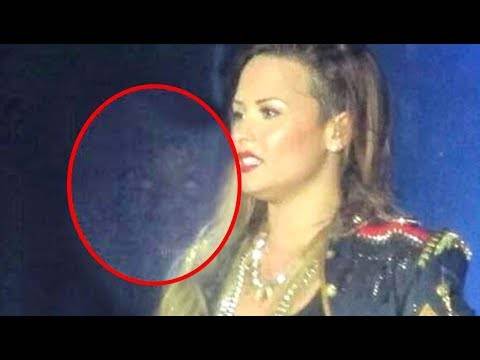
The human brain is evolutionarily hardwired to find patterns in chaos—a phenomenon known as pareidolia. This is especially prevalent in ghost photography, where the subject matter is often low-contrast, blurry, and shot in high-stress environments.
In 2026, psychologists have used eye-tracking software to study how people view "ghost" photos. The findings show that viewers almost always gravitate toward "face-like" patterns. Once a face is identified, the brain ignores contradictory data and focuses on reinforcing the pattern. This explains why a textured stone wall or a cluster of leaves can be perceived as a detailed spirit; the "mysterious patterns" are not in the photo itself, but in the neural pathways of the observer.
Comparing Photographic Anomalies and Claims
To better understand the patterns found in ghost sightings, it is helpful to compare common photographic artifacts with the claims made by paranormal researchers.
| Feature | Photographic Artifact | Paranormal Claim | Technical Explanation (2026) |
|---|---|---|---|
| Orb Geometry | Hexagonal or Circular | Spirit Energy Pods | Out-of-focus light reflecting aperture shape. |
| Grid Texture | Sensor Pattern Noise | "Matrix" Manifestation | CMOS sensor architecture and AI sharpening. |
| Translucent Streaks | Motion Blur / Shutter Lag | Ectoplasm / "Rods" | Slow shutter speeds capturing moving insects or dust. |
| Mist/Vapors | Lens Fog / Breath | Spirit Ectoplasm | Condensation on the lens or exhaled breath in cold air. |
| Shadow Figures | Compression Artifacts | "Shadow People" | Lossy JPEG/HEIF compression simplifying dark areas. |
Practical Steps for Verifying Ghost Photos
If you capture a photo in 2026 that appears to reveal mysterious patterns, follow these steps to determine if the anomaly has a technical or potentially unexplained origin.
- Check the Metadata (EXIF Data): Look at the shutter speed and ISO. A slow shutter speed (e.g., 1/15th of a second) is a prime candidate for motion-blurred "ghosts." High ISO levels (above 3200) introduce the noise patterns that often mimic spectral textures.
- Examine the "Live" Photo: Most modern devices capture a few seconds of video before and after the shot. Reviewing this footage can reveal if a "ghost" was actually a passing insect, a piece of lint, or a lens flare moving in sync with the camera.
- Analyze Local Light Sources: Identify any infrared (IR) sources. Many 2026 security cameras and smartphone sensors are highly sensitive to IR light, which is invisible to the human eye but can appear as glowing patterns or "mists" on camera.
- Disable AI Enhancements: If possible, take a second photo with "Pro" or "RAW" mode enabled. This bypasses the generative AI reconstruction that often creates false patterns in standard photo modes.
- Clean the Optics: A single fingerprint smudge on a 2026 high-index lens can create "god rays" or misty patterns that look remarkably like traditional ghost sightings.
Frequently Asked Questions
Why do "ghosts" in 2026 photos look different than those from 20 years ago?
The change is due to the shift from film and early digital sensors to AI-integrated computational photography. Older photos were limited by grain and chemical processes, whereas 2026 photos are subject to algorithmic sharpening, noise reduction, and generative filling, which create sharper, more geometric "patterns" that didn't exist in older technology.
Can thermal imaging cameras capture ghost patterns?
Thermal cameras detect infrared radiation (heat). "Mysterious patterns" in thermal photos are usually "cold spots" or "heat leaks." In 2026, most thermal anomalies are traced back to drafts, reflective surfaces (like glass or polished metal reflecting the operator's body heat), or residual heat from electronic devices behind walls.
What causes the "vortex" pattern often seen in haunted locations?
A "vortex" in photography is usually a long-exposure streak. In 2026, this is often caused by the strap of the camera or a strand of hair falling in front of the lens. Because the object is so close to the lens and out of focus, it appears as a translucent, swirling tunnel or "vortex" when illuminated by the flash.
Is it possible for a digital sensor to detect something the human eye cannot?
Yes. Digital sensors are sensitive to a broader spectrum of light, particularly in the near-infrared range. While this explains many "invisible" patterns caught on camera, it does not necessarily prove they are supernatural. Most of these detections are mundane light sources, like TV remotes, security LEDs, or thermal vents.
Next Steps for Investigators
When encountering mysterious patterns in ghost sightings photos, the most effective next action is to replicate the conditions. If a pattern appears in a specific corner of a room, attempt to trigger it again using controlled light sources and identical camera settings. Understanding the baseline behavior of your equipment in 2026 is the only way to distinguish between a fascinating technological glitch and a potentially groundbreaking anomalous event. Always shoot in RAW format to preserve the original data before AI processing alters the patterns.
Image Gallery