A Comprehensive Guide to States in the Central Time Zone
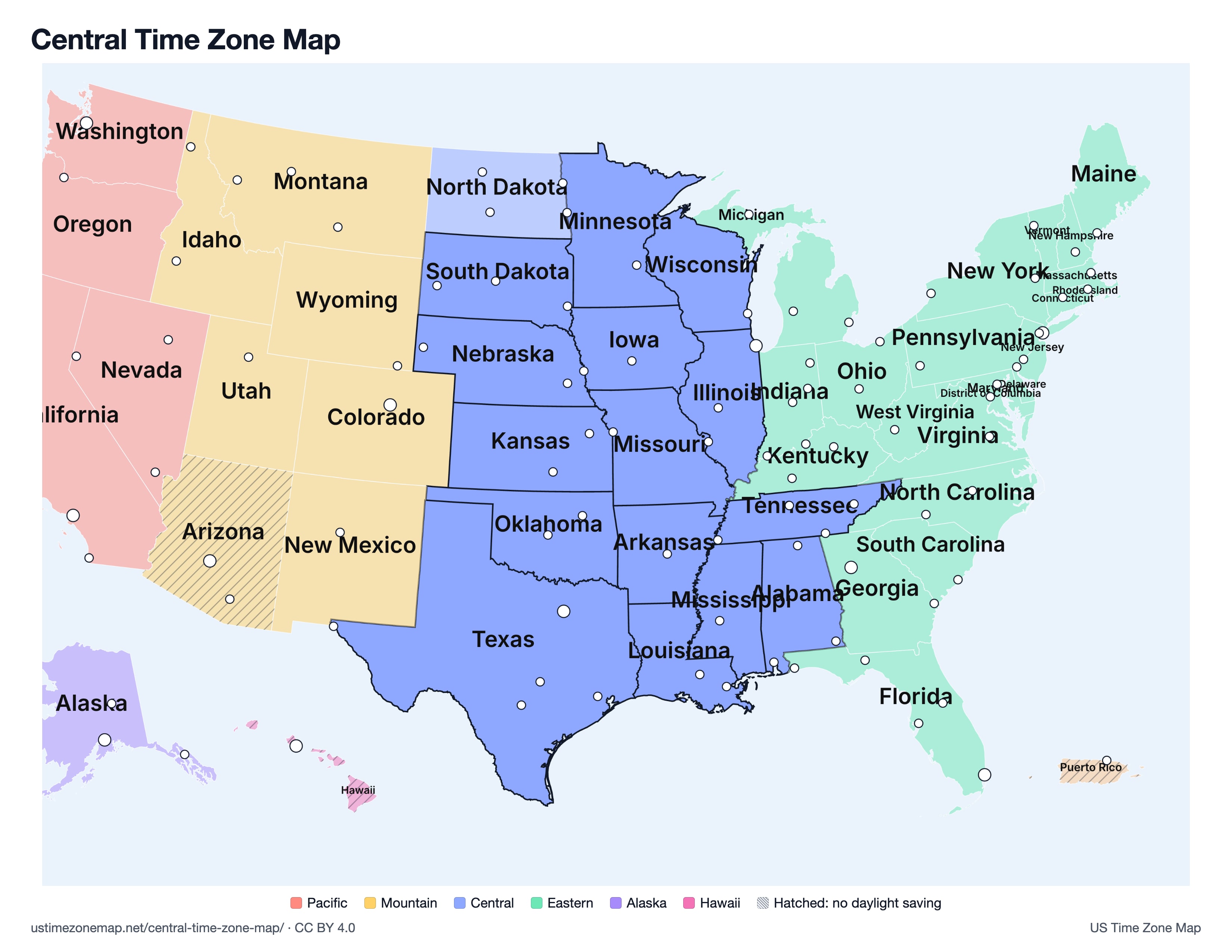
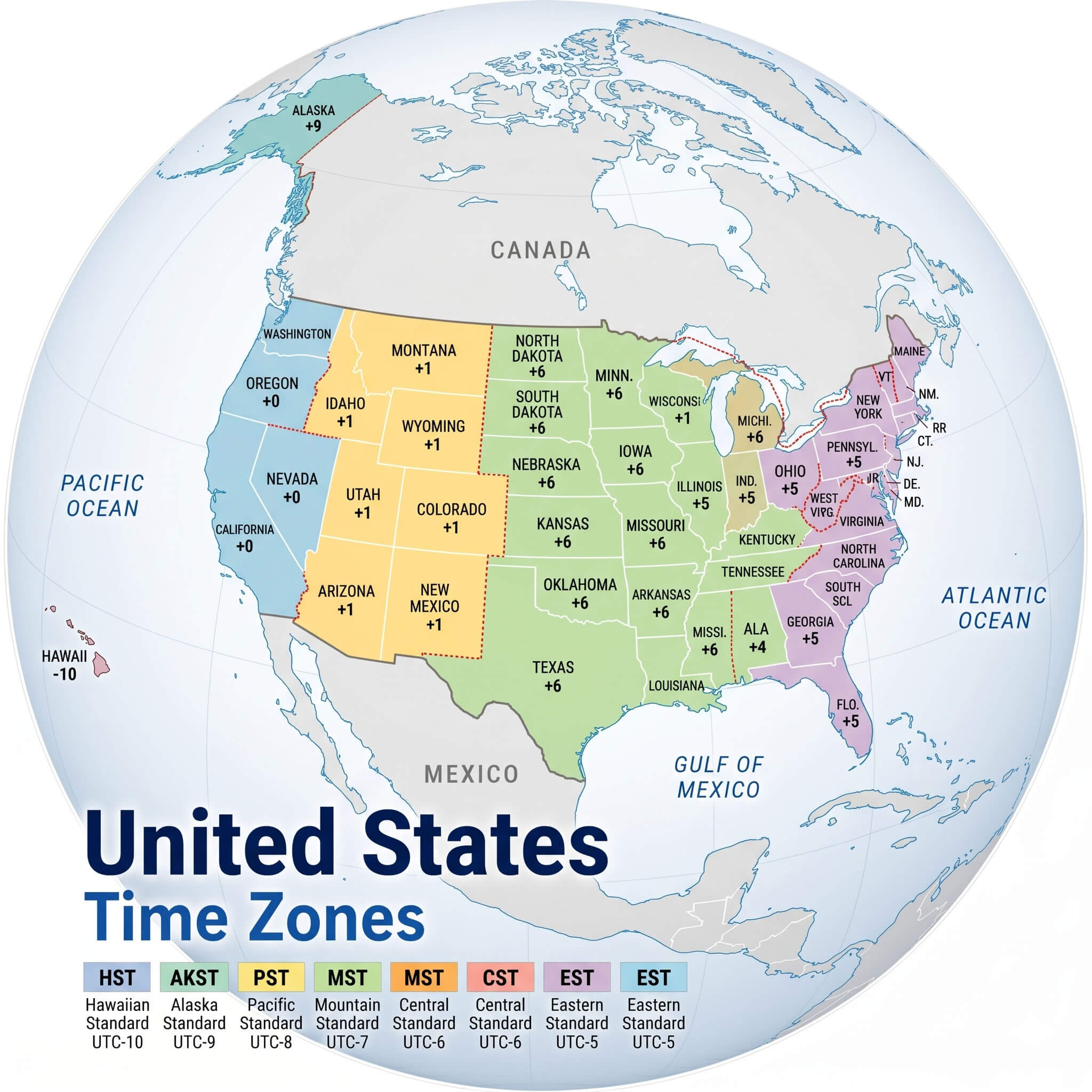
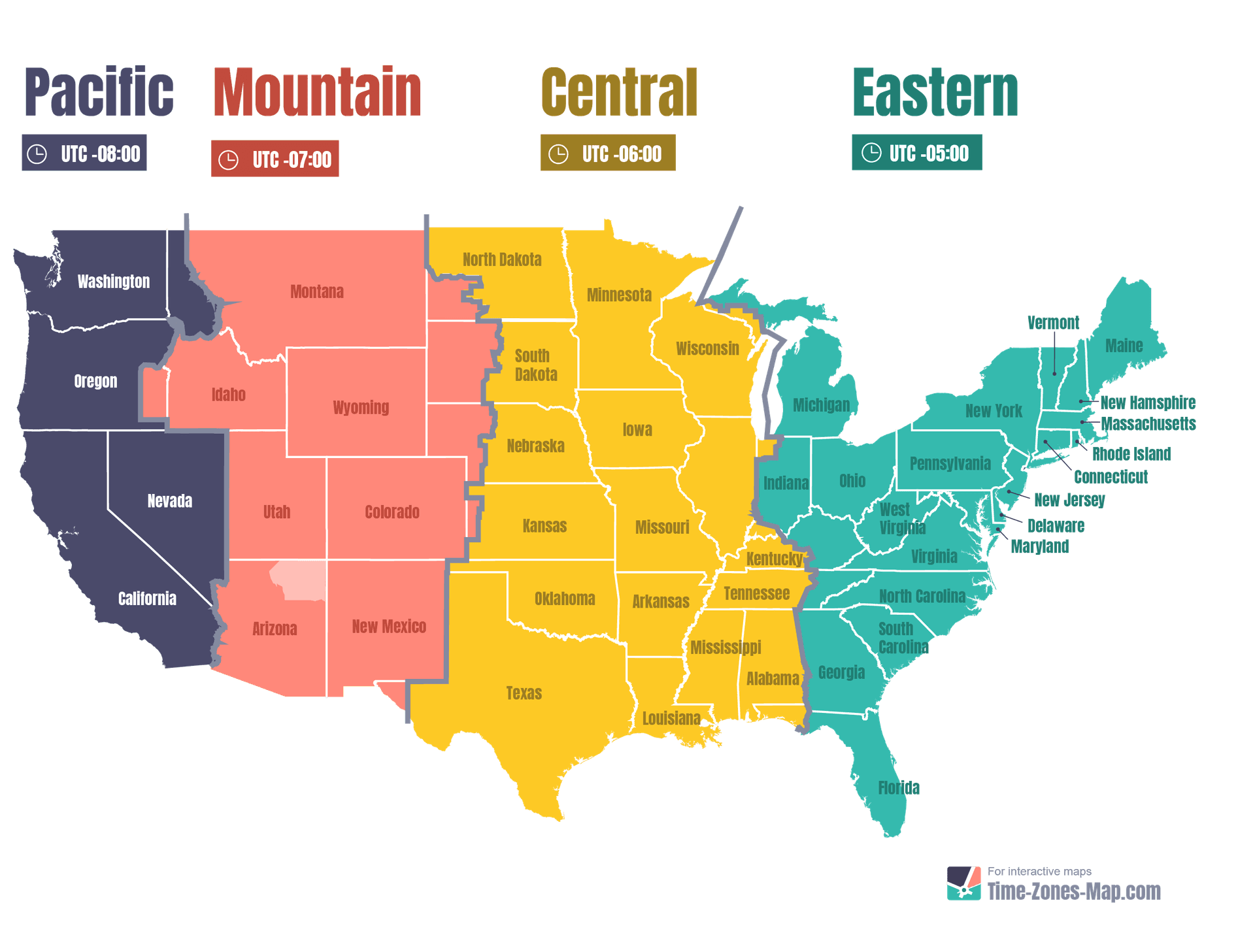
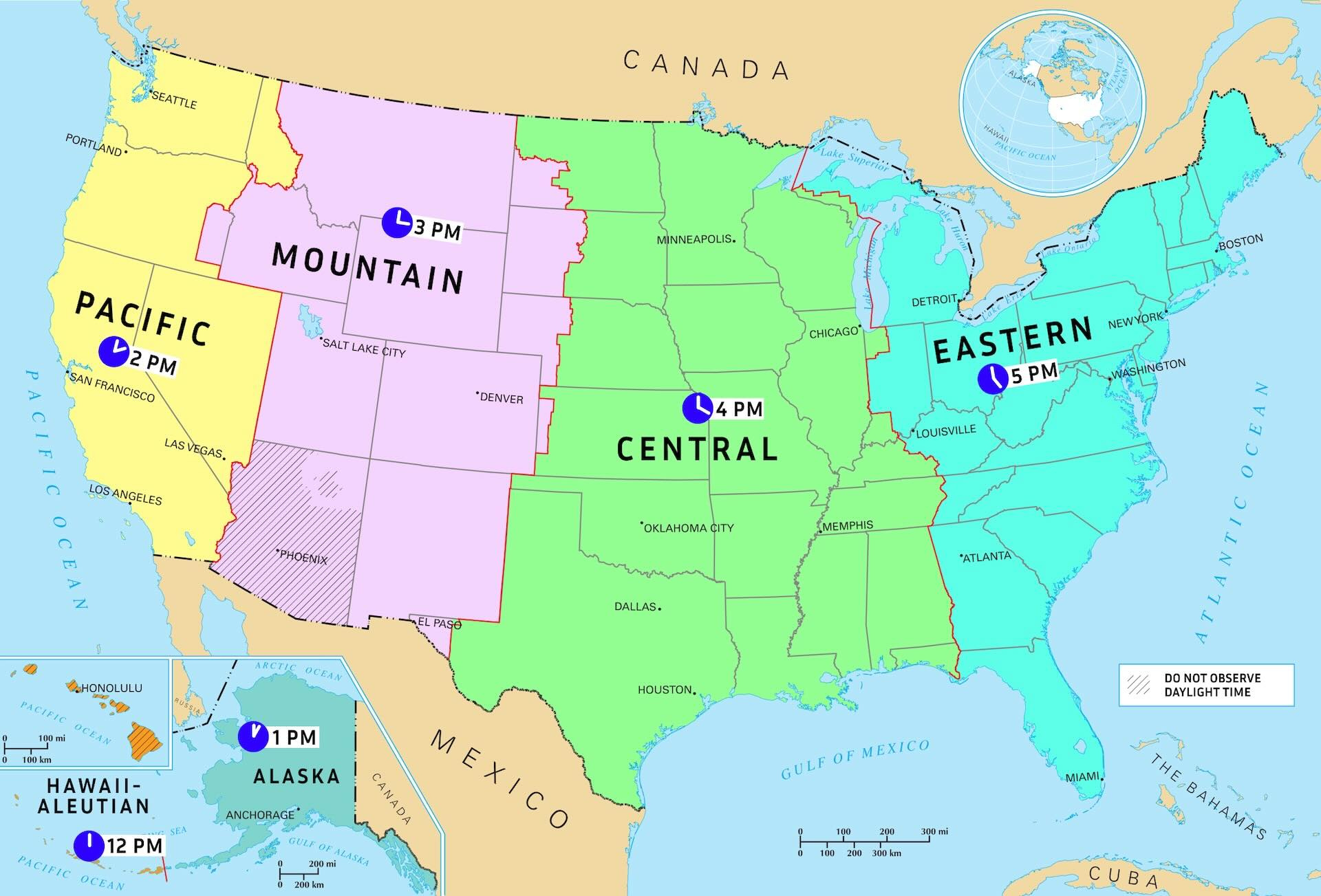
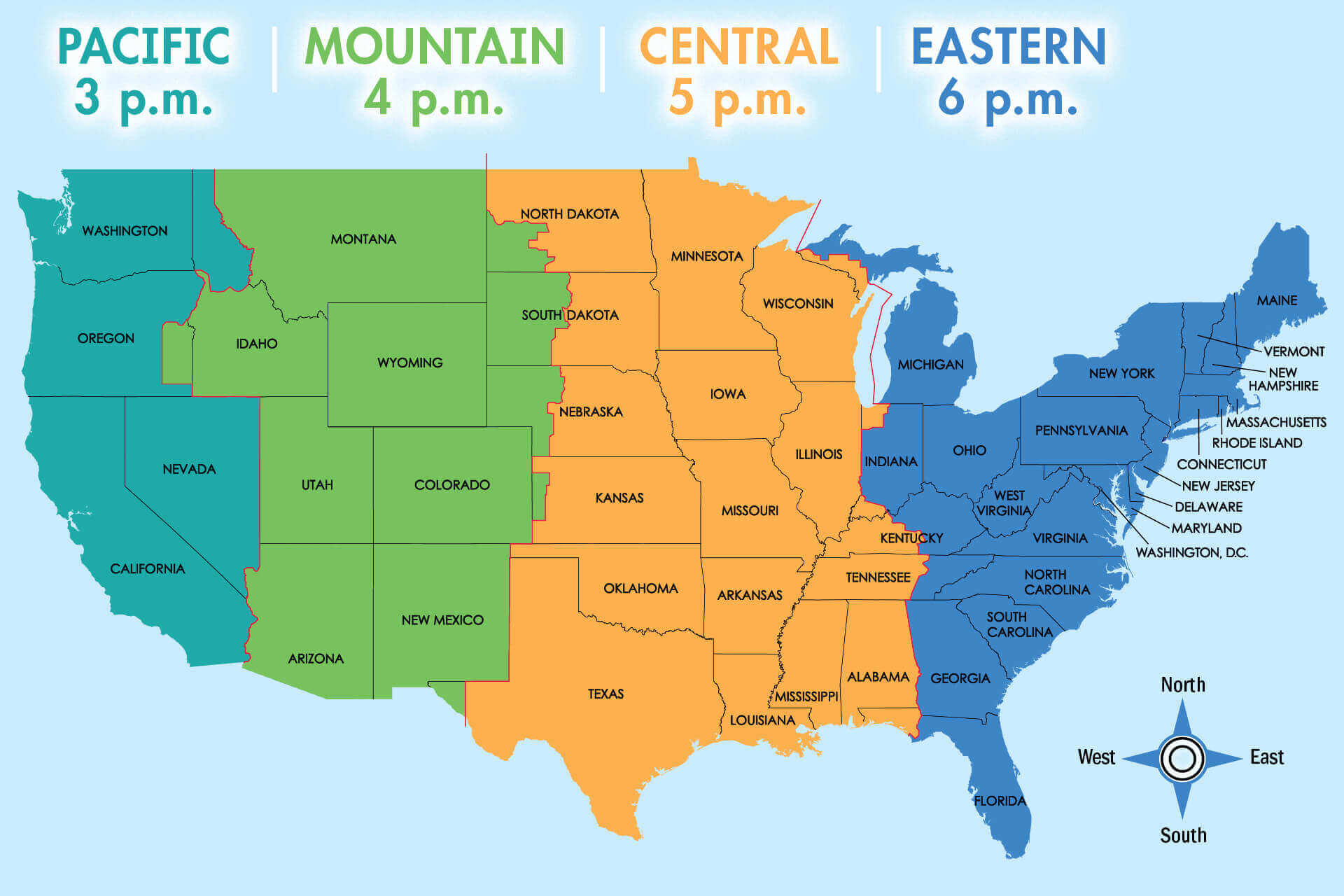
The Central Time Zone (CT) in the United States covers all or parts of 20 states. These states are predominantly located in the central portion of the country, stretching from the Great Lakes and the Midwest down to the Gulf Coast. Whi...
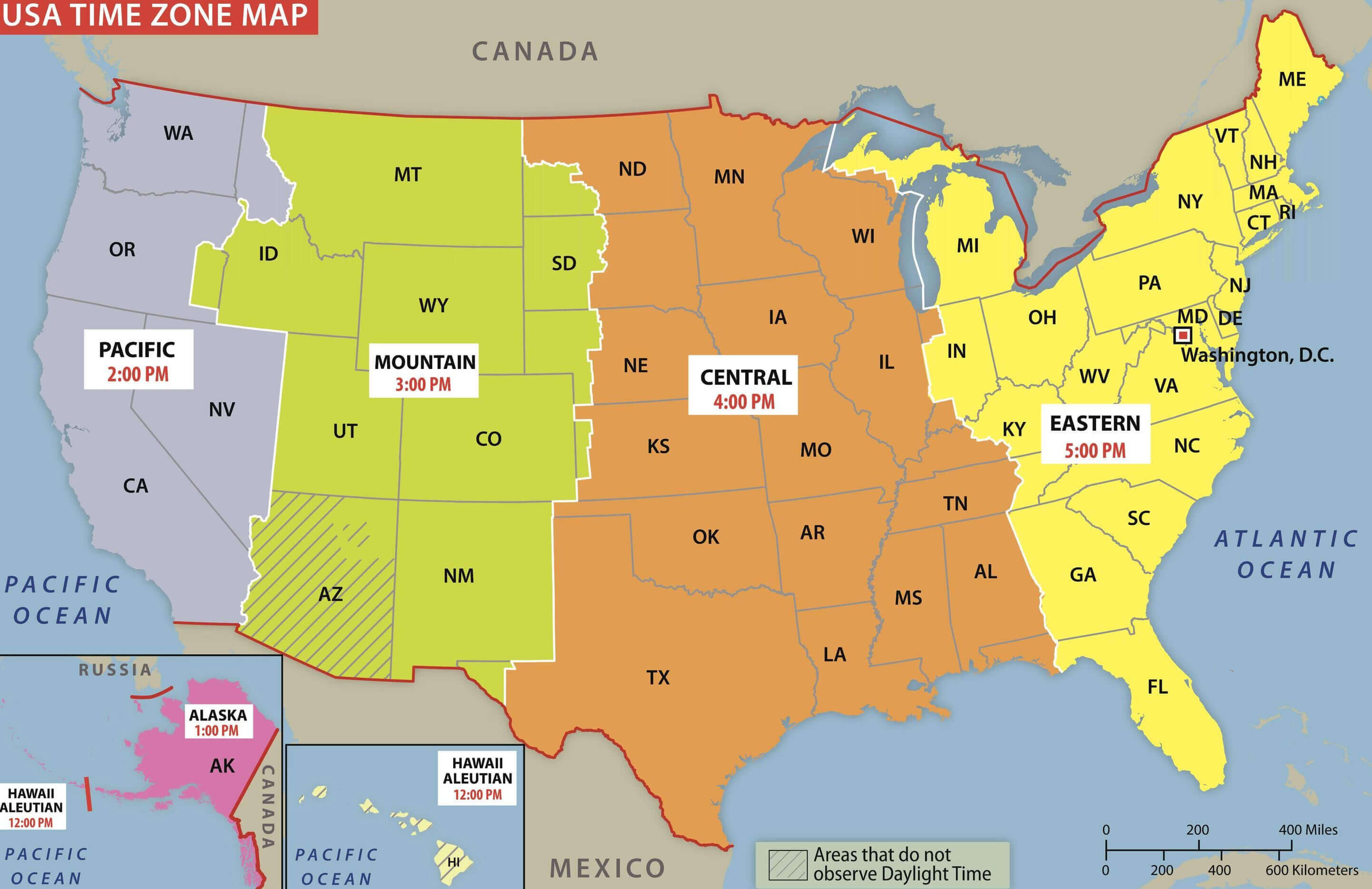
The Central Time Zone (CT) in the United States covers all or parts of 20 states. These states are predominantly located in the central portion of the country, stretching from the Great Lakes and the Midwest down to the Gulf Coast. While some states are entirely within this zone, others are split between Central and either Eastern or Mountain time.
Contents
Geography of the Central Time Zone
The Central Time Zone is defined by its relationship to Coordinated Universal Time (UTC). During standard time, the zone operates at UTC-6, and during Daylight Saving Time (DST), it shifts to UTC-5. Because the border between time zones often follows state lines, county boundaries, or natural landmarks like rivers, the map of the Central Time Zone is rarely a perfect rectangle.
To understand which states observe Central Time, it is essential to distinguish between those that are entirely contained within the zone and those that are bisected by time zone boundaries.
States Entirely Within the Central Time Zone
The following states are located fully within the Central Time Zone. Residents in these areas do not need to worry about crossing a "time border" when traveling within their state:
- Alabama: Covering the entire state, including Birmingham and Mobile.
- Arkansas: The entirety of the state operates on Central Time.
- Illinois: This includes the Chicago metropolitan area and the rest of the state.
- Iowa: The entire state observes Central Time.
- Louisiana: From New Orleans to Shreveport, the whole state is in the zone.
- Minnesota: The entire state is in the Central Time Zone.
- Mississippi: The entire state observes Central Time.
- Missouri: The entire state is in the Central Time Zone.
- Oklahoma: The entire state is in the Central Time Zone.
- Wisconsin: The entire state is in the Central Time Zone.
States Partially Within the Central Time Zone
Many states utilize two time zones to better align with local solar time or to keep metropolitan areas in the same time zone as neighboring commercial hubs. If you are traveling through these states, it is critical to verify the specific county or region:
- Florida: The western Panhandle (such as Pensacola and Panama City) is in the Central Time Zone, while the remainder of the state is in the Eastern Time Zone.
- Indiana: While most of Indiana is in the Eastern Time Zone, several counties in the northwest (near Chicago) and southwest (near Evansville) observe Central Time.
- Kansas: The majority of the state is Central, but several western counties bordering Colorado are in the Mountain Time Zone.
- Kentucky: The western portion of the state, including cities like Owensboro and Paducah, is in the Central Time Zone.
- Michigan: Most of the state is Eastern, but four counties in the Upper Peninsula (Gogebic, Iron, Dickinson, and Menominee) bordering Wisconsin observe Central Time.
- Nebraska: The eastern and central parts of the state are in the Central Time Zone, while the western portion (including the Panhandle) is in the Mountain Time Zone.
- North Dakota: The eastern two-thirds of the state is in the Central Time Zone, while the southwestern portion is in Mountain Time.
- South Dakota: The eastern half is in the Central Time Zone, and the western half is in the Mountain Time Zone.
- Tennessee: The state is split, with the eastern and central grand divisions generally in Eastern Time, but 79 counties in Middle and West Tennessee are in the Central Time Zone.
- Texas: The vast majority of the state is in the Central Time Zone, but El Paso County and two neighboring counties in the far west are in the Mountain Time Zone.
Comparative Overview of Time Zone Distribution
The following table provides a quick reference for states that share their time with the Central Time Zone, highlighting whether the state is fully or partially included.
| State | Central Time Status | Primary Neighboring Zone |
|---|---|---|
| Alabama | Entire | N/A |
| Arkansas | Entire | N/A |
| Florida | Partial (Panhandle) | Eastern |
| Illinois | Entire | N/A |
| Indiana | Partial (Select Counties) | Eastern |
| Iowa | Entire | N/A |
| Kansas | Partial | Mountain |
| Kentucky | Partial (Western) | Eastern |
| Louisiana | Entire | N/A |
| Michigan | Partial (4 UP Counties) | Eastern |
| Minnesota | Entire | N/A |
| Mississippi | Entire | N/A |
| Missouri | Entire | N/A |
| Nebraska | Partial | Mountain |
| North Dakota | Partial | Mountain |
| Oklahoma | Entire | N/A |
| South Dakota | Partial | Mountain |
| Tennessee | Partial | Eastern |
| Texas | Partial (El Paso region) | Mountain |
| Wisconsin | Entire | N/A |
Daylight Saving Time and Legal Considerations
In the United States, time zone boundaries and the observance of Daylight Saving Time (DST) are regulated by the Department of Transportation (DOT) under the Uniform Time Act of 1966.
Most states in the Central Time Zone observe Daylight Saving Time. This means that from the second Sunday in March until the first Sunday in November, clocks are advanced by one hour. However, it is important to note that Arizona and Hawaii are the only two states that do not observe DST, and neither of these states is in the Central Time Zone. Therefore, if you are located in a Central Time state, you should expect the shift to occur annually.
When traveling between time zones, pay close attention to electronic devices. Most smartphones and computers automatically update their time based on the local cellular tower or network time protocol (NTP) server. However, if you are in a "split" state—such as driving from Nashville (CT) toward Knoxville (ET) in Tennessee—your phone may update its time automatically as you cross the boundary. Always check local signage and business hours if you are relying on time-sensitive appointments.
Practical Tips for Travelers and Business Planning
Managing time differences across different states requires more than just knowing the current hour. If you are scheduling a conference call or traveling for business, keep the following in mind:
- Check the County: If you are visiting a state like Indiana or Kentucky, knowing the state name is not enough. Ensure you have the specific city or county to determine the correct time zone.
- Verify Business Hours: Small businesses in rural border counties may occasionally set their own hours based on the dominant time zone of the nearest large city, which can sometimes lead to local "unofficial" time variations. Always verify operating hours directly with the venue.
- Use Universal Time Tools: When scheduling meetings across multiple time zones, use online scheduling tools that allow you to convert between Central, Eastern, and Mountain time automatically.
- Airports and Public Transit: Airport departure and arrival times are always listed in the local time of the city of departure or arrival. Never convert these times yourself; the airline's official schedule is the authoritative source.
Frequently Asked Questions
Is Texas entirely in the Central Time Zone? No, Texas is not entirely in the Central Time Zone. While the vast majority of the state, including Dallas, Houston, and Austin, follows Central Time, the far-western region—specifically El Paso, Hudspeth, and Culberson counties—observes Mountain Time to align with neighboring New Mexico.
Do all Central Time states change their clocks for Daylight Saving Time? Yes. Every state that observes Central Time currently participates in the federal Daylight Saving Time mandate. Clocks move forward one hour in the spring and back one hour in the autumn.
Why are some states split between two time zones? Time zone boundaries are established by the Department of Transportation to account for both geographical solar time and the socio-economic needs of residents. Often, a state is split so that a metropolitan area that straddles a state line remains in the same time zone as its primary commercial hub, or to ensure that rural counties align with the trade and transportation flow of the nearest state.
Is there a way to tell if I am in the Central Time Zone? If you are physically in the United States, your smartphone will typically display the correct local time automatically. You can also check your device's settings under "Date & Time," where it will usually list the current time zone (e.g., "Central Standard Time" or "Central Daylight Time").
What is the difference between CST and CDT? CST stands for Central Standard Time (UTC-6), which is observed during the winter months. CDT stands for Central Daylight Time (UTC-5), which is observed during the summer months when Daylight Saving Time is in effect.
Next Steps for Time-Sensitive Planning
If you are planning travel or coordinating operations across these states, your first step should be to confirm the specific local time of your destination. For professional planning, use the official U.S. time portal maintained by the National Institute of Standards and Technology (NIST) at time.gov. This resource provides the accurate, synchronized time for all U.S. zones and can prevent costly errors in scheduling or travel coordination.
Image Gallery