Why All Benedict Cumberbatch Performances Matter
Benedict Cumberbatch’s performances matter because they represent a masterclass in technical precision, intellectual depth, and the rare ability to bridge the gap between high-concept prestige drama and global blockbuster franchises. H...
Benedict Cumberbatch’s performances matter because they represent a masterclass in technical precision, intellectual depth, and the rare ability to bridge the gap between high-concept prestige drama and global blockbuster franchises. His work redefines the modern leading man by prioritizing psychological complexity and physical transformation over traditional archetype-driven acting.
Contents
Since his breakout as a global sensation in the early 2010s, Benedict Cumberbatch has established a filmography that serves as a blueprint for the 21st-century actor. By 2026, his body of work has matured into a legacy defined not just by popularity, but by a consistent commitment to "the difficult character." Whether he is portraying a sociopathic detective, a tortured mathematician, or a sorcerer supreme, Cumberbatch’s performances matter because they demand that the audience engage with the intellect of the character as much as their emotional narrative.
The Architecture of the "Cumberbatch Genius"
The most prominent reason his performances carry such weight is his specialized ability to portray high-functioning intellect. For decades, "genius" in cinema was often portrayed through tropes—wild hair, social ineptitude, or magical insights. Cumberbatch transformed this into a rigorous acting discipline.
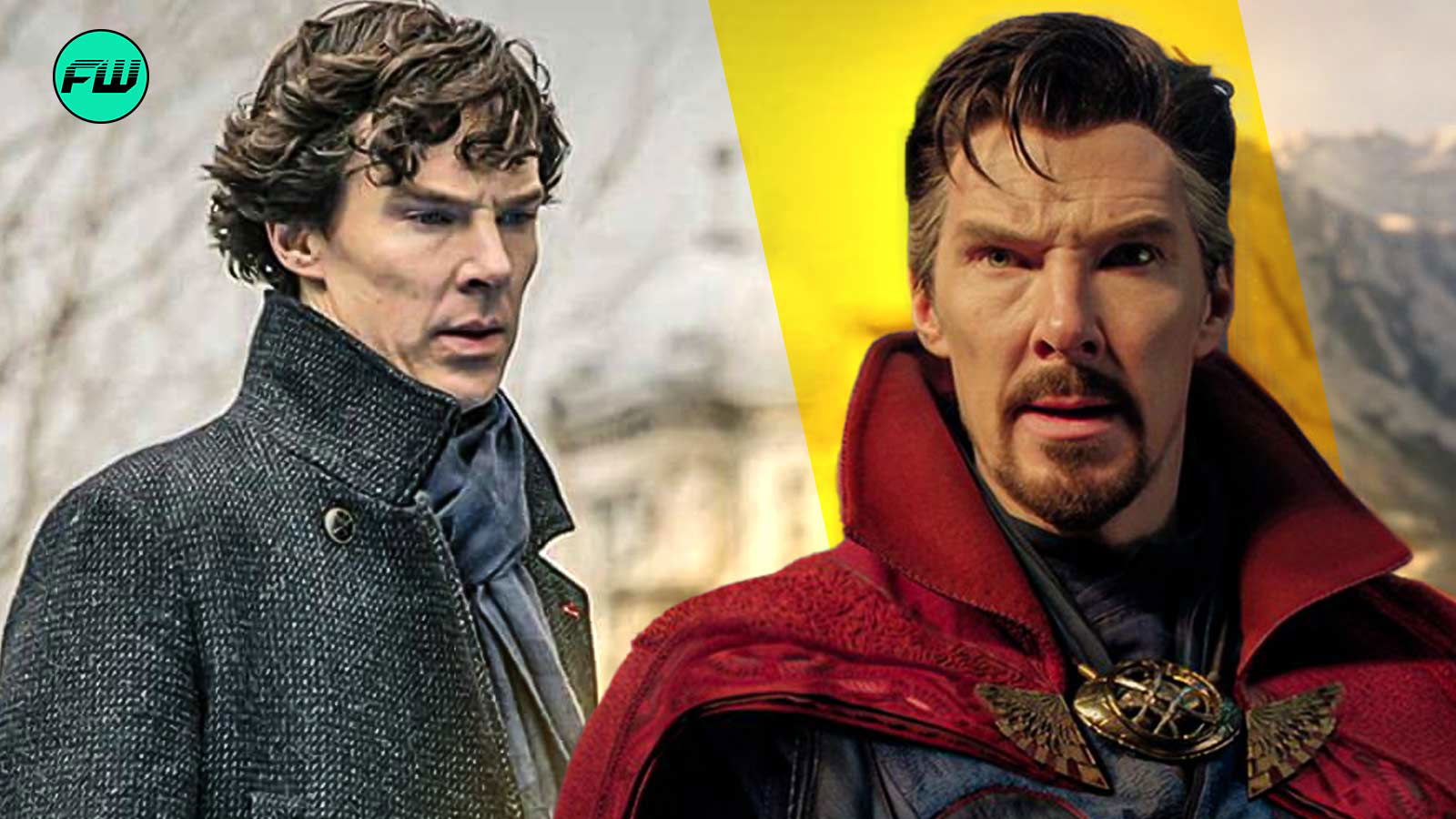
In Sherlock (2010–2017), he didn’t just play a smart man; he choreographed the speed of thought. His rapid-fire delivery and "mind palace" sequences required a level of linguistic precision that influenced a decade of television writing. This performance mattered because it proved that an audience could be captivated by a character’s internal processing speed, making the act of thinking as exciting as a car chase.
This intellectual rigor transitioned into his portrayal of Alan Turing in The Imitation Game (2014). Here, the performance mattered for a different reason: it provided a humanizing lens on a historical figure whose brilliance was silenced by the state. Cumberbatch avoided the "eccentric scientist" cliché, opting instead for a portrayal of profound isolation. By grounding Turing’s genius in physical stiffness and social anxiety, he shifted the focus from the Enigma machine to the human cost of being "different."
The Physicality of Non-Human and Hyper-Human Roles
While many critics focus on his dialogue-heavy roles, Cumberbatch’s performances matter equally because of his extraordinary physical commitment to non-traditional roles. He is one of the few actors of his generation to treat motion capture and voice acting with the same gravity as a Shakespearean stage play.
His portrayal of Smaug in The Hobbit trilogy is a definitive example of this. Rather than simply providing a voice in a recording booth, Cumberbatch engaged in full-body motion capture, slithering on the floor of the studio to mimic the serpentine movements of a dragon. This performance matters because it elevated the standard for creature work in Hollywood, demonstrating that the soul of a digital character is dependent on the physical exertion of the actor.
Similarly, in the National Theatre’s production of Frankenstein (2011), directed by Danny Boyle, Cumberbatch alternated between playing Victor Frankenstein and the Creature. His performance as the Creature, which involved nearly 15 minutes of wordless, agonizing physical struggle as the character learned to walk, is cited by acting coaches as a modern standard for physical theater. It proved that his "theatricality" isn't limited to his voice, but extends to a complete command of his anatomy.
Deconstructing Masculinity Through Phil Burbank
By the time The Power of the Dog (2021) reached audiences, Cumberbatch was a household name. However, his performance as Phil Burbank was a pivot point that fundamentally changed how critics viewed his range. It matters because it was a surgical deconstruction of toxic masculinity.
Phil Burbank is a character defined by what he hides—his tenderness, his grief, and his sexuality. Cumberbatch’s performance was an exercise in "methodical stillness." He learned to castrate bulls, play the banjo, and went weeks without washing to inhabit the role's rugged exterior.
This performance matters because it challenged the audience’s perception of Cumberbatch himself. He moved away from the "refined Englishman" persona to play a character who was visceral, threatening, and deeply pathetic. It served as a reminder that a great actor’s work matters most when it risks the audience’s direct sympathy to reveal a deeper, more uncomfortable truth.
The Blockbuster as a Vessel for Prestige
In the current landscape of 2026, the division between "art house" and "superhero" films has blurred, largely due to actors like Cumberbatch. His role as Doctor Stephen Strange in the Marvel Cinematic Universe (MCU) is more than just a commercial endeavor; it is a performance that anchors an entire cinematic universe in a sense of gravitas.
Cumberbatch treats Doctor Strange with the same intensity he might bring to a tragedy. This matters because it prevents the genre from collapsing into mere spectacle. By infusing a character who "performs magic" with a believable sense of arrogance, trauma, and eventual wisdom, he validates the emotional stakes of high-budget filmmaking. His performance ensures that the "human" is never lost in the "superhuman."
Comparative Analysis of Key Performances
The following table highlights how different roles have contributed to his overall impact on the industry, focusing on the technical elements that make each performance significant.
| Role | Project | Primary Impact/Technique | Why It Matters |
|---|---|---|---|
| Sherlock Holmes | Sherlock | Linguistic velocity and micro-expressions | Redefined the "genius" archetype for modern TV. |
| The Creature | Frankenstein (Stage) | Extreme physical transformation | Set a new benchmark for physical theater in the 21st century. |
| Alan Turing | The Imitation Game | Subdued emotional repression | Brought global awareness to a marginalized historical figure. |
| Smaug | The Hobbit | Motion-capture innovation | Proved that digital characters require deep physical acting. |
| Phil Burbank | The Power of the Dog | Deconstruction of masculinity | Showed his ability to play raw, unlikable, and visceral roles. |
| Henry Sugar | The Wonderful Story of Henry Sugar | Narrative precision/Direct address | Demonstrated mastery of Wes Anderson's highly stylized dialogue. |
The "Cumberbatch Effect" on Modern Casting
Another reason these performances matter is their influence on the "meritocracy of acting." Cumberbatch did not rise to fame through traditional Hollywood "hunk" roles. Instead, he forced the industry to value "character-first" leading men.
Before 2010, the idea of a global leading man who looked and sounded like Cumberbatch—highly articulate, unconventional in appearance, and deeply theatrical—was rare. His success opened doors for a new generation of actors who prioritize craft over image. His production company, SunnyMarch, further extends this impact by focusing on female-led narratives and underrepresented stories, showing that his influence matters as much behind the camera as it does in front of it.
The Significance of the "Small" Roles
Even in his smaller or more experimental roles, such as in Wes Anderson’s The Wonderful Story of Henry Sugar (2023) or the voice of The Grinch (2018), Cumberbatch demonstrates a commitment to the specific "tone" of a project.
In the Wes Anderson shorts, he adapted his naturalistic style to fit a rigid, fast-paced, and highly artificial narrative structure. This versatility matters because it shows a lack of ego. Many actors of his stature attempt to "overpower" a director's style with their own persona; Cumberbatch, conversely, uses his skills to become a precise tool for the director’s vision.
Frequently Asked Questions
Why is Benedict Cumberbatch considered a "technical" actor?
A technical actor focuses on the mechanics of a performance—voice, movement, and pacing—to build a character from the outside in. Cumberbatch is noted for his meticulous preparation, including learning specific dialects, physical skills (like violin or horse riding), and his ability to control the rhythm of his dialogue to reflect a character's mental state.
How did Sherlock change Benedict Cumberbatch’s career?
Sherlock transformed him from a respected character actor into a global "A-list" star. However, it also created a "Sherlock-type" casting trend that he had to work hard to break by taking radically different roles, such as those in The Power of the Dog or Patrick Melrose.
Does his stage work matter as much as his films?
Yes. Many critics argue that his stage work is where his most significant technical breakthroughs occur. Performances like Hamlet (2015) and Frankenstein (2011) allow for a level of unedited physical and vocal intensity that is often toned down for film, and these performances often inform his approach to his movie roles.
What is his most critically acclaimed performance to date?
As of 2026, his role as Phil Burbank in The Power of the Dog remains his most critically decorated performance, earning him a significant lead actor nomination across all major award bodies and being cited as a "career-defining" turn that showcased his greatest range.
How has he influenced the Marvel Cinematic Universe?
Cumberbatch brought a level of "prestige" acting to the MCU. His portrayal of Doctor Strange added a layer of intellectual arrogance and grounded emotion that helped the franchise transition into more complex, "multiversal" storytelling without losing character depth.
Moving Forward: Why We Should Continue to Watch
To truly appreciate Benedict Cumberbatch’s contribution to cinema, one must look past the "celebrity" and focus on the "craft." Every performance, no matter the size of the role, is treated with a level of intentionality that is rare in contemporary Hollywood.
For viewers, the next step is to explore his less-commercial work—his stage captures, his voice-over narrations, and his early BBC dramas. By doing so, you see an actor who is not just seeking fame, but seeking to understand the limits of human (and non-human) expression. His performances matter because they remind us that acting is not just about being someone else; it is about the rigorous, difficult work of revealing what it means to think, to feel, and to exist in a complex world.
Image Gallery