Dennis Rodman’s Connection to Detroit: Debunking the Myths of His Upbringing and NBA Legacy
Dennis Rodman did not grow up in Detroit; he was raised in the Oak Cliff neighborhood of Dallas, Texas. However, he is inextricably linked to Detroit because his NBA career began with the Detroit Pistons in 1986. His aggressive, blue-c...
Dennis Rodman did not grow up in Detroit; he was raised in the Oak Cliff neighborhood of Dallas, Texas. However, he is inextricably linked to Detroit because his NBA career began with the Detroit Pistons in 1986. His aggressive, blue-collar playing style perfectly mirrored the city's identity, leading many to assume he was a local.
Contents
While many fans associate the legendary rebounder with the grit and determination of the Motor City, the reality of his formative years is a story of struggle and a late-blooming athletic career in the American South. Understanding the distinction between where Rodman grew up and where he "became" a man is essential for any basketball historian or fan looking to understand the "Bad Boy" era of the NBA.
The Reality of Dennis Rodman’s Upbringing in Dallas
Dennis Keith Rodman was born on May 13, 1961, in Trenton, New Jersey, but his family moved shortly after his birth. He spent the entirety of his childhood and adolescence in the Oak Cliff section of Dallas, Texas. This neighborhood, at the time, was a challenging environment characterized by economic hardship, which played a significant role in shaping Rodman’s early worldview.
His father, Philander Rodman Jr., an Air Force veteran, left the family when Dennis was very young, eventually settling in the Philippines. This left his mother, Shirley, to raise Dennis and his two sisters, Debra and Annie, as a single parent. Shirley often worked multiple jobs simultaneously to keep the family afloat. Interestingly, during his time at South Oak Cliff High School, Dennis was not the basketball star of the family. His sisters were both All-American basketball players, while Dennis was frequently cut from the team or relegated to the bench.
At the time of his high school graduation, Rodman stood only 5’11” and was considered too small and uncoordinated for a career in professional sports. He spent the immediate years after high school working as a night janitor at Dallas-Fort Worth International Airport. It was during this period of manual labor that he experienced a miraculous physical transformation, growing nearly ten inches in a very short span to reach his adult height of 6’7”. This late growth spurt is what eventually led him back to the basketball court, first at Cooke County College and later at Southeastern Oklahoma State University.
Why the "Detroit" Misconception Persists
The reason many people mistakenly believe Dennis Rodman grew up in Detroit is due to the intense cultural symbiosis between the player and the city during the late 1980s. When the Detroit Pistons drafted Rodman in the second round (27th overall) of the 1986 NBA Draft, they weren't just hiring a player; they were finding the final piece of the "Bad Boys" puzzle.
The Blue-Collar Mirror
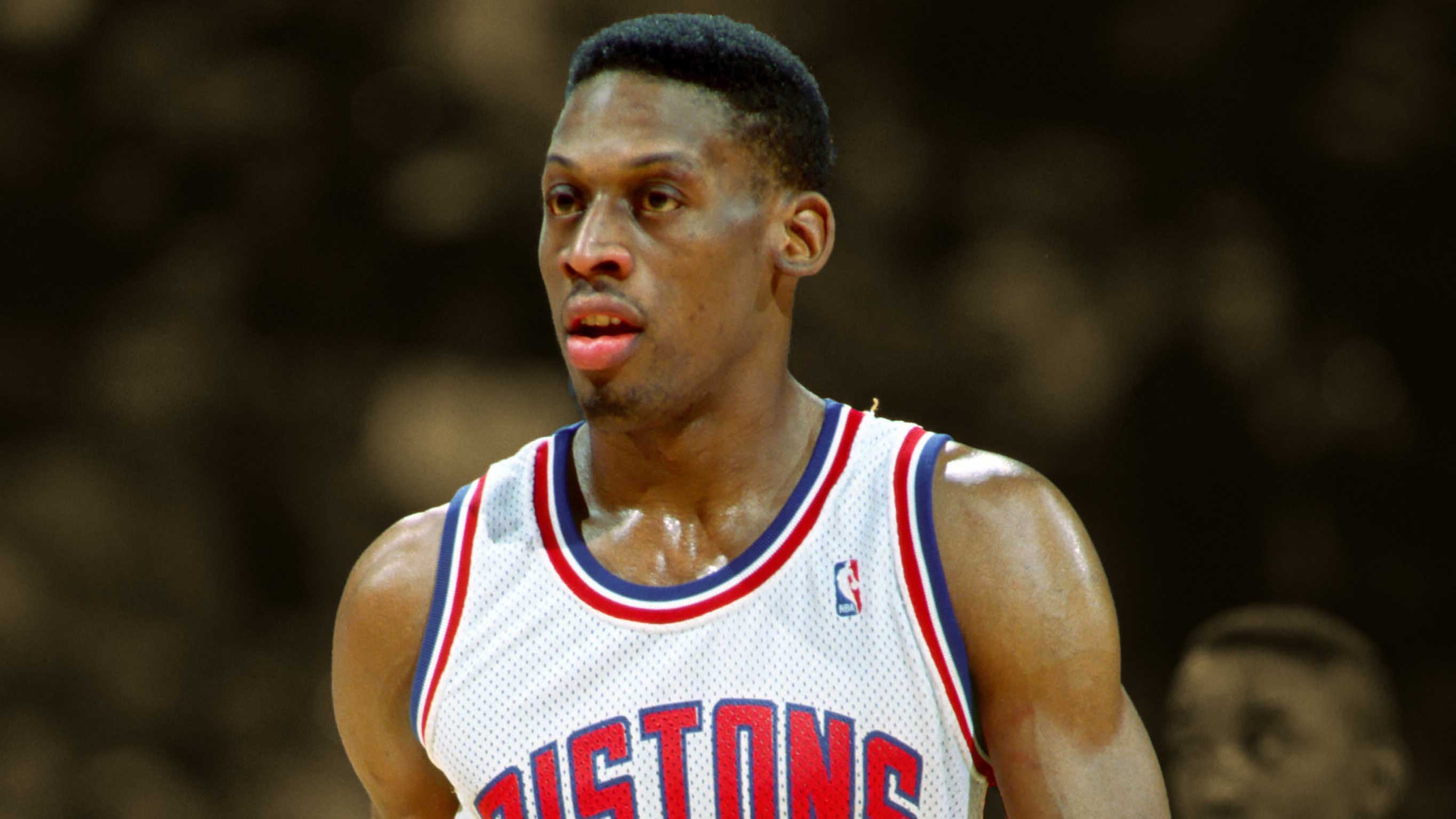
Detroit in the 1980s was a city defined by its industrial roots and its toughness. The Pistons, led by coach Chuck Daly and players like Isiah Thomas, Bill Laimbeer, and Joe Dumars, adopted a physical, defensive-minded style of play that the local fans embraced. Rodman, with his relentless energy and willingness to do the "dirty work"—rebounding, diving for loose balls, and guarding the opponent's best player—became the personification of the Detroit worker.
The Chuck Daly Relationship
Chuck Daly served as a surrogate father figure for Rodman. In Detroit, Rodman found the structure and unconditional support he had lacked during his actual upbringing in Dallas. This emotional bond was so strong that Rodman’s identity became synonymous with the Pistons' franchise. When people saw him on national television, they didn't see a kid from Dallas; they saw a "Motor City" warrior. This association was so powerful that it effectively rewrote his origin story in the minds of casual observers.
The Formative Years: A Comparison of Dallas and Detroit
To understand how Rodman was shaped by these two distinct locations, it is helpful to look at the specific influences each environment provided.
| Feature | Dallas (Upbringing) | Detroit (Professional Growth) |
|---|---|---|
| Primary Influence | Survival and Economic Hardship | Discipline and Professional Identity |
| Social Standing | Overlooked, non-athletic teenager | Two-time NBA Champion, DPOY |
| Key Figures | Shirley Rodman (Mother) | Chuck Daly (Coach/Mentor) |
| Atmosphere | Oak Cliff (Residential/Struggling) | The Palace of Auburn Hills (Competitive/Elite) |
| Physical Status | Short, late bloomer (5'11") | Elite athlete and rebounding specialist (6'7") |
| Legacy | The root of his insecurity and drive | The foundation of his Hall of Fame career |
The "Bad Boy" Era: How Detroit Redefined Rodman
From 1986 to 1993, Rodman’s time in Detroit was marked by a meteoric rise from an unknown second-round pick to a two-time NBA Defensive Player of the Year (1990, 1991). During these years, he perfected the "science of rebounding," a skill he developed through obsessive study of the ball's rotation and trajectory off the rim.
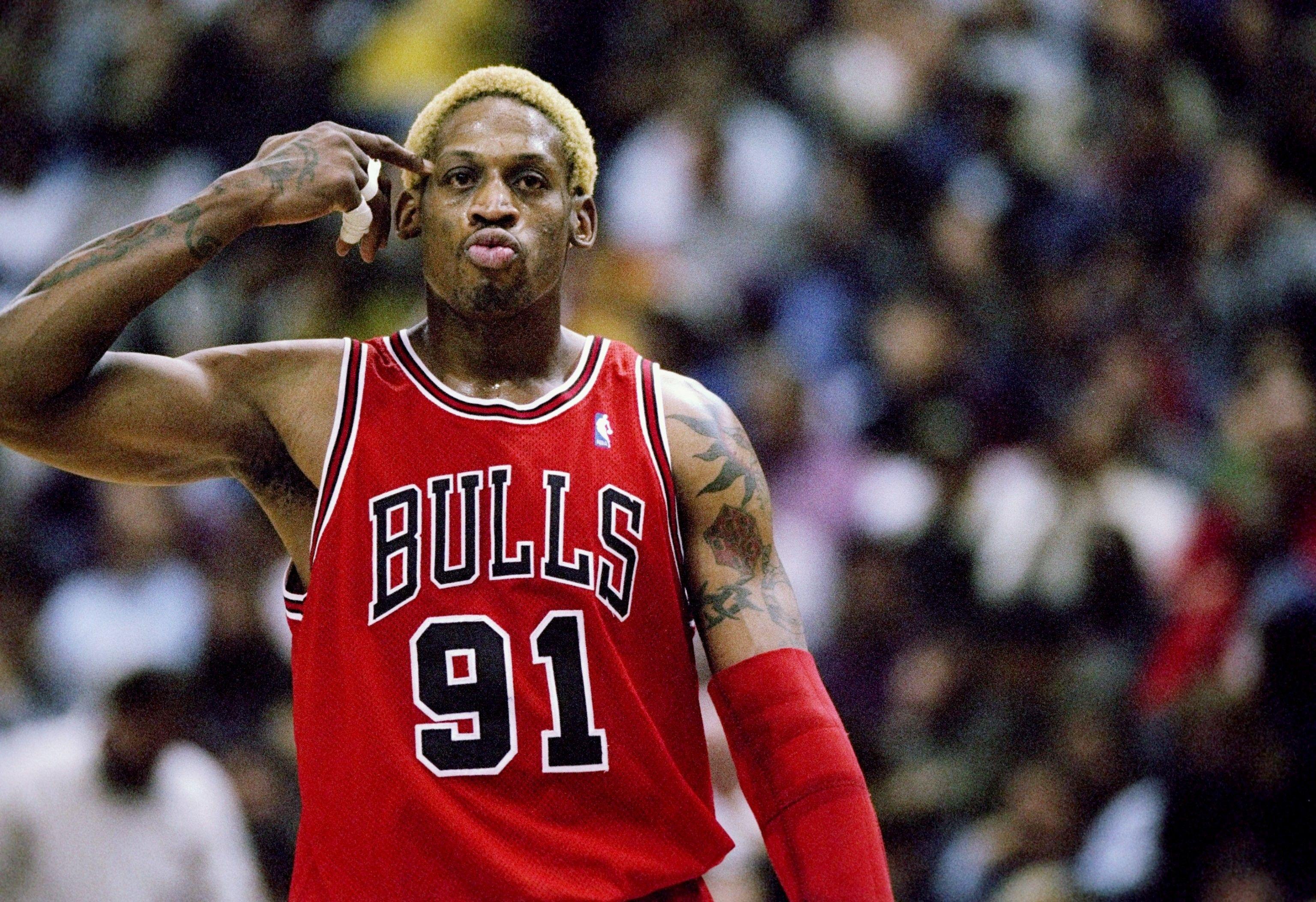
In Detroit, Rodman was not yet the flamboyant, multi-colored-hair icon he would become in the mid-90s with the San Antonio Spurs and Chicago Bulls. Instead, he was the "Worm"—a skinny, tireless defender who could switch from guarding point guards to centers. His performance in the 1989 and 1990 NBA Finals solidified his status as a Detroit legend.
However, the connection to Detroit was so deep that when the "Bad Boys" era began to crumble—specifically with the retirement of Chuck Daly—Rodman experienced a personal crisis. The famous 1993 incident, where he was found asleep in his car with a rifle at the Palace of Auburn Hills, marked the end of his Detroit chapter. He later stated that he "killed" the old, shy Dennis Rodman that night to become the persona known to the world today.
Transitioning from Detroit to Global Icon
After leaving Detroit in 1993, Rodman’s career took him to San Antonio, Chicago, Los Angeles, and Dallas. While he won three more championships with the Chicago Bulls alongside Michael Jordan and Scottie Pippen, many purists argue that his "purest" basketball years were spent in Detroit.
His brief stint with the Dallas Mavericks in 2000 was a "homecoming" of sorts, as he returned to the city where he actually grew up. However, the stint was short-lived and unsuccessful, further reinforcing the idea that while Dallas was his home by birth, Detroit was his home by spirit.
As of 2026, Rodman remains a frequent guest at Detroit Pistons alumni events. The city continues to claim him as one of its own, and his jersey, number 10, was retired by the Pistons in 2011. This honor serves as the permanent seal on his legacy in Michigan, regardless of his Texas roots.
The Science of Rebounding Developed in Detroit
One of the most technical aspects of Rodman’s time in Detroit was his development of rebounding as a specialized craft. Unlike many players who relied solely on height and vertical leap, Rodman utilized:
- Trajectory Analysis: He would watch film for hours to see how different players' shots hit the rim. He noted that left-handed shooters produced different spins than right-handed shooters.
- Tipping: He mastered the art of "self-tipping," where he would deliberately tap a rebound into the air multiple times until he could secure it, preventing taller opponents from grabbing the ball.
- Positioning: He used his lower body strength to "box out" players much larger than him, leveraging his center of gravity to push them away from the "drop zone."
These skills were honed in the practice facilities of Detroit, under the tutelage of defensive-minded coaches who valued possessions over points.
Frequently Asked Questions
Did Dennis Rodman play high school basketball in Detroit?
No. Dennis Rodman attended South Oak Cliff High School in Dallas, Texas. He was not a standout player during his high school years and did not receive any major college recruitment offers upon graduation.
What was Dennis Rodman's job before the NBA?
After graduating high school in Dallas, Rodman worked as a night janitor at the Dallas-Fort Worth International Airport. He credits this period of his life with giving him the humility and work ethic that later defined his NBA career.
Why do people think Rodman is from Detroit?
The association is primarily due to his seven-year tenure with the Detroit Pistons, where he won two championships and became a central figure in the "Bad Boys" era. His personality and playing style were a perfect match for the city's blue-collar culture.
When did Dennis Rodman move to Detroit?
Rodman moved to Detroit in 1986 after being drafted by the Pistons. He lived in the Detroit area until he was traded to the San Antonio Spurs in 1993.
Is Dennis Rodman in the Detroit Pistons Hall of Fame?
The Pistons retired Rodman's No. 10 jersey on April 1, 2011. While the NBA has a central Hall of Fame (which he was inducted into in 2011), the jersey retirement is the highest honor a franchise can bestow upon a former player.
Did Rodman ever live in Detroit after his retirement?
While Rodman maintains various residences and frequently travels, he does not reside in Detroit permanently. However, he often returns for charitable events and Pistons celebrations.
Practical Recommendation for Fans and Researchers
If you are researching the life of Dennis Rodman to understand his development as an athlete, it is vital to distinguish between his geographic upbringing and his professional evolution. For those looking for local sites associated with his early life, your search should focus on the Oak Cliff area of Dallas. For those looking to understand his impact on the game and his rise to stardom, the archives of the Detroit Pistons and the history of the Palace of Auburn Hills are the primary sources.
To get the most accurate picture of Rodman's early years, the 2019 documentary Rodman: For Better or Worse (ESPN 30 for 30) provides extensive footage and interviews regarding his time in Dallas and his transformative years in Detroit.
Image Gallery