Choosing the Best Patio Cushion for Comfort and Durability
To choose the best patio cushion, you must prioritize solution-dyed acrylic fabrics for UV resistance and reticulated open-cell foam for moisture drainage. Balancing these technical specifications ensures that your outdoor seating rema...
To choose the best patio cushion, you must prioritize solution-dyed acrylic fabrics for UV resistance and reticulated open-cell foam for moisture drainage. Balancing these technical specifications ensures that your outdoor seating remains plush and supportive while resisting the fading, mold, and structural degradation common in harsh environmental conditions.
Contents
Understanding the Foundation of Outdoor Comfort
As we move through 2026, the distinction between indoor and outdoor living spaces has nearly vanished. Homeowners expect the same level of ergonomic support from a chaise lounge as they do from a living room sofa. However, the engineering required for a patio cushion is significantly more complex due to the "Triple Threat" of outdoor environments: ultraviolet (UV) radiation, moisture, and temperature fluctuations.
Comfort in an outdoor setting is not merely about softness; it is about resilience. A cushion that feels like a cloud in the showroom but compresses into a pancake after three weeks of use has failed its primary mission. To achieve lasting comfort, you must look beneath the fabric at the core materials and the structural integrity of the assembly.
The Science of Cushion Fillings: Support and Drainage
The internal "filling" of a cushion dictates how it feels when you sit and how it recovers when you stand. In 2026, several filling technologies dominate the market, each with specific performance profiles.
Reticulated Polyurethane Foam
Often referred to as "dry-fast" foam, reticulated foam is the gold standard for durability in wet climates. Unlike standard foam, which has a closed-cell structure that traps water like a sponge, reticulated foam features an open-pore structure. This allows water to pour through the cushion rather than soaking into it. This rapid drainage is the most effective defense against internal mold and mildew.
High-Density (HD) Polyurethane Foam
For areas that are covered (such as screened porches or deep lanais), high-density foam offers superior loft and support. When evaluating HD foam, look for a density rating of at least 1.8 to 2.5 pounds per cubic foot. Higher density correlates directly with the foam's ability to maintain its shape over years of compression cycles. However, if these cushions are exposed to direct rain, they require a protective moisture barrier or "ticking" to prevent the core from becoming waterlogged.
Polyester Fiberfill and Blown Fibers
Usually found in "tufted" cushions or back pillows, polyester fiberfill provides a softer, "pillowy" feel. While excellent for aesthetics and immediate comfort, fiberfill lacks the structural "memory" of foam. Over time, it can bunch or flatten. In 2026, high-end manufacturers often use a foam core wrapped in polyester batting (Dacron) to provide the structural support of foam with the soft exterior touch of fiber.
Fabric Selection: The Barrier Against the Elements
The fabric is the most expensive and visible component of a patio cushion. Its job is to protect the filling while remaining comfortable against the skin. In the current market, not all "outdoor fabrics" are created equal.
Solution-Dyed Acrylic
The undisputed leader in durability is solution-dyed acrylic, with brands like Sunbrella and Tempotest setting the industry benchmark. Unlike "piece-dyed" fabrics, where the color is applied to the surface of the finished yarn, solution-dying involves adding pigments to the liquid polymer before the fiber is even extruded. This means the color is locked through the entire cross-section of the fiber. It is virtually immune to fading from UV exposure and can be cleaned with diluted bleach without losing its hue.
Olefin (Polypropylene)
Olefin is a high-performance synthetic fiber that is naturally hydrophobic (water-resistant) and quick-drying. It is often more affordable than acrylic while offering comparable durability. Olefin is highly resistant to staining and chemicals, making it an excellent choice for poolside furniture where chlorine exposure is a factor.
Spun Polyester
Spun polyester is common in mid-range patio furniture sets. While it can be treated with UV inhibitors and water-repellent coatings, these are surface treatments that eventually wear off. By 2026 standards, spun polyester is considered a 2-3 season fabric, whereas solution-dyed acrylic is an 8-10 year investment.
Technical Construction Details to Verify
Before purchasing, inspect the "build quality" of the cushion. These small details often determine whether a cushion lasts two years or a decade.
- Stitch Density and Thread Type: Look for heavy-duty, UV-stabilized polyester or PTFE (Teflon) thread. Standard nylon thread will rot and break under sun exposure within a single season.
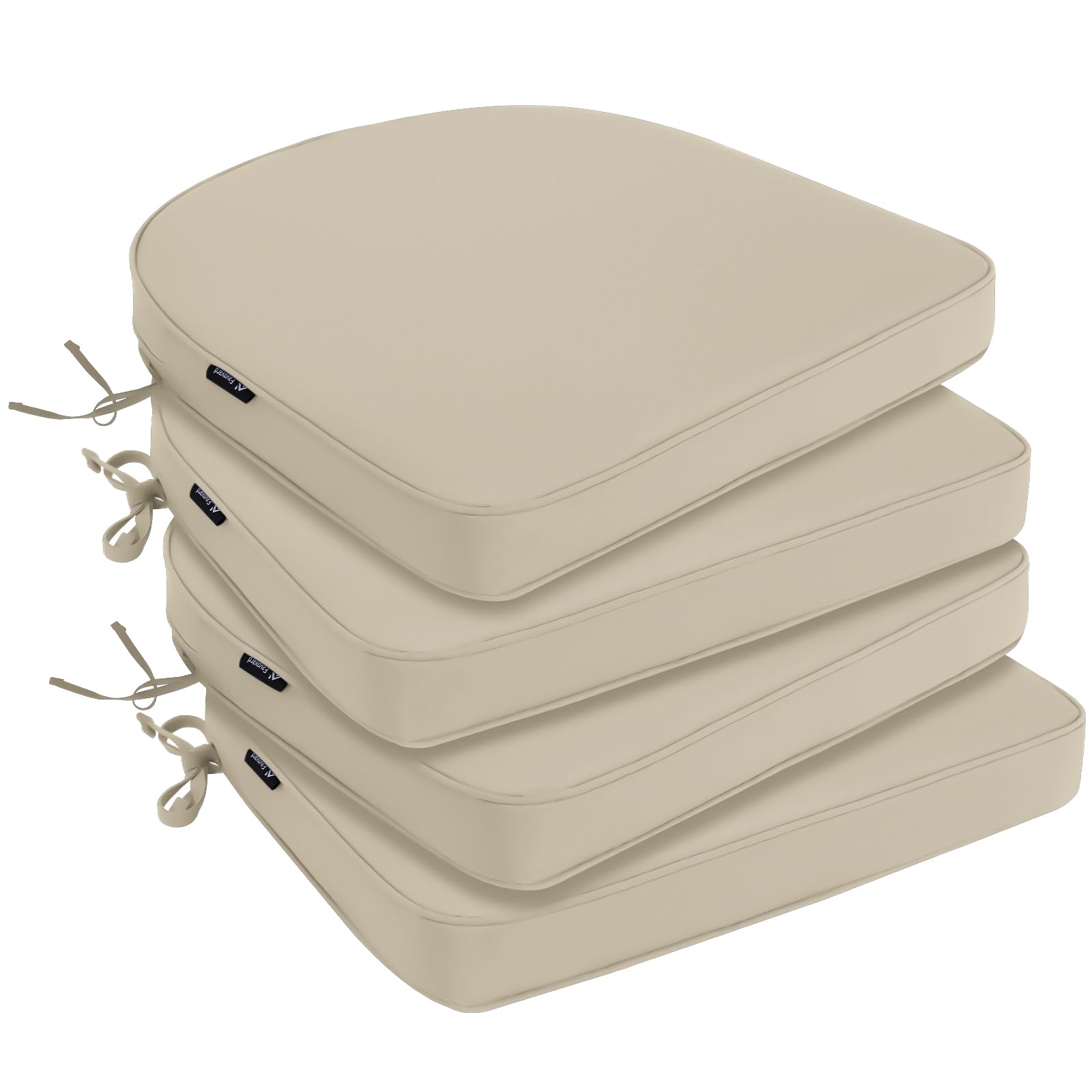
- Welting (Piping): Beyond aesthetics, welting reinforces the seams where the fabric panels meet. This provides structural integrity and helps the cushion maintain its crisp edges.
- Zipper Quality: High-quality outdoor cushions feature non-corrosive plastic or brass zippers. Ideally, the zipper should be "hidden" under a fabric flap to protect it from direct sunlight and rain.
- Venting: High-quality foam cushions often have a mesh strip on the underside or back. This allows the foam to "breathe," letting air escape during compression and allowing moisture to evaporate.
Comparison of Common Outdoor Fabrics (2026 Standards)
| Fabric Type | UV Resistance | Moisture Management | Softness/Texture | Expected Lifespan |
|---|---|---|---|---|
| Solution-Dyed Acrylic | Excellent (1,500+ hrs) | High | Soft/Cotton-like | 7–10 Years |
| Olefin | Very Good (1,000 hrs) | Excellent | Slightly Waxy | 4–6 Years |
| Spun Polyester | Moderate (500 hrs) | Moderate | Soft | 2–3 Years |
| PVC Coated Polyester | Excellent | High | Rough/Plastic-like | 5–7 Years |
Maintenance Strategies for 2026
Even the most durable cushion requires maintenance to reach its full life expectancy. The primary enemy of durability in 2026 is not the sun, but atmospheric pollutants and organic debris.
When bird droppings, pollen, or dust sit on the fabric, they provide a nutrient base for mold to grow—even on synthetic fibers that don't support mold themselves. To prevent this, a simple monthly "hose-down" is recommended. For deeper cleans, a solution of mild soap and lukewarm water is sufficient. Always allow cushions to air dry completely by standing them on their side (the "on-edge" position), which facilitates faster drainage through the seams.
For those in regions with extreme winters, storage remains mandatory. Even UV-resistant fabrics can be stressed by the weight of heavy snow and the expansion/contraction of ice within the fibers.
Common Mistakes to Avoid
- Buying by Price Alone: Low-cost cushions often use "crushed foam" or low-density batting that loses 50% of its thickness within six months.
- Ignoring the "Hand": Some durable fabrics feel like plastic. If you plan to sit in a swimsuit, ensure the fabric is breathable and soft to the touch (like acrylic).
- Assuming Waterproof Means Maintenance-Free: Truly waterproof fabrics (like vinyl) can be uncomfortable because they don't breathe, causing the user to sweat. Furthermore, if water gets inside a "waterproof" cover through a seam, it will never get out, leading to internal rot.
- Incorrect Sizing: A cushion that is too small for the frame will slide, causing friction damage to the fabric. A cushion that is too large will "bunch," creating pressure points that cause the seams to fail.
Frequently Asked Questions
Can I leave my patio cushions out in the rain?
While modern cushions with reticulated foam and solution-dyed acrylic are designed to handle moisture, it is not recommended to leave them out during heavy, prolonged storms. Continuous saturation can lead to "wicking," where water pulls dirt deep into the cushion core. If they do get soaked, stand them on their side to expedite drainage.
How do I know if a cushion is actually "solution-dyed"?
Check the product specifications for brand names like Sunbrella, Outdura, or Tempotest. If the brand is not listed, look for the specific phrase "solution-dyed." If the tag only says "UV resistant" or "water-repellent," it is likely a surface-treated polyester which has a shorter lifespan.
Is memory foam good for outdoor cushions?
Generally, no. Memory foam is a closed-cell material that is highly temperature-sensitive. In the heat of summer, it can become too soft and offer no support; in cold weather, it can become as hard as a brick. Furthermore, it acts as a giant sponge for moisture, making it a high risk for mold.
Why are my cushions fading even though they are "outdoor rated"?
Most "outdoor-rated" cushions sold at big-box retailers are made of printed polyester. These are only rated for about 500 hours of direct sunlight. In a sunny environment, you can hit this limit in just two months. For permanent sun exposure, only solution-dyed fabrics provide the necessary 1,500+ hour rating.
How often should I replace my patio cushions?
With high-quality materials (Solution-Dyed Acrylic and HD Foam), you should expect 7 to 10 years of use. If you are using mid-grade polyester cushions, you will likely need to replace them every 2 to 3 years as the foam loses its resilience and the fabric begins to thin or fade.
Final Recommendation
For the best balance of comfort and longevity in 2026, invest in cushions featuring Solution-Dyed Acrylic covers and Reticulated (Dry-Fast) Foam cores. While the initial cost may be 40% to 60% higher than standard retail options, the extended replacement cycle and superior ergonomic support provide a much lower "cost-per-year" of ownership. Always verify the foam density (minimum 1.8 lbs) and ensure the seams are sewn with UV-stabilized thread to prevent structural failure.
Image Gallery