What an LLC Is Considered: Legal Classification and Tax Status Explained
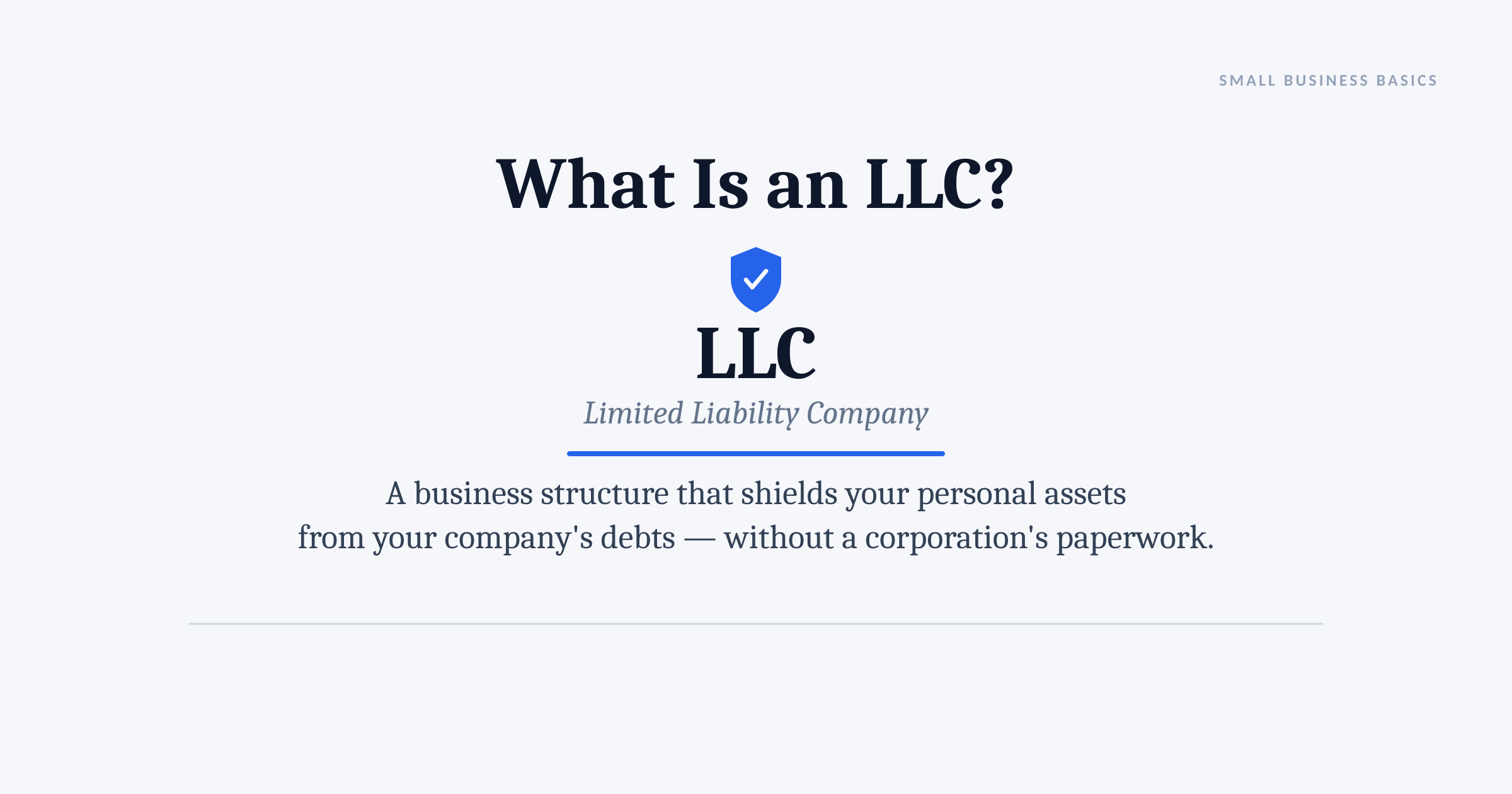
A Limited Liability Company (LLC) is legally considered a distinct business structure created under state law that separates business liabilities from the personal assets of its owners. For federal tax purposes, the Internal Revenue Se...
A Limited Liability Company (LLC) is legally considered a distinct business structure created under state law that separates business liabilities from the personal assets of its owners. For federal tax purposes, the Internal Revenue Service (IRS) does not recognize an LLC as a separate tax category, treating it by default as a disregarded entity or partnership.
Contents
Legal Identity: What an LLC Is Considered Under State Law
Under United States business law, a Limited Liability Company is a hybrid legal entity created by state statute. It combines the operational flexibility and pass-through management of a general partnership with the asset protection features traditionally reserved for corporations. State legal frameworks govern how an LLC is formed, operated, and dissolved.
When an LLC is established by filing Articles of Organization (sometimes referred to as a Certificate of Formation) with a state’s Secretary of State or equivalent division of corporations, the business becomes a legal person distinct from its owners, who are designated as "members."
- State Level
- Legal Structure: Limited Liability Company (LLC)
- Creates separate legal entity from owners (members)
- Provides limited liability asset protection
- Legal Structure: Limited Liability Company (LLC)
- Federal Level
- Tax Classification (IRS "Check-the-Box" Rules)
- Default Classifications:
- 1 Member: Disregarded Entity
- 2+ Members: Partnership
- Elective Classifications:
- C-Corporation (Form 8832)
- S-Corporation (Form 2553)
- Default Classifications:
- Tax Classification (IRS "Check-the-Box" Rules)
The Liability Shield
The primary benefit of being considered a legal entity distinct from its members is limited liability. Under normal operating conditions, members are not personally responsible for the debts, lawsuits, obligations, or contractual liabilities incurred by the business entity. If an LLC defaults on a commercial lease or faces a civil judgment, creditors generally can target only the assets owned directly by the LLC, such as business bank accounts, inventory, or equipment. Personal assets—including primary residences, personal savings, and investment accounts—remain protected.
Single-Member vs. Multi-Member LLCs
State statutes recognize two fundamental ownership structures:
- Single-Member LLCs (SMLLCs): Owned by a single individual, corporation, or parent entity.
- Multi-Member LLCs (MMLLCs): Owned by two or more individuals or organizational entities, governed by an internal contract known as an Operating Agreement.
While both single-member and multi-member LLCs enjoy liability protection under state law, courts in certain jurisdictions scrutinize single-member entities more rigorously when creditors attempt to pierce the corporate veil or obtain charging orders.
Federal Tax Identity: How the IRS Classifies an LLC
While state law determines an LLC’s legal status, federal tax law treats the entity differently. The Internal Revenue Code does not contain a specific statutory tax classification labeled "LLC." Instead, the IRS relies on entity classification regulations under 26 CFR § 301.7701-3, commonly referred to as the "check-the-box" rules.
Under these regulations, the IRS assigns default tax classifications based on ownership count, while allowing the entity to elect alternative corporate tax status if specific qualifications are met.
- LLC Formed at State Level
- Single-Member Ownership
- Default Tax Status: Disregarded Entity (Schedule C / Form 1040)
- Multi-Member Ownership
- Default Tax Status: Partnership Tax (Form 1065)
- Elective Corporate Tax Status
- C-Corporation: Taxed under Subchapter C (IRS Form 8832)
- S-Corporation: Taxed under Subchapter S (IRS Form 2553)
- Single-Member Ownership
1. Disregarded Entity (Default for Single-Member LLCs)
If an LLC has only one owner, the IRS considers it a "disregarded entity" for income tax purposes. This means the entity’s financial transactions bypass the LLC itself for tax computation and flow directly to the owner’s individual tax return.
For an individual owner, revenues and deductible expenses are reported on Schedule C (Profit or Loss From Business) attached to Form 1040. The business itself does not file a separate federal income tax return, though it remains responsible for federal employment taxes (FICA/FUTA) and excise taxes under its assigned Employer Identification Number (EIN).
2. Partnership (Default for Multi-Member LLCs)
If an LLC has two or more members, the IRS automatically considers it a partnership for federal tax purposes. The LLC is categorized as a pass-through entity: it pays no entity-level federal income tax.
Instead, the LLC must file an annual informational return using IRS Form 1065 (U.S. Return of Partnership Income). The entity issues a Schedule K-1 (Partner’s Share of Income, Deductions, Credits, etc.) to each member, detailing their proportional share of net profits or losses. Members then report these figures on their individual income tax returns (Form 1040, Schedule E).
3. Elective Tax Status: C-Corporation Taxation
An LLC can opt out of its default pass-through tax status by filing IRS Form 8832 (Entity Classification Election) to be taxed as a C-Corporation under Subchapter C of the Internal Revenue Code.
When categorized as a C-Corporation for tax purposes:
- The business files Form 1120 and pays corporate-level income tax on net earnings.
- Distributions of post-tax corporate profits to members as dividends are subject to personal dividend taxes, giving rise to "double taxation."
- The business gains the ability to retain earnings within the company at corporate income tax rates rather than passing all earnings through to members annually.
4. Elective Tax Status: S-Corporation Taxation
Alternatively, an eligible LLC can elect S-Corporation tax status under Subchapter S by filing IRS Form 2553 (Election by a Small Business Corporation). According to guidance from the Internal Revenue Service, an LLC electing S-Corporation status retains its state-level legal structure while adopting a specialized pass-through tax treatment.
Under S-Corporation taxation:
- Active owners who provide services to the company must be paid a "reasonable salary" subject to standard payroll taxes (FICA).
- Remaining net profits can be distributed to owners as pass-through distributions, which are exempt from self-employment tax (SECA).
- The entity must satisfy strict eligibility criteria, including a limit of 100 shareholders, single-class stock structure requirements, and restrictions permitting only U.S. citizens or resident aliens as individual owners.
Comparing Legal and Tax Classifications
Understanding what an LLC is considered requires separating legal entity types from IRS tax designations. The table below details how various business structures are classified across legal authorities and tax codes.
| Business Structure | State Legal Identity | Default Federal Tax Classification | Optional Tax Elections | Personal Liability Exposure | Primary Tax Return Filed |
|---|---|---|---|---|---|
| Sole Proprietorship | Unincorporated individual | Disregarded entity | None | Unlimited personal liability | Form 1040 (Schedule C) |
| General Partnership | Unincorporated association | Partnership | None | Unlimited joint liability | Form 1065 (Schedules K-1) |
| Single-Member LLC | State-registered LLC | Disregarded entity | C-Corporation or S-Corporation | Limited liability shield | Form 1040 (Schedule C) |
| Multi-Member LLC | State-registered LLC | Partnership | C-Corporation or S-Corporation | Limited liability shield | Form 1065 (Schedules K-1) |
| C-Corporation | State-chartered corporation | C-Corporation | S-Corporation (if eligible) | Limited liability shield | Form 1120 |
Operational and Financial Implications of LLC Status
The dual nature of an LLC—being a corporate-like legal entity and a flexible pass-through tax entity—creates specific operational and financial dynamics.
- LLC Operational Dynamics
- Financial & Tax Aspects
- Self-Employment Tax (SECA)
- Pass-Through Net Profits
- State Entity & PTE Taxes
- Legal & Risk Aspects
- Veil Piercing Risks
- Corporate Formality Rules
- Asset Co-Mingling Cautions
- Financial & Tax Aspects
Self-Employment Tax Obligations
Under default tax status (disregarded entity or partnership), the IRS considers active LLC members to be self-employed rather than employees. Consequently, members do not receive standard W-2 wages subject to employer payroll tax withholding.
Instead, the entirety of an active member’s pass-through net earnings is subject to the Self-Employment Contributions Act (SECA) tax. SECA tax funds Social Security (12.4%) and Medicare (2.9%) up to annual statutory caps. Members calculate and pay this liability via Schedule SE alongside estimated quarterly income tax payments.
Piercing the Corporate Veil
An LLC’s legal liability shield is not absolute. Litigants or creditors can ask a court to "pierce the corporate veil," revoking limited liability status and holding members personally responsible for corporate debts. Courts may grant this remedy if the LLC fails to function as a genuinely separate legal entity.
Common triggers for piercing the corporate veil include:
- Commingling Funds: Mixing personal funds with business accounts or paying personal expenses directly from corporate bank accounts.
- Inadequate Capitalization: Launching or operating an enterprise without sufficient financial resources or insurance to cover reasonably foreseeable liabilities.
- Failure to Maintain Formalities: Neglecting to maintain an active Operating Agreement, failing to record state annual filings, or omitting separate financial accounting.
- Fraudulent Intent: Utilizing the LLC structure deliberately to evade existing personal debts or conduct deceptive transactions.
State-Level Taxing Variations
While the IRS provides standardized federal rules, state tax authorities classify and tax LLCs differently. Business owners must comply with local rules established by state revenue departments and the U.S. Small Business Administration:
- Franchise Taxes and Annual Fees: States like California impose a mandatory annual minimum franchise tax ($800) on LLCs operating within their borders, regardless of profitability. Delaware charges a flat annual entity tax.
- Gross Receipts Taxes: Certain jurisdictions, such as Texas (Franchise Tax) and Washington State (Business and Occupation Tax), tax an LLC based on total gross revenue rather than net income.
- Pass-Through Entity (PTE) Taxes: Many states offer elective PTE taxes allowing multi-member LLCs to pay income tax at the entity level. This mechanism helps members work around the federal cap on State and Local Tax (SALT) deductions established under the Tax Cuts and Jobs Act.
Common Misconceptions About LLC Status
Misconception 1: "An LLC is a tax classification."
An LLC is exclusively a legal entity structure created under state law. The IRS does not have an "LLC tax bracket" or an "LLC tax rate." An LLC is always taxed under another tax regime: as a sole proprietorship, partnership, C-corporation, or S-corporation.
Misconception 2: "Forming an LLC eliminates all personal liability."
While an LLC provides robust protection against standard business liabilities (such as commercial debt or vendor contract breaches), it does not protect an owner from personal tort liability. If a member personally commits a negligent act, causes an auto accident while working, or personally guarantees a commercial loan, that member remains personally liable for resulting damages.
Misconception 3: "You must form a corporation to get S-Corp status."
Business owners often confuse an S-Corporation with a legal entity type. An S-Corp is merely a tax election status. An LLC can elect S-Corporation taxation by filing Form 2553 while remaining legally registered as an LLC with the state, avoiding corporate governance burdens such as mandatory board of directors meetings and complex share issuance procedures.
Frequently Asked Questions
Is an LLC considered an incorporated entity?
No. An LLC is an unincorporated legal association created under state LLC statutes, whereas a corporation is incorporated under state general corporation laws. While both offer limited liability protection, LLCs benefit from fewer governance formalities and flexible management structures compared to statutory corporations.
Is a single-member LLC considered self-employed?
Yes. For federal tax purposes, the IRS treats an individual who owns a single-member LLC as a self-employed sole proprietor by default. The business owner must pay self-employment taxes (Social Security and Medicare) on net business earnings using Schedule SE.
How is an LLC considered for payroll taxes if it has employees?
For federal employment taxes (FICA, FUTA, and income tax withholding), the IRS treats an LLC as a separate entity rather than a disregarded entity. The LLC must obtain an Employer Identification Number (EIN) and deposit payroll taxes under the company's name using standard employer quarterly tax filings (IRS Form 941).
Is an LLC considered a pass-through entity?
Yes, under its default tax classifications (disregarded entity for single-member LLCs or partnership for multi-member LLCs), an LLC is a pass-through entity. Net profits and losses bypass entity-level income taxation and pass directly to the owners' individual tax returns.
Can an LLC be considered a non-profit organization?
In limited circumstances, an LLC can qualify for tax-exempt non-profit status under Section 501(c)(3) of the Internal Revenue Code. However, the IRS imposes strict rules: all members of the LLC must themselves be recognized 501(c)(3) tax-exempt organizations or government entities, preventing private individuals from owning a tax-exempt non-profit LLC directly.
Practical Guidance and Next Steps
Determining how your business should operate as an LLC requires balancing state legal requirements against federal and state tax rules.
- Draft a Clear Operating Agreement: Even for single-member LLCs, a formal Operating Agreement demonstrates entity separation, helping safeguard the corporate veil in court.
- Separate Financial Operations Immediately: Open dedicated business checking accounts and business credit cards. Never pay personal expenses out of an LLC account.
- Evaluate Tax Elections Annually: As an LLC’s net profit grows, consult a Certified Public Accountant (CPA) or tax attorney to calculate whether electing S-Corporation taxation (via Form 2553) or C-Corporation taxation (via Form 8832) could reduce self-employment tax liabilities or provide income-retention benefits.
- Maintain Local Compliance: Track ongoing state requirements, including annual report filings, registered agent designations, and local franchise tax deadlines to prevent involuntary administrative dissolution.
Image Gallery