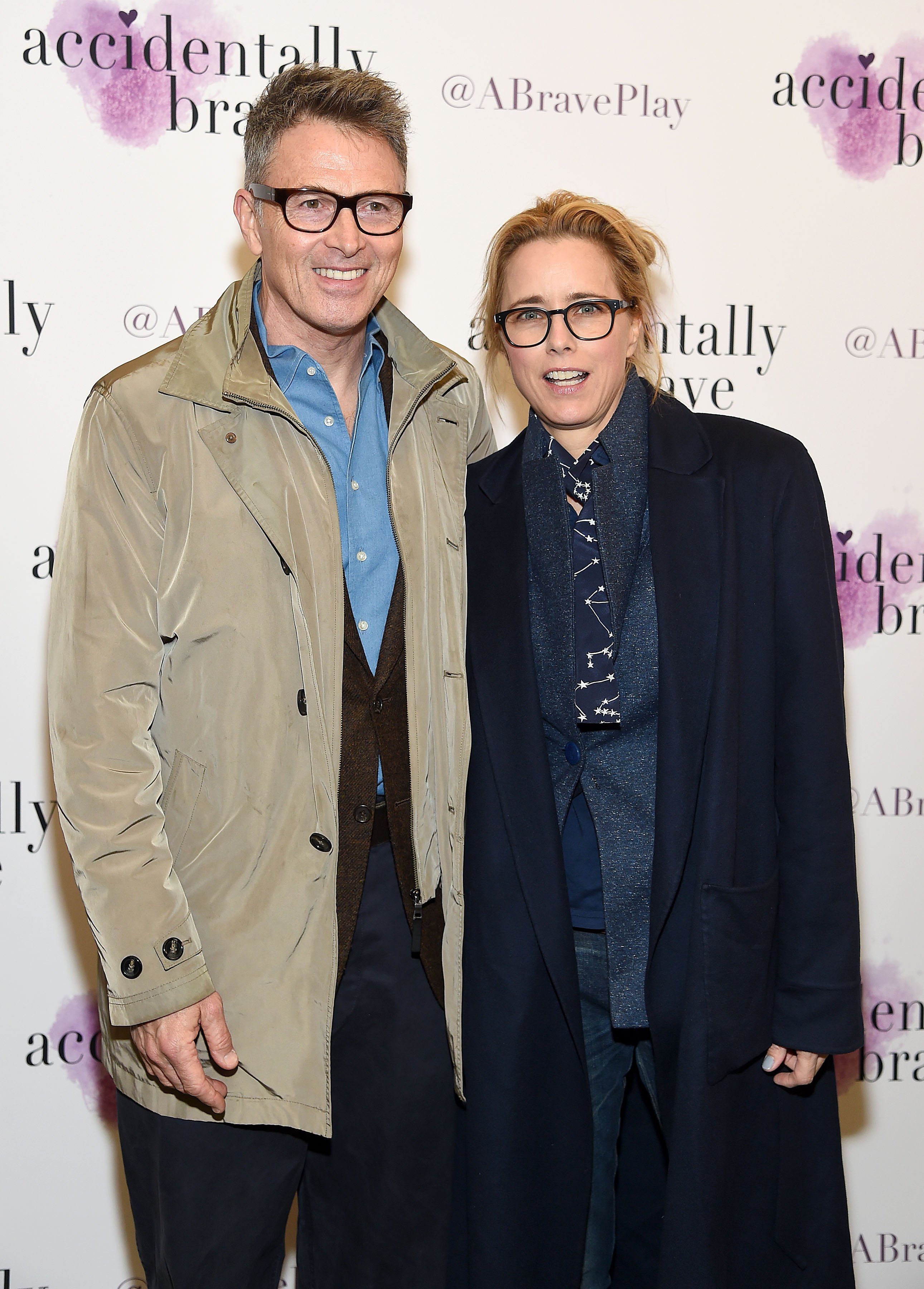
Tim Daly and The Actor’s Journey: Navigating the Realities of a Professional Career
Tim Daly’s contribution to The Actor’s Journey serves as a vital bridge between aspiring performers and the complex realities of the entertainment industry. By sharing candid insights into the business, psychological resilience, and te...
Tim Daly’s contribution to The Actor’s Journey serves as a vital bridge between aspiring performers and the complex realities of the entertainment industry. By sharing candid insights into the business, psychological resilience, and technical craft, Daly provides a roadmap for actors to transition from student life to a sustainable, professional career in a competitive landscape.
Contents
The Foundation of The Actor’s Journey Project
The Actor’s Journey, originally conceived and produced by Stanley B. Herman, is a comprehensive documentary and educational series designed to demystify the professional acting world. While many acting programs focus heavily on the "craft"—the internal emotional work and character development—this project addresses the "business" of being an actor. Tim Daly, alongside other luminaries, became a central voice in this initiative because of his unique position as both a classically trained actor and a veteran of long-running television hits.
As of 2026, the project remains a cornerstone in performing arts curricula. It does not promise stardom; instead, it promises a realistic look at the infrastructure of Hollywood and Broadway. The series covers the mechanics of the industry that are often ignored in traditional theater schools, such as how to secure a reputable agent, the nuances of union membership, and the etiquette of a professional film set. Daly’s involvement underscores a primary truth of the project: a successful career is built on a foundation of professional conduct and industry literacy, not just raw talent.
The project was born out of a necessity to protect young actors from the predatory elements of the industry. By providing direct testimony from established actors like Daly, the series functions as a protective guide, helping newcomers distinguish between legitimate opportunities and "pay-to-play" schemes that often target the inexperienced.
Tim Daly’s Career as a Case Study in Longevity
To understand why Tim Daly is a primary figure in The Actor’s Journey, one must look at the trajectory of his career. Unlike actors who experience a singular "big break" followed by a slow decline, Daly has maintained visibility across five decades. From his breakout role as Joe Hackett in Wings to his acclaimed performance as Dr. Pete Wilder in Private Practice and Henry McCord in Madam Secretary, his career reflects the "journey" in its most literal sense.
Daly’s insights are grounded in the reality of the "working actor." Even during his time on The Sopranos, where he earned an Emmy nomination for his portrayal of J.T. Dolan, Daly spoke openly about the ebb and flow of work. In the context of the series, he emphasizes that the journey is rarely a straight line upward. It is a series of plateaus, peaks, and valleys.
His background also includes a deep commitment to the stage, having performed in numerous Broadway and Off-Broadway productions. This versatility allows him to speak to the specific challenges of different mediums. For instance, in The Actor’s Journey, Daly clarifies the technical differences between the high-volume, multi-camera environment of a sitcom and the nuanced, single-camera requirements of a prestige drama. This level of technical depth is exactly what makes the resource indispensable for students transitioning into the professional world in 2026.
The Business of Acting: Beyond the Script
One of the most significant contributions Tim Daly makes to the discourse is his focus on the actor as a business entity. In the modern era, an actor is effectively the CEO of a small corporation where they are the primary product. Daly’s advice often centers on the logistical requirements of maintaining that business.
Agency and Representation
Daly discusses the symbiotic relationship between an actor and their agent. He dispels the myth that an agent’s job is to "make" a career. Instead, he explains that an agent provides access, but the actor must provide the "goods" to close the deal. In The Actor’s Journey, he highlights the importance of finding representation that shares the actor’s long-term vision, rather than an agent who is merely looking for a quick commission on a single commercial.
The Audition Room
The audition process is often the most anxiety-inducing part of the journey. Daly’s perspective focuses on taking control of the room. He teaches that an audition is not a plea for a job, but a solution to a problem that a casting director has. By shifting the power dynamic from "please pick me" to "here is my professional interpretation of this character," actors can maintain their dignity and deliver more grounded performances.
Financial Literacy
Though it is rarely discussed in artistic circles, Daly has been an advocate for financial pragmatism. He stresses that the "journey" requires a financial buffer to survive the inevitable periods of unemployment. In 2026, where the gig economy has permeated every sector, this advice is more relevant than ever. Actors must understand their taxes, their residuals, and their health insurance requirements (SAG-AFTRA) to stay in the game long enough for luck to meet preparation.
Psychological Resilience and Mental Health
A recurring theme in Tim Daly's contributions to The Actor’s Journey is the importance of mental health. The acting profession is unique in that rejection is personal; it is often the actor’s appearance, voice, or essence that is being "turned down." Daly speaks candidly about the toll this takes.
He advocates for a life outside of acting. For Daly, the journey is only sustainable if the actor is a well-rounded human being with interests, relationships, and passions that have nothing to do with the industry. This "outside life" provides the perspective necessary to survive a bad audition or a canceled series.
Furthermore, Daly touches on the "myth of the tortured artist." He argues that one does not need to be miserable or self-destructive to be a great actor. Professionalism, punctuality, and kindness are, in his view, just as important to a long-term career as emotional depth. This message is a vital part of the project’s mission: to create not just better actors, but healthier ones.
The Role of Advocacy: The Creative Coalition
Tim Daly’s journey is also defined by his role as a citizen-artist. As the longtime president of The Creative Coalition, he has led the charge in Washington D.C. for arts funding and freedom of expression. In the context of The Actor’s Journey, this involvement demonstrates that an actor’s influence can extend far beyond the screen.
He encourages young actors to understand the policy and politics that affect their industry. This includes:
- Copyright protection in the age of generative AI.
- Tax incentives for local film productions.
- Public funding for the arts through the NEA.
Daly proves that being an actor means being part of a larger community. His work with the coalition shows that the journey involves a responsibility to the next generation of artists. This advocacy work is presented as a way for actors to find meaning during the periods when they aren't working on a specific set.
Key Career Comparisons: The Professional Reality
To better understand the stages of the journey that Tim Daly and the project outline, the following table summarizes the typical professional progression and the focus areas for each stage as of 2026.
| Career Stage | Primary Focus | Key Requirement | Daly’s Advice |
|---|---|---|---|
| Early Career | Skill Acquisition & Network Building | Professional Headshots & Demo Reel | "Don't try to be what you think they want; be yourself." |
| Developing Pro | Securing Representation | SAG-AFTRA Eligibility | "Your reputation on set is your most valuable currency." |
| Established Actor | Diversification (TV, Film, Voice) | Contract Negotiation Skills | "Learn when to say 'no' to protect your brand." |
| Veteran/Leader | Mentorship & Advocacy | Brand Longevity | "Give back to the community that sustained you." |
Adapting to the 2026 Industry Landscape
The actor’s journey in 2026 looks different than it did when the project first launched, yet the core principles remain. Digital auditions (self-tapes) have become the global standard, and the traditional "pilot season" has been replaced by year-round streaming production.
Daly’s advice has evolved to include the mastery of home-studio technology. He emphasizes that the "journey" now includes being your own cinematographer and sound engineer for auditions. However, he cautions against letting the technology overshadow the performance. The "human element" is what casting directors are looking for, regardless of whether the audition is in person or sent via a high-speed fiber connection.
He also addresses the rise of social media as a branding tool. While some influencers transition into acting, Daly maintains that the reverse—actors becoming influencers—should be handled with care. The goal is to remain a "blank canvas" for characters, and over-exposure on social platforms can sometimes hinder an actor’s ability to disappear into a role.
Practical Steps for Engaging with the Project
For those looking to utilize The Actor’s Journey as a resource, there are specific actions to take to maximize the benefit of Tim Daly’s experience:
- Review the Core Series: Access the full interviews where Daly discusses specific "on-set" scenarios. Pay close attention to his breakdown of the relationship between the actor and the director.
- Audit Your Professionalism: Use Daly’s "Professional Conduct Checklist" to ensure your punctuality, preparation, and attitude are at a professional grade.
- Engage with The Creative Coalition: Follow the advocacy work led by Daly to understand the legislative issues affecting the 2026 entertainment market.
- Practice the "Business" of You: Set aside time each week for the administrative side of acting—updating resumes, researching casting directors, and managing finances.
Frequently Asked Questions
What is the main message of Tim Daly in The Actor’s Journey?
The main message is that acting is a professional trade that requires as much business acumen and discipline as it does emotional talent. Daly emphasizes that longevity in the industry is the result of preparation, resilience, and a commitment to being a "working professional" rather than a "celebrity."
Does The Actor’s Journey provide job placement?
No, The Actor’s Journey is an educational resource and documentary project. It provides the knowledge, strategies, and "insider" information needed to navigate the industry effectively, but it does not act as a talent agency or a job placement service.
How has Tim Daly’s advice changed with the rise of AI in 2026?
Daly has become a vocal advocate for "the human soul" in performance. While he acknowledges the utility of AI in post-production, his advice to actors in 2026 is to lean into the unpredictable, unique human choices that an algorithm cannot replicate. He views the actor’s unique "essence" as their greatest defense against automation.
Who is the primary audience for this project?
The project is primarily designed for BFA and MFA students, early-career actors, and theater professionals looking to transition into film and television. It is also used by educators as a "Real World 101" supplement to traditional acting classes.
Is Tim Daly still active in the project?
Yes, Daly continues to participate in updated segments and live Q&A sessions associated with the project. His ongoing leadership in the Creative Coalition ensures that his insights remain current with the latest industry shifts and legal developments in 2026.
Final Recommendation for Aspiring Performers
For any actor serious about a lifelong career, the insights provided by Tim Daly in The Actor’s Journey are essential. The next logical step is to move beyond the study of "how to act" and begin the study of "how to be an actor." This involves treating your career with the same rigor you apply to your rehearsals. By adopting Daly’s philosophy of the "citizen-artist"—one who is technically skilled, business-savvy, and socially engaged—you prepare yourself not just for your next role, but for the entire journey ahead.
Image Gallery