Essential Types of Trusts to Protect Assets and Life Insurance
Trusts are legal vehicles designed to hold assets for the benefit of specific individuals or entities. By separating the legal ownership of property from its beneficial enjoyment, trusts provide a robust layer of protection against cre...
Trusts are legal vehicles designed to hold assets for the benefit of specific individuals or entities. By separating the legal ownership of property from its beneficial enjoyment, trusts provide a robust layer of protection against creditors, litigation, and estate taxation. When integrating life insurance, a trust can ensure death benefits are managed, shielded from probate, and distributed according to the grantor’s specific intent rather than by default state laws.
Contents
Understanding the Role of Trusts in Asset Protection
Asset protection is the practice of organizing one’s finances to minimize the risk of loss from lawsuits, judgments, or bankruptcy. A trust functions by transferring legal title of assets from the individual (the grantor) to a fiduciary (the trustee). Once transferred, these assets are typically no longer considered the property of the grantor, meaning they are not subject to the claims of the grantor’s personal creditors, provided the transfer was not made to defraud existing creditors.
For life insurance, the primary concern is often estate liquidity and the avoidance of taxable "incidents of ownership." If you own your life insurance policy personally, the death benefit is usually included in your taxable estate. Placing the policy within a trust can remove this benefit from your estate, potentially reducing or eliminating federal estate taxes.
Irrevocable Trusts: The Foundation of Asset Shielding
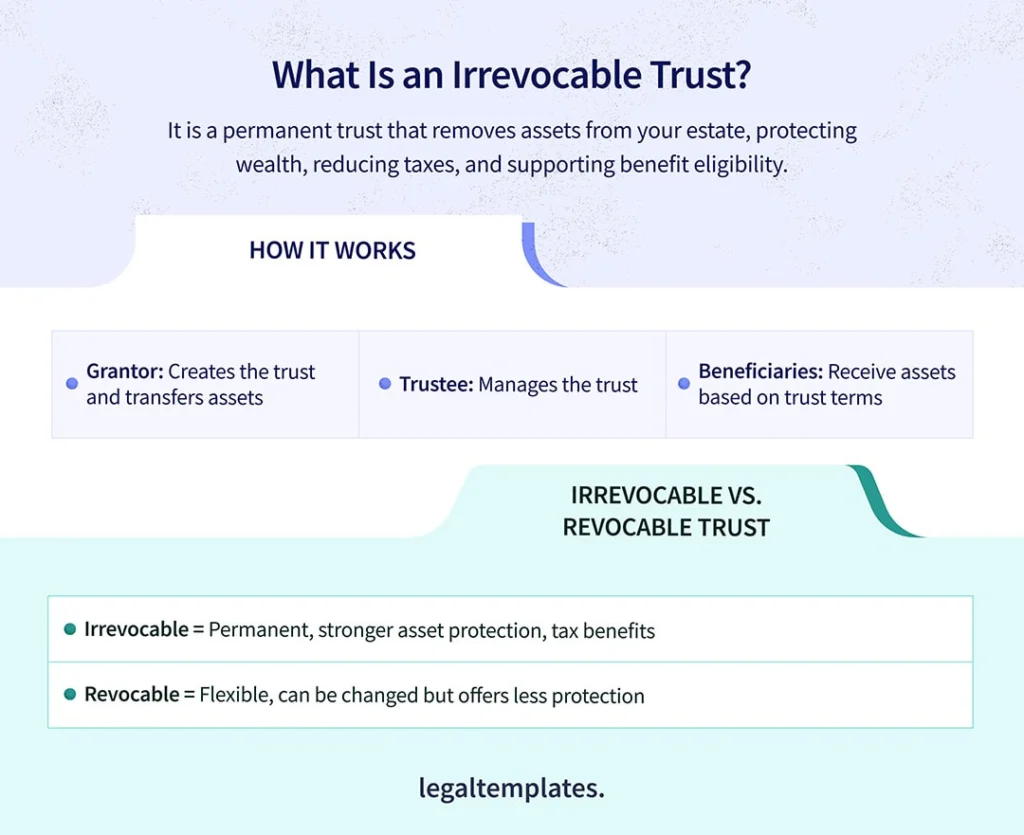
An irrevocable trust is a structure where the grantor relinquishes control and ownership of the assets permanently. Because the grantor cannot dissolve the trust or reclaim the assets, the assets are generally shielded from the grantor’s future creditors.
- Irrevocable Life Insurance Trusts (ILITs): This is the most common vehicle for life insurance. When you transfer an existing policy to an ILIT—or have the trust purchase a new policy—the death benefit is excluded from your taxable estate. This structure is particularly valuable for high-net-worth individuals whose insurance payouts might otherwise push their total estate value over federal tax exemption thresholds.
- Domestic Asset Protection Trusts (DAPTs): Available in specific U.S. jurisdictions, these trusts allow the grantor to remain a beneficiary while still enjoying asset protection. These are highly complex and require strict adherence to state-specific statutory requirements.
Revocable Living Trusts: Managing Life Insurance and Assets
A revocable living trust is a flexible arrangement where the grantor maintains control over the assets during their lifetime. While highly effective for probate avoidance and streamlined asset management, they offer limited protection against lawsuits or creditors.
Because the grantor retains the power to revoke the trust or change its terms, the law views the trust’s assets as still being under the grantor’s control. Consequently, if a creditor sues the grantor, the assets in a revocable trust can often be reached to satisfy the judgment. However, if a life insurance policy is paid into the trust upon the death of the grantor, the trust becomes irrevocable at that time, and subsequent protection may then apply to those proceeds.
Comparing Trust Types for Insurance and Asset Preservation
| Trust Type | Primary Goal | Creditor Protection | Tax Implications | Flexibility |
|---|---|---|---|---|
| Revocable Trust | Probate Avoidance | Minimal | Standard Estate Tax | High |
| ILIT | Estate Tax Reduction | High | Excludes Proceeds | Low |
| DAPT | Legal Liability | High | Variable by State | Moderate |
| Spendthrift Trust | Beneficiary Protection | Moderate | Variable | Low |
Operational Requirements and Legal Prerequisites
Establishing a trust is a formal legal process that necessitates professional guidance. Attempting to "self-fund" or draft trust documents without legal counsel can lead to the invalidation of the trust, leaving your assets vulnerable.
- Drafting the Trust Instrument: The trust document must explicitly define the powers of the trustee, the identity of the beneficiaries, and the conditions under which assets are distributed.
- Funding the Trust: An ILIT or other trust is not effective until it is properly funded. For life insurance, this involves transferring ownership of the policy or ensuring the trust is the named beneficiary.
- Maintaining Separateness: The trust must function as a distinct entity. For an ILIT, this involves the trustee paying premiums using funds provided to the trust, rather than the grantor paying the insurance company directly. Failure to maintain this "arm's length" relationship can result in the IRS including the death benefit in your taxable estate.
Common Risks and Compliance Failures
The most frequent error in trust planning is the "commingling" of funds. If you treat trust accounts as personal checking accounts, courts may apply the "alter ego" doctrine, effectively disregarding the trust and exposing the assets to your creditors.
Another significant risk involves the "three-year rule" regarding life insurance. If you transfer an existing life insurance policy into an ILIT and pass away within three years of that transfer, the IRS may include the death benefit in your taxable estate regardless of the trust structure. This makes it crucial to consider having the trust apply for the insurance policy directly rather than transferring an existing one.
Frequently Asked Questions
Can a trust protect my life insurance from a divorce settlement? Generally, if a trust is properly structured as an irrevocable entity before a marriage or during a period without current divorce litigation, the assets within the trust are often shielded. However, state laws vary significantly regarding the characterization of trust assets during divorce proceedings.
What is the minimum cost to establish an ILIT? Costs vary by complexity and geography. One should expect to pay for legal drafting, potential trustee fees, and administrative costs for managing the policy premiums. These costs must be weighed against the potential estate tax savings provided by the trust.
Does a trust stop creditors from taking my insurance death benefit? If the proceeds are paid to an ILIT, the money is held for the benefit of the trust beneficiaries. Depending on the language of the trust (such as a "spendthrift clause"), creditors of the beneficiaries may be restricted from attaching those assets until they are distributed.
Can I be the trustee of my own life insurance trust? While you can be the trustee of a revocable trust, acting as the trustee of an ILIT that you created may trigger tax issues. It is standard practice to appoint an independent, third-party trustee to ensure the trust adheres to all necessary legal requirements for tax and creditor protection.
Recommendation for Next Steps
If you are seeking to integrate life insurance into an asset protection strategy, your first step should be to consult with an estate planning attorney or a tax professional specializing in high-net-worth wealth management. Request a comprehensive audit of your current insurance policy ownership and an assessment of your potential exposure to estate taxes and litigation. Ensure your advisor is familiar with the specific statutes in your state of residence, as asset protection rules are highly localized.
Image Gallery