75 Day Challenge: What It Is, Strict Rules, and How It Works
The 75 Day Challenge—commonly known as the 75 Hard program—is a intensive 75-day transformative mental toughness regimen requiring completion of five strict daily tasks: following a structured diet with zero alcohol or cheat meals, com...
The 75 Day Challenge—commonly known as the 75 Hard program—is a intensive 75-day transformative mental toughness regimen requiring completion of five strict daily tasks: following a structured diet with zero alcohol or cheat meals, completing two separate 45-minute workouts (one outdoors), drinking a gallon of water, reading ten pages of non-fiction, and taking a daily progress photo.
Contents
What Is the 75 Day Challenge?
Created in 2019 by entrepreneur and podcaster Andy Frisella, the 75 Day Challenge (officially branded as 75 Hard) is designed not primarily as a fitness program, but as a "transformational mental toughness program." While physical changes like fat loss and muscle gain frequently occur during the 75 days, the primary objective is developing discipline, fortitude, self-reliance, and grit.
Unlike standard fitness routines that allow for rest days or minor indiscretions, the 75 Day Challenge operates on a strict zero-tolerance policy. If you miss a single requirement or alter any rule, even by a tiny margin, your progress resets entirely, and you must start over at Day 1.
Disclaimer: The 75 Day Challenge demands high physical effort and rapid habit changes. Consult a qualified medical professional before undertaking any rapid increases in exercise volume, extreme nutritional shifts, or drastic increases in water consumption.
The 5 Non-Negotiable Daily Rules
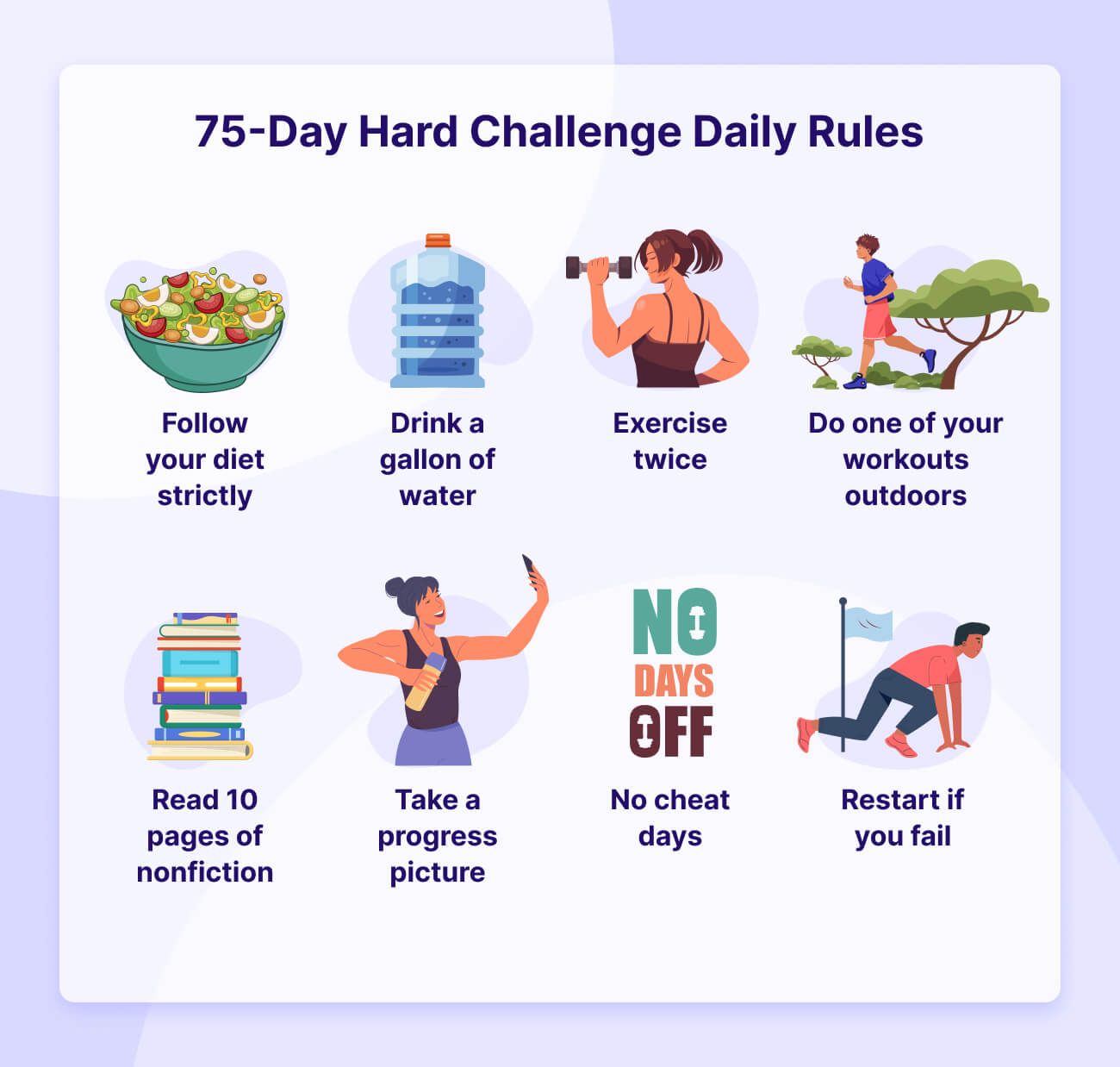
To successfully complete the 75 Day Challenge, you must complete five specific tasks every single day for 75 consecutive calendar days. There are no built-in rest days, modifications, or partial credits.
- Follow a Structured Diet
- Two 45-Min Workouts (1 Outdoors)
- Drink 1 Gallon of Water
- Read 10 Pages of Non-Fiction
- Take a Daily Progress Photo
1. Follow a Structured Diet (No Alcohol, No Cheat Meals)
You must select a structured nutrition plan tailored to your physical goals and follow it strictly without deviation.
- Allowed Diets: You can choose any legitimate dietary framework—such as macro-tracking, calorie restriction, ketogenic, Mediterranean, plant-based, or high-protein plans.
- The Zero-Tolerance Clause: Absolutely no cheat meals, off-plan snacks, or alcohol consumption are permitted for 75 days. Even a single bite of food outside your selected diet plan constitutes a failure and requires a reset to Day 1.
2. Complete Two 45-Minute Workouts Daily (One Must Be Outdoors)
Physical activity must be divided into two separate 45-minute exercise sessions every day.
- Outdoor Requirement: At least one of the two workouts must take place outdoors, regardless of weather conditions (rain, snow, extreme heat, or cold).
- Separation: The two workouts cannot be stacked back-to-back. They must be distinct sessions separated by several hours to promote endurance and scheduling discipline.
- Intensity: Workouts do not need to involve high-intensity interval training (HIIT) every session. A structured 45-minute outdoor walk counts as a valid workout alongside traditional weightlifting, cycling, swimming, or yoga sessions.
3. Drink One Gallon of Water Daily
You must consume one full U.S. gallon (approximately 3.78 liters or 128 fluid ounces) of plain water each day.
- No Substitutes: Flavored powders, zero-calorie enhancers, electrolytes, teas, and coffees do not count toward your one-gallon quota.
- Pacing: Water intake should be distributed evenly throughout the day to avoid hyponatremia (water intoxication) and gastrointestinal distress late at night.
4. Read 10 Pages of Non-Fiction Daily
You must read at least ten pages of an educational, self-development, business, or psychological non-fiction book each day.
- Medium Requirements: Reading must be done using a physical book or an e-reader (like a Kindle).
- Audiobook Restriction: Listening to audiobooks does not count toward this requirement, as the intent is to foster focused visual attention and cognitive retention.
5. Take a Daily Progress Photo
You must take a full-body photograph every single day to document your physical transformation over time.
- Consistency: Take the picture at a similar time each day (e.g., immediately after waking up) in consistent lighting.
- The Trap: Forgetting to take the daily progress photo is the single most common reason participants fail late in the challenge, as it is easy to overlook when tired at night.
75 Hard vs. 75 Soft: Program Comparison
As the 75 Day Challenge grew in global popularity, modified alternatives emerged for individuals seeking structured habit formation without the severe operational constraints or risk of physical burn-out associated with the original routine. The most prominent alternative is 75 Soft.
| Feature / Rule | 75 Hard (Original Challenge) | 75 Soft (Modified Alternative) |
|---|---|---|
| Primary Goal | Build extreme mental toughness and discipline | Build sustainable wellness and health habits |
| Dietary Rules | Strict plan; zero cheat meals; zero alcohol | Eat well generally; drink alcohol only socially |
| Workouts | Two 45-min sessions daily (1 outdoors) | One 45-min workout daily (1 rest day per week) |
| Daily Water | 1 Gallon (3.78 L) pure water | 3 Liters of water daily |
| Daily Reading | 10 pages of non-fiction (No audiobooks) | 10 pages of any book (Non-fiction or fiction) |
| Progress Photo | Required daily | Optional or weekly |
| Missed Task Penalty | Reset immediately to Day 1 | Adjust, learn, and continue next day |
How the Challenge Works: Physiological & Psychological Mechanisms
Understanding why the 75 Day Challenge works requires examining both its psychological frameworks and its physical stress dynamics.
Habit Stacking and Cognitive Load
The daily protocol relies heavily on habit stacking—anchoring new habits to consistent daily triggers. By standardizing tasks (reading, drinking water, taking photos, exercising twice), the routine minimizes "decision fatigue." Over 75 days, performing these non-negotiable tasks reorganizes your default daily schedule, replacing passive downtime with structured action.
Physical Adaptation and Recovery Management
Executing 150 workouts over 75 days creates significant physical fatigue. To complete the program without joint injury or overtraining syndrome, participants must balance exercise intensity strategically:
- Active Recovery Integration: Because rest days are prohibited, one daily session (often the outdoor session) should consist of low-impact, low-intensity recovery activities such as brisk walking, mobility work, or low-intensity yoga.
- Electrolyte Balance: Rapidly increasing water consumption to one gallon daily increases urine output, which can flush out essential sodium, potassium, and magnesium. Incorporating electrolytes into your dietary plan (outside your plain water gallon) helps prevent cramping and sluggishness.
Potential Benefits and Common Risks
While completing the 75 Day Challenge can yield significant personal growth, participants should weigh the mental and physical demands before starting.
Verified Benefits
- Enhanced Mental Resilience: Executing workouts in poor weather and managing tight schedules builds psychological endurance and self-efficacy.
- Improved Physical Conditioning: Consistent exercise combined with structured nutrition leads to reduced body fat, improved cardiovascular stamina, and muscle retention.
- Stronger Daily Habits: The challenge enforces daily reading, proper hydration, and time management habits that frequently endure long after Day 75.
Common Risks & Drawbacks
- Overtraining and Injury: Performing 90 minutes of daily exercise without rest days increases the risk of tendonitis, shin splints, and stress fractures if intensity is not managed carefully.
- Unhealthy Relationship Dynamics: The strict "no cheat meal" rule and immediate-reset protocol can foster rigid, all-or-nothing thinking around food and recovery.
- Dehydration / Electrolyte Imbalance: Drinking a full gallon of water without adequate sodium intake can lead to headaches, fatigue, or hyponatremia in smaller individuals.
Practical Strategies for Success
- Daily 75-Day Challenge Timeline:
- 06:00 AM: Morning Routine: Photo + 16 oz Water + Read 10 Pages
- 07:00 AM: Workout #1: Indoor Strength / Gym (45 Mins)
- 12:00 PM: Midday Check: Sip Water + Follow Diet Plan
- 05:30 PM: Workout #2: Outdoor Walk / Run (45 Mins)
- 09:30 PM: Night Check: Confirm Gallon Done + Complete Log
- Front-Load Your Water Intake: Drink 50% of your daily gallon before noon. Postponing water consumption leaves you drinking large volumes late at night, leading to disrupted sleep.
- Take the Progress Photo First Thing in the Morning: Pair taking the photo with brushing your teeth so you never forget it before going to bed.
- Pace Your Exercise Load: Alternate heavy lifting or running days with low-impact walking and stretching sessions to protect your joints and central nervous system.
- Prep Meals in Advance: Keep pre-portioned, plan-compliant meals ready in your refrigerator so busy workdays do not force an accidental dietary deviation.
Frequently Asked Questions
What happens if I miss one task on Day 74?
Under the official 75 Hard rules, if you fail or forget any requirement on Day 74, you must immediately reset your counter to Day 1. There are no compromises or makeup sessions allowed.
Can I do two workouts back-to-back to save time?
No. The rules state that the two 45-minute workouts must be completely separate sessions taking place at different points in the day. A minimum gap of three to four hours between sessions is standard practice.
Do audiobooks count for the daily reading requirement?
No. Audiobooks do not count toward the requirement. You must read a physical book or an e-reader text. The goal is to cultivate focused reading discipline.
Is drinking a gallon of water safe for everyone?
For most healthy adults, drinking one gallon of water spread across a 16-hour waking day is safe. However, individuals with smaller body masses, renal issues, or specific cardiac conditions should consult a doctor first, as excessive water intake can dilute blood sodium levels.
Can I customize the diet plan during the challenge?
Yes, as long as you define your dietary rules before Day 1 and follow them with zero deviations. You can choose calorie counting, low-carb, vegan, or macro tracking. Once set, you cannot alter the plan to make it easier mid-challenge.
Actionable Next Steps: How to Start
If you decide to undertake the 75 Day Challenge, take the following preparation steps before Day 1:
- Select Your Specific Diet: Define clear nutritional boundaries (e.g., daily target calorie/macro targets or food lists) so there is zero ambiguity about what constitutes a "cheat meal."
- Purchase Your Reading Material: Secure two to three non-fiction self-development or educational books in physical or e-book format before starting.
- Map Out Emergency Workout Options: Plan low-impact outdoor activities (such as indoor-garage walking or raincoat-clad walking) so severe weather doesn't disrupt your schedule.
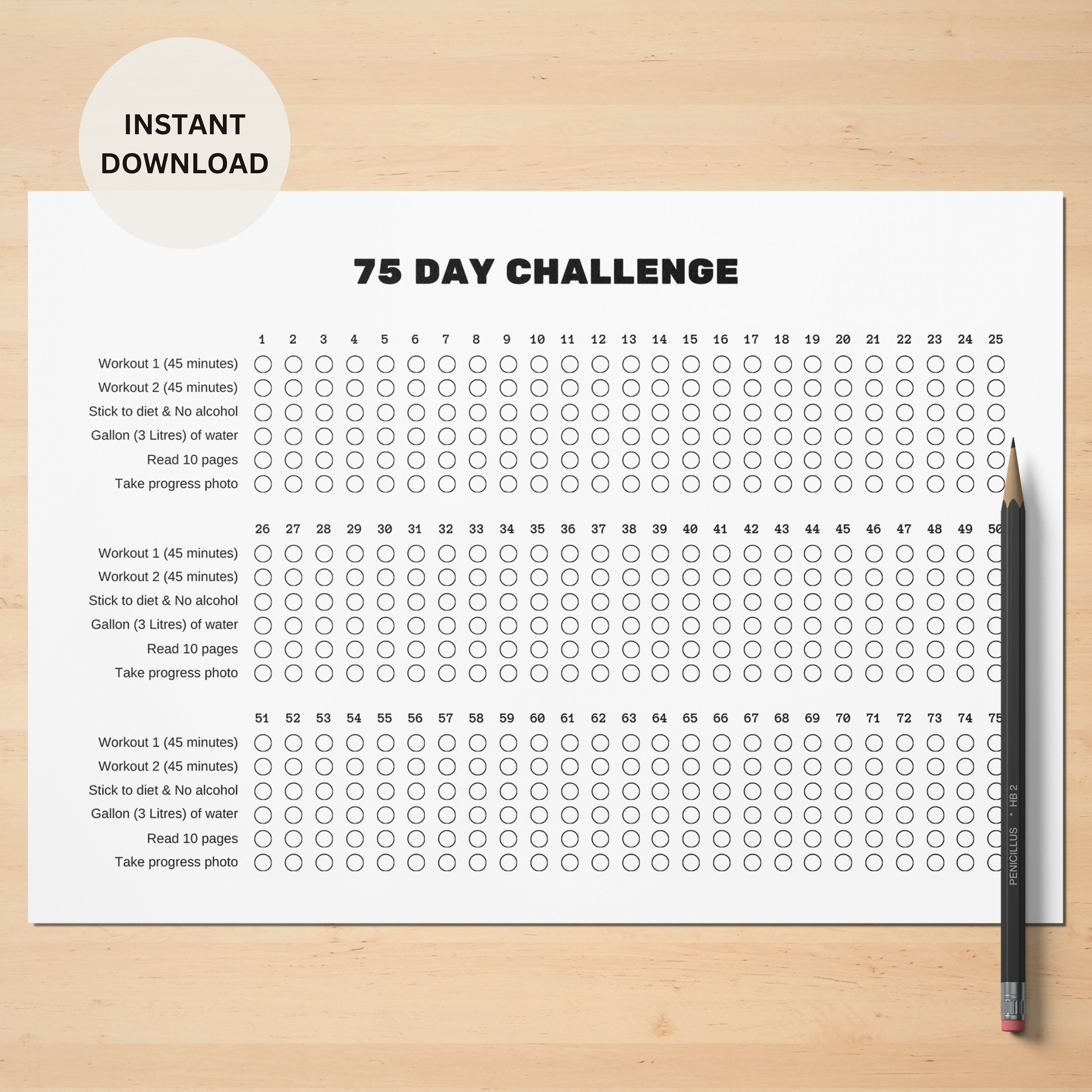
- Set Up a Visual Tracking Tool: Use a physical journal or task-tracking app to check off each rule daily before sleeping.
Image Gallery