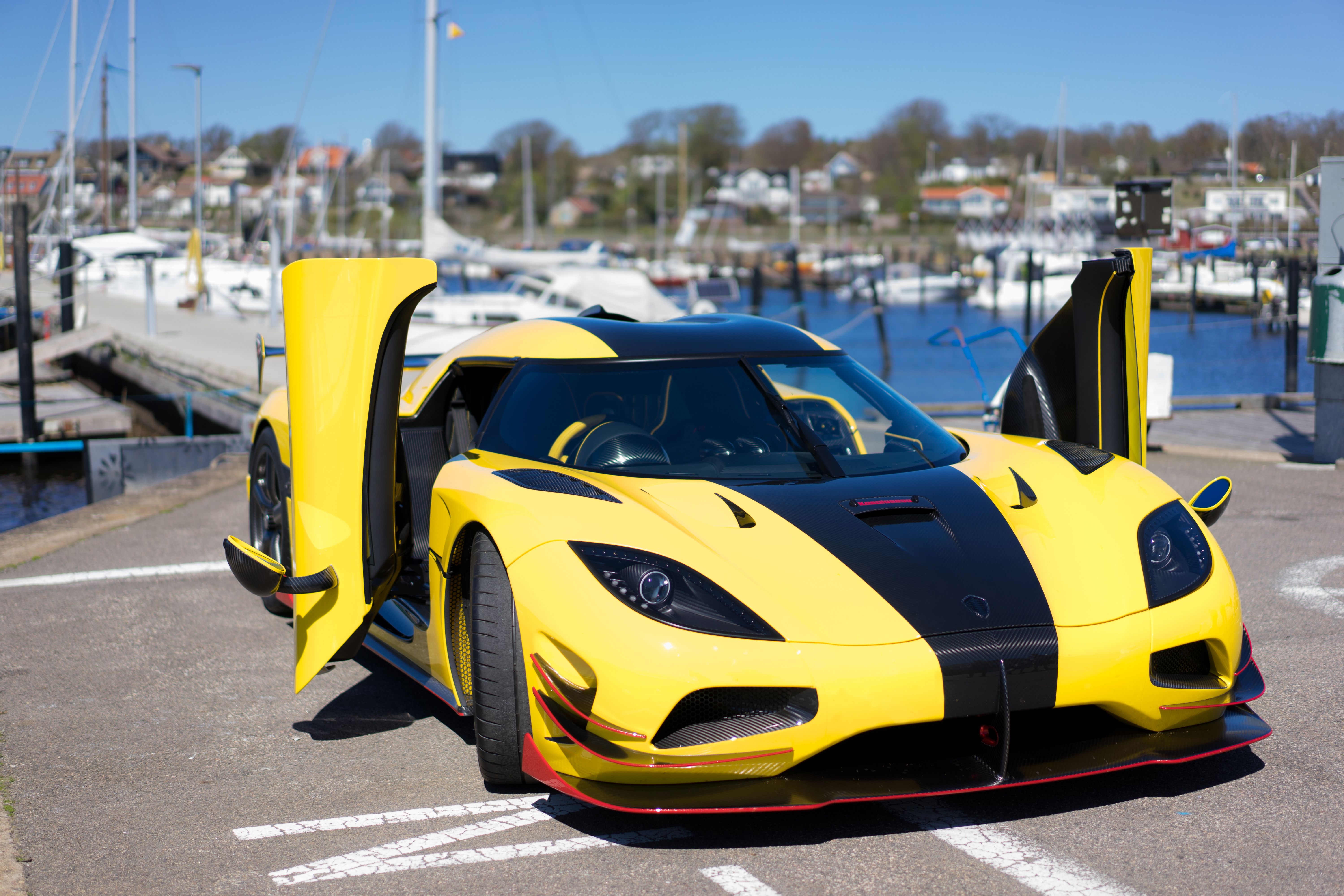
Total Production and Technical History of the Koenigsegg Agera R
Koenigsegg produced exactly 18 units of the Agera R between 2011 and 2014. This limited production run cemented the car’s status as one of the rarest hypercars in existence. While the broader Agera family includes several variants, the...
Koenigsegg produced exactly 18 units of the Agera R between 2011 and 2014. This limited production run cemented the car’s status as one of the rarest hypercars in existence. While the broader Agera family includes several variants, the Agera R remains a distinct, high-performance chapter in the brand's history.
Contents
The Evolution of the Agera Platform
To understand why only 18 Agera R units exist, one must first look at the evolution of the Koenigsegg lineup. The Agera was introduced in 2010 as the successor to the CCX range. Christian von Koenigsegg intended the Agera to be a more refined, technologically advanced platform that could handle significantly more power than its predecessors.
The "standard" Agera was the baseline, but the market demanded even more extreme performance. This led to the development of the Agera R. While the original Agera was already a world-class machine, the R version introduced flex-fuel capabilities, allowing the engine to run on both E85 biofuel and standard gasoline. This engineering choice was pivotal; the higher octane rating of E85 allowed the 5.0-liter twin-turbo V8 to produce staggering power figures that were simply not possible on pump gas at the time.
The production of the Agera R coincided with a period of rapid expansion for the Swedish manufacturer. During these years, Koenigsegg was transitioning from a niche boutique maker to a global hypercar powerhouse. The 18 units produced represent a time when the factory in Ängelholm was perfecting its carbon fiber construction and engine management systems, leading directly to the innovations found in the later Agera RS and the Jesko.
Breaking Down the Production Numbers
The figure of 18 units is often cited by the factory and official registries. However, production at Koenigsegg is rarely a linear process. Each car is hand-built to the specific requirements of the client, meaning no two Agera Rs are identical.
The production timeline spanned approximately four years:
- 2011: The debut year saw the first customer deliveries, including the famous Geneva Motor Show car.
- 2012-2013: Peak production years where the majority of the 18 units were completed.
- 2014: The final units were finished as the company began pivoting toward the Agera S (developed for markets without E85 availability) and eventually the Agera RS.
It is important to distinguish the Agera R from its siblings. For instance, the Agera S looks nearly identical but was built for regions like East Asia where E85 fuel is not widely distributed. Only 5 units of the Agera S were made. Similarly, the later Agera RS had a production run of 25 units. When enthusiasts ask how many Agera Rs were made, they are specifically referring to the flex-fuel capable variant that dominated headlines in the early 2010s.
Technical Specifications and Performance
The Agera R was more than just a low-volume exotic; it was a technical laboratory. The heart of the car is a 5.0-liter V8 engine with twin ceramic ball-bearing turbochargers. When running on E85, the engine produces 1,140 horsepower and 1,200 Nm of torque. On 95-octane gasoline, the power drops to approximately 960 horsepower, which is still formidable by any standard.
The Triplex Suspension
One of the most significant technical introductions found in many Agera R units was the Triplex rear suspension. Developed in collaboration with Öhlins Racing, this system added a third, horizontal shock absorber connecting the two rear wheels. This setup was designed to counteract the "squat" that occurs under extreme acceleration. By stabilizing the car during high-torque events, the Triplex system allowed for a softer spring rate for general driving without sacrificing stability during 0-300 km/h sprints.
Aerodynamics and Construction
The chassis is an industry-leading carbon fiber monocoque with integrated fuel tanks for optimal weight distribution. The total weight of the car is approximately 1,435 kg (3,163 lbs) with all fluids and a half-tank of fuel.
Aerodynamically, the Agera R features a top-mounted rear wing. Unlike traditional bottom-mounted wings, the top-mounted design allows the underside of the wing—the most critical surface for generating downforce—to remain undisturbed by mounting brackets. This innovation was a precursor to the massive active wings seen on the One:1 and subsequent models.
Agera R vs. Other Agera Variants
Comparing the Agera R to its predecessors and successors highlights its unique position in the Koenigsegg lineage. The following table illustrates the key differences across the most prominent members of the Agera family.
| Model | Production Units | Engine Output (E85) | Key Feature |
|---|---|---|---|
| Agera (Base) | 7 | 960 hp (Gasoline) | First to use the Agera body and interior |
| Agera R | 18 | 1,140 hp | Introduced Flex-Fuel and Triplex suspension |
| Agera S | 5 | 1,030 hp (Gasoline) | Optimized for markets without E85 |
| Agera RS | 25 | 1,160 - 1,360 hp | Combined One:1 tech with Agera R comfort |
| One:1 | 7 | 1,360 hp (1 Megawatt) | World’s first "Megacar" |
The Agera R served as the performance bridge between the original Agera and the record-breaking Agera RS. While the RS eventually took the title of the world's fastest production car, the Agera R set several Guinness World Records of its own in 2011, including a 0-300-0 km/h time of just 21.19 seconds.
Special Editions and Notable Chassis
Within the 18-unit production run, several cars stand out due to their unique configurations or historical significance.
- The "Speed Racer" Car: One of the most famous Agera R units features a white exterior with red accents, inspired by the Speed Racer cartoon. This car was featured extensively in media and served as a high-profile ambassador for the brand.
- The 2011 Geneva Show Car: This was the first Agera R ever shown to the public. It featured a unique Thule roof box that was aerodynamically integrated into a replacement roof panel, demonstrating the car's "practical" side for winter sports enthusiasts.
- Matte Blue and Carbon Units: Several units were finished in "naked" carbon fiber or matte paint finishes, which were pioneering aesthetic choices at the time and remain highly sought after by collectors in 2026.
Every Agera R was built with a removable hardtop that could be stowed in the front luggage compartment. This feature is a hallmark of Koenigsegg design, offering the structural rigidity of a coupe with the experience of a roadster.
Ownership and Market Value in 2026
As of 2026, the Agera R has transitioned from a contemporary hypercar into a blue-chip collectible. Because only 18 were made, they rarely appear on the open market. Most transactions occur through private brokers or specialized high-end auctions.
In the current market, an Agera R typically commands a price significantly higher than its original MSRP. While the cars originally sold for approximately $1.6 million to $2.1 million depending on options, 2026 valuations often sit between $5 million and $8 million. The appreciation is driven by the car's raw, analog driving feel compared to modern hybrid or electric hypercars, as well as its status as a foundational piece of the Koenigsegg story.
Maintenance for an Agera R remains a specialized affair. Owners typically fly "Flying Rangers" (factory technicians) from Sweden to their locations, or ship the cars back to Ängelholm or authorized regional service hubs. The longevity of the 5.0L V8 is well-regarded, provided the complex cooling and turbocharging systems are maintained according to the factory schedule.
FAQ: Common Questions About the Agera R
How fast is the Agera R? The Agera R has a theoretical top speed of approximately 440 km/h (273 mph). In official testing, it broke several world records, most notably the 0-300-0 km/h sprint, which it completed in 21.19 seconds.
Can the Agera R run on normal gasoline? Yes. The Agera R features a sophisticated engine management system that detects the fuel type. While it produces 1,140 hp on E85 biofuel, it can safely run on 95-octane gasoline, though power output is reduced to around 960 hp.
What is the difference between an Agera R and an Agera RS? The Agera RS was a later model (2015-2018) that incorporated technology developed for the One:1. The RS is lighter, has more advanced active aerodynamics, and higher power potential. The Agera R (2011-2014) was the predecessor that established the flex-fuel performance benchmarks.
How many Agera Rs were sold in the United States? Because of stringent federalization requirements at the time, very few Agera Rs were originally delivered to the U.S. as road-legal cars. Many entered the country under "Show or Display" exemptions, though some were later converted to meet full compliance.
Is the Agera R still supported by Koenigsegg? Yes. Koenigsegg provides comprehensive support for all its legacy models. In 2026, the company continues to offer upgrades, including electronics and infotainment refreshes, to ensure these vehicles remain compatible with modern standards while preserving their original performance.
Final Recommendation for Enthusiasts and Collectors
For those tracking the history of the Agera R, it is vital to keep detailed records of chassis numbers. Given the low production volume of 18 units, the provenance of each specific car significantly impacts its historical and monetary value. If you are a collector looking to acquire one, prioritize cars with a documented service history from the Ängelholm factory. For enthusiasts, the Agera R remains a pinnacle of internal combustion engineering, representing a moment in time when mechanical grip and raw horsepower were the primary tools for breaking world records.
Image Gallery