What Is the Name for Sin, Cos, and Tan?
The collective name for sin, cos, and tan is trigonometric functions. Individually, these abbreviations stand for sine, cosine, and tangent. They are mathematical ratios that describe the relationship between the angles and side length...
The collective name for sin, cos, and tan is trigonometric functions. Individually, these abbreviations stand for sine, cosine, and tangent. They are mathematical ratios that describe the relationship between the angles and side lengths of a right-angled triangle, and they serve as the foundational elements of trigonometry in geometry and calculus.
Contents
Understanding the Collective Term: Trigonometric Functions
In the realm of mathematics, sin, cos, and tan are categorized as trigonometric functions (also known as goniometric functions or circular functions). The term "trigonometry" is derived from the Greek words trigonon, meaning "triangle," and metron, meaning "measure." As of 2026, these functions remain the cornerstone of secondary and higher-level mathematics, physics, and engineering.
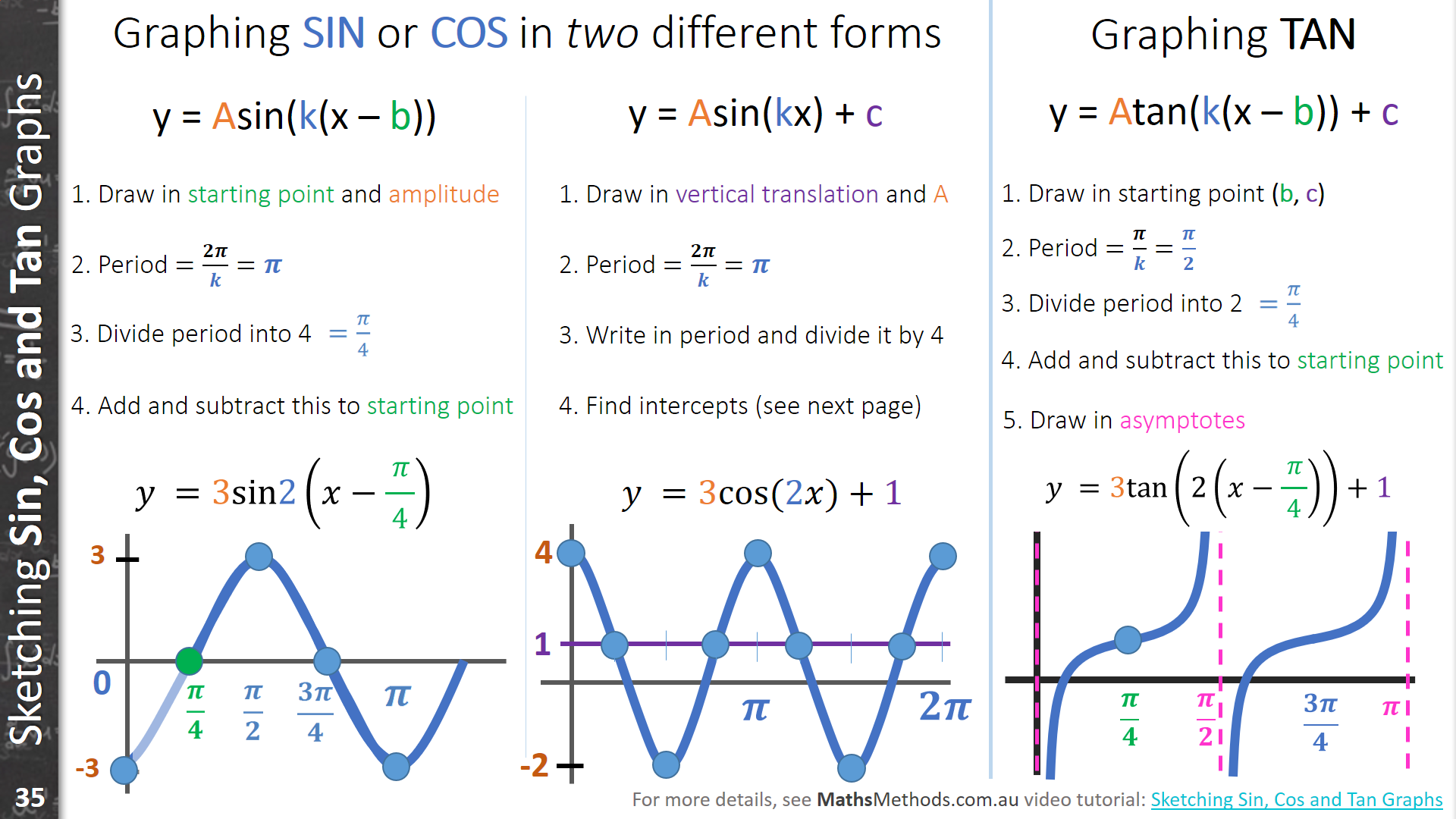
A trigonometric function is a function that relates an angle of a right-angled triangle to ratios of two side lengths. While they are most often introduced through the geometry of triangles, they are also defined as coordinates on a unit circle—a circle with a radius of one centered at the origin of a coordinate system. This dual definition allows trigonometric functions to describe periodic phenomena, such as sound waves, light waves, and the movement of celestial bodies.
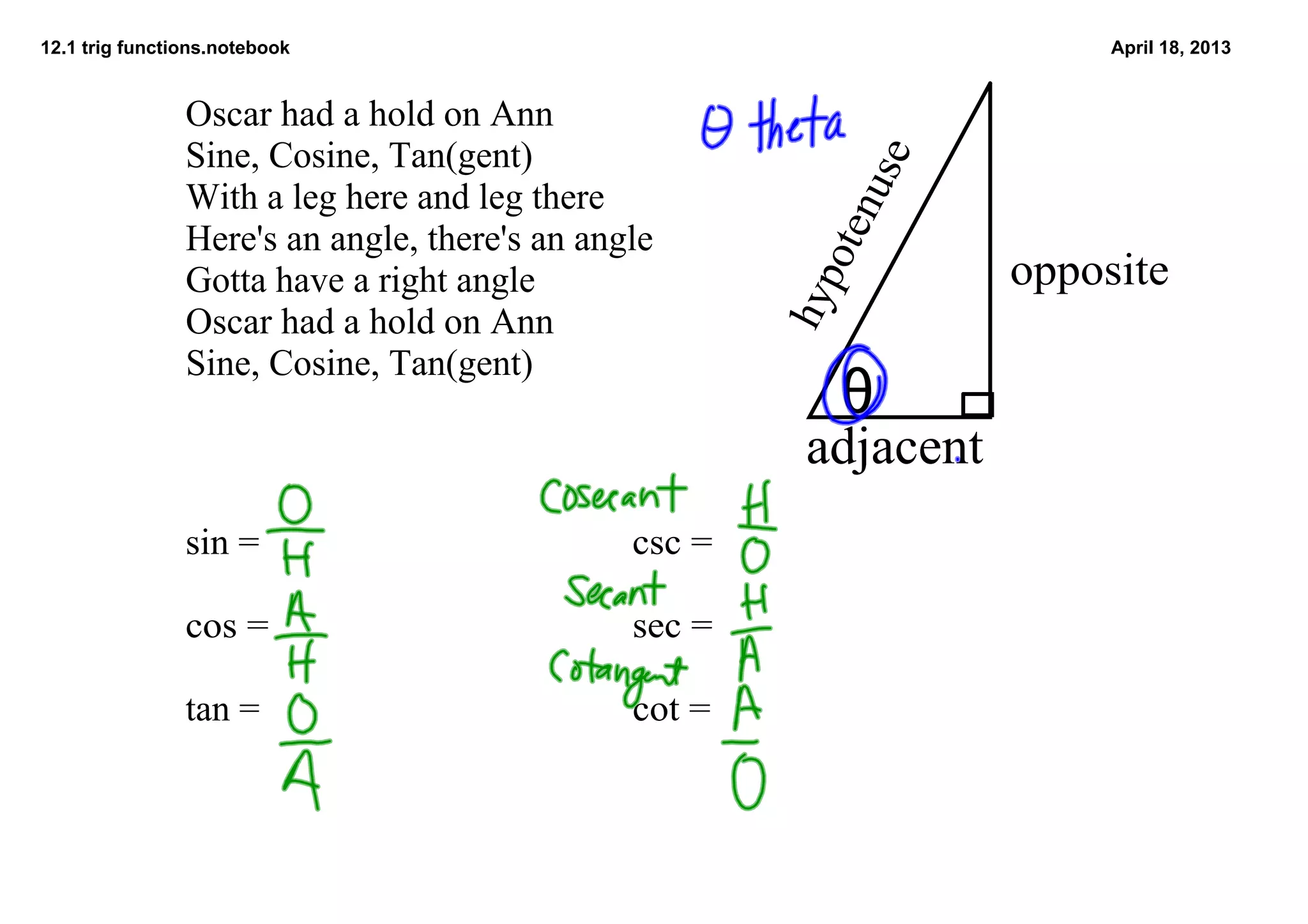
In a broader sense, these functions are members of a larger family that includes three other primary functions: the cosecant (csc), secant (sec), and cotangent (cot). However, sine, cosine, and tangent are referred to as the "primary" or "basic" trigonometric functions because all others can be derived from them.
Breaking Down the Individual Names
To understand the nomenclature fully, one must look at each specific function, its full name, its geometric definition, and its mathematical purpose.
Sine (sin)
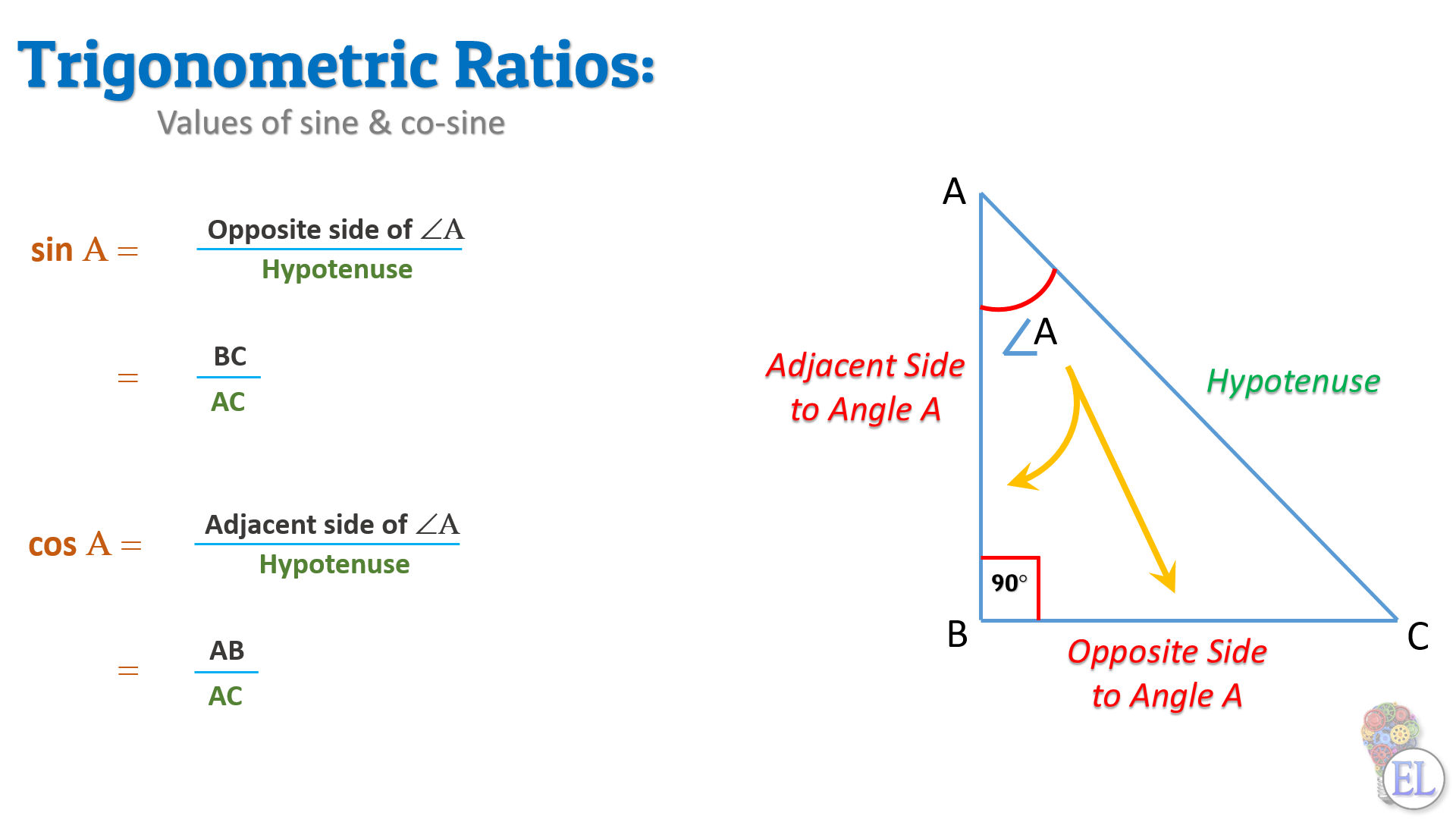
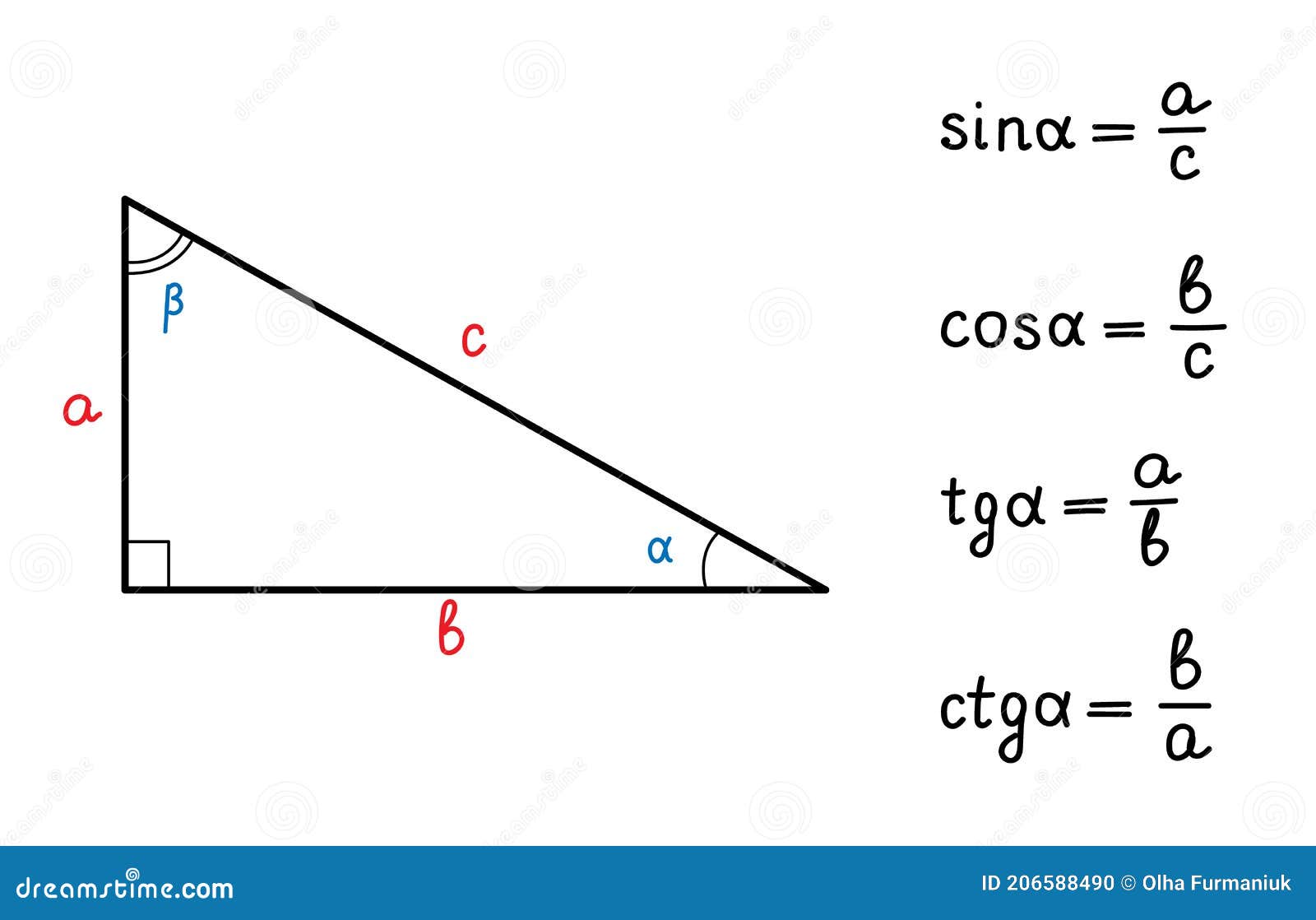
The full name for "sin" is sine. In a right-angled triangle, the sine of a specific angle is defined as the ratio of the length of the side that is opposite that angle to the length of the longest side, known as the hypotenuse.
The mathematical formula is: Sine (θ) = Opposite / Hypotenuse
In the context of a unit circle, if you have a point (x, y) on the circle at a given angle, the sine of that angle is simply the y-coordinate. This makes the sine function essential for calculating vertical displacements in physics and engineering.
Cosine (cos)
The full name for "cos" is cosine. The "co-" prefix in cosine stands for "complementary." This is because the cosine of an angle is equal to the sine of its complementary angle (the angle that, when added to the original, equals 90 degrees). In a right-angled triangle, the cosine of an angle is the ratio of the length of the side adjacent to the angle to the length of the hypotenuse.
The mathematical formula is: Cosine (θ) = Adjacent / Hypotenuse
On the unit circle, the cosine of an angle corresponds to the x-coordinate of the point. Because it tracks horizontal movement, it is used extensively in fields ranging from navigation to architectural load distribution.
Tangent (tan)
The full name for "tan" is tangent. The term is derived from the Latin tangens, meaning "touching." In geometry, a tangent is a line that touches a curve at exactly one point. In trigonometry, the tangent of an angle is the ratio of the sine of that angle to its cosine. In terms of triangle sides, it is the ratio of the opposite side to the adjacent side.
The mathematical formula is: Tangent (θ) = Opposite / Adjacent
The tangent function is unique because it describes the slope of a line. As an angle approaches 90 degrees, the tangent value approaches infinity because the adjacent side becomes infinitely small. This property makes it vital for understanding gradients and rates of change in calculus.
The Etymology and History of the Names
The names we use today—sine, cosine, and tangent—have a long and complex history involving translations across Sanskrit, Arabic, and Latin.
The word sine has one of the most famous etymological "mistakes" in history. Indian mathematicians, such as Aryabhata in the 5th century, used the term jya (meaning "bowstring") to describe the half-chord of a circle. When this was translated into Arabic, it became jiba. However, in written Arabic, vowels are often omitted. When European scholars like Gerard of Cremona translated these texts into Latin in the 12th century, they misread jb as jaib, which means "bay" or "pocket." The Latin word for bay or pocket is sinus, which eventually became the English word "sine."
Cosine developed later as a way to describe the "sine of the complement." The term sinus complementi was used in the 15th and 16th centuries. Over time, this was shortened to co-sinus and eventually "cosine."
Tangent entered the mathematical lexicon through a different route. While early versions of the concept existed in the study of shadows (often called "umbrae" or "shadow lengths" in medieval Islamic mathematics), the term "tangent" was formally introduced by the Danish mathematician Thomas Fincke in the late 16th century. He chose the word because it relates to the length of a segment on a line tangent to a circle.
Comparison Table: Primary Trigonometric Functions
The following table summarizes the primary functions, their full names, their ratios in a right-angled triangle, and their reciprocal counterparts.
| Abbreviation | Full Name | Triangle Ratio (SOH CAH TOA) | Unit Circle Relation | Reciprocal Function |
|---|---|---|---|---|
| sin | Sine | Opposite / Hypotenuse | y-coordinate | Cosecant (csc) |
| cos | Cosine | Adjacent / Hypotenuse | x-coordinate | Secant (sec) |
| tan | Tangent | Opposite / Adjacent | y / x (Slope) | Cotangent (cot) |
Mnemonics and Learning Aids
Because these names and their corresponding ratios can be difficult for students to memorize, several mnemonics have been developed. The most enduring of these is SOH CAH TOA.
- SOH: Sine = Opposite / Hypotenuse
- CAH: Cosine = Adjacent / Hypotenuse
- TOA: Tangent = Opposite / Adjacent
In 2026, educational technology platforms and interactive graphing tools often use these abbreviations as the standard labels for input buttons. Understanding the full names behind the abbreviations helps students transition from rote memorization to a conceptual understanding of how these functions relate to the geometry of the circle and the triangle.
Practical Applications in Modern Science
The names "sine," "cosine," and "tangent" appear in almost every technical field. Even in 2026, with the advancement of artificial intelligence and automated computation, the underlying trigonometry remains essential.
- Civil Engineering and Architecture: Engineers use these functions to calculate the forces acting on bridges and buildings. For instance, the tangent function is used to determine the necessary slope for drainage systems or the pitch of a roof.
- Digital Signal Processing: Sound waves and radio frequencies are represented as sine waves. The name "sine" is synonymous with the purest form of periodic oscillation.
- Navigation and GPS: Global Positioning Systems rely on the "Law of Cosines" and the "Law of Sines" to determine the exact location of a receiver based on signals from multiple satellites.
- Computer Graphics and Video Games: When you see a character rotate or a camera move in a 3D environment, the software is using trigonometric functions to calculate new coordinates for every pixel on the screen.
Common Mistakes to Avoid
When working with these names and functions, several common errors occur, particularly among students and novice technicians.
- Confusing Degrees and Radians: While the names remain the same, the values of sine, cosine, and tangent change depending on whether the angle is measured in degrees or radians. In calculus, radians are the standard, whereas in construction and basic geometry, degrees are more common.
- Mixing up Reciprocals: It is a common mistake to assume that the reciprocal of sine is secant because they both start with "s." In reality, the reciprocal of sine is cosecant, and the reciprocal of cosine is secant.
- Inverse vs. Reciprocal: The "name" for the inverse of a function is different from its reciprocal. The inverse of sine is arcsine (or $sin^{-1}$), which finds the angle given a ratio. The reciprocal is cosecant, which is $1 / sin$.
Related Questions and Extensions
What is the name for the inverse of sin, cos, and tan?
The inverse functions are called arcsine, arccosine, and arctangent. These are used when you know the ratio of the sides but need to find the measurement of the angle itself. On many calculators, these are labeled as $sin^{-1}$, $cos^{-1}$, and $tan^{-1}$, though the "arc" prefix is preferred in formal mathematics to avoid confusion with exponentiation.
Are there other trigonometric functions?
Yes, there are six primary trigonometric functions in total. In addition to sine, cosine, and tangent, there are:
- Cosecant (csc): The reciprocal of sine.
- Secant (sec): The reciprocal of cosine.
- Cotangent (cot): The reciprocal of tangent.
While less commonly used in basic geometry, these are essential in complex calculus and advanced wave mechanics.
Why is tangent called "tangent"?
The name comes from the fact that the value of the tangent function represents the length of a segment on a line that is "tangent" to the unit circle. This geometric relationship was established during the Renaissance as mathematicians sought to link the ratios of triangles to the properties of circles.
What is the "Law of Sines" and "Law of Cosines"?
These are mathematical rules that extend the use of sine and cosine beyond right-angled triangles to any triangle. The Law of Sines relates the sides of a triangle to the sines of its angles, while the Law of Cosines is a more generalized version of the Pythagorean theorem that works for non-right triangles.
Practical Recommendation
If you are a student or professional working with these terms, the best way to master them is to visualize them on the unit circle. While "SOH CAH TOA" is excellent for right triangles, the unit circle provides a deeper understanding of why these functions behave the way they do across all angles (0 to 360 degrees and beyond). Using tools like Wolfram MathWorld or Desmos can provide real-time visual feedback on how changing an angle affects the sine, cosine, and tangent values.
Image Gallery