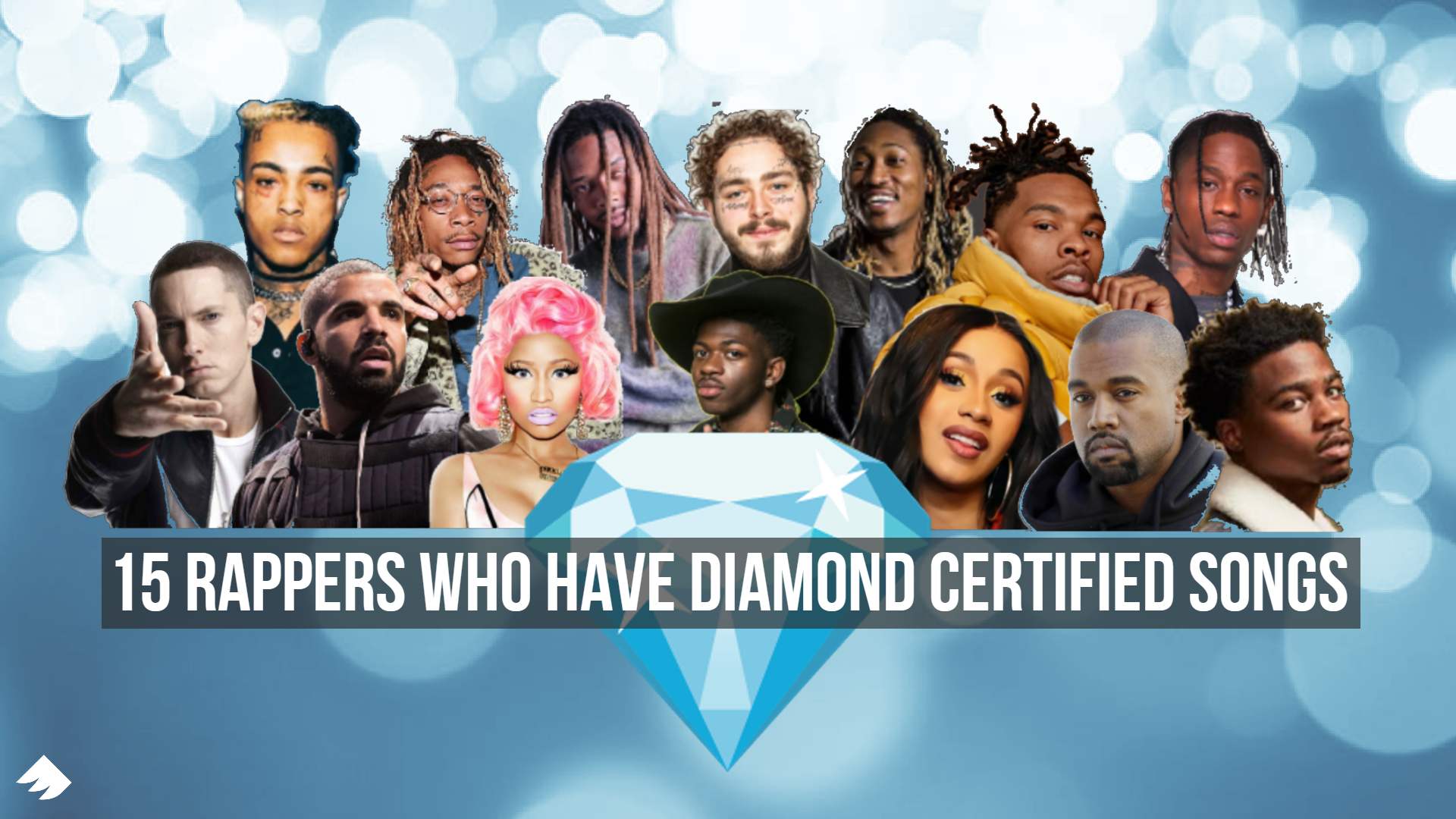
How Many Diamond Rap Albums Are There?
Determining the exact number of diamond-certified rap albums requires tracking historical certifications awarded by the Recording Industry Association of America (RIAA) for crossing the 10 million units threshold. As of recent music in...
Determining the exact number of diamond-certified rap albums requires tracking historical certifications awarded by the Recording Industry Association of America (RIAA) for crossing the 10 million units threshold. As of recent music industry milestones, there are over 25 rap albums that have achieved diamond status in the United States, representing a mix of classic 1990s masterpieces, 2000s commercial juggernauts, and modern streaming-era blockbusters.
Contents
The achievement of a diamond certification is one of the rarest and most prestigious milestones in the music industry. While pop, rock, and country acts have historically occupied a large share of the RIAA's diamond registry, hip-hop has steadily carved out its own dominant space. Understanding how many diamond rap albums exist requires a look at how these certifications are calculated, which artists hold multiple diamond plaques, and how streaming formats have reshaped the path to reaching 10 million equivalent units.
Understanding the RIAA Diamond Certification Standard
To understand how many diamond rap albums exist, one must first examine the criteria established by the Recording Industry Association of America. Established in 1958, the RIAA introduced gold and platinum certifications to measure commercial success based on physical sales. It was not until 1999 that the organization introduced the diamond award to recognize albums that reached 10 million sales in the United States.
For decades, this milestone was exclusively calculated using physical shipments of cassettes, vinyl records, and compact discs, minus verified returns. Because of this rigid physical requirement, achieving diamond status in the 1990s and early 2000s meant an artist had to sell millions of physical units at retail stores, requiring massive mainstream appeal, dedicated fanbases, and significant label distribution power.
In February 2016, the RIAA fundamentally modernized its certification rules to include on-demand audio and video streams alongside track sales. Under the updated formula, 1,500 on-demand streams for an audio or video track are counted as one album sale. This shift opened the door for contemporary hip-hop artists whose consumption habits heavily rely on digital streaming platforms rather than physical purchases. Consequently, several modern rap albums that achieved modest physical sales crossed the 10 million equivalent unit threshold through billions of cumulative streams.
The Evolution of Diamond Status in Hip-Hop
Hip-hop was once considered a niche or volatile commercial genre by major record labels, making early diamond certifications monumental cultural achievements. The journey of rap music into the diamond tier spans several distinct eras, reflecting the expansion of the genre's commercial footprint and cultural dominance.
The Pioneering 1990s Era
During the golden age of 1990s hip-hop, achieving multi-platinum success was impressive, but crossing into diamond territory was exceptionally rare. MC Hammer’s 1990 album Please Hammer, Don’t Hurt 'Em became the first rap album to achieve RIAA diamond certification, eventually selling over 10 million physical copies. Following Hammer, 2Pac made history with his 1996 double album All Eyez on Me, which achieved diamond status, and later his posthumous 1998 compilation Greatest Hits.
The Notorious B.I.G. joined this elite group with his posthumous double album Life After Death in 1997. Outkast also secured a spot for the 20th century with their genre-bending 1998 masterpiece Aquemini, though its certification journey evolved over subsequent decades. These early milestones proved that hip-hop could achieve the same massive commercial penetration as traditional rock and pop acts.
The 2000s Commercial Peak
The commercial zenith of physical CD sales in the early 2000s produced some of the highest-selling rap albums in history. Eminem emerged as a dominant force of this era, securing multiple diamond certifications. His 2000 release The Marshall Mathers LP and his 2002 release The Eminem Show both crossed the 10 million threshold, making him one of the few artists across any genre with multiple diamond rap records.
Other defining releases from this decade include 50 Cent’s explosive 2003 debut Get Rich or Die Tryin’, Nelly’s 2000 breakout album Country Grammar, and Outkast’s cultural phenomenon Speakerboxxx/The Love Below in 2003. These albums benefited from a robust retail ecosystem where consumers regularly purchased physical compact discs.
The Streaming Era and Modern Additions
Following the RIAA's inclusion of streaming data in 2016, the rate at which rap albums achieve diamond status accelerated significantly. Streaming made music universally accessible, allowing breakout hits to accumulate billions of plays over a fraction of the time it took to sell physical albums.
Artists like Drake, Kendrick Lamar, Post Malone, Travis Scott, and Juice WRLD have added their names to the diamond registry through massive streaming numbers. For instance, Drake’s Take Care and Scorpion, along with Post Malone’s Stoney and Beerbongs & Bentleys, showcase how modern consumption metrics redefine commercial benchmarks in contemporary music.
Verified Diamond Rap Albums Snapshot
The following table highlights a cross-section of prominent rap albums that have achieved official RIAA diamond certification, including their release years and primary artists.
| Artist | Album Title | Release Year | Certification Basis |
|---|---|---|---|
| MC Hammer | Please Hammer, Don’t Hurt 'Em | 1990 | Physical Sales |
| 2Pac | All Eyez on Me | 1996 | Physical Sales / Shipments |
| The Notorious B.I.G. | Life After Death | 1997 | Physical Sales / Shipments |
| Eminem | The Marshall Mathers LP | 2000 | Physical Sales / Streaming |
| Outkast | Speakerboxxx/The Love Below | 2003 | Physical Sales / Shipments |
| 50 Cent | Get Rich or Die Tryin’ | 2003 | Physical Sales / Streaming |
| Eminem | The Eminem Show | 2002 | Physical Sales / Streaming |
| Drake | Take Care | 2011 | Streaming / Sales Combined |
| Post Malone | beerbongs & bentleys | 2018 | Streaming / Sales Combined |
Note: Certification figures are periodically audited by the RIAA upon request by the record label or artist management, meaning total certified units for older albums frequently update over time.
Multi-Diamond Artists and Record Holders
Among the elite group of artists with diamond-certified rap albums, a select few have managed the rare feat of earning multiple diamond plaques. Earning one diamond album cements an artist in music history, but securing two or more places them in an even more exclusive tier of commercial success.
Eminem stands out as one of the most successful physical and digital era crossover artists, holding multiple diamond album certifications alongside several diamond-certified singles like "Lose Yourself" and "Not Afraid." Similarly, other multi-platinum heavyweights have accumulated massive portfolios where individual singles reach diamond status even if their parent albums hover in multi-platinum territory.
It is important to distinguish between album certifications and single certifications. While an album requires 10 million equivalent units, a digital single also requires 10 million sales or equivalent streams under current RIAA guidelines. Many rap artists possess numerous diamond singles—such as Drake, Kendrick Lamar, and Kanye West—while having a smaller, highly select number of fully certified diamond albums.
Challenges in Auditing and Verifying Certifications
Tracking the exact number of diamond rap albums involves navigating specific industry practices and auditing protocols. A common misconception is that an album automatically receives a diamond plaque the moment it crosses 10 million sales. In reality, RIAA certifications are not automatic; record labels must formally request, pay for, and undergo an independent audit of their sales and streaming data to verify that the milestone has been reached.
Because audits require administrative effort and investment from labels, some albums that have mathematically surpassed 10 million equivalent units may not officially hold the plaque until the label processes the paperwork. Furthermore, shifting definitions of what constitutes an "album" in the streaming era—such as deluxe editions, unbundled digital releases, and playlist-heavy track configurations—occasionally prompt adjustments in how equivalent units are calculated and audited.
Frequently Asked Questions
How many streams equal one diamond rap album?
Under RIAA guidelines, 1,500 on-demand audio or video streams count as one album sale. Therefore, to reach the 10 million equivalent unit threshold required for diamond status purely through streaming, an album must accumulate 15 billion streams.
What was the first rap album to go diamond?
MC Hammer’s third studio album, Please Hammer, Don’t Hurt 'Em, released in 1990, was the first rap album in history to be certified diamond by the RIAA, driven by massive crossover hits like "U Can't Touch This."
Can mixtapes or independent rap projects achieve diamond status?
Yes, provided they meet RIAA auditing requirements and are officially registered. However, the vast majority of diamond-certified rap projects have been distributed through major record labels or large independent distribution networks capable of tracking global and domestic consumption accurately.
Are international sales counted toward RIAA diamond certification?
No. The RIAA certification system only tracks sales and streams within the United States. International milestones are monitored separately by local music industry bodies, such as the BPI in the United Kingdom or Music Canada.
Do featured tracks and remixes count toward the album total?
Streams and sales of individual tracks from an album—including standalone singles released prior to the album—contribute to the overall album unit count, provided those streams occur on official platforms recognized by the RIAA.
Conclusion and Next Actions
Achieving a diamond-certified rap album represents the pinnacle of commercial success, combining cultural resonance, mass consumer appeal, and sustained listening over time. With over 25 albums crossing this threshold through a combination of historic physical sales and modern streaming figures, hip-hop's commercial footprint continues to expand. For listeners and industry researchers looking to verify current counts, consulting the official RIAA searchable database remains the definitive method for checking active certifications and newly audited milestones.
Image Gallery