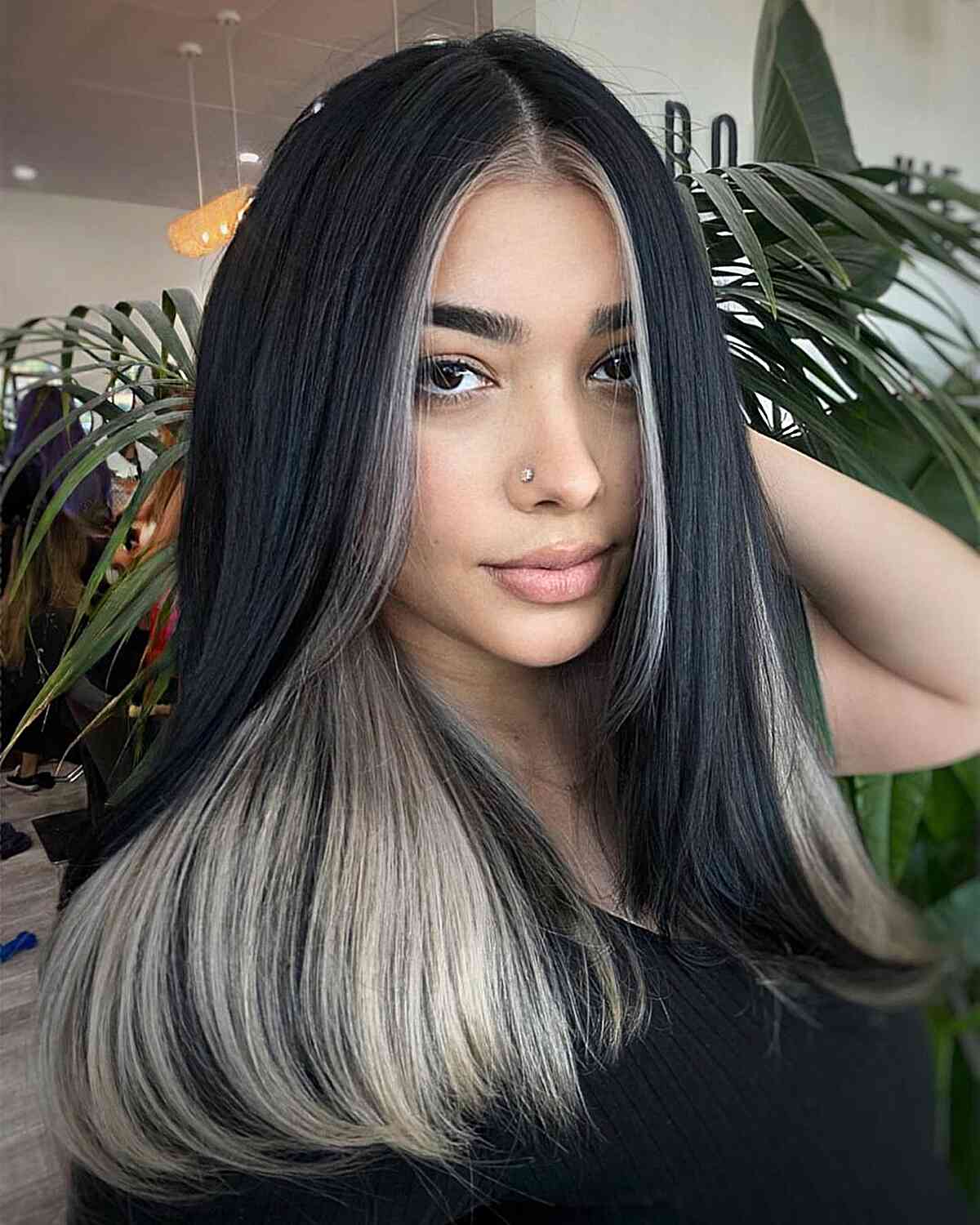
Comprehensive Guide to Blonde Under Black Hair: Trends, Technical Execution, and Maintenance for 2026
Blonde under black hair—widely known as "underlights" or "peek-a-boo" hair—is a high-contrast coloring technique where the bottom layers of the hair are lightened to a blonde shade while the top canopy remains a deep, pigmented black....
Blonde under black hair—widely known as "underlights" or "peek-a-boo" hair—is a high-contrast coloring technique where the bottom layers of the hair are lightened to a blonde shade while the top canopy remains a deep, pigmented black. This style offers a striking visual duality, allowing the wearer to reveal or conceal the blonde through movement, specific styling, or updos.
Contents
The aesthetic landscape of 2026 has seen a significant resurgence of high-contrast "alt-glam" styles. Blonde under black hair has evolved from a niche subculture trend into a mainstream professional request. Unlike traditional highlights, this technique requires a sophisticated understanding of color theory and chemical boundaries to prevent "bleeding" (color transfer) and to maintain the structural integrity of the hair fibers during the intensive lifting process required to move from a Level 1 black to a Level 10 blonde.
Technical Specifications: The Chemistry of High-Contrast Hair
Achieving a clean blonde under a jet-black exterior is one of the most technically demanding tasks for a colorist. In 2026, the standard for this service involves a multi-step chemical process that prioritizes the "health-first" philosophy of modern trichology.
Understanding the Lift Levels
To reach a pale, "clean" blonde that doesn't look orange or brassy against black hair, the hair must be lifted to a Level 9 or 10. For clients starting with natural Level 1 (Black) or Level 2 (Darkest Brown), this involves removing both eumelanin and the stubborn underlying red/orange pigments.
Chemical Stability in 2026: Modern lighteners now utilize encapsulated ammonia or ammonia-free oil-delivery systems that allow for a slower, more controlled lift. This reduces the "thermal spike" often associated with high-volume developers, which is crucial when working on the sensitive nape and occipital areas of the scalp where underlights are typically placed.
The Role of Bond Builders
The use of maleic acid or cystine-based bond builders is no longer optional in 2026 salon standards for this look. Because the blonde section is often subjected to repeated lifting to achieve the desired coolness, internal disulfide bonds must be reinforced. These additives cross-link the keratin chains, preventing the hair from becoming "mushy" or losing its elasticity when wet.
Structural Placement and Sectioning Strategies
The success of blonde under black hair depends entirely on the precision of the sectioning. Inaccurate sectioning results in a messy "salt and pepper" look rather than a clean, intentional contrast.
- The Horseshoe Section: The most common method involves sectioning off the top "canopy" of the hair in a horseshoe shape, starting from the temples and curving around the crown. This top section is dyed or maintained as black.
- The Nape Panel: For a subtle "peek-a-boo" effect, only the hair from the occipital bone down to the nape is lightened. This is ideal for clients who need to hide the blonde for professional environments.
- The Ear-to-Ear Divide: A more aggressive version where the hair is split horizontally from ear to ear. The entire bottom half is blonde, creating a 50/50 split that is highly visible even when the hair is worn down.
- Face-Framing Extensions: In 2026, many stylists combine underlights with "money piece" framing, where the blonde extends from the under-layers to frame the face, creating a cohesive look that connects the interior blonde to the exterior silhouette.
Maintenance and Longevity: 2026 Standards
The primary challenge of this style is color bleeding. When washing, the black pigment—especially if it is a semi-permanent or demi-permanent "fashion black"—can migrate into the porous blonde sections, turning them a muddy gray or green.
| Feature | Requirement for Success | Frequency/Interval |
|---|---|---|
| Root Touch-up | Precision application to avoid "hot roots" on the black section. | Every 6–8 weeks |
| Blonde Toning | Neutralizing yellow/brass with violet or pearl pigments. | Every 4 weeks |
| Cleansing Protocol | Cold water washing and "zonal" shampooing. | Every 3–4 days |
| Bond Repair | At-home biomimetic hair masks (e.g., K18 or similar 2026 tech). | Weekly |
| Heat Protection | 450°F (232°C) rated barrier sprays to prevent pigment oxidation. | Every styling session |
The "Cold Wash" Technique
In 2026, professional guidelines strictly recommend "zonal washing." This involves tilting the head forward and washing the blonde section separately from the black section using cool water. This prevents the dark pigment molecules from expanding and leaking into the blonde cuticle.
Comparative Analysis: Underlights vs. Other Contrast Methods
Deciding if blonde under black hair is the right choice involves comparing it to other popular 2026 high-contrast trends.
Underlights vs. Skunk Stripe
While both involve high contrast, the "Skunk Stripe" is typically a vertical block of color on one side of the head or a single thick highlight. Underlights are horizontal and more versatile, offering a "hidden" element that the Skunk Stripe lacks.
Underlights vs. Ombré/Balayage
Ombré and Balayage are gradient techniques designed for a natural, sun-kissed transition. Blonde under black hair is purposefully unnatural and graphic. There is no "blend" between the black and blonde; the line of demarcation is sharp and intentional.
Step-by-Step Procedure for Salon Professionals (2026 Guidelines)
If you are a stylist or an advanced DIY enthusiast, following a strict protocol is essential to avoid "bleeding" during the initial application.
- Isolate the Canopy: Secure the top section of the hair using non-slip clips. Apply a barrier cream (petroleum-based or modern silicone-free alternatives) along the part line to prevent the black dye from touching the lightened area.
- Lifting the Under-layer: Apply lightener to the bottom section. Use foils to insulate the heat and keep the lightener separate from the rest of the hair. In 2026, "air-permeable" foils are preferred to ensure oxygen flow for an even lift.
- Processing the Black Canopy: While the blonde is lifting, apply the black color to the top section. Use a high-viscosity cream color to minimize dripping.
- The "Split Rinse": This is the most critical step. Rinse the black section first with the head tilted back, ensuring the water runs away from the face and the lower section. Once the black is fully rinsed and the water runs clear, rinse the blonde section.
- Acidic Bonding Rinse: Finish with a pH-balancing rinse (pH 3.5–4.5) to seal the cuticles of both colors simultaneously, locking in the pigments.
Troubleshooting Common Issues
Issue 1: The Blonde Turned Gray/Blue
This usually happens during the rinse phase if the black dye touches the blonde. To fix this in 2026, use a "chelating shampoo" or a "color eraser" specifically designed for direct dyes. Do not re-bleach immediately, as this will drive the pigment deeper into the cortex.
Issue 2: Excessive Breakage at the Parting Line
The line where the black and blonde meet is the most vulnerable. This is often caused by "overlap" where lightener touches previously darkened hair. Use a precise brush (6mm or smaller) for root touch-ups to maintain a clean boundary without overlapping.
Issue 3: Fading Black to Red/Brown
Black hair dyes often have a red or blue base. In 2026, we use "green-based" blacks for clients with warm undertones to ensure the black stays "inky" and cool as it fades, preventing a muddy contrast with the blonde.
Frequently Asked Questions
How do I stop the black hair from bleeding into the blonde?
The most effective way is to wash your hair with cold water and use a sulfate-free, color-safe shampoo. Additionally, applying a thick conditioner to the blonde section before rinsing the black section can act as a temporary physical barrier against pigment transfer.
In 2026, many users also utilize "dry cleansing" powders on the black canopy to extend the time between wet washes, further reducing the risk of color bleeding.
Is blonde under black hair high maintenance?
Yes, this is considered a high-maintenance style. You must manage two different chemical needs: the black hair requires pigment retention, while the blonde hair requires pigment neutralization (toning) and structural repair. Expect to visit the salon every 4 to 6 weeks for optimal results.
Failure to maintain the blonde with purple shampoos or toners will result in a yellow-black contrast that looks unpolished and lacks the "2026 alt-glam" precision.
Can I achieve this look on previously dyed black hair?
It is possible but very difficult. Lifting "box black" dye is a multi-session process. You will likely hit a "plateau" at an orange or red stage. In 2026, stylists use "reductive color removers" before bleaching to strip the synthetic black molecules without shattering the natural hair pigment.
What blonde shade looks best under black?
Platinum, silver, and "ash-ice" are the most popular 2026 choices because they provide the maximum possible contrast. However, "honey-blonde" or "caramel" can work for those with warmer skin tones who want a slightly softer transition.
Does this style work for curly or coily hair?
Absolutely. Blonde under black is particularly striking on curly hair (Type 3 and 4) because the curls naturally mingle, creating a "glimmer" effect. However, curly hair is more prone to dryness, so the use of "lipid-replenishing" masks is mandatory to prevent the blonde curls from losing their pattern.
Practical Recommendations for 2026
If you are considering this look, the primary recommendation is to prioritize the "Health of the Fiber" over the "Speed of the Lift." In 2026, the trend is moving toward "sustainable beauty," meaning we avoid aggressive 40-volume developers in favor of lower volumes and longer processing times.
For those at home, ensure you have a "three-way mirror" setup and a professional-grade barrier cream. If you are going to a professional, ask for a "zonal color" specialist who has experience with high-contrast applications. The financial investment for a high-quality blonde under black service typically ranges from $250 to $550, depending on the hair length and the number of lifting sessions required.
Image Gallery