Oracle Expands Cloud Presence in Singapore: Scaling Infrastructure for a Digital Economy
Oracle has significantly bolstered its cloud infrastructure in Singapore to meet the escalating demand for high-performance computing, artificial intelligence (AI) integration, and data residency requirements. This strategic expansion...
Oracle has significantly bolstered its cloud infrastructure in Singapore to meet the escalating demand for high-performance computing, artificial intelligence (AI) integration, and data residency requirements. This strategic expansion enables enterprises in Southeast Asia to leverage the Oracle Cloud Infrastructure (OCI) ecosystem with lower latency, enhanced regulatory compliance, and greater scalability for mission-critical applications.
Contents
Strategic Drivers for Cloud Expansion
The decision by Oracle to increase its cloud presence in Singapore is rooted in the city-state's role as a primary digital hub for the Asia-Pacific region. As Singapore accelerates its "Smart Nation" initiative, domestic and multinational businesses alike require robust, reliable, and secure cloud environments to support data-intensive workloads.
Key drivers behind this expansion include:
- Data Residency and Sovereignty: Many industries—particularly financial services, government, and healthcare—operate under strict mandates requiring data to be stored and processed within specific geographical boundaries. Expanding local infrastructure ensures that Singapore-based entities can comply with these regulations while utilizing global cloud capabilities.
- AI and Machine Learning Requirements: The explosion of generative AI has necessitated massive compute power. By deploying specialized high-performance computing (HPC) clusters, Oracle enables companies to train and deploy complex models locally, reducing the time-to-value for AI initiatives.
- Latency-Sensitive Workloads: For real-time applications such as high-frequency trading, IoT sensor processing, and interactive digital services, physical proximity to the cloud provider’s hardware is critical. Scaling infrastructure within Singapore reduces network latency, providing a superior user experience.
Architectural Advantages of OCI in Singapore
Oracle Cloud Infrastructure differs from traditional public cloud models by focusing on a "cloud-native" architecture designed to handle enterprise-grade workloads with predictable performance. The Singapore expansion utilizes OCI’s distributed cloud strategy, which provides a consistent set of services across all its deployment regions.
The infrastructure deployed in Singapore is built on a non-oversubscribed network architecture. Unlike other providers that may share bandwidth, OCI offers dedicated network bandwidth, ensuring that noisy-neighbor issues do not impact performance during peak traffic periods. This is particularly advantageous for organizations migrating large-scale ERP systems, such as Oracle Fusion Cloud, which require consistent throughput to maintain operational integrity.
Comparing OCI Deployment Models
To understand the impact of this expansion, it is helpful to compare the different ways Oracle provides cloud services in the region.
| Deployment Model | Primary Use Case | Key Benefit |
|---|---|---|
| Public Cloud Region | General purpose SaaS and PaaS | Scalability and rapid provisioning |
| Dedicated Region | Highly regulated industries | Full control and data isolation |
| Oracle Alloy | Managed service providers | Custom branding and localized control |
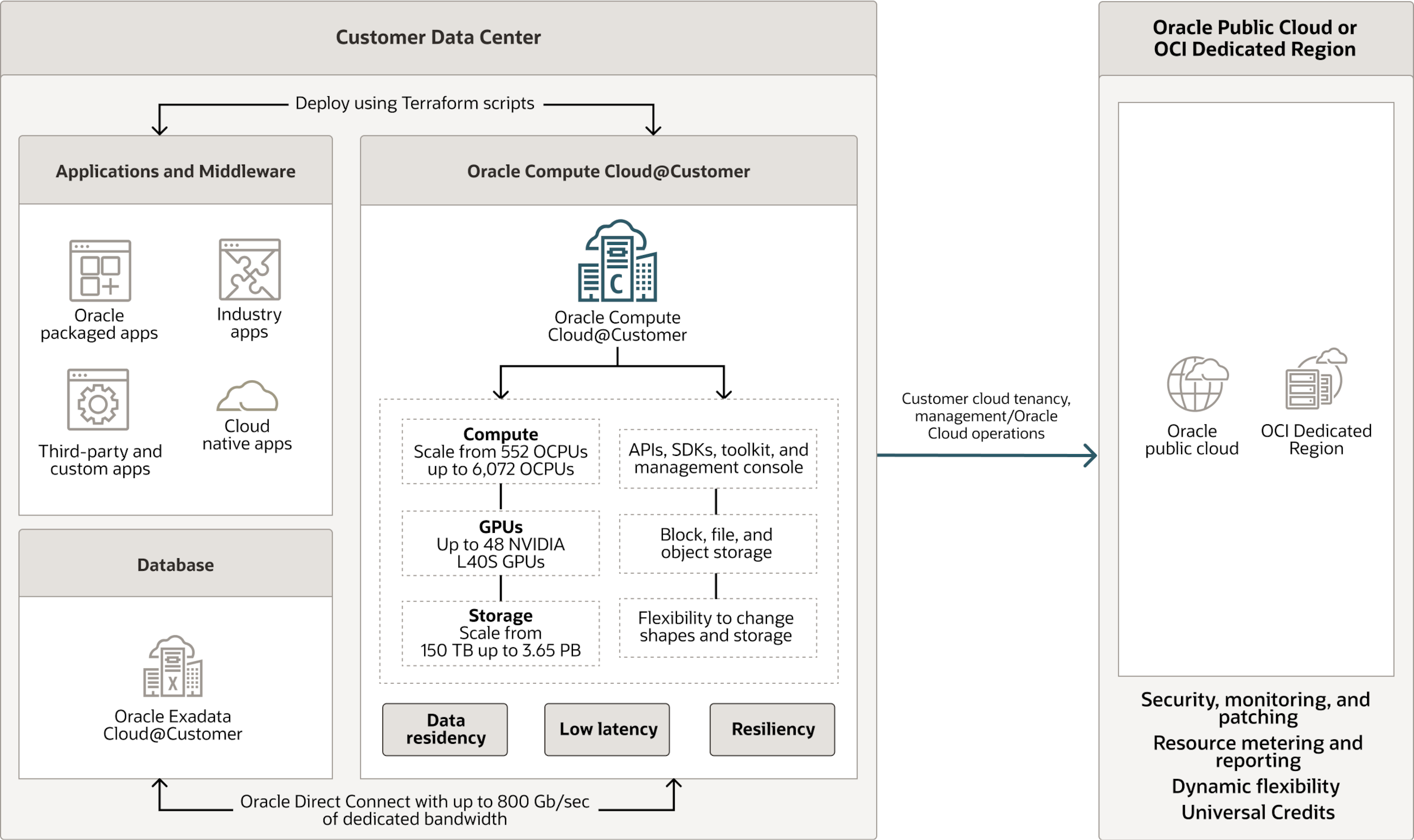
| Compute Cloud@Customer | Hybrid cloud requirements | On-premises performance with OCI API |
Operational Impact for Local Enterprises
For CIOs and IT directors in Singapore, the expansion translates into tangible operational improvements. When evaluating the shift to this expanded capacity, organizations should prioritize three specific areas: connectivity, security, and integration.
1. Connectivity and Network Interconnection
With the expanded cloud presence, Oracle has intensified its partnerships with major telecommunications providers in the region. Enterprises can now utilize FastConnect to create dedicated, private network connections to OCI. This bypasses the public internet, providing a stable, high-bandwidth path that is essential for migrating large databases or running real-time analytics.
2. Security and Compliance
Security in the cloud is a shared responsibility, but the underlying hardware and virtualization layers are the provider’s domain. The expanded Singapore footprint incorporates OCI’s "Maximum Security Zones," which enforce security policies by default, preventing the accidental misconfiguration of cloud resources—a leading cause of data breaches.
3. Integration with Legacy Systems
Many Singaporean enterprises operate in hybrid environments. The expansion facilitates the integration of existing on-premises Oracle databases with cloud-native OCI services. Using tools such as Oracle Zero Downtime Migration, companies can move their legacy workloads to the cloud with minimal operational disruption, effectively extending the lifecycle of their existing hardware investments while transitioning to a flexible OpEx (Operating Expenditure) model.
Overcoming Implementation Challenges
While the expansion provides new capacity, moving to a modern cloud environment is not without hurdles. Organizations often face challenges regarding skill gaps and architectural legacy debt.
- Skill Requirements: Managing OCI requires a different skill set than managing traditional on-premises data centers or older legacy clouds. Organizations should prioritize training programs for their DevOps and database administration teams, focusing on Infrastructure as Code (IaC) principles.
- Architectural Debt: Simply "lifting and shifting" legacy applications often leads to sub-optimal performance. To fully realize the benefits of the Singapore expansion, businesses should look toward refactoring critical applications to utilize cloud-native features, such as microservices and serverless functions, which are now more accessible due to the expanded regional capacity.
- Cost Management: While the cloud offers scalability, costs can spiral without active management. OCI’s cost-transparency tools, including granular tagging and budget alerts, should be implemented immediately upon migration to maintain financial control.
Frequently Asked Questions
How does Oracle's Singapore expansion affect data latency? By increasing the physical compute and storage capacity within the region, data packets travel shorter distances between the end-user or edge device and the cloud infrastructure. This significantly reduces round-trip time, which is critical for real-time applications and high-frequency data processing.
Is this expansion limited to large enterprises? No. While large-scale enterprises are early adopters, the expansion benefits small and medium-sized businesses (SMBs) by making high-tier cloud resources more accessible. Oracle’s flexible pricing models and the ability to provision resources on demand allow smaller organizations to access the same infrastructure used by global corporations.
How does this impact existing OCI customers? Existing customers can immediately leverage the new capacity for workload balancing and disaster recovery. By distributing workloads across more availability domains within the Singapore region, companies can increase their system uptime and resilience against local failures.
Does this expansion support hybrid cloud deployments? Yes. Oracle’s focus on "Cloud@Customer" ensures that organizations can keep data in their own data centers while using the same management console and API as the public cloud region. The expanded regional infrastructure acts as the control and anchor point for these hybrid configurations.
What is the role of Oracle Alloy in this expansion? Oracle Alloy allows partners in Singapore to build their own cloud services using the same infrastructure that runs OCI. This means local service providers can offer branded cloud solutions that are powered by Oracle’s technology, further widening the ecosystem of support for local businesses.
Next Steps for Implementation
To capitalize on Oracle’s expanded presence in Singapore, organizations should initiate a formal assessment of their current workload distribution. Begin by identifying mission-critical applications that are currently hindered by latency or compliance constraints. Contact your account representative to review the latest regional service availability and to obtain specific pricing for your region. Finally, conduct a migration readiness assessment to ensure your team is prepared to utilize the advanced security and automation features now available in the local OCI environment.
Image Gallery