The Blueprint of Greatness: Decoding Nike’s Brand Positioning Strategy
Nike’s brand positioning is defined by the democratization of athleticism, operating under the core belief that "if you have a body, you are an athlete." By leveraging emotional storytelling through the "Just Do It" ethos, Nike transce...
Nike’s brand positioning is defined by the democratization of athleticism, operating under the core belief that "if you have a body, you are an athlete." By leveraging emotional storytelling through the "Just Do It" ethos, Nike transcends mere footwear, positioning itself as a vital catalyst for personal transformation and technical innovation.
Contents
The Core Philosophy: Democratizing the Athlete
Nike’s brand positioning is not built on the features of a shoe, but on the potential of the person wearing it. From its inception, the company has avoided the "product-first" trap that ensnares many of its competitors. Instead, Nike focuses on a high-level conceptual mission: to bring inspiration and innovation to every athlete in the world.
The brilliance of this positioning lies in the expansive definition of "athlete." This phrase, attributed to Nike co-founder Bill Bowerman, effectively removes the barrier to entry for the brand. It suggests that a professional marathoner and a person taking their first walk around the block are part of the same tribe. By positioning the brand as a universal mentor, Nike creates a deep psychological bond with consumers that transcends price points and specific product categories.
In 2026, this democratization has evolved into a hyper-personalized experience. Nike does not just sell to a mass audience; it uses data from its digital ecosystem to understand the specific barriers an individual faces—whether that is a lack of motivation, physical limitations, or environmental factors—and positions its products as the solution to those specific hurdles.
The Emotional Hook: The Power of "Just Do It"
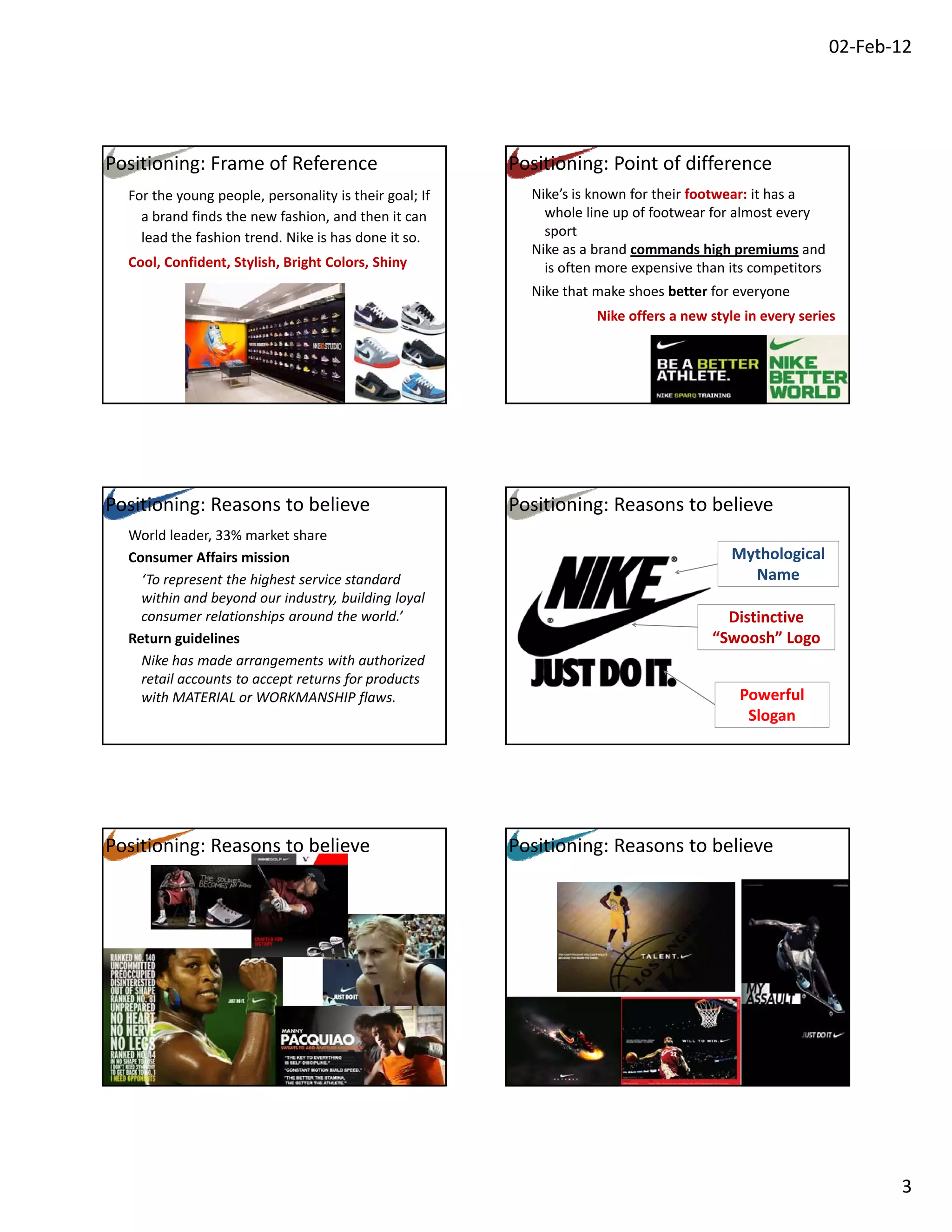
The "Just Do It" slogan, introduced in 1988, remains the most successful brand positioning tool in history. It serves as a brand "imperative"—a call to action that addresses the universal human struggle with procrastination and self-doubt. Nike’s positioning strategy relies on the Hero Archetype. In every advertisement, the consumer is the hero, the obstacle is their own limitation, and Nike is the "magical tool" that helps them overcome the challenge.
Nike’s emotional positioning is successful because it rarely talks about the technical specifications of its foam or the durability of its rubber in its primary brand messaging. Instead, it highlights the grit, the sweat, and the triumph of the human spirit. This creates "brand resonance," where the consumer feels that the brand understands their internal struggles. In a 2026 marketplace crowded with technical jargon, Nike’s return to fundamental human emotion continues to provide a competitive moat that is difficult for younger, more niche brands to replicate.
Technical Superiority and the Nike Research Lab (NRL)
While emotion is the hook, technical innovation is the proof of Nike’s brand positioning. Nike positions itself as a leader in sports science, a claim backed by the Nike Research Lab (NRL). This facility is central to their "innovation" pillar, where they study biomechanics, physiology, and sensory perception to create products that provide a measurable performance advantage.
For instance, the introduction of the Vaporfly series and its subsequent iterations through 2026 revolutionized distance running. By positioning these shoes as "unfair advantages," Nike created a narrative of technical necessity. If you are serious about your sport, the brand positioning suggests, you cannot afford not to use Nike technology. This creates a "performance-first" reputation that trickles down from elite athletes to casual consumers who want the "best" equipment available.
Key Innovation Pillars:
- Energy Return: Evolution of ZoomX and Air Zoom units to reduce metabolic cost.
- Adaptive Fit: Flyknit and FlyEase technologies that cater to both performance and accessibility.
- Digital Integration: The integration of sensors and AI-driven coaching within the Nike app ecosystem.
Target Audience and Market Segmentation
Nike’s market segmentation is a masterclass in balance. They manage to appeal to professional athletes while maintaining dominance in the "athleisure" and lifestyle markets. Their brand positioning handles this through a multi-tiered approach:
- The Elite Athlete: Positioning via sponsorships (LeBron James, Cristiano Ronaldo, Naomi Osaka) to validate performance claims.
- The Fitness Enthusiast: Targeting via the Nike Training Club (NTC) and Nike Run Club (NRC) apps, providing value through services.
- The Lifestyle Consumer: Positioning Nike as a cultural icon through collaborations with designers, musicians, and artists, ensuring the brand remains relevant in high-fashion and streetwear circles.
By 2026, Nike’s focus has shifted heavily toward the "Female Athlete." Recognizing that women’s sports and fitness represent the largest growth opportunity in the industry, Nike has repositioned its retail spaces and product lines to prioritize women’s specific physiological needs and aesthetic preferences.
Competitive Landscape: Nike vs. The Industry
To understand Nike’s positioning, one must look at how it differentiates itself from other major players. Nike maintains its lead by being a "generalist that feels like a specialist."
| Feature | Nike | Adidas | Lululemon | Hoka / On |
|---|---|---|---|---|
| Brand Essence | Inspiration & Innovation | Heritage & Street Culture | Wellness & Community | Technical Performance |
| Primary Positioning | The "Hero" Archetype | The "Creator" Archetype | The "Sage/Lover" Archetype | The "Explorer" Archetype |
| Market Focus | Universal (All sports) | Sports-Lifestyle Hybrid | Yoga, Running, Wellness | Niche Performance / Comfort |
| Key Competitive Edge | Global scale & Emotional resonance | Style and "Originals" legacy | High consumer loyalty & Community | Extreme cushioning/Unique aesthetics |
| Digital Ecosystem | High (Integrated apps/DTC) | Medium (Confirmed app) | Developing (Mirror/Studio) | Low (Focus on wholesale) |
While Adidas leans into its heritage and "Originals" line, and Lululemon dominates the "wellness" space, Nike sits at the intersection of all these categories. This broad positioning is risky, as it can lead to brand dilution, but Nike avoids this by keeping its sub-brands (like Jordan Brand) distinct and highly focused.
The Direct-to-Consumer (DTC) Pivot
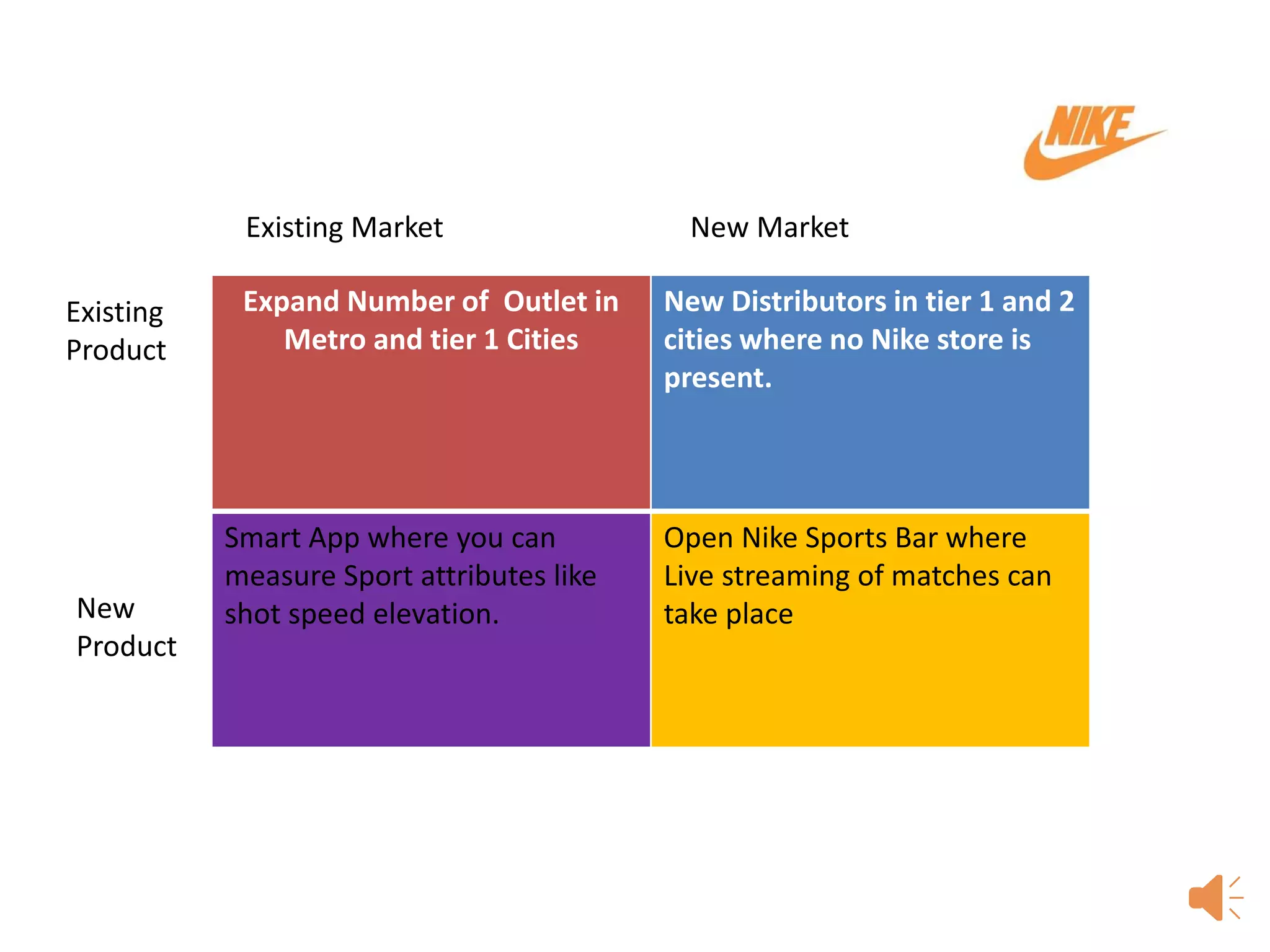
A significant shift in Nike’s brand positioning in the mid-2020s has been the transition from a wholesale-reliant brand to a Direct-to-Consumer (DTC) powerhouse. This is not just a logistical change; it is a brand positioning move. By controlling the environment in which their products are sold—through Nike.com and Nike-owned retail stores—they ensure that the brand narrative is never diluted by third-party retailers.
In 2026, the Nike Membership program is the core of this strategy. Membership creates a "walled garden" where Nike can offer exclusive products, early access, and personalized coaching. This positions the brand as a "service provider" rather than just a "product manufacturer." The data gathered here allows Nike to position the right product in front of the right person at the exactly right moment in their fitness journey.
Purpose-Led Positioning and Social Impact
In the modern era, brand positioning is inseparable from a company’s social and environmental stance. Nike has shifted its positioning to be a "purpose-led" brand. This involves taking risks that other corporations might avoid, such as the Colin Kaepernick "Dream Crazy" campaign.
While such moves can be polarizing, they solidify Nike’s positioning among its core demographic: younger, socially conscious consumers (Gen Z and Alpha). By taking a stand, Nike positions itself as a brand with a "soul," moving it from a commodity to a cultural symbol.
Furthermore, the "Move to Zero" initiative positions Nike as a leader in sustainability within the apparel industry. By 2026, Nike’s commitment to zero carbon and zero waste is integrated into its product naming and marketing. Using recycled polyester and "Space Hippie" materials isn't just an ecological choice; it’s a positioning strategy that appeals to the environmentally aware athlete.
Challenges to Nike’s Positioning in 2026
Despite its dominance, Nike faces significant headwinds. The rise of "micro-brands" and niche competitors like On Running and Hoka has challenged Nike’s dominance in the technical running space. These brands position themselves as "more specialized" and "more authentic" to serious runners.
Additionally, the reliance on the "Just Do It" emotional framework faces the risk of fatigue. In a world where consumers are increasingly skeptical of corporate "purpose-washing," Nike must continuously prove that its actions match its marketing. Supply chain transparency, fair labor practices, and the actual environmental impact of their massive production scale are constant points of scrutiny that can undermine their "inspirational" positioning.
Strategic Recommendations for Brand Managers
Studying Nike’s brand positioning offers several actionable lessons for any business:
- Find the Universal Truth: Don't just sell a product; solve a universal human problem or tap into a universal emotion (like the desire for progress).
- Define Your "Athlete": Expand your target audience by redefining who can benefit from your product. Who is the "athlete" in your industry?
- Control the Narrative: Invest in DTC channels to ensure your brand story remains consistent and your customer data remains yours.
- Balance Emotion with Proof: Use high-level storytelling to hook the customer, but provide "technical proof" (like the Nike Research Lab) to justify the premium price point.
- Be Purposeful, Not Just Profitable: In 2026, a brand that stands for nothing is at risk. Identify the social or environmental issues that matter most to your audience and integrate them into your brand DNA.
Frequently Asked Questions
What is the core of Nike’s brand positioning? The core is the democratization of athleticism. Nike positions itself as an inspirational mentor that provides the tools (innovation) and the motivation (emotion) for anyone with a body to achieve their personal best.
How does Nike use the "Hero" archetype? Nike positions the consumer as the hero on a journey. The "villain" is the consumer’s own laziness or physical limitation. Nike acts as the "mentor" or "magical object" that helps the hero succeed. This is most evident in their "Just Do It" campaigns.
Why is Nike’s DTC strategy important for its brand? The Direct-to-Consumer strategy allows Nike to control the brand experience entirely. By cutting out mediocre wholesale environments, they ensure that every interaction a customer has with the brand—from the app to the flagship store—is premium, data-driven, and on-message.
How does Nike differentiate from Adidas? While both are global leaders, Nike focuses on performance and the "Hero" narrative, whereas Adidas often leans into heritage, "street culture," and the "Creator" archetype. Nike’s positioning is generally perceived as more aggressive and achievement-oriented.
What role does sustainability play in Nike’s positioning? Through its "Move to Zero" initiative, Nike positions sustainability as a performance requirement. They argue that without a healthy planet, there are no athletes and no sports, making environmentalism a logical extension of their brand mission.
Final Actionable Insight
To replicate a fraction of Nike’s success, stop marketing the "what" (the shoe) and start marketing the "why" (the achievement). Your brand positioning should serve as an invitation to a better version of the consumer. In 2026, consumers aren't just buying products; they are buying into ecosystems that provide motivation, community, and a sense of identity.
Image Gallery