Understanding Median Net Worth Per Person Including Debt: A Comprehensive Financial Metric
Median net worth per person including debt is a financial metric that calculates the exact midpoint of an individual's total accumulated assets minus all outstanding liabilities, dividing a population into two equal halves. Unlike the...
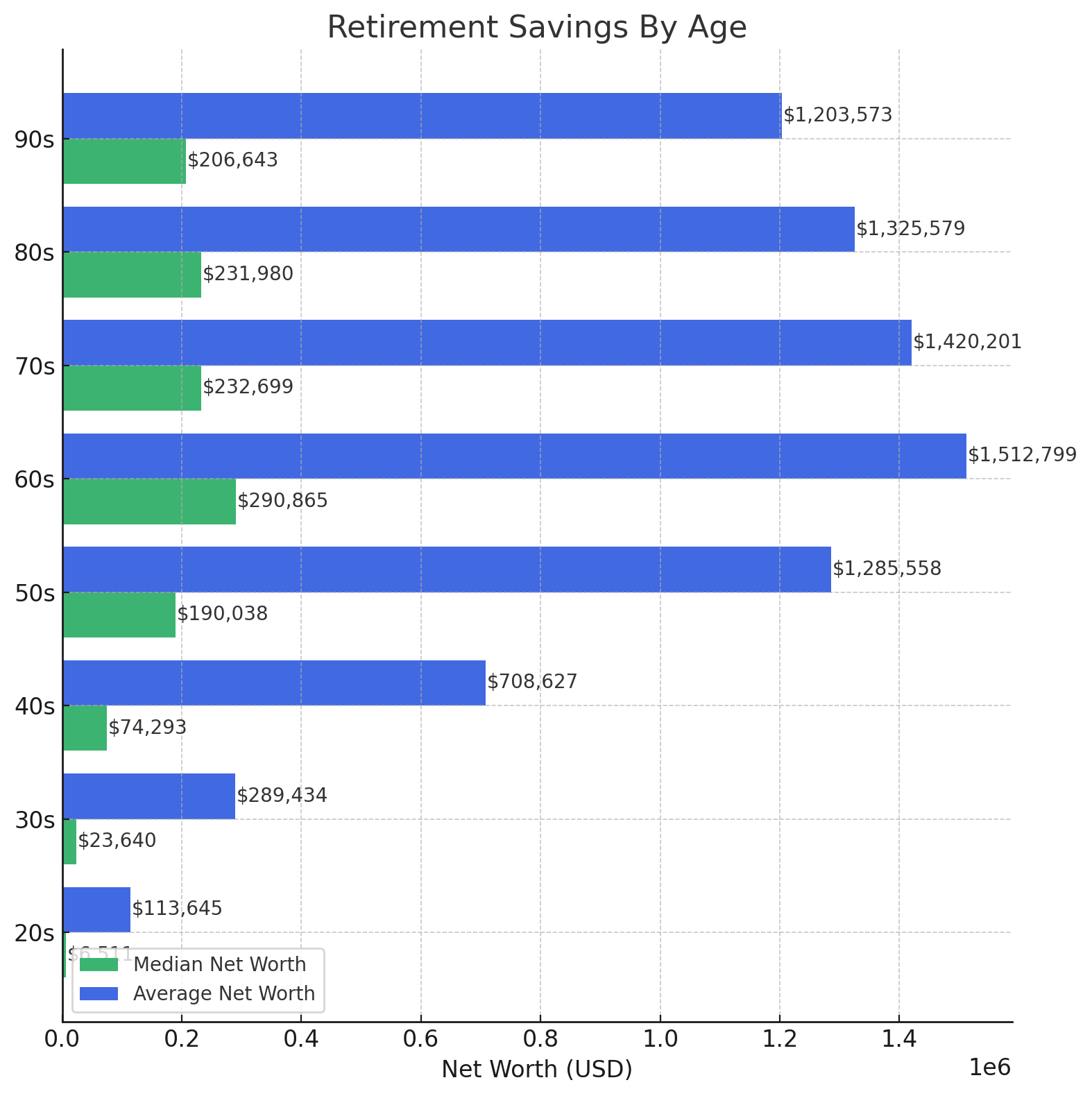
Median net worth per person including debt is a financial metric that calculates the exact midpoint of an individual's total accumulated assets minus all outstanding liabilities, dividing a population into two equal halves. Unlike the average net worth, which can be heavily skewed upward by extreme multi-millionaires and billionaires, the median provides an accurate reflection of the financial standing of a typical person within a specific demographic, geographic region, or age group.
Contents
The Definitional Framework of Net Worth and Debt
To understand median net worth per person including debt, one must break down the core components that construct the equation. Net worth is fundamentally a stock variable representing the economic value of everything a person owns, subtracted by everything they owe.
Assets: What Is Owned
Assets encompass both tangible and intangible resources that hold quantifiable market value. These typically include:
- Liquid Assets: Cash, checking accounts, savings accounts, and money market funds that can be accessed immediately.
- Investments: Stocks, bonds, mutual funds, exchange-traded funds (ETFs), and retirement accounts such as 401(k)s, Individual Retirement Accounts (IRAs), and pensions.
- Real Estate: Primary residences, commercial properties, and landholdings valued at current market rates rather than purchase price.
- Personal Property: Vehicles, high-value jewelry, art, electronics, and other durable goods that possess resale value.
Liabilities: What Is Owed (Including Debt)
Liabilities represent financial obligations and claims held by creditors against an individual's assets. When calculating net worth "including debt," these obligations are deducted in full from the total asset value. Common liabilities include:
- Secured Debt: Mortgages, home equity lines of credit (HELOCs), and auto loans, where a physical asset serves as collateral for the loan.
- Unsecured Debt: Credit card balances, personal loans, medical debt, and unpaid utility or service bills.
- Educational Debt: Federal and private student loans incurred to finance higher education and professional training.
When all liabilities are subtracted from total assets, the resulting figure is an individual's net worth. If liabilities exceed assets, the individual possesses a negative net worth, a common occurrence among younger demographics burdened by early-career student loans and mortgages.
Mean Versus Median: Why the Midpoint Matters
When evaluating population-wide economic health, economists and financial researchers strongly prefer the median over the mean (average). The mean is calculated by summing the net worth of every individual in a population and dividing by the total count. Because wealth distribution in modern economies follows a heavily right-skewed Pareto distribution, a small percentage of ultra-high-net-worth individuals pull the mathematical average artificially high.
The median, by contrast, arranges every individual's net worth in ascending order from negative figures to multi-million-dollar portfolios and identifies the exact physical center. Half the population owns more than this midpoint value, and the other half owns less. This makes the median net worth per person including debt the most reliable indicator of financial well-being for the working and middle classes.
Key Demographic Factors Influencing Median Net Worth
An individual's net worth is rarely static; it evolves predictably across the human lifecycle and shifts dramatically depending on education, geographic location, and macroeconomic conditions.
Age and Career Stage
Lifecycle financial theory demonstrates that net worth typically follows an inverted U-shape curve over time.
- Young Adults (Under 35): This cohort frequently exhibits a low or negative median net worth. Educational debt accumulation typically precedes peak earning years, and young adults have had limited time to acquire appreciating assets like real estate or mature investment portfolios.
- Mid-Career Adults (35–54): As careers stabilize, individuals pay down principal balances on mortgages and build equity. Median net worth begins a steady upward trajectory during these decades.
- Pre-Retirees and Retirees (55+): This group typically reaches its peak median net worth. With mortgages largely paid off and decades of compounding investment returns behind them, older demographics hold the highest concentration of wealth, despite transitioning out of the labor force.
Educational Attainment
Higher levels of formal education correlate strongly with higher earning potential, which directly accelerates asset accumulation and debt management capabilities. Individuals holding bachelor's, master's, or professional degrees generally exhibit a higher median net worth than those with only a high school diploma, even when accounting for the initial burden of student loan debt.
Comparative Overview of Financial Wealth Indicators
To contextualize where a specific individual stands relative to broader economic trends, financial analysts look at segmented benchmarks. The following table contrasts how different variables alter economic assessments.
| Metric Type | Calculation Method | Sensitivity to Outliers | Primary Economic Use Case |
|---|---|---|---|
| Mean Net Worth | Total wealth of all individuals divided by population count. | Extremely High (skewed upward by top earners). | Macroeconomic resource tracking and national GDP comparisons. |
| Median Net Worth | The middle value when all individual net worths are ranked sequentially. | Low (resistant to extreme highs or lows). | Assessing middle-class economic health and typical household security. |
| Net Worth Including Debt | Total assets minus all secured and unsecured liabilities. | Moderate | Providing a realistic, conservative assessment of true solvency. |
| Liquid Net Worth | Total cash and marketable securities minus short-term debts. | Low | Measuring immediate financial emergency preparedness and cash flow stability. |
The Impact of Debt on Individual Solvency
Debt is not inherently destructive to net worth; economists frequently categorize debt into "good debt" and "bad debt." Understanding this distinction is vital when evaluating net worth calculations that include liabilities.
Good Debt Versus Bad Debt
- Good Debt: Borrowing money to acquire an asset that is expected to appreciate in value or generate long-term income. Examples include a fixed-rate mortgage on a residential property or low-interest student loans utilized for career advancement. Over time, the asset's appreciation or the income boost outpaces the cost of borrowing.
- Bad Debt: Borrowing money to finance consumable goods or depreciating assets that lose value immediately upon purchase. High-interest credit card debt accumulated for lifestyle spending falls squarely into this category, draining cash flow through compounding interest charges without building underlying asset value.
When total debt exceeds total asset value, an individual enters insolvency. While common among young adults launching their professional lives, persistent negative net worth driven by bad debt severely restricts future borrowing capacity, housing stability, and retirement readiness.
Methodological Challenges in Measuring Individual Wealth
Calculating the exact median net worth per person including debt presents significant statistical hurdles for economists, central banks, and financial research bureaus.
Individual Versus Household Reporting
Many major economic surveys—such as the Federal Reserve’s Survey of Consumer Finances (SCF) in the United States—measure wealth at the household level rather than the individual level. Households often consist of married couples, domestic partners, or extended families sharing expenses, pooling assets, and combining mortgages.
Isolating a strict "per person" figure requires complex demographic adjustments, particularly when parsing single-adult households versus multi-earner households. When looking strictly at per-person metrics, researchers must allocate shared assets and joint liabilities proportionally or focus on single-adult subsets to avoid distortion.
Asset Valuation Fluctuations
Net worth is a fluid calculation dependent on volatile market valuations. A sudden downturn in the stock market or a localized correction in real estate prices can wipe out thousands of dollars in paper wealth overnight, while outstanding debt obligations (like fixed-rate mortgages) remain entirely unchanged. Consequently, median net worth figures fluctuate alongside macroeconomic cycles, interest rate adjustments, and inflationary pressures.
Frequently Asked Questions
Why is median net worth often much lower than average net worth?
The average (mean) net worth is pulled upward by a small percentage of ultra-wealthy individuals whose fortunes are exponentially larger than the rest of the population. The median represents the exact middle point of the population, ignoring extreme outliers to show what a typical person owns.
Does a negative net worth in early adulthood mean financial failure?
No. Many young adults, particularly those who pursued higher education or purchased a first home with a mortgage, experience a temporary negative net worth because their liabilities (student loans, home loans) exceed their accumulated assets. This is a normal stage of the lifecycle financial curve before earnings and asset accumulation accelerate.
How does inflation impact median net worth including debt?
Inflation simultaneously erodes the real value of cash savings while potentially increasing the market value of hard assets like real estate and equities. For individuals carrying fixed-rate debt, inflation can theoretically make paying off that debt easier over time as wages adjust upward, though rising interest rates can simultaneously suppress asset prices.
Should personal property like cars be included when calculating net worth?
Yes, but they should be valued at current resale (market) price rather than original purchase price. Because automobiles and consumer electronics depreciate rapidly, including them at historical cost will artificially inflate net worth calculations.
Practical Recommendations for Tracking and Improving Net Worth
- Conduct an Annual Audit: Compile a comprehensive balance sheet listing all liquid accounts, investments, and estimated property values on one side, and every outstanding loan and credit balance on the other.
- Prioritize High-Interest Debt Elimination: Target unsecured debts with double-digit interest rates (such as credit cards) aggressively, as the guaranteed return on paying off high-interest debt outperforms most conservative investment vehicles.
- Automate Asset Accumulation: Build consistent savings habits by automatically routing a percentage of income into diversified retirement accounts or index funds to harness the power of compound interest over decades.
Image Gallery