The Detroit Three Automakers: State of the Industry in 2026
The Detroit Three automakers—General Motors, Ford Motor Company, and Stellantis (North American operations)—represent the historical and industrial backbone of the United States automotive sector. As of 2026, these companies are naviga...
The Detroit Three automakers—General Motors, Ford Motor Company, and Stellantis (North American operations)—represent the historical and industrial backbone of the United States automotive sector. As of 2026, these companies are navigating a complex transition from traditional internal combustion engines to software-defined electric vehicles, while balancing domestic manufacturing requirements and shifting global trade policies.
Contents
The Evolution of the Detroit Three
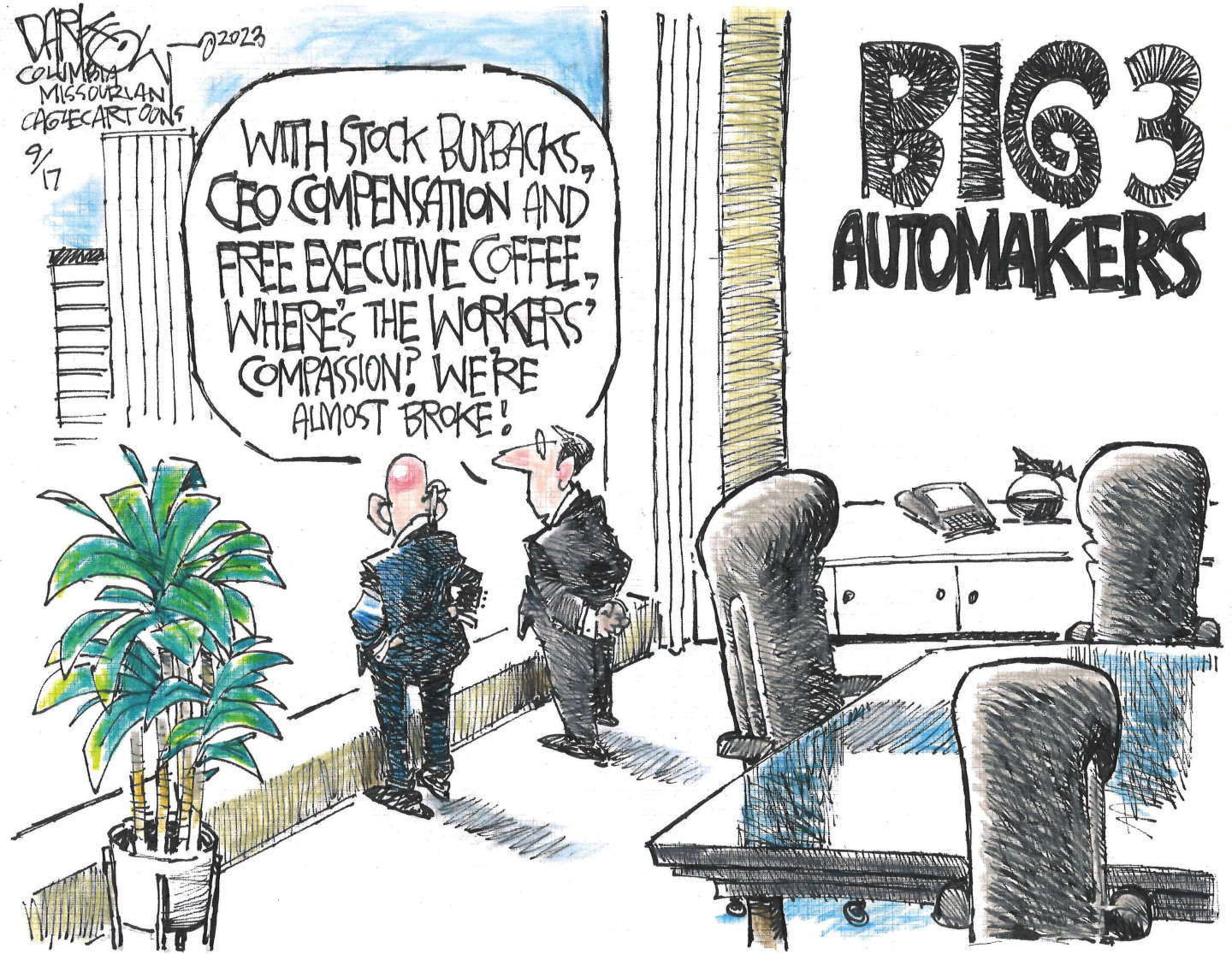
Traditionally known as the "Big Three," the collective identity of Detroit’s primary automakers has evolved significantly over the last century. While the term originally referred to General Motors, Ford, and Chrysler, the 21st century brought structural changes that redefined the group. Today, the "Detroit Three" consists of:
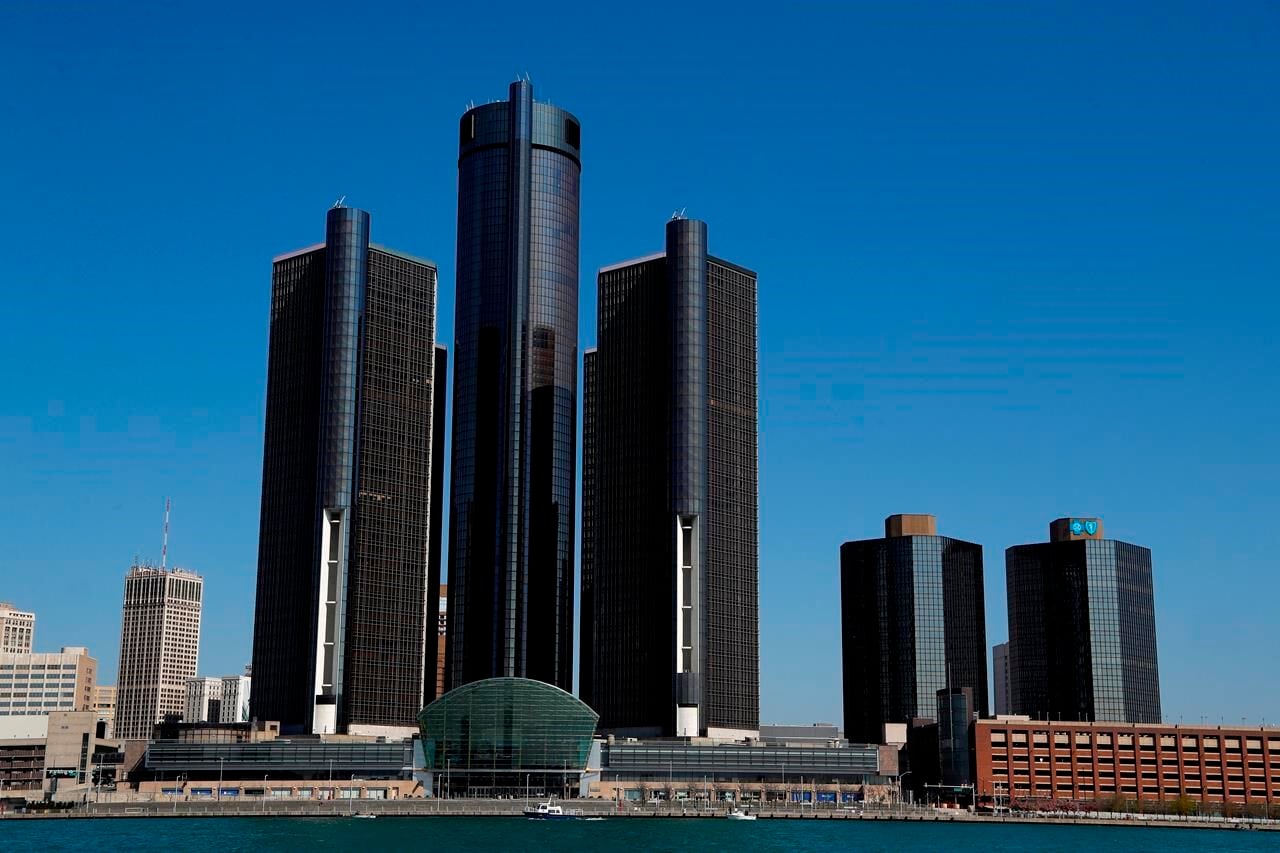
- General Motors (GM): Headquartered at the Renaissance Center in Detroit, Michigan.
- Ford Motor Company: Headquartered in Dearborn, Michigan.
- Stellantis: The global entity formed by the 2021 merger of Fiat Chrysler Automobiles (FCA) and the PSA Group, maintaining its North American headquarters in Auburn Hills, Michigan.
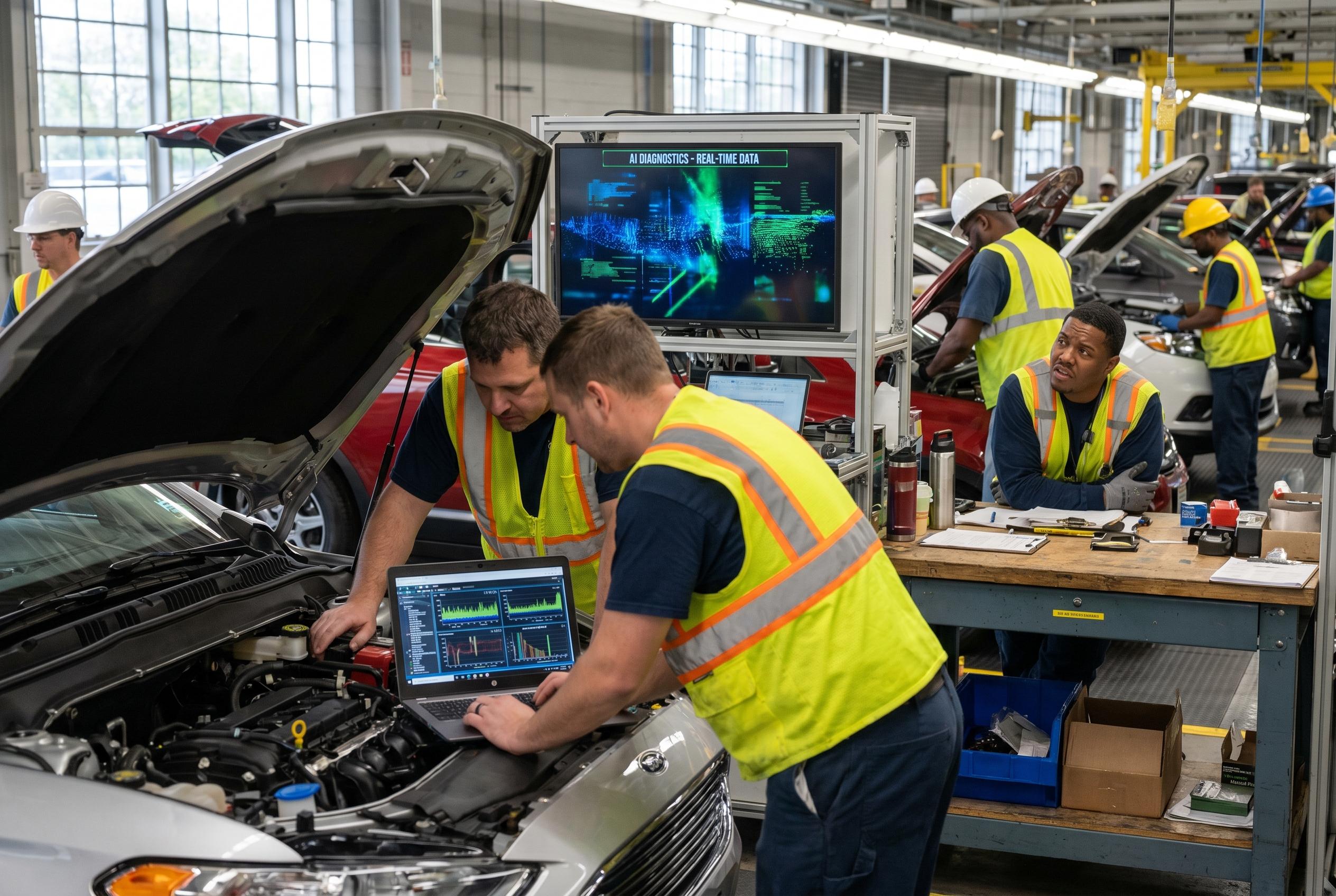
By 2026, these organizations have moved beyond being simple vehicle manufacturers. They are now integrated technology firms focusing on autonomous driving, battery chemistry, and fleet management services. The historical significance of the Detroit Three remains rooted in their role as the "Arsenal of Democracy" during World War II and their contribution to the development of the American middle class through the labor movements of the mid-20th century.
General Motors: The Ultium Era and Beyond
In 2026, General Motors operates as a leader in the domestic transition to electrification. Its strategy is built entirely around the Ultium platform, a modular battery and drive unit architecture that allows the company to produce everything from compact crossovers to heavy-duty pickups on a single technological foundation.
Strategic Focus in 2026
GM’s primary objective in 2026 is the scaling of its battery cell manufacturing. Through its Ultium Cells LLC joint venture, the company has stabilized production at multiple domestic plants, reducing the cost per kilowatt-hour (kWh) to levels that allow for price parity with internal combustion engine (ICE) vehicles.
The brand portfolio remains distinct:
- Chevrolet: Focuses on high-volume EV adoption with the Bolt, Equinox, and Silverado EV.
- Cadillac: Has nearly completed its transition to an all-electric luxury brand, led by the Lyriq and the ultra-luxury Celestiq.
- GMC: Dominates the premium truck and SUV space with the Hummer EV and Sierra EV.
- BrightDrop: GM’s commercial brand, which provides electric delivery vans and logistics software to major shipping entities.
Software and Autonomous Driving
GM’s 2026 revenue model increasingly relies on Software as a Service (SaaS). The "Ultifi" software platform allows for over-the-air (OTA) updates that can improve vehicle performance or add features like advanced maps and in-car entertainment. Meanwhile, Cruise, GM’s autonomous vehicle subsidiary, continues to expand its robotaxi operations in major North American cities, despite the regulatory scrutiny that defined the mid-2020s.
Ford Motor Company: The Split Strategy
Ford entered 2026 having matured the structural split it initiated years prior between its internal combustion and electric divisions. This organizational decoupling allowed the company to satisfy legacy truck buyers while aggressively pursuing the tech-heavy EV market.
Ford Blue, Ford Model e, and Ford Pro
- Ford Blue: This division handles the iconic ICE and hybrid products like the F-150, Bronco, and Mustang. In 2026, Ford Blue remains the primary profit engine, funding the research and development for the company’s future-looking ventures.
- Ford Model e: The startup-style division focused on EVs and digital connectivity. By 2026, the second generation of Ford EVs—including a ground-up electric full-size truck and a new three-row SUV—has hit the market, emphasizing aerodynamic efficiency and advanced computing.
- Ford Pro: A dedicated business for commercial and government customers, providing not just vehicles like the E-Transit, but also telematics and charging infrastructure management.
The Hybrid Pivot
While many competitors focused solely on battery electric vehicles (BEVs), Ford’s 2026 success is largely attributed to its "Hybrid First" approach for certain segments. Recognizing that charging infrastructure in rural America has not yet caught up to coastal standards, Ford’s Maverick and F-150 hybrids have become some of the best-selling vehicles in the country, serving as a bridge for consumers not yet ready to go fully electric.
Stellantis: A Global Conglomerate with Detroit Roots
Stellantis occupies a unique position among the Detroit Three. As a multi-national corporation with 14 brands, its North American operations (the former Chrysler Group) are the guardians of iconic American labels like Jeep, Ram, Dodge, and Chrysler.
The STLA Platforms
In 2026, Stellantis has fully implemented its "Dare Forward 2030" strategic plan. The company utilizes four global EV platforms: STLA Small, Medium, Large, and Frame. For the Detroit-based brands, the STLA Frame and STLA Large platforms are the most critical, powering the Ram 1500 REV and the electrified Dodge muscle car lineup.
Jeep and Ram Electrification
Jeep’s "4xe" plug-in hybrid technology has become the standard across its lineup in 2026, making it the leader in off-road electrification. Ram, meanwhile, has successfully launched its "Range Extended" electric truck, which uses an on-board generator to alleviate the towing-range anxiety that hampered early electric pickups. Stellantis remains the most fiscally conservative of the three, often waiting for technology costs to drop before committing to high-volume production.
Comparative Overview of the Detroit Three (2026 Data)
| Feature | General Motors | Ford Motor Company | Stellantis (NA) |
|---|---|---|---|
| Core EV Platform | Ultium | Model e (Gen 2) | STLA (Frame/Large) |
| Key 2026 Model | Chevrolet Silverado EV | Ford F-150 Lightning / T3 | Ram 1500 REV |
| Software OS | Ultifi | BlueOS | STLA Brain |
| Autonomous Level | Super Cruise / Ultra Cruise | BlueCruise | STLA AutoDrive |
| Primary Profit Center | Full-size Trucks & SUVs | Ford Blue (ICE/Hybrid) | Jeep & Ram Trucks |
| Battery Sourcing | Ultium Cells LLC (US) | BlueOval SK (US) | StarPlus Energy (US) |
Economic and Regulatory Landscape in 2026
The Detroit Three do not operate in a vacuum. Their strategies in 2026 are heavily dictated by two major factors: federal regulation and labor relations.
The Inflation Reduction Act (IRA) Legacy
By 2026, the full impact of the Inflation Reduction Act of 2022 is evident. To qualify for federal consumer tax credits, automakers must source a significant percentage of battery minerals from the U.S. or its free-trade partners. The Detroit Three have spent billions on domestic "Gigafactories" in Michigan, Ohio, Tennessee, and Kentucky to secure these subsidies. This has created a "Battery Belt" across the Midwest and South, reshoring jobs that had been lost to overseas markets decades prior.
Labor Relations and the UAW
Following the historic "Stand Up" strikes of 2023, the relationship between the Detroit Three and the United Auto Workers (UAW) has entered a new phase. In 2026, the focus has shifted from wage increases to "Just Transition" protections. As EVs require roughly 30% less labor to assemble than ICE vehicles, the Detroit Three are working with the UAW on massive retraining programs to move engine-plant workers into battery-cell manufacturing and software verification roles.
Greenhouse Gas (GHG) Standards
The Environmental Protection Agency (EPA) standards for the 2027–2032 model years are looming. As of 2026, the Detroit Three are under immense pressure to meet fleet-wide average emissions targets. This has led to the "sunsetting" of several famous high-displacement V8 engines in favor of turbocharged V6s and high-output electric motors.
Key Challenges Facing the Detroit Three
- Infrastructure Gaps: Despite the expansion of the National Electric Vehicle Infrastructure (NEVI) formula program, public charging reliability remains a hurdle for Detroit’s customers, particularly those in the heavy-towing and commercial sectors.
- Chinese Competition: While high tariffs have limited the direct sale of Chinese EVs in the U.S. through 2026, the Detroit Three face intense pressure from these low-cost competitors in global markets like Mexico, South America, and Europe.
- Software Integration: Moving from hardware-centric engineering to software-centric development has been difficult. All three companies have faced delays in vehicle launches between 2023 and 2026 due to code stability and user interface issues.
Frequently Asked Questions
Which of the Detroit Three is the largest?
In terms of North American market share and domestic production volume, General Motors typically holds the top spot, followed closely by Ford. However, when looking at global revenue and total vehicle units across all 14 brands, Stellantis is a larger global entity, though only its North American brands (Jeep, Ram, Dodge, Chrysler) are considered part of the "Detroit Three."
Are the Detroit Three still based in Detroit?
Yes, but with nuances. General Motors remains in downtown Detroit (though it has announced moves to the Hudson’s Detroit site), Ford is deeply rooted in Dearborn (part of the Detroit metro), and Stellantis maintains its North American headquarters in Auburn Hills (also metro Detroit). The region has rebranded itself as a hub for mobility technology rather than just traditional manufacturing.
What is the difference between the "Big Three" and the "Detroit Three"?
The terms are often used interchangeably, but "Detroit Three" is more accurate in the modern era. "Big Three" was coined when GM, Ford, and Chrysler were the undisputed kings of the global market. Today, companies like Toyota, Volkswagen, and Tesla often exceed them in certain global metrics, making "Detroit Three" a more specific geographic and cultural identifier.
Do the Detroit Three still make sedans?
As of 2026, the Detroit Three have largely exited the traditional sedan market in North America, focusing instead on SUVs, crossovers, and trucks. While some luxury sedans remain under the Cadillac brand and performance sedans under Dodge (in electric form), the "traditional" family sedan like the Ford Fusion or Chevy Impala has been discontinued in favor of more profitable utility vehicles.
How did Chrysler become Stellantis?
Chrysler's path involved several mergers. It first became DaimlerChrysler (1998), then was sold to Cerberus Capital Management (2007). Following the 2009 bankruptcy, it merged with Fiat to become Fiat Chrysler Automobiles (FCA). In 2021, FCA merged with the French PSA Group (Peugeot/Citroën) to form Stellantis.
Next Actions for Consumers and Investors
If you are looking to engage with the Detroit Three in 2026, consider the following:
- For Buyers: Evaluate vehicles based on their software update frequency and NACS (North American Charging Standard) compatibility, which has become the industry standard for charging as of 2025.
- For Investors: Monitor the "cost-to-build" metrics of EV programs versus the remaining ICE margins. The "inflection point"—where EVs become more profitable than gas cars—is the key metric for Detroit’s stock performance in the late 2020s.
- For Career Seekers: Focus on electrical engineering, data science, and chemical engineering, as the Detroit Three are hiring more in these fields than in traditional mechanical engineering.
Image Gallery