Workers’ Compensation Insurance for Nonprofit Organizations in New York State
Nonprofit organizations operating in New York State are generally required by law to provide workers’ compensation insurance for their employees. This coverage acts as a mandatory safety net, providing medical benefits and wage replace...
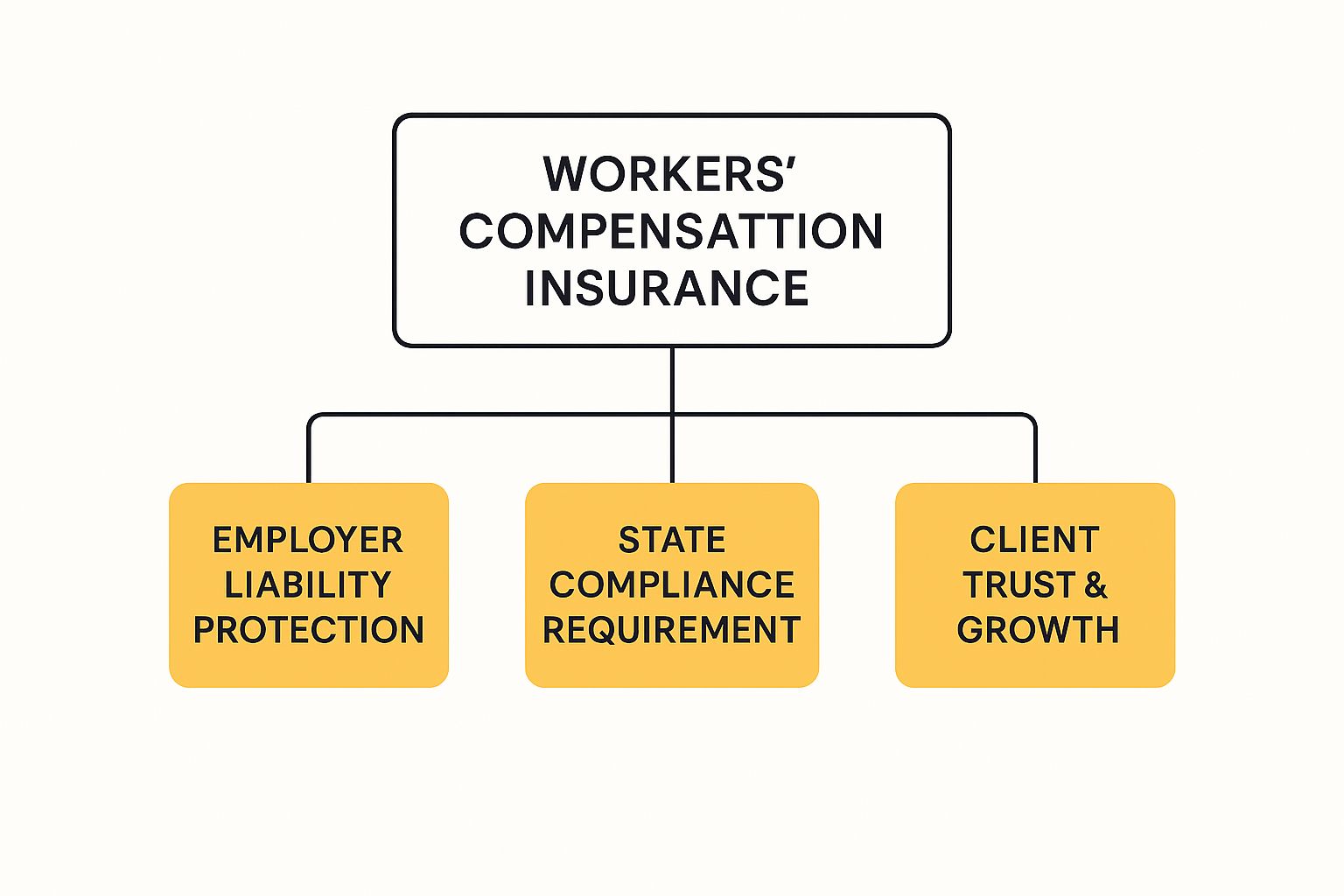
Nonprofit organizations operating in New York State are generally required by law to provide workers’ compensation insurance for their employees. This coverage acts as a mandatory safety net, providing medical benefits and wage replacement to workers who sustain job-related injuries or illnesses. For nonprofits, compliance is not optional; it is a critical regulatory obligation that protects the organization from severe financial liabilities and legal penalties.
Contents
The Legal Framework for New York Nonprofits
In New York, the Workers’ Compensation Law (WCL) dictates that almost every employer, including nonprofit entities, must provide coverage for their employees. This requirement applies regardless of the size of the organization or whether the nonprofit is registered as a 501(c)(3) charity. The New York State Workers’ Compensation Board (WCB) oversees these regulations, ensuring that all employees—whether full-time, part-time, seasonal, or volunteer in specific circumstances—are protected.
The primary purpose of this system is to provide a "no-fault" insurance scheme. When a worker is injured or becomes ill due to their employment, they are entitled to benefits without the need to prove that the employer was negligent. In exchange for providing this mandatory coverage, nonprofit employers are generally protected from civil lawsuits filed by employees for work-related injuries.
Distinguishing Employees from Volunteers
One of the most frequent points of confusion for nonprofits in New York involves the classification of personnel. While paid employees are almost universally covered under WCL, volunteers present a different legal profile.
Under the New York Workers' Compensation Law, volunteers who perform services for a nonprofit organization are not automatically considered "employees" for the purpose of workers' compensation. However, a nonprofit may choose to voluntarily cover its volunteers. If a nonprofit organization elects to purchase a policy that includes coverage for volunteers, they are then treated as employees under the law.
If your nonprofit does not affirmatively elect to cover volunteers, they generally do not fall under the mandate. However, if any person receives remuneration—even in the form of stipends, housing, or other benefits that could be construed as compensation—the WCB may classify them as an employee, necessitating mandatory coverage. Nonprofits should maintain clear documentation regarding the nature of their volunteer agreements to prevent unexpected liability during a payroll audit.
Coverage Requirements and Compliance
To maintain compliance in 2026, a nonprofit organization must secure a policy from a licensed insurance carrier, the New York State Insurance Fund (NYSIF), or by becoming a self-insured employer (a process usually reserved for large, financially stable organizations).
Failure to carry appropriate workers’ compensation insurance in New York carries significant risks. The WCB imposes penalties for non-compliance, which include:
- Fines: Daily fines for every period an employer is uninsured.
- Assessments: Additional monetary penalties based on the size of the workforce and the duration of the lapse.
- Stop-Work Orders: The Board has the authority to issue stop-work orders, which effectively shut down operations until coverage is secured and penalties are paid.
- Personal Liability: Officers of a corporation or members of an LLC may be held personally liable for the costs of a claim if the organization fails to provide insurance.
Financial Impacts and Cost Management
The cost of workers’ compensation insurance is determined by the "classification code" of the employees and the organization's payroll size. Nonprofits often deal with unique payroll structures, including grants and limited budgets, which makes cost-predictability essential.
| Factor | Impact on Premium |
|---|---|
| Payroll Size | Premiums are calculated based on total payroll; larger staffs result in higher base costs. |
| Job Classification | Low-risk clerical work commands lower rates than high-risk field work or manual labor. |
| Experience Modification (Mod) | A rating based on the organization's past claims history; fewer claims lower the modifier. |
| Safety Programs | Proactive injury prevention training can lead to lower premiums over time. |
By implementing rigorous safety protocols and first-aid training, nonprofits can improve their experience modification rating, effectively lowering their insurance overhead over the long term.
Steps to Secure and Verify Coverage
For leadership in a nonprofit, the process of establishing and maintaining compliance involves several key administrative steps:
- Assess Employee Status: Audit your current workforce to determine who is a paid employee versus a true volunteer. Consult with legal counsel if stipends are involved.
- Contact a Licensed Broker: Reach out to an insurance broker specializing in nonprofit commercial insurance or contact the NYSIF directly to obtain a quote.
- Provide Accurate Payroll Data: Ensure that all payroll projections are accurate to avoid an audit penalty at the end of the policy term.
- Display Notice of Compliance: New York law requires nonprofits to post the "Notice of Compliance" (Form C-105) in a conspicuous location where employees can easily view it.
- Maintain Records: Keep all certificates of insurance and payroll reports for at least seven years, as these are subject to review by the WCB.
Troubleshooting Common Compliance Gaps
Nonprofits often face difficulties when they rely on casual labor or independent contractors. A common mistake is misclassifying a worker as an "independent contractor" to avoid paying for workers’ compensation premiums. The New York WCB applies the "direction and control" test; if the organization dictates when, where, and how the work is performed, the worker is likely an employee under the law, regardless of their title. If a subcontractor is injured and does not have their own insurance, the nonprofit may be held liable for their claim. Always verify that any hired contractor provides their own Certificate of Insurance (COI) before they begin work.
Frequently Asked Questions
Are board members of a nonprofit considered employees for workers' compensation? Generally, no. Uncompensated board members who perform traditional oversight functions are not considered employees. However, if a board member performs executive duties and receives a salary for those services, they are likely considered an employee and must be included in the coverage calculation.
Does New York State provide special insurance funds for small nonprofits? While there are no "charity-specific" insurance discounts, small nonprofits can often access competitive rates through the New York State Insurance Fund (NYSIF), which is a state-operated insurance carrier designed to ensure that coverage remains available to all employers, regardless of risk level or size.
What should a nonprofit do if an employee is injured on the job? The nonprofit must immediately provide first aid and arrange for medical care. The employer is required to file a C-2 form (Employer’s Report of Work-Related Injury/Illness) with the Workers’ Compensation Board and the insurance carrier within ten days of learning about the injury.
Can a nonprofit organization be exempt from the mandate if they only have one employee? No. In New York, the mandate to provide workers' compensation insurance applies to almost all employers, even if they have only one part-time employee. There is no "size-based" exemption for small nonprofits.
How does the 2026 legislative landscape affect insurance requirements? As of 2026, the foundational requirements for workers' compensation in New York remain centered on the Workers' Compensation Law. While premium rates may fluctuate based on insurance market conditions and annual WCB adjustments, the mandate for coverage remains a permanent fixture of New York state business regulation.
Recommendation
For nonprofit administrators, the most effective strategy for managing workers' compensation is a dual-track approach: strictly document the status of every individual performing work for the organization and invest in a documented safety-training program. Ensure that your organization’s Workers’ Compensation Policy is reviewed annually during your budget cycle to reflect current staffing levels. If you are uncertain about a worker's classification, obtain a formal opinion from your legal advisor or submit an inquiry to the New York State Workers' Compensation Board to avoid significant future liabilities.
Image Gallery