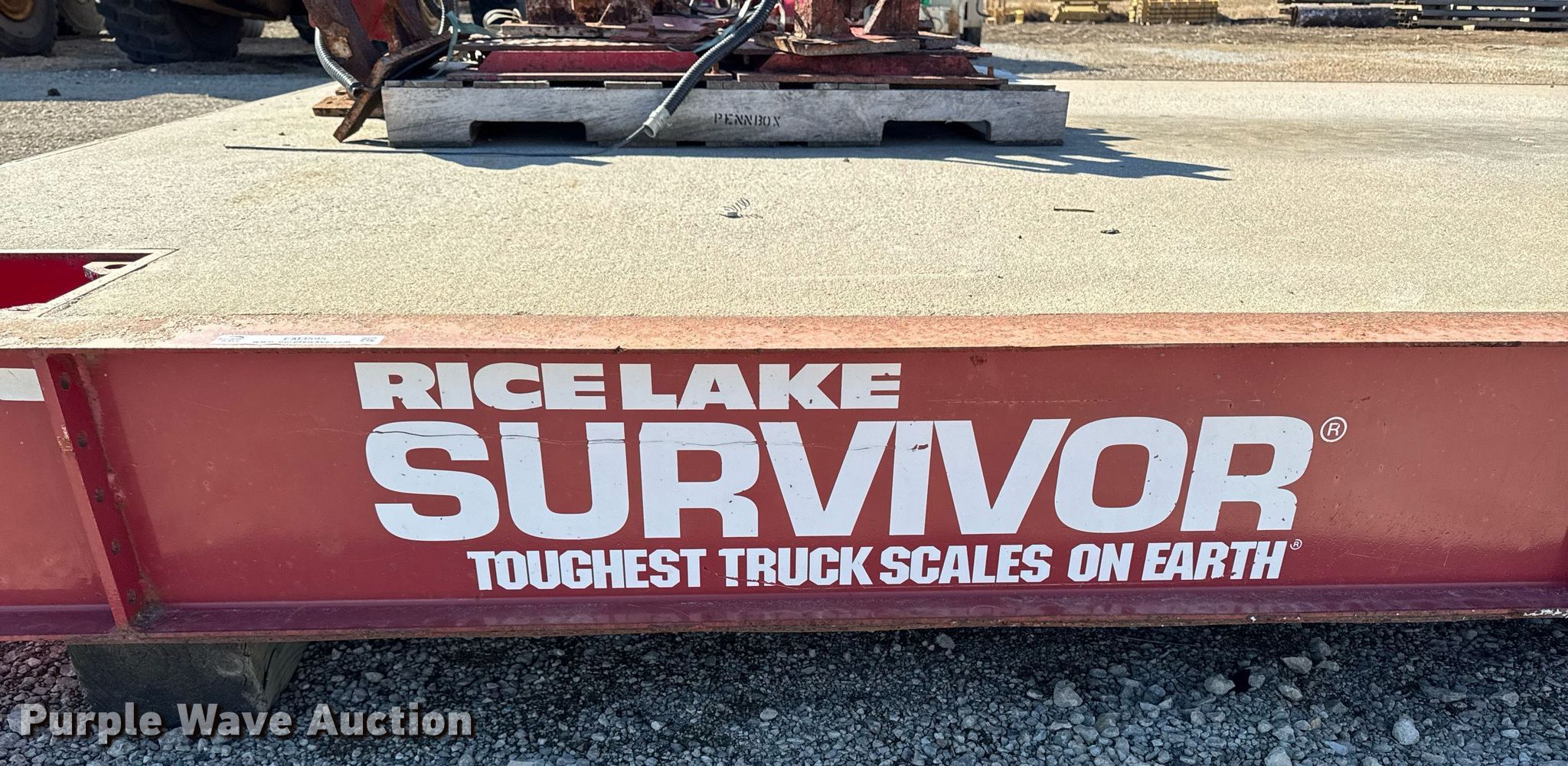
Rice Lake SURVIVOR Truck Scale: Comprehensive Technical and Buyer's Guide
The Rice Lake SURVIVOR truck scale series is an industry-leading line of legal-for-trade vehicle scales engineered for heavy industrial weighing, including mining, aggregates, agriculture, and waste management. Built with robust steel...
The Rice Lake SURVIVOR truck scale series is an industry-leading line of legal-for-trade vehicle scales engineered for heavy industrial weighing, including mining, aggregates, agriculture, and waste management. Built with robust steel wide-flange girders and patented G-Force™ suspension systems, SURVIVOR scales offer superior durability, high accuracy, and concrete or steel deck configurations tailored to extreme operational environments.
Contents
Overview of the Rice Lake SURVIVOR Scale Series
In commercial transport, bulk material handling, and logistics, vehicle scales serve as cash registers for raw material transactions. Accuracy, uptime, and long-term mechanical integrity directly dictate operational profitability. Rice Lake Weighing Systems manufactures the SURVIVOR line to address the most demanding weighing challenges in North America and globally.
Known as "The Tough-Marked Scale," the SURVIVOR family is built with structural steel designs that exceed standard National Type Evaluation Program (NTEP) requirements. Vehicle scales endure extreme dynamic forces, including sharp braking, accelerating heavy axles, temperature-induced expansion, and corrosive environmental exposure. Rice Lake addresses these stress factors by utilizing continuous solid welds, heavy-gauge steel I-beams, and rigid internal ribbing.
Choosing the correct vehicle scale involves evaluating daily truck counts, concentrated load capacities (CLC), environmental exposure, site layout constraints, and total cost of ownership. The SURVIVOR series spans multiple structural profiles—from low-profile pitless decks to fully portable modular configurations—ensuring an operational fit for every application.
Core Models in the SURVIVOR Lineup
Rice Lake structures the SURVIVOR family into distinct configurations, each optimized for specific duty cycles, spatial requirements, and operational lifetimes.
SURVIVOR OTR (Over-the-Road)
The SURVIVOR OTR is the flagship model for standard to heavy-duty commercial vehicle weighing. Designed for high-volume highway truck traffic, scrap yards, and agricultural processing facilities, the OTR features wide-flange longitudinal girders that support the weigh deck directly along the tire paths. Available in both concrete and steel deck options, the OTR offers top-access panel covers for convenient load cell inspection, cleaning, and maintenance without requiring beneath-deck crawl spaces.
SURVIVOR ATV (Above-Ground Timber/Steel Portable)
The SURVIVOR ATV is engineered for temporary or semi-permanent operational sites such as road construction zones, logging sites, and short-term mining operations. Featuring a self-contained, modular design, the ATV incorporates built-in side rails and framed foundation sub-modules. This setup enables rapid installation on compacted gravel beds or temporary concrete footings, allowing operators to relocate the entire weighing structure as project sites shift.
SURVIVOR SR (Sidemember Design)
The SURVIVOR SR features heavy-duty structural steel side beams that act as built-in guide rails while providing structural stiffness. This design keeps the deck profile low to the ground, reducing the required slope and length of approach ramps. The SR configuration is frequently chosen for pit installations where vertical clearance is restricted, or for above-ground sites where space constraints limit ramp footprint dimensions.
SURVIVOR PT (Pipe Tough / Extreme Duty)
For severe-duty applications involving off-highway haul trucks, scrap metal drop sites, or heavy-equipment processing facilities, the SURVIVOR PT provides maximum structural strength. Utilizing extra-heavy structural pipe or wide-flange beam designs, the PT scale withstands extreme axle point loads that exceed standard highway legal weight limits.
Structural Deck Comparison: Concrete vs. Steel
Selecting between a concrete deck and a steel deck relies on site traffic volume, ambient climate, installation downtime limits, and budget parameters. Both deck types integrate with Rice Lake's structural support frames and weighment electronics.
| Concrete Deck | Steel Deck |
|---|---|
| [Concrete Pour] | [Diamond Steel Plate] |
| [Rebar Reinforced Grid] | [Welded Structural Sub] |
| [I-Beam Support Frame] | [I-Beam Support Frame] |
| Higher traction | Fast setup / Ready instantly |
| Superior moisture resist | Lighter weight profile |
| Best for high truck volume | Easy relocation capability |
Concrete Deck Advantages and Considerations
Concrete deck scales are poured on-site into pre-fabricated steel pans containing reinforced rebar grids tied directly to the scale’s structural framework.
- Traction and Safety: The textured surface of a cured concrete deck provides superior traction in wet, icy, or muddy conditions compared to steel plate.
- Mass and Damping: The mass of a concrete deck absorbs mechanical shock and vibration from heavy braking trucks, reducing stress on internal load cells and extending component longevity.
- Corrosion Resistance: Concrete inherently withstands road salt, chemical runoff, and moisture accumulation better than exposed steel, making it ideal for northern climates and chemical processing plants.
- Considerations: Requires a curing window of 21 to 28 days before heavy traffic can operate on the scale, delaying site commissioning.
Steel Deck Advantages and Considerations
Steel deck scales utilize heavy-gauge diamond safety plate welded directly to longitudinal support beams.
- Immediate Commissioning: Steel scales can be fully calibrated and placed into revenue service immediately following mechanical installation, eliminating concrete cure times.
- Portability: The lower overall deadweight makes steel scales easier to lift, transport, and reassemble on temporary job sites.
- Lower Initial Deck Costs: Steel deck units eliminate the material, labor, and logistics expenses associated with ordering, pouring, and finishing ready-mix concrete on-site.
- Considerations: Steel surfaces can become slippery when wet or icy, require periodic repainting to prevent rust, and transmit higher impact shock to suspension components.
Technical Specifications and Model Comparison
The following matrix highlights the core specifications across primary Rice Lake SURVIVOR configurations:
| Model Feature | SURVIVOR OTR Concrete | SURVIVOR OTR Steel | SURVIVOR ATV Portable | SURVIVOR SR Sidemember |
|---|---|---|---|---|
| Primary Deck Surface | Poured-in-place concrete | Heavy diamond steel plate | Steel plate or concrete | Concrete or steel deck |
| Standard Deck Widths | 10 ft to 14 ft | 10 ft to 12 ft | 10 ft to 12 ft | 10 ft to 12 ft |
| Concentrated Load Capacity (CLC) | Up to 100,000 lb | Up to 90,000 lb | Up to 80,000 lb | Up to 100,000 lb |
| Section Capacity | Up to 100,000 lb | Up to 90,000 lb | Up to 80,000 lb | Up to 100,000 lb |
| Typical Profile Height | 14 inches to 16 inches | 14 inches | 16 inches to 20 inches | Low-profile / Pit compatible |
| Ideal Application | High-volume highway terminals | High-throughput quick installs | Temporary sites / Logging | Space-restricted sites / Pits |
| NTEP Compliance | Class III/IIIL Certified | Class III/IIIL Certified | Class III/IIIL Certified | Class III/IIIL Certified |
Advanced Engineering: Suspension and Load Cell Technology
The accuracy and reliability of a vehicle scale depend on how effective its suspension system is at transmitting vertical vehicle mass to internal sensors while isolating horizontal side-loads caused by sudden braking or thermal expansion.
- [ Scale Deck Bracket ]
- Free-Rolling Steel Button (Absorbs thermal expansion & sudden vehicle braking)
- [ Load Cell Sensor ]
- [ Foundation Pocket ]
The Patented G-Force™ Suspension System
Rice Lake equips the SURVIVOR series with the G-Force self-checking load cell suspension system. Unlike traditional rigid stay-rod assemblies or check-rod hardware that can bind, rust, or transfer unwanted lateral forces into the load cell, the G-Force system utilizes a gravity-restoring design.
The suspension mount incorporates hardened stainless steel components that allow the scale deck to move naturally under impact forces and instantly return to dead center without mechanical friction. This eliminates horizontal restraint binding, protects the sensor pins from shock loading, and maintains measurement repeatability across changing ambient temperatures.
Load Cell Technologies: Digital vs. Analog
SURVIVOR scales accommodate both high-accuracy analog load cells and modern digital load cell systems:
- Digital Load Cell Systems: Digital load cells convert analog millivolt signals directly within the sensor housing using internal microprocessors. This design sends robust digital communication signals to the scale indicator, minimizing signal degradation caused by moisture, radio-frequency interference (RFI), or long cable runs. Digital systems also offer individual cell diagnostics, allowing technicians to identify a failing sensor remotely before it causes weighing errors.
- Analog Compression Load Cells: Analog canister and rocker-pin load cells use heavy-duty stainless steel housings hermetically sealed to IP69K standards. Combined with signal-trimming junction boxes, analog cells deliver dependable performance and lower replacement component costs.
- Transient Voltage & Lightning Protection: Vehicle scales act as large metallic antennas in open fields. Rice Lake integrates multi-stage lightning protection—including laboratory-tested transient voltage suppressors, ground straps, and single-point grounding schemes—to safeguard sensitive load cell networks from direct atmospheric strikes and line surges.
Foundation Options and Site Preparation
A truck scale is only as stable as the foundation supporting it. Soil bearing capacity, frost line depth, and site drainage directly dictate foundation design requirements.
| Foundation Types | Description |
|---|---|
| 1. Full Frame Pit Mount | Flush with ground; ideal for small sites. |
| 2. Pitless Above-Ground | Slab/pier mount; accessible, easy drainage. |
| 3. Deep Pier Foundation | Anchored below local frost lines. |
1. Pitless (Above-Ground) Foundations
Above-ground installations mount the scale deck on concrete piers or a flat concrete slab, raising the deck 14 to 18 inches above grade.
- Pros: Excellent natural ventilation prevents moisture accumulation beneath the scale deck. Easy access for washing out dirt debris, inspecting load cell mounts, and performing routine service.
- Cons: Requires concrete approach ramps on both entry and exit ends, extending the total mechanical footprint by 30 to 50 feet.
2. Flush Pit Mount Foundations
Pit installations place the scale deck flush with the surrounding asphalt or concrete pavement inside a excavated reinforced concrete vault.
- Pros: Minimizes overall site footprint by eliminating long approach ramps. Allows vehicles to approach, stop, and turn directly adjacent to the scale edge.
- Cons: Pit spaces require sumps or gravity drainage pipes to prevent water submersion. Maintenance personnel must follow confined-space safety protocols when servicing lower assemblies.
3. Deep Pier and Slab Foundations
In regions with freezing weather cycles, foundations must extend deep piers below the local frost line to prevent frost heave from tilting the weighbridge and causing scale errors. Where soil bearing capacity is weak, continuous concrete slab foundations spread structural loads across a broader surface area.
Calibration, Legal-for-Trade Requirements, and Maintenance
To operate legally for trade under NIST Handbook 44 standards, vehicle scales must undergo periodic certification by accredited weights and measures authorities or licensed service agencies.
Legal-for-Trade Compliance Standards
- NTEP Certification: Rice Lake SURVIVOR scales hold NTEP Certificates of Conformance (CoC), validating that the physical structure and weight indicators meet strict accuracy, temperature range, and repeatability criteria.
- Shift and Section Testing: Certification technicians test individual load cell sections by placing concentrated test weight carts (often totaling 20,000 to 40,000 lbs) directly over each sensor group to verify load distribution accuracy.
- Acceptance and Maintenance Tolerances: New or repaired scales must perform within tight acceptance tolerances (typically ±0.1% of applied test load), while operational scales must remain within maintenance tolerances throughout their service life.
Preventive Maintenance Checklist
To maintain accuracy and prevent premature mechanical failure, operators should enforce a routine maintenance schedule:
- [ DAILY / WEEKLY ]
- Inspect deck surface for heavy mud or ice buildup.
- Clear debris from approach end-plates and side clearance gaps.
- [ MONTHLY ]
- Inspect underneath scale decks for debris buildup contacting girders.
- Check junction box seals for moisture ingress or cable wear.
- Inspect grounding straps for corrosion or mechanical breaks.
- [ BI-ANNUALLY / ANNUALLY ]
- Conduct full section-by-section calibration with certified test trucks.
- Inspect load cell mounts, G-Force assemblies, and stop bolts.
- Clean out pit sumps and confirm automatic drainage pumps operate correctly.
Frequently Asked Questions
What is the typical lifespan of a Rice Lake SURVIVOR truck scale?
With routine maintenance, periodic cleaning, and proper foundation engineering, a Rice Lake SURVIVOR truck scale typically achieves an operational lifespan of 20 to 30 years or more. Structural wide-flange I-beams and heavy steel decks resist fatigue, while stainless steel IP69K load cells protect electronic components from moisture degradation.
How do I choose between a steel deck and a concrete deck SURVIVOR scale?
Choose a concrete deck if your facility experiences high daily truck volumes (over 100 to 200 trucks per day), operates in severe winter climates where salt is applied, or requires maximum traction. Choose a steel deck if you require fast installation without waiting for concrete to cure, anticipate relocating the scale in the future, or want lower upfront deck costs.
What causes truck scale accuracy errors, and how are they fixed?
Accuracy errors are commonly caused by mud or debris binding the scale deck against its approach walls, moisture entering load cell junction boxes, damaged strain gauges, or foundation settling. Regular visual inspections to clear clearance gaps, drying or replacing junction boxes, and scheduling calibration tests with a certified test truck will correct these issues.
Can a Rice Lake SURVIVOR scale be integrated with automated weighmaster software?
Yes. Rice Lake SURVIVOR scales connect directly with digital weight indicators (such as the Rice Lake 920i® or 880 series) and integrate with automated ticketing software, RFID card readers, license plate recognition cameras, traffic lights, and enterprise resource planning (ERP) platforms.
What is Concentrated Load Capacity (CLC) and why does it matter?
Concentrated Load Capacity (CLC) is an NTEP rating that measures a scale’s structural ability to weigh heavy dual-axle load concentrations applied to a localized area of the deck platform. Choosing a scale with an adequate CLC rating (such as 90,000 to 100,000 lbs) ensures the scale bridge will not bend or crack under tandem axles loaded to legal maximums.
Strategic Selection and Next Steps
Selecting the right vehicle scale requires balancing current operational demands with long-term facility growth. An undersized scale deck or an inadequate foundation leads to costly downtime, scale binding, and frequent recalibration penalties.
- Audit Site Traffic and Vehicle Configurations: Determine maximum vehicle length, maximum gross weights, and peak daily truck throughput to select the appropriate deck length (standard 70-foot to 120-foot configurations) and CLC rating.
- Evaluate Environmental and Spatial Constraints: Measure available approach distances to choose between an above-ground scale requiring ramps or a flush pit design for tight facilities. Assess local water table levels to ensure proper drainage design.
- Consult Authorized Rice Lake Dealers: Partner with an authorized weighing system dealer to perform soil bearing tests, secure local municipal building permits, and establish a scheduled calibration contract.
Image Gallery