What Is Greenwich Village? History, Culture, and Neighborhood Guide
Greenwich Village, often referred to simply as "the Village," is an iconic, predominantly residential neighborhood situated on the Lower West Side of Manhattan in New York City. Renowned for its irregular street pattern, historic 19th-...
Greenwich Village, often referred to simply as "the Village," is an iconic, predominantly residential neighborhood situated on the Lower West Side of Manhattan in New York City. Renowned for its irregular street pattern, historic 19th-century townhouses, and influential role in American counterculture, the neighborhood remains a global symbol of artistic freedom, bohemian culture, and civil rights activism.
Contents
Defining the Boundaries of Greenwich Village
Greenwich Village occupies a defined geographical footprint in Lower Manhattan, bordered by distinct neighborhoods that each carry their own cultural identities.
While exact boundaries can vary slightly depending on municipal, historical, or real estate definitions, the standard parameters recognized by the City of New York and urban historians are:
- Northern Boundary: 14th Street, which separates Greenwich Village from Chelsea and the Union Square area.
- Southern Boundary: Houston Street, forming the border with SoHo (South of Houston) and Hudson Square.
- Western Boundary: The Hudson River (along West Street and Hudson River Park).
- Eastern Boundary: Broadway or Fourth Avenue, where the neighborhood transitions into the East Village and NoHo.
Within these borders, the area is frequently divided into distinct micro-neighborhoods. The West Village encompasses the portion lying west of Sixth Avenue (Avenue of the Americas), characterized by its intimate, winding residential lanes and high concentration of preserved brownstones. The Central Village surrounds Washington Square Park and houses major educational institutions, while the area stretching east toward Broadway connects directly to the historical fabric of the early 20th-century labor and political movements.
| Area | Description |
|---|---|
| 14th Street | Border: Chelsea / Union Square |
| WEST VILLAGE | West of 6th Avenue to the Hudson River |
| CENTRAL VILLAGE | 6th Ave to Broadway/ Washington Square Park |
| Houston Street | Border: SoHo / Hudson Square |
Historically, the area east of Third Avenue was considered part of the Lower East Side. Over the mid-20th century, writers, artists, and real estate developers began calling that adjacent district the "East Village." Today, standard civic convention treats Greenwich Village and the East Village as two separate, culturally distinct neighborhoods.
The Street Grid: Why the Village Defies Manhattan’s Geometry
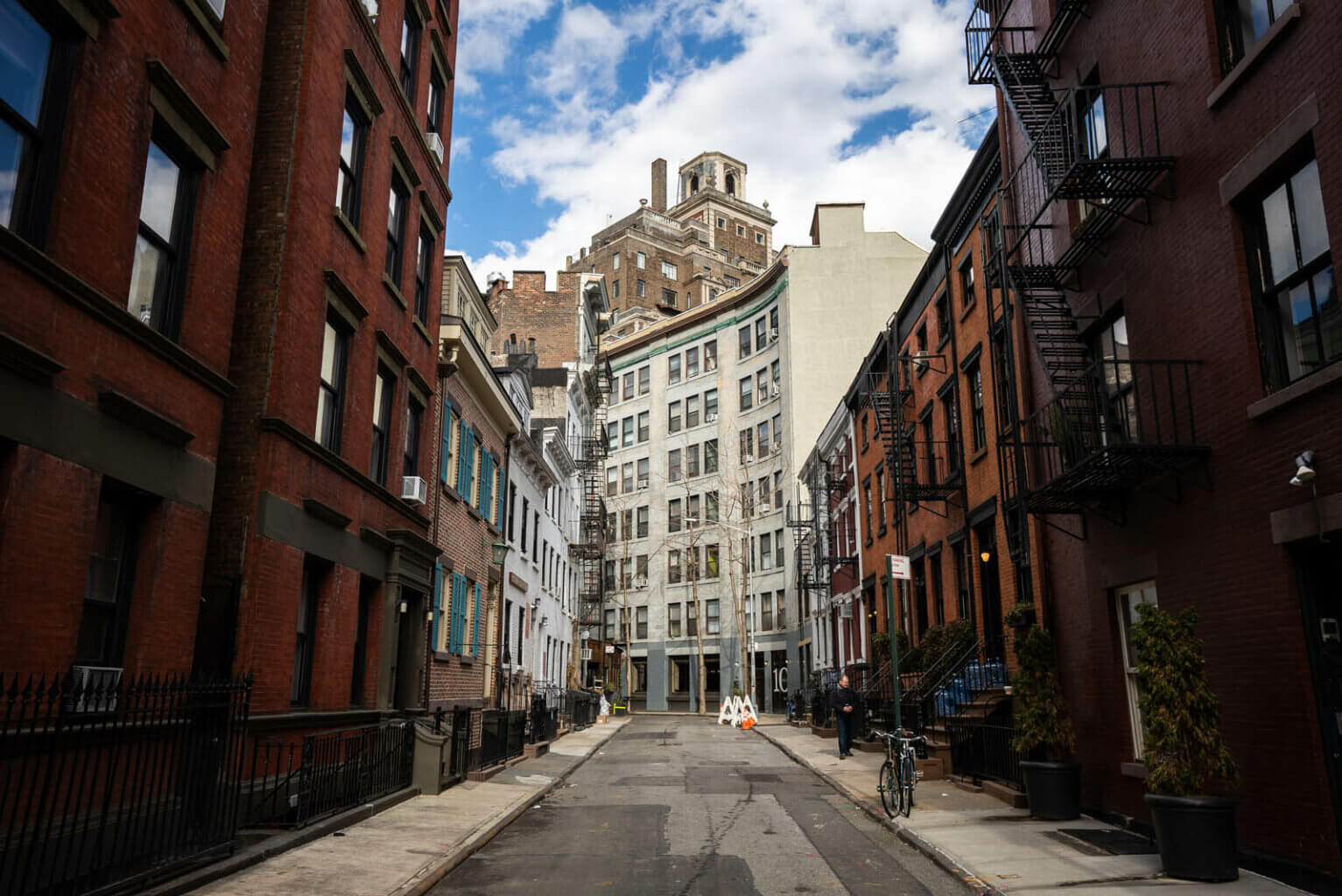
Visitors and newcomers navigating Greenwich Village quickly discover that the intuitive, numbered street grid defining most of Manhattan breaks down here entirely. Instead of parallel avenues running north-south intersected by perpendicular cross-streets running east-west, the Village features an irregular layout where streets angle sharply, converge at unexpected intersections, and occasionally intersect themselves—such as the famous crossing of West 4th Street and West 10th Street.
This divergence exists because Greenwich Village was an established, thriving rural settlement long before the implementation of the Commissioners' Plan of 1811. That master plan laid out Manhattan’s rectangular street grid from Houston Street north to 155th Street. Village residents vigorously defended their existing roadways, property boundaries, and orientation toward the Hudson River. As a result, the city planners incorporated the existing street layout into the municipal map, creating an abrupt disruption between the grid above 14th Street and the colonial-era routes below.
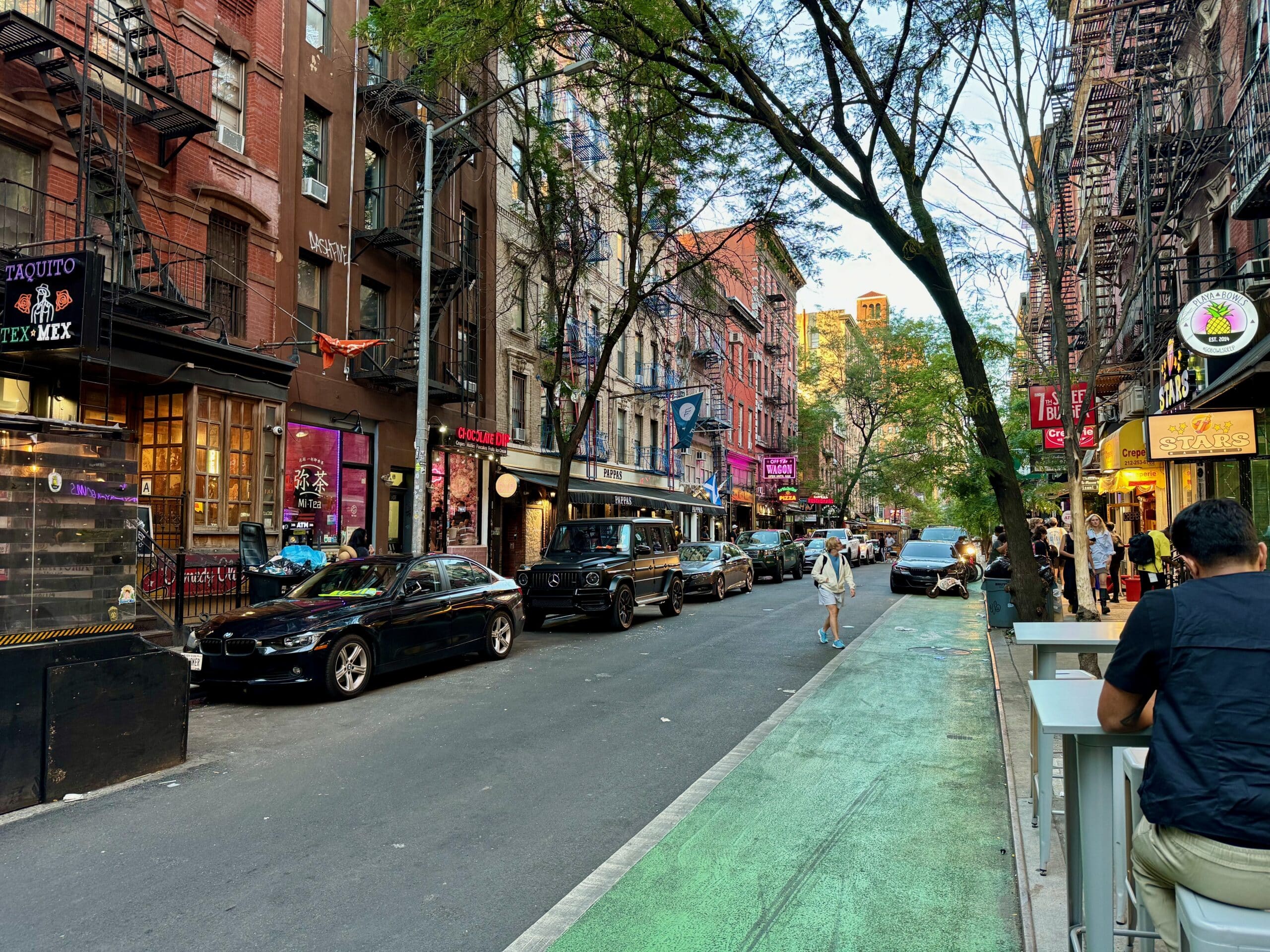
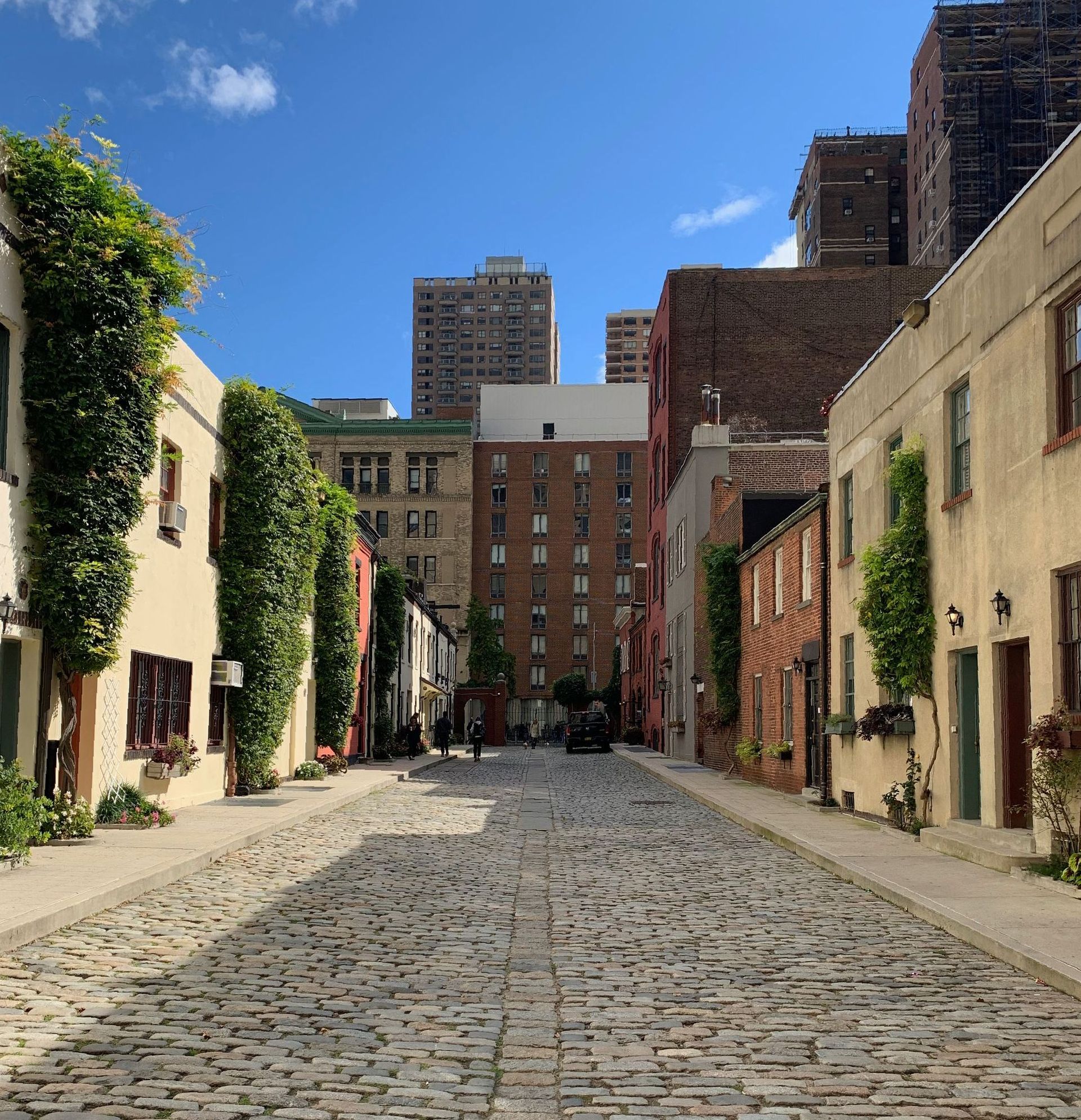
This 18th- and early 19th-century street pattern gives Greenwich Village a human-scale, walkable character uncommon in North American urban centers. Alleys, cul-de-sacs, and preserved mews—such as Washington Mews and MacDougal Alley, which originally served as stables for nearby mansions—survive alongside primary commercial avenues.
Historical Evolution: From Farmland to Countercultural Capital
The history of Greenwich Village spans four distinct centuries, shifting repeatedly from rural refuge to industrial fringe, then to bohemian sanctuary, and finally to one of the most protected residential neighborhoods in the United States.
Indigenous Roots and Colonial Settlement
Before European colonization, the Lenape Native Americans maintained an encampment in the area known as Sapokanikan, utilizing the fertile land along the Hudson River and the fresh water of Minetta Brook. In the 1630s, the Dutch West India Company established plantations across the territory, designating portions to freed African slaves under conditional manumission, creating one of the earliest communities of free Black landholders in New York.
When the British captured New Amsterdam in 1664, they renamed the settlement "Greenwich" after the English town. Throughout the 18th century, it remained an agricultural hamlet isolated from the dense commercial core at the southern tip of Manhattan.
The 19th Century: Urban Sanctuary and Class Stratification
Greenwich Village transformed rapidly during the yellow fever and cholera epidemics that struck Lower Manhattan in 1799, 1805, and 1822. Thousands of city residents, along with businesses and municipal offices, fled north to the cleaner air and lower population density of Greenwich Village. Many never returned downtown, turning temporary residences into permanent estates.
By the 1830s, wealthy New Yorkers built elegant Greek Revival and Federal-style townhouses around the newly created Washington Square, transforming the area into an elite enclave. Concurrently, the areas farther west and south filled with working-class immigrants—primarily Irish, Italian, and German—who worked at the nearby Hudson River docks and in local manufacturing lofts.
The Bohemian Vanguard: 1910–1960
By the early 20th century, low commercial rents, aging residential properties, and an atmosphere detached from uptown social conventions made Greenwich Village an incubator for artists, radical political thinkers, playwrights, and intellectuals.
- Literary Roots: Figures such as Edgar Allan Poe, Mark Twain, and Henry James lived or worked in the neighborhood during its transitional decades. By the 1910s and 1920s, the Village attracted Edna St. Vincent Millay, Eugene O’Neill, and Djuna Barnes.
- The Little Theatre Movement: The Provincetown Players, operating on MacDougal Street, revolutionized American drama by staging the early works of Eugene O'Neill and Susan Glaspell, prioritizing artistic expression over commercial Broadway viability.
- The Beat Generation: During the 1950s, Jack Kerouac, Allen Ginsberg, and William S. Burroughs made the Village’s coffeehouses their primary gathering spaces, holding readings at venues like the San Remo Café and the Gaslight Cafe.
- The Folk Music Revival: In the early 1960s, musicians such as Bob Dylan, Joan Baez, and Dave Van Ronk launched their careers in Village basement clubs, particularly along MacDougal and Bleecker Streets.
CHRONOLOGICAL EVOLUTION OF GREENWICH VILLAGE
- 1630s: Dutch Farmland & Sapokanikan
- 1799–1822: Epidemics spur relocation north; hamlet becomes urbanized
- 1830s: Washington Square emerges; Federal & Greek Revival rows built
- 1910s–1920s: Rise of Bohemian arts, experimental theater, and radical politics
- 1950s–1960s: The Beat Generation, Folk Music Revival, and Jane Jacobs' preservation movement
- 1969: Stonewall Uprising inaugurates modern LGBTQ+ civil rights movement
- 1969–Present: Landmark preservation, NYU expansion, and prime residential status
The Birthplace of the Modern LGBTQ+ Civil Rights Movement
Greenwich Village holds foundational significance in civil rights history. By the mid-20th century, Christopher Street and the surrounding West Village served as an essential gathering place for gay, lesbian, and transgender Americans, despite pervasive police harassment, state-sanctioned discrimination, and mafia-controlled nightlife operations.
In the early morning hours of June 28, 1969, New York City police raided the Stonewall Inn, an unlicensed gay bar at 53 Christopher Street. Patrons and neighborhood residents resisted arrest, leading to several nights of protests and clashes along Christopher Street.
The Stonewall Uprising acted as a national catalyst, prompting the establishment of liberation organizations like the Gay Liberation Front and the Gay Activists Alliance, and leading to the first Christopher Street Liberation Day March in June 1970—the predecessor to modern Pride parades worldwide. In 2016, the federal government established the Stonewall National Monument, designating Christopher Park and the immediate vicinity as the first U.S. National Monument dedicated to LGBTQ+ history.
Urban Preservation: The Legacy of Jane Jacobs
Greenwich Village was the central battleground for modern American urban planning during the mid-20th century. In the 1950s, Master Builder Robert Moses proposed constructing the Lower Manhattan Expressway (LOMEX), an elevated highway that would have cut through Lower Manhattan, destroying vast swathes of SoHo, Little Italy, and the Village, while extending Fifth Avenue straight through Washington Square Park.
Urban theorist and Greenwich Village resident Jane Jacobs led a successful grassroots coalition of residents, parents, and civic groups to block the expressway and close Washington Square Park to automobile traffic permanently. In her landmark 1961 work, The Death and Life of Great American Cities, Jacobs drew directly from the everyday life of Greenwich Village—its mixed-use buildings, short blocks, sidewalk culture, and "eyes on the street"—to formulate principles of human-centered city design that remain influential worldwide.
Jacobs' activism paved the way for municipal protections. In 1969, the New York City Landmarks Preservation Commission designated the Greenwich Village Historic District, protecting over 2,200 buildings across more than 100 blocks. Subsequent expansions have preserved additional historic corridors, shielding the core of the Village from the high-rise redevelopment common elsewhere in Manhattan.
Key Sub-Districts and Neighboring Areas Compared
Understanding Greenwich Village requires distinguishing it from neighboring districts that share historical ties or geographical borders.
| District | Core Boundaries | Dominant Architectural Style | Primary Cultural Identity |
|---|---|---|---|
| West Village | West of 6th Ave to Hudson River; 14th St to Houston St | 19th-century brownstones, federal row houses, cobblestone lanes | High-end residential, literary heritage, LGBTQ+ historic landmarks |
| Central Greenwich Village | 6th Ave to Broadway; 14th St to Houston St | Pre-war apartment buildings, Greek Revival townhouses, commercial lofts | University-anchored (NYU), bustling civic life, Washington Square Park |
| East Village | East of 3rd Ave/Bowery to East River; 14th St to Houston St | Walk-up tenements, community gardens, commercial storefronts | Punk rock roots, avant-garde arts, independent nightlife, counterculture |
| SoHo | South of Houston St to Canal St; 6th Ave to Crosby/Lafayette St | Cast-iron industrial facades, high-ceiling loft buildings | High-end retail, commercial art galleries, luxury fashion |
Architectural Character and Landmark Institutions
The neighborhood's low-rise streetscapes stand out dramatically against the surrounding Midtown and Financial District skylines. This visual character is anchored by a collection of residential styles and public institutions.
Architectural Styles
- Federal Style (1790–1830s): Modest brick homes featuring Flemish-bond brickwork, pitched roofs with dormers, and simple stone lintels. The house at 75½ Bedford Street, measuring just nine-and-a-half feet wide, stands as a prominent example.
- Greek Revival (1830s–1850s): Evidenced by the monumental row houses along the north side of Washington Square (known as "The Row"), built with formal entryways, recessed doorways, and columns.
- Italianate and Victorian Brownstones (1850s–1880s): Defined by ornate cast-iron railings, high front stoops, and heavy overhanging cornices, particularly prominent on residential blocks like St. Luke's Place and West 11th Street.
COMMON VILLAGE RESIDENTIAL ELEVATIONS
- Federal (c. 1820)
- Dormers
- Low brownstone stoop
- Greek Revival (c. 1840)
- Attic frieze
- Columns
- Grand parlor stoop
- Italianate (c. 1860)
- Ornate Cornice
- Arched pediments
- High carved stone stoop
Central Institutions
- Washington Square Park: The public centerpiece of the neighborhood, dominated by the Washington Square Arch (designed by Stanford White and completed in marble in 1892 to replace an earlier temporary wooden structure celebrating George Washington’s inauguration). The park features a large fountain plaza, world-famous outdoor chess tables, and public performance spaces.
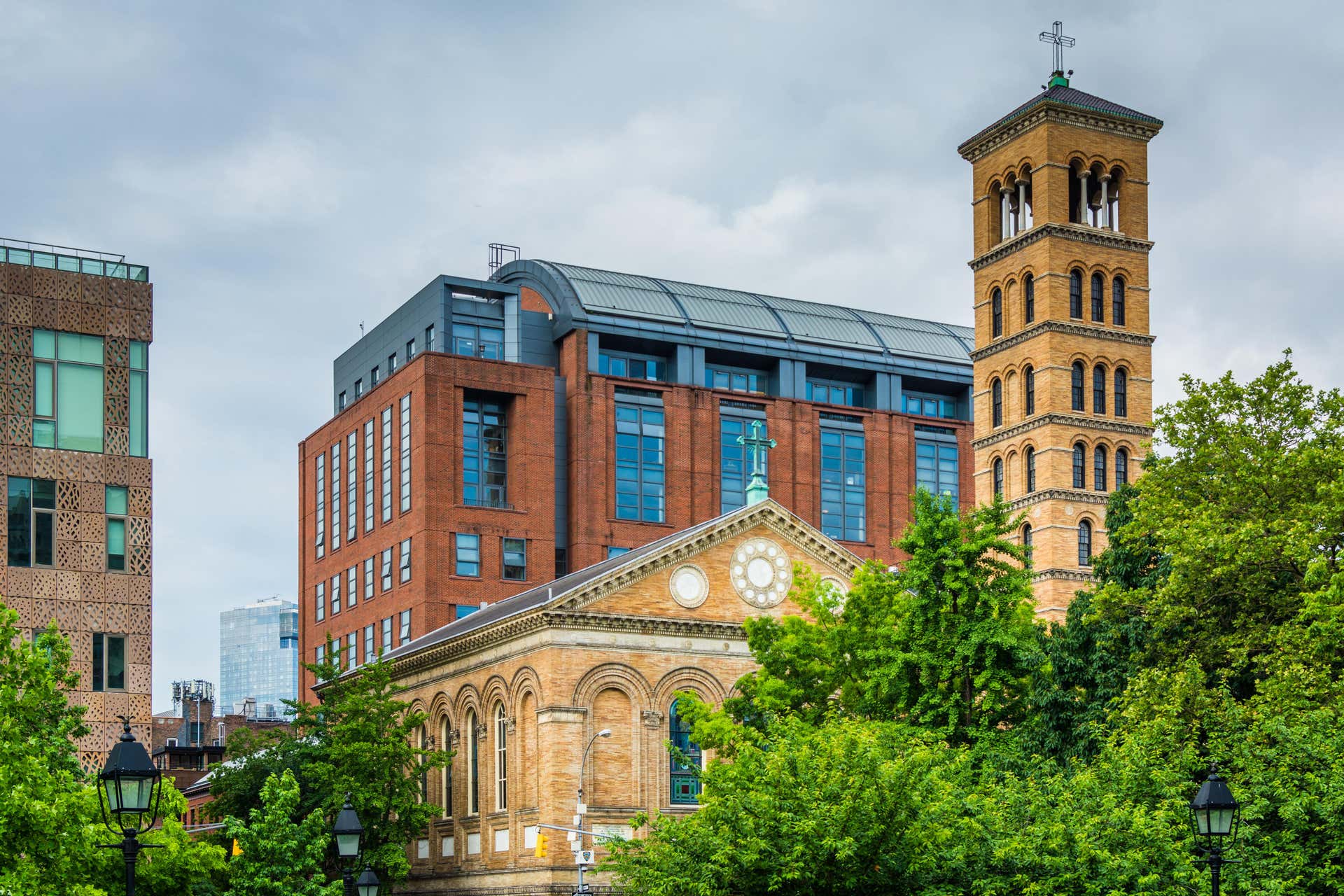
- New York University (NYU): Founded in 1831, NYU’s primary campus surrounds Washington Square Park. The relationship between the university's facility expansions and the neighborhood's historic preservation groups has been an active debate in local civic planning for decades.
- The New School: Located near the northern edge of the Village, this private research university has long contributed to the neighborhood's progressive academic and artistic profile.
- Live Performance Venues: Greenwich Village remains an operational hub for live music and theater, home to historic venues including the Village Vanguard (opened in 1935 and still presenting world-class jazz), the Blue Note, the Cherry Lane Theatre (New York’s longest continuously running Off-Broadway theater, founded by Edna St. Vincent Millay in 1924), and iconic comedy venues like the Comedy Cellar on MacDougal Street.
Modern Living and Economic Profile
Throughout the 20th century, the Village transitioned from a low-rent haven for starving artists into one of the most expensive and desirable residential areas in the world.
Because strict zoning and historic district designations prevent large-scale demolition and high-density luxury tower construction, the neighborhood's housing supply remains constrained. Real estate consists predominantly of historic co-op apartments, walk-up rental buildings, and multi-million-dollar single-family townhouses.
Despite these market pressures, the Village retains distinct civic vitality. Community boards, local merchant associations, and neighborhood coalitions strictly regulate commercial signage, liquor licenses, and building alterations, maintaining street-level diversity that blends historic family-owned businesses with contemporary retail.
Transit Access and Urban Mobility
Greenwich Village is among the most accessible neighborhoods in New York City by public transit:
- Subway Hubs: The West 4th Street–Washington Square station connects the A, C, E, B, D, F, and M trains. The Christopher Street–Sheridan Square station serves the 1 local train, while the 8th Street–NYU station serves the N, Q, R, and W lines. The 6 train stops at Astor Place and Bleecker Street.
- PATH Train: Stations at Christopher Street and 9th Street provide direct, trans-Hudson rail transit to Jersey City and Hoboken, New Jersey.
- Bicycle Infrastructure: Protected bike lanes line Hudson Street, Eighth Avenue, and the Hudson River Greenway, providing seamless north-south transit across Manhattan.
Frequently Asked Questions
Is Greenwich Village the same thing as the West Village?
No, the West Village is technically a sub-district of Greenwich Village. While some real estate listings and locals use the terms interchangeably, the West Village formally refers to the portion of Greenwich Village situated west of Sixth Avenue (Avenue of the Americas). The wider designation of Greenwich Village also includes the Central Village, running east to Broadway.
Why do the streets in Greenwich Village run diagonally?
Greenwich Village was settled long before New York adopted the rectangular Commissioners' Plan of 1811. The early residents oriented their homes and roads along natural topography, old Native American paths, and the shoreline of the Hudson River. When city planners introduced the numbered street grid, Village residents resisted the redevelopment, forcing the city to integrate the existing, curved 18th-century street pattern into the master map.
What happened at the Stonewall Inn in Greenwich Village?
On June 28, 1969, patrons and community members resisted a routine police raid at the Stonewall Inn, an LGBTQ+ bar on Christopher Street. The resulting multi-day demonstrations, known as the Stonewall Uprising, catalyzed the modern LGBTQ+ civil rights movement, leading directly to the establishment of the first national gay rights advocacy organizations and annual global Pride marches.
Who was Jane Jacobs and what was her connection to the Village?
Jane Jacobs was an urban activist, journalist, and author who lived on Hudson Street in Greenwich Village during the mid-20th century. She organized community resistance against master planner Robert Moses's plans to build the Lower Manhattan Expressway through the Village and remove traffic access from Washington Square Park. Her observations of the Village's streets formed the foundation of her influential 1961 book, The Death and Life of Great American Cities.
Which university owns the buildings around Washington Square Park?
The majority of the academic, administrative, and dormitory facilities surrounding Washington Square Park belong to New York University (NYU). Rather than maintaining a closed, traditional campus, NYU operates an open "urban campus," integrating its facilities directly into the commercial and residential blocks of the Central Village.
Exploring Greenwich Village: Recommended Walking Itinerary
To fully grasp what makes Greenwich Village exceptional, experience it on foot. The neighborhood is best appreciated through a self-guided route highlighting its architectural variety, community spaces, and civil rights history:
- Start at Washington Square Park: Enter from Fifth Avenue through the Washington Square Arch to observe the mix of university students, residents, chess players, and street performers. Walk past the Greek Revival townhouses on Washington Square North.
- Move West via Washington Place: Cross Sixth Avenue into the West Village, where the modern grid shifts into older, narrower corridors.
- Visit Christopher Park and the Stonewall National Monument: Explore Christopher Street between Seventh Avenue and Waverly Place to view the historic site of the 1969 Stonewall Uprising.
- Wander the Residential Core: Head down Bedford Street to view the Isaacs-Hendricks House (dating to 1799) and the narrow 75½ Bedford Street, then turn onto St. Luke’s Place to admire intact rows of Italianate townhouses shaded by mature canopy trees.
- Finish at Hudson River Park: Conclude the walk heading west to the riverfront, where the industrial piers have been converted into public parkland offering open views of Lower Manhattan and the Hudson River.
Image Gallery