Discontinued Olympic Events: A Historical Guide to Dropped Sports and Retired Contests
Discontinued Olympic events represent a fascinating cross-section of sports history, reflecting shifting cultural values, safety standards, and changing definitions of athletic competition. Over more than a century of modern Olympic hi...
Discontinued Olympic events represent a fascinating cross-section of sports history, reflecting shifting cultural values, safety standards, and changing definitions of athletic competition. Over more than a century of modern Olympic history, dozens of events and entire sports—ranging from tug of war and polo to live pigeon shooting and Olympic art competitions—have been removed from the official program by the International Olympic Committee (IOC).
Contents
The Evolution of the Olympic Program: Why Events Are Dropped
The modern Olympic Games were revived in Athens in 1896 by Baron Pierre de Coubertin with a commitment to dynamic evolution. As global interest expanded, the International Olympic Committee (IOC) routinely introduced experimental events, refined competitive disciplines, and eliminated contests that lost international traction, presented safety hazards, or failed to uphold evolving standards of fair play.
- Proposed / Experimental Event
- Included in Official Program
- Retained & Standardized
- Phased Out / Removed
- Lack of Global Reach
- Safety / Ethics
- Structural / Rule
The decision to discontinue an Olympic event or sport is governed by several core criteria set out in the Olympic Charter and refined through reform packages such as Olympic Agenda 2020:
- Global Participation and Reach: A sport must be widely practiced by men in at least 75 countries on four continents and by women in at least 40 countries on three continents (for Summer Games inclusion). Events with narrow regional appeal face heightened risk of removal.
- Infrastructure and Cost Constraints: Events requiring highly specialized, cost-prohibitive venues with limited post-Games utility are frequently audited to reduce the operational footprint on host cities.
- Governance and Anti-Doping Compliance: The governing body of any Olympic sport must adhere to the World Anti-Doping Agency (WADA) code and demonstrate transparent administrative practices.
- Safety and Ethical Standards: Events involving direct cruelty to animals or unacceptable physical risk to human competitors have been systematically removed.
- Program Modernization and Youth Appeal: The IOC actively balances traditional disciplines with modern sports to ensure the Olympic movement remains relevant to younger global audiences, leading to strict limits on total athlete quotas (typically capped around 10,500 athletes for the Summer Games).
Major Discontinued Olympic Sports
While individual events within sports undergo regular modification, several complete sports were once featured as medal disciplines before being permanently or temporarily removed from the official Olympic schedule.
HISTORICAL OLYMPIC SPORT DISCONTINUATIONS
| Sport | Active Years in Official Medaled Program |
|---|---|
| Tug of War | 1900, 1904, 1908, 1912, 1920 |
| Polo | 1900, 1908, 1920, 1924, 1936 |
| Fine Art Competitions | 1912, 1920, 1924, 1928, 1932, 1936, 1948 |
| Water Motorsports | 1908 |
| Croquet / Roque | 1900 (Croquet), 1904 (Roque) |
| Rackets & Real Tennis | 1908 |
Tug of War (1900–1920)
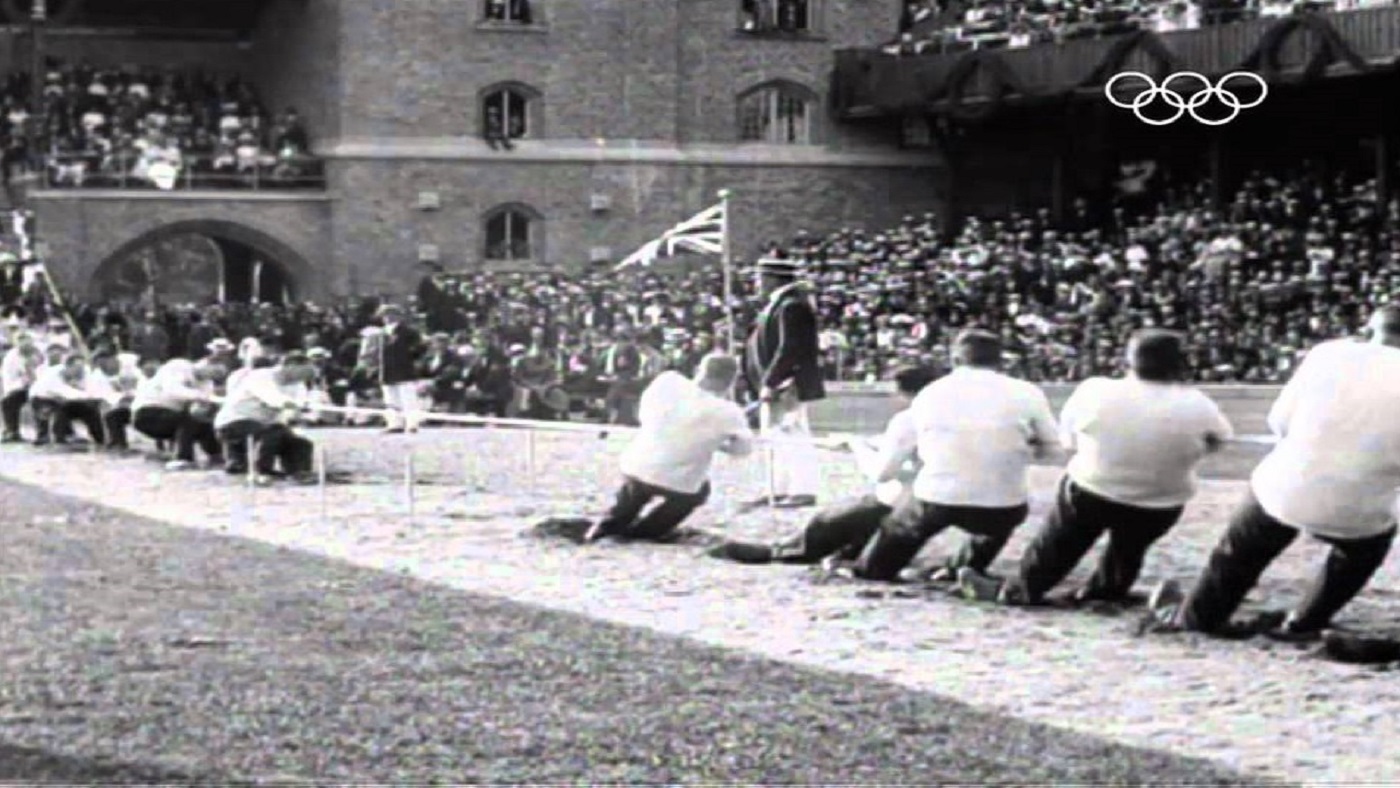
Tug of war was a cornerstone of the track and field program across five Olympic Games: 1900, 1904, 1908, 1912, and 1920. Under the rules of the era, nation-states could enter multiple multi-man club teams. This led to notable outcomes, such as the 1904 St. Louis Games, where American club teams swept all three medals, and the 1908 London Games, where British police forces won gold, silver, and bronze.
The sport was highly popular among spectators but fell victim to the IOC’s decision to streamline the athletics program and reduce the overall number of specialized team events following the 1920 Antwerp Games.
Polo (1900–1936)
Equestrian polo appeared in five Olympic editions: 1900, 1908, 1920, 1924, and 1936. Great Britain historically dominated the sport, although Argentina captured gold in 1924 and 1936, establishing its long-standing international dominance.
Polo was eventually removed due to several logistical challenges:
- The extreme cost of shipping polo ponies internationally during the pre-aviation era.
- The small number of competing nations able to field world-class equestrian teams.
- The specialized field dimensions required for top-tier competition.
Water Motorsports / Motorboating (1908)
Motorboating made its sole official appearance at the 1908 London Olympics. Three events were staged over a 40-nautical-mile course off the coast of Southampton. However, gale-force winds and severe weather plagued the competition, causing multiple boats to run aground or suffer engine failure.
In two of the three events, only a single boat finished the race. Following the event, the IOC established a fundamental principle within the Olympic Charter: events relying primarily on mechanical propulsion rather than human physical exertion are ineligible for the Olympic program.
Fine Art Competitions (1912–1948)
From 1912 to 1948, the Olympic Games awarded official gold, silver, and bronze medals for creative arts under the vision of Pierre de Coubertin, who believed the Olympics should celebrate both body and mind. Known as the "Pentathlon of the Muses," competitions were held across five categories:
- Architecture
- Literature
- Music
- Painting
- Sculpture
All submitted works were required to be original and directly inspired by the concept of sport. High-profile figures won official medals, including Walter W. Winans (who won gold in shooting in 1908 and gold in sculpture in 1912) and Luxembourgian painter Jean Jacoby, who won two art gold medals.
The art competitions were abandoned after the 1948 London Games because the majority of participating artists were working professionals. This directly violated the strict amateurism rules enforced by IOC President Avery Brundage at the time. The events were subsequently replaced by non-medaled cultural exhibitions, known today as the Cultural Olympiad.
Croquet and Roque (1900, 1904)
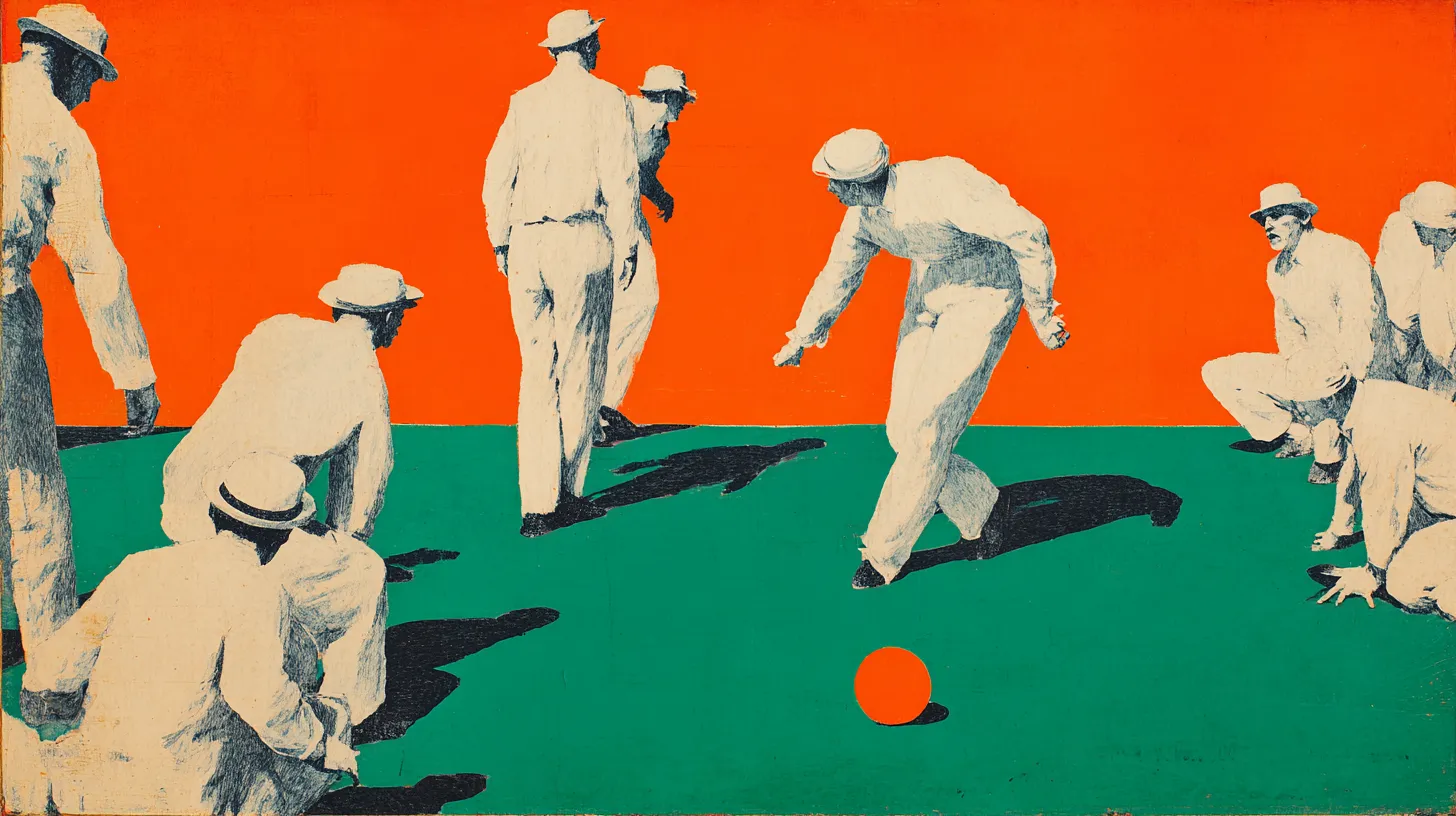
Croquet featured at the 1900 Paris Games, notable historically as one of the first Olympic events in which women were permitted to compete alongside men. However, the event generated virtually no public interest; only one spectator bought a ticket for the matches, and all ten competitors represented France.
In 1904, an American variant played on a hard court with wall cushions called roque replaced croquet at the St. Louis Games. Like its predecessor, roque suffered from zero international entries outside the host country and was promptly dropped.
Oddities and Extinct Track, Field, and Aquatic Events
In addition to entire sports, the Olympic record includes numerous individual events that were tested during early 20th-century Games before being phased out.
Standing Jump Events (1900–1912)
Before modern track techniques were fully standardized, athletics included three non-running jump disciplines:
- Standing High Jump
- Standing Long Jump
- Standing Triple Jump
Competitors performed these jumps from a stationary start without a run-up. American athlete Ray Ewry became one of the most successful Olympians in history by dominating these disciplines, winning eight official Olympic gold medals across the 1900, 1904, and 1908 Games. As running jump techniques improved and generated higher athletic performance standards, standing jumps were phased out after the 1912 Stockholm Olympics.
- Standing Jump Execution
- Feet Stationary at Line
- Explosive Leg Extension
- Standing High Jump (Vertical Clearance)
- Standing Long Jump (Horizontal Distance)
Early Aquatic Novelties (1900, 1904)
The 1900 Paris Olympics featured several experimental swimming events in the Seine River that were never repeated:
- Obstacle Swim Race (200m): Swimmers had to climb over a pole, scramble over a row of boats, and swim under a second line of boats while navigating the river's current.
- Underwater Swimming: Competitors received points for distance covered underwater (up to 60 meters) plus points for every second spent submerged.
- Plunge for Distance (1904): Competitors executed a standing dive into the pool and remained completely motionless in the water for up to 60 seconds (or until their head surfaced). The distance traveled before surfacing was measured. William Dickey won gold in 1904 with a distance of 62 feet 6 inches (19.05 meters). Critics labeled the event unathletic, and it was dropped immediately.
Specialized Gymnastic and Target Events
- Club Swinging (1904, 1932): Athletes held two wooden clubs resembling bowling pins and whirled them rapidly around their body in complex rhythmic routines. It was an early precursor to modern rhythmic gymnastics.
- Rope Climb: A gymnastics event held in 1896, 1904, 1912, 1924, and 1932, where competitors climbed a vertical rope using only their hands and arms. Early editions evaluated both speed and form, whereas later editions judged pure speed.
- Live Pigeon Shooting (1900): Held at the 1900 Paris Games, this was the only time in modern Olympic history where live animals were deliberately killed during competition. Nearly 300 birds were released and shot during the event. Due to widespread public outcry, live targets were permanently replaced by clay targets (trapshooting).
- Dueling Pistols (1906/1908/1912): Competitors shot at man-sized plaster dummies dressed in frock coats from distances of 20 to 30 meters. In earlier experimental non-medaled forms, participants used modified dueling pistols firing wax bullets while wearing protective leather armor and heavy wire-mesh face masks.
Detailed Matrix of Discontinued Olympic Events
The following matrix provides a historical breakdown of notable discontinued sports and events, their operational lifespan, and the official reasons for their removal from the Olympic program.
| Sport / Event Name | Years Active in Program | Host Cities Featured | Primary Reason for Discontinuation | Current Status |
|---|---|---|---|---|
| Tug of War | 1900–1920 | Paris, St. Louis, London, Stockholm, Antwerp | Streamlining of athletics program; IOC limit on team events | Recognized by IOC; governed by TWIF; non-Olympic |
| Polo | 1900, 1908, 1920, 1924, 1936 | Paris, London, Antwerp, Paris, Berlin | Logistical cost of horse transport; limited global competitors | Recognized by FIP; non-Olympic |
| Motorboating | 1908 | London | Violation of Charter rule against mechanical propulsion | Excluded from Olympic eligibility |
| Fine Art Competitions | 1912–1948 | Stockholm, Antwerp, Paris, Amsterdam, Los Angeles, Berlin, London | Strict amateurism enforcement by IOC; artist professionalization | Replaced by non-medaled Cultural Olympiad |
| Standing Jumps | 1900–1912 | Paris, St. Louis, London, Stockholm | Redundancy alongside standard running jump disciplines | Extinct in elite international competition |
| Plunge for Distance | 1904 | St. Louis | Lack of dynamic athletic movement and negative media reception | Fully extinct |
| Live Pigeon Shooting | 1900 | Paris | Ethical concerns and animal welfare complaints | Replaced by clay target shooting (Trapshooting/Skeet) |
| Tandem Cycling | 1908, 1920–1972 | London, Antwerp, Paris, Amsterdam, Los Angeles, Berlin, London, Helsinki, Melbourne, Rome, Tokyo, Mexico City, Munich | Restructuring of track cycling program to favor individual formats | Discontinued in Olympics; active in Paralympic Track Cycling |
| Basque Pelota | 1900 | Paris | Insufficient international participation (only two teams entered) | Dropped after 1900; occasional demonstration sport |
| Lacrosse | 1904, 1908 | St. Louis, London | Low international entry numbers in early 20th century | Returning in 6v6 (Sixes) format for Los Angeles 2028 |
From Removal to Revival: The Flexible Olympic Program
The modern Olympic framework does not treat the removal of a sport as a permanent ban. Under the reforms introduced by Olympic Agenda 2020, host organizing committees have the authority to propose temporary sports specifically tailored to local sporting culture, subject to IOC ratification.
- Olympic Agenda 2020 Framework
- Host City Selects Optional Sport
- IOC Executive Board Approval
- One-Edition Appearance (e.g., Karate in Tokyo 2020)
- Permanent Core Inclusion (e.g., Skateboarding / Climbing)
This structural shift created two distinct pathways for discontinued or non-core sports:
Re-inclusion After Decades: Sports that were dropped in the early 20th century have successfully modernised and returned to official medal status:
- Golf: Dropped after 1904; reinstated at the 2016 Rio Olympics after a 112-year absence.
- Rugby: Traditional 15-a-side rugby was dropped after 1924; reinstated in the fast-paced Rugby Sevens format in 2016.
- Tennis: Removed after 1924 due to disputes over amateur status rules; fully reinstated as a medal sport at Seoul 1988.
- Baseball and Softball: Excluded after 2008, featured as optional sports at Tokyo 2020, and scheduled to return at the Los Angeles 2028 Games.
- Lacrosse: Dropped after 1908; approved to return at Los Angeles 2028 using the condensed, high-speed Sixes discipline.
Rotation of Event Disciplines: Individual disciplines within existing sports are continuously updated. For example, in track cycling, the 2,000-meter tandem sprint was a staple of the Olympic program from 1908 through 1972 before being phased out to make room for events like the keirin and team sprint. Similarly, in swimming, distance events and stroke rules are periodically revised to match evolving international standards set by World Aquatics.
Key Factors That Determine an Olympic Event's Future
Sports organizations seeking to retain or regain Olympic status must continuously adapt their governance, athlete pathways, and competition formats. The IOC evaluates existing and prospective sports against specific operational criteria:
- Broadcast and Digital Engagement: Events must translate effectively to live television, digital streaming platforms, and social media channels.
- Gender Balance: Disciplines must offer equal medal opportunities and athlete quota allocations for male and female competitors.
- Compact Footprint: Sports that can utilize multi-purpose venues or existing urban facilities are preferred over those requiring dedicated, high-cost infrastructure.
- Youth Appeal and Modern Relevance: The inclusion of dynamic urban sports—such as skateboarding, sport climbing, 3x3 basketball, and BMX freestyle—reflects the IOC's goal of maintaining relevance among younger demographics.
Understanding these criteria clarifies why historical events like motorboating or plunge for distance were phased out, while modern, high-intensity disciplines continue to expand within the official Olympic schedule.
Frequently Asked Questions
Which was the stranger event ever held in the Olympics?
Live pigeon shooting at the 1900 Paris Olympics is widely considered the most controversial event in Olympic history. Almost 300 birds were killed during the contest. Due to widespread public discomfort and animal welfare concerns, the IOC banned the use of live animals as targets, replacing them permanently with clay targets.
Why were art competitions removed from the Olympic Games?
Olympic fine art competitions were dropped after the 1948 London Games because the majority of participating artists were working professionals who earned money from their creations. At the time, strict IOC regulations required all Olympic competitors to be pure amateurs. The art competitions were subsequently converted into cultural exhibitions.
Will tug of war ever return to the Olympic Games?
While tug of war has a dedicated international governing body—the Tug of War International Federation (TWIF)—and is officially recognized by the IOC, its return to the Olympic program is unlikely. The IOC's current caps on total athlete quotas and preference for urban, youth-focused sports make it difficult for team-based strength events to secure a spot.
What is the difference between a discontinued sport and a dropped event?
A discontinued sport refers to an entire athletic discipline (such as polo or croquet) being completely removed from the Olympic program. A dropped event refers to a specific sub-discipline removed from an active sport, such as the removal of the standing high jump from athletics or the tandem sprint from cycling, while the parent sport remains in the Games.
Can host cities bring back discontinued Olympic sports?
Yes. Under the guidelines of Olympic Agenda 2020, host cities can propose the inclusion of temporary sports for their specific edition of the Games. This rule enabled the return of baseball/softball at Tokyo 2020 and its upcoming return at Los Angeles 2028, alongside reinstated historical sports like lacrosse.
Next Actions and Further Research
To explore the historic documentation, official results, and governance rules regarding Olympic program changes, consult these primary sources:
- Review Official Records: Access the official post-Games reports available through the International Olympic Committee Historical Archives for complete historical results and discontinued discipline rosters.
- Examine Governing Charter Rules: Read the latest edition of the Olympic Charter to understand the formal criteria for adding, auditing, or removing sports from future Games.
- Track Future Event Programs: Monitor announcements from upcoming organizing committees (such as Los Angeles 2028 and Brisbane 2032) to follow optional sport selection processes and venue plans.
EDITORIAL CATEGORY METADATA:
Image Gallery