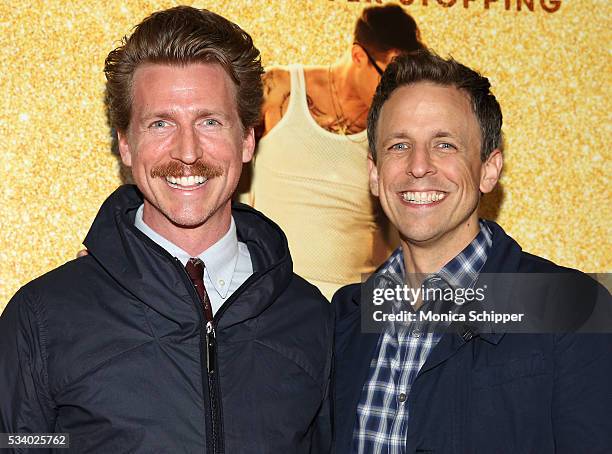
Josh Meyers: A Career in Comedy and Television Performance
Josh Meyers is a versatile American actor and comedian recognized for his significant contributions to sketch comedy, television sitcoms, and voice acting. Often noted for his tenure as a cast member on MADtv and his recurring roles in...
Josh Meyers is a versatile American actor and comedian recognized for his significant contributions to sketch comedy, television sitcoms, and voice acting. Often noted for his tenure as a cast member on MADtv and his recurring roles in various ensemble comedies, Meyers has built a consistent career by balancing physical comedy with nuanced performance work, establishing himself as a reliable and recognizable figure in the modern entertainment landscape.
Contents
Early Life and Entry into Comedy
Born and raised in Bedford, New Hampshire, Josh Meyers grew up in an environment that would eventually foster a deep interest in the performing arts. His family background includes his older brother, Seth Meyers, who also pursued a career in late-night television and sketch comedy. Josh’s formal education at Northwestern University served as a critical foundation for his career; it was during his college years that he sharpened his improvisational skills, which are essential for any working comedian in the industry.
Following his graduation, Meyers moved to Chicago to refine his craft, an essential rite of passage for many prominent American comedians. Chicago’s rich comedy scene, particularly the influence of Second City and other improvisational theaters, provided the laboratory for Meyers to experiment with character work and delivery. This period of his life was defined by the transition from academic training to the unpredictable reality of professional stage and screen performance.
The MADtv Era
Meyers is perhaps most widely recognized for his high-energy run on the FOX sketch comedy series MADtv. Joining the cast during the show's eighth season in 2002, he quickly carved out a niche for himself through his ability to commit fully to absurd characters and his proficiency with physical comedy. Sketch comedy requires an actor to pivot rapidly between personas, a task that demands significant technical discipline.
Throughout his tenure, which lasted until 2004, Meyers participated in numerous recurring sketches, parodying both pop culture icons and original characters. His time on MADtv was characterized by:
- Character Versatility: The ability to portray everything from high-strung authority figures to exaggerated social archetypes.
- Physicality: The use of body language to underscore punchlines, a trademark of the MADtv style which often favored broader humor than its competitor, Saturday Night Live.
- Ensemble Integration: His performance style was well-suited to the fast-paced nature of sketch television, where the interaction between cast members is often as important as the script itself.
Transition into Sitcoms and Television
Following his departure from MADtv, Meyers successfully transitioned into mainstream television sitcoms. This shift allowed him to move away from the frantic pace of sketch comedy toward the sustained character arcs found in narrative television. One of his most notable roles was as Randy Pearson in the long-running sitcom That '70s Show. Joining the cast in its final seasons, Meyers faced the challenge of integrating into a well-established ensemble dynamic, proving his ability to maintain narrative continuity in a high-pressure production environment.
His career also includes appearances in The Mindy Project, where his work highlighted his timing in romantic comedy settings, and various voice-over roles. Voice acting represents a unique sector of his career, requiring a different set of technical skills compared to live-action performance. In animation, the actor must convey the entirety of a character’s emotional state through voice alone, a discipline that highlights Meyers' technical versatility.
Technical Skills and Performance Style
To understand the work of a comedian like Josh Meyers, one must examine the specific technical demands of the medium he inhabits. Comedy, while often appearing spontaneous, relies on rigorous timing, pacing, and emotional calibration.
| Skill Type | Description | Application in Meyers' Work |
|---|---|---|
| Improvisation | The ability to generate unscripted dialogue. | Essential for MADtv sketches and live stage work. |
| Characterization | Building distinct personas with unique traits. | Used in That '70s Show and various guest spots. |
| Physical Comedy | Utilizing movement for comedic effect. | A key component of his sketch work and slapstick scenes. |
| Voice Acting | Modulating tone, pitch, and speed for audio performance. | Critical for animated guest roles and character portrayals. |
The evolution of his career reflects a broader trend in television comedy where performers migrate between roles as writers, actors, and improvisers. By maintaining a consistent presence in both comedy and character-driven narrative work, Meyers has navigated the industry by adapting to the specific needs of different production types, whether it be a multi-camera sitcom or a serialized project.
Professional Considerations and Industry Context
The entertainment industry in 2026 continues to value actors who possess a background in foundational comedy. For performers like Josh Meyers, the ability to operate across multiple formats—ranging from television acting to voice work—provides significant career durability. Unlike actors who focus on a singular genre, those with a comedy background can often secure roles in dramas, commercials, and animated features by leveraging their training in vocal control and reaction timing.
However, the industry also presents challenges. The transition from a sketch comedian to a series regular in a traditional sitcom is often scrutinized by critics and audiences alike. The success of such a transition depends on the actor’s ability to move from "bit-playing" to sustained, multi-episode character development. Meyers' career longevity serves as an example of successful professional adaptation, as he has consistently found roles that fit his specific performance style while evolving to meet the shifting demands of television production.
Frequently Asked Questions (FAQ)
1. What is Josh Meyers best known for in comedy? Josh Meyers is primarily recognized for his tenure on the sketch comedy series MADtv, where he was a featured cast member from 2002 to 2004. His work on the show highlighted his improvisational skills and physical comedy performance.
2. Is Josh Meyers related to other famous comedians? Yes, Josh Meyers is the younger brother of Seth Meyers, the well-known comedian, writer, and host of Late Night with Seth Meyers. Both brothers have built successful careers in television, often intersecting with sketch comedy and talk show formats.
3. Did Josh Meyers appear in That '70s Show? Yes, Josh Meyers played the role of Randy Pearson in the final seasons of That '70s Show. His character was introduced toward the conclusion of the series, joining the central ensemble for the show's final arc.
4. Does Josh Meyers still perform stand-up comedy? While he is heavily involved in television acting and ensemble comedy, Meyers has often focused his efforts on scripted narrative television and improv rather than the traditional stand-up circuit. His career trajectory has prioritized sitcom performance and character-based acting roles.
5. How has the comedy industry changed during his career? Since he began in the early 2000s, the comedy industry has shifted from traditional network television to a more fragmented landscape of streaming platforms and shorter-form digital content. Actors like Meyers have adapted by diversifying their portfolios to include voice work and streaming-exclusive series.
Next Steps for Enthusiasts
For those interested in exploring the breadth of Josh Meyers' work, the best approach is to categorize his career into three distinct stages: his sketch-heavy years on MADtv, his narrative sitcom appearances such as those in That '70s Show, and his various guest roles in modern streaming comedies. By watching examples from each period, viewers can observe how his delivery has transitioned from high-intensity sketch performances to the more nuanced, character-focused requirements of modern television.
To stay informed about current or upcoming projects, viewers should monitor official press releases from production companies or verify credits through reputable industry databases like the Internet Movie Database (IMDb), ensuring that information is current as of 2026.
Image Gallery