What the WEEE Definition Means for Recycling
The WEEE definition (Waste Electrical and Electronic Equipment) classifies any discarded item that requires an electric current or electromagnetic field to function as regulated waste. For recycling, this means these items cannot enter...
The WEEE definition (Waste Electrical and Electronic Equipment) classifies any discarded item that requires an electric current or electromagnetic field to function as regulated waste. For recycling, this means these items cannot enter standard waste streams; instead, they require specialized collection and treatment to recover hazardous components and valuable raw materials, shifting the responsibility of disposal costs to the producers.
Contents
As of 2026, the global electronics landscape has expanded to include everything from micro-sensors in "smart" clothing to massive energy storage systems. Understanding the precise definition of WEEE is no longer just a concern for industrial recyclers—it is a critical compliance requirement for manufacturers, retailers, and end-users. The definition acts as the legal trigger for the entire circular economy of electronics, dictating how a product must be designed, tracked, and eventually dismantled.
The Technical Scope: Defining What Qualifies as WEEE
To understand what the WEEE definition means for recycling, one must first identify the technical boundaries of "Electrical and Electronic Equipment" (EEE). Legally, EEE comprises equipment that is dependent on electric currents or electromagnetic fields to work properly. It also includes equipment for the generation, transfer, and measurement of such currents and fields. Specifically, this applies to equipment designed for use with a voltage rating not exceeding 1,000 volts for alternating current and 1,500 volts for direct current.
In the 2026 regulatory environment, the "Open Scope" principle is fully matured. This means that unless a product is explicitly exempted, it is assumed to fall under WEEE regulations. This differs from early iterations of the law where only specific categories were listed. Today, the inclusion of "smart" components in non-traditional items—such as furniture with integrated USB ports or footwear with LED lighting—means these hybrid products are now classified as WEEE. For recyclers, this creates a significant challenge: they must now process complex, multi-material goods that were previously treated as simple textile or wood waste.
The Inclusion of Components and Sub-assemblies
The definition extends beyond the finished product. It includes all components, sub-assemblies, and consumables that are part of the product at the time of discarding. For example, a printer is WEEE, but so is the internal circuitry and the proprietary motors inside it. When these items are sent for recycling, the WEEE definition mandates that certain components, such as batteries, mercury-containing switches, and printed circuit boards, be removed for specific treatment. This "selective treatment" is a cornerstone of the recycling process, ensuring that hazardous substances do not contaminate the shredded material fractions used for new manufacturing.
The Producer Responsibility Principle
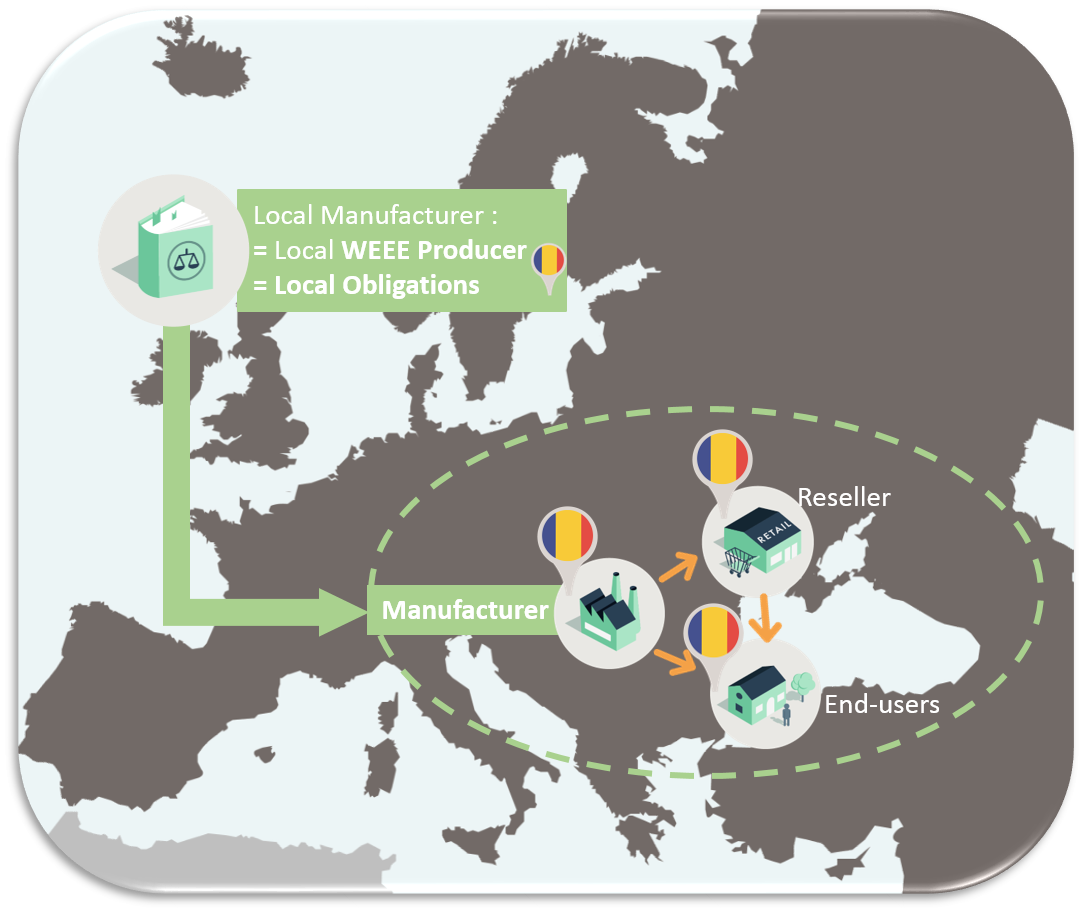
The most significant implication of the WEEE definition for the recycling industry is the shift toward Extended Producer Responsibility (EPR). Under this framework, the entity that manufactures, imports, or rebrands electronic equipment is legally responsible for the end-of-life management of those products.
For recycling, this means that the "polluter pays." Producers must either set up their own recycling systems or, more commonly, join a Producer Compliance Scheme (PCS). These schemes collect data on the weight of electronics placed on the market and use that data to fund the collection and recycling of an equivalent weight of waste. This financial model ensures that recycling remains viable even when the market value of recovered materials—like plastic or low-grade glass—drops. In 2026, these financial obligations also factor in the "eco-modulation" of fees, where producers pay less if their products are easier to recycle or contain fewer hazardous chemicals.
Current WEEE Categories and Recycling Implications
The WEEE definition divides electronics into several categories, each requiring a distinct recycling methodology. By 2026, these categories have been refined to focus on the physical characteristics of the waste, which dictates the type of machinery needed for processing.
| WEEE Category | Common Examples | Primary Recycling Challenge |
|---|---|---|
| Temperature Exchange Equipment | Refrigerators, Air Conditioners, Heat Pumps | Removal of ozone-depleting gases and flammable refrigerants. |
| Screens and Monitors | Televisions, Laptops, Digital Signage | Managing lead-acid glass and mercury backlights in older units. |
| Lamps | LED bulbs, Fluorescent tubes, HID lamps | Recovery of rare earth phosphors and safe mercury capture. |
| Large Equipment (>50cm) | Washing machines, Dishwashers, PV panels | Heavy logistics and intensive metal separation (steel/copper). |
| Small Equipment (<50cm) | Toasters, Kettles, Power tools | High volume, diverse plastics, and difficult manual sorting. |
| Small IT & Telecom | Smartphones, Routers, GPS devices | Recovery of Critical Raw Materials (CRMs) like Cobalt and Lithium. |
The Impact on Logistics and Collection
Because WEEE is defined as a hazardous or "special" waste stream, its transportation is strictly regulated. This means that a business cannot simply throw a broken server into a general skip. The definition requires "separate collection," which keeps electronic waste apart from other waste streams to prevent damage that could lead to fires (especially from lithium batteries) or chemical leaks. For the recycler, this ensures that the feedstock arrives in a condition that allows for maximum material recovery.
Critical Raw Materials and "Urban Mining"
Perhaps the most evolved aspect of what the WEEE definition means for recycling in 2026 is the focus on Urban Mining. Electronic waste is a concentrated source of precious and critical raw materials, often containing higher grades of gold, silver, and copper than raw ores extracted from the earth.
The WEEE definition serves as the gatekeeper for these materials. By mandating that electronics be recycled through authorized channels, the law ensures that critical materials like Neodymium (found in hard drive magnets) and Tantalum (found in capacitors) are not lost to landfills. In 2026, recycling facilities have transitioned from simple "shred and sort" operations to advanced chemical and thermal recovery centers. The goal is no longer just to recycle for the sake of waste reduction, but to secure a domestic supply of the materials necessary for the green energy transition, such as those used in electric vehicle components and wind turbine electronics.
Hazardous Substance Management
A primary reason for the rigid WEEE definition is the presence of persistent organic pollutants (POPs) and heavy metals. Many older electronics contain substances that are now banned but remain in the waste cycle. These include:
- Polychlorinated Biphenyls (PCBs): Found in older capacitors.
- Brominated Flame Retardants (BFRs): Often found in the plastic casings of older computers and TVs.
- Mercury: Used in switches and backlighting for older LCD screens.
- Lead: Found in the solder of circuit boards and the glass of cathode ray tubes (CRTs).
For recycling, the WEEE definition mandates a "de-pollution" step. Recyclers must manually or mechanically extract these substances before the remaining material can be processed. This prevents toxic chemicals from entering the recycled plastic or metal streams, which could otherwise contaminate new consumer products. The definition, therefore, acts as a safety filter for the entire manufacturing industry.
Business Compliance and the "Right to Repair"
For organizations, the WEEE definition implies a significant administrative burden but also an opportunity for asset management. In 2026, the definition is closely linked to the Right to Repair legislation. This means that before an item is officially classified as "waste" (WEEE), it should be evaluated for "Preparing for Re-use."
Recyclers are now legally encouraged to prioritize the repair and refurbishment of electronics over shredding. If a laptop can be repaired, it is not yet WEEE; it is a second-hand electronic device. Once it is beyond repair, it crosses the threshold into the WEEE definition. This distinction is vital for businesses to understand because the "Preparing for Re-use" pathway often yields a higher environmental credit and lower disposal costs than straight recycling.
Reporting and Documentation
Businesses must maintain a paper trail (or digital equivalent) showing that their WEEE was handed over to an Authorized Treatment Facility (ATF). Failure to distinguish between general waste and WEEE can lead to heavy fines under environmental protection laws. This documentation must prove that the waste was treated according to the best available treatment, recovery, and recycling techniques (BATRRT).
FAQs About the WEEE Definition and Recycling
Is everything with a battery considered WEEE?
Yes, in almost all cases. If a product relies on a battery to perform its primary function, it falls under the WEEE definition when discarded. This includes "disposable" electronics like single-use vapes or greeting cards with sound chips, which have become a major focus for recyclers in 2026 due to their high volume and fire risk.
Does the WEEE definition apply to solar panels?
Yes. Photovoltaic (PV) panels are classified under the "Large Equipment" category. Because they have a long lifespan (20-30 years), the volume of solar WEEE reaching recycling centers has increased dramatically by 2026. Specialized processes are required to recover the high-purity glass, aluminum frames, and silicon cells.
Can I recycle WEEE with my household plastics?
No. Household recycling systems are designed for packaging (bottles, cans, cardboard). Electronics contain complex assemblies of metals, glass, and chemicals that would contaminate the plastic recycling stream. Furthermore, the lithium batteries found in many small electronics can explode or catch fire when compressed in standard refuse collection vehicles.
What is the "crossed-out wheeled bin" symbol?
This symbol, found on almost all electronic products, is the visual representation of the WEEE definition. It indicates that the product should not be disposed of in general waste. It serves as a reminder to consumers and businesses that the item requires separate collection at the end of its life.
How has the definition changed for 2026?
The definition itself remains grounded in the 2012/19/EU Directive and subsequent national updates (like the UK’s WEEE Regulations 2013), but the application has broadened. In 2026, there is a much heavier emphasis on "Circular Design," where the definition of WEEE is used to inform producers that if a product cannot be easily recycled, they will face significantly higher "end-of-life" fees.
Practical Recommendation for Waste Management
To ensure compliance with the WEEE definition, organizations should conduct an annual "Electronics Audit." Identify all assets that require power to operate, and ensure they are logged in an asset register. When these items reach the end of their functional life, do not default to recycling; first, consult an authorized refurbisher to see if the item can be diverted from the "waste" category through repair. If the item must be scrapped, ensure you receive a Waste Transfer Note and a Certificate of Destruction from a licensed WEEE recycler. This protects your organization from liability and ensures that the hazardous and valuable materials within your devices are managed according to the highest environmental standards.
Image Gallery