Cloud Identity and Access Management: AWS IAM vs. Microsoft Entra ID (Azure) in 2026
Cloud Identity and Access Management (IAM) provides the essential security framework for managing digital identities and controlling resource access across cloud environments. While AWS IAM excels at granular, policy-based resource con...
Cloud Identity and Access Management (IAM) provides the essential security framework for managing digital identities and controlling resource access across cloud environments. While AWS IAM excels at granular, policy-based resource control within the Amazon ecosystem, Microsoft Entra ID (formerly Azure AD) serves as a centralized identity provider optimized for enterprise-wide Single Sign-On (SSO) and complex directory integrations.
Contents
The Fundamentals of Cloud Identity and Access Management (IAM)
In the current landscape of 2026, cloud IAM is no longer just about "usernames and passwords." It is the primary security perimeter for modern infrastructure. As organizations have shifted away from traditional castle-and-moat networking, IAM has become the mechanism that enforces the principle of least privilege (PoLP) and the Zero Trust architecture.
IAM systems are designed to answer four critical questions: Who is the requester (Authentication), what are they allowed to do (Authorization), which resources can they access, and how can we audit that activity? To manage this at scale, cloud providers utilize different methodologies, primarily Role-Based Access Control (RBAC) and Attribute-Based Access Control (ABAC).
The complexity of IAM increases as organizations adopt multi-cloud strategies. Managing identities across both Amazon Web Services (AWS) and Microsoft Azure requires an understanding of how each platform interprets "identity" and "permissions." Failure to configure these correctly often leads to over-privileged accounts, which remain the leading cause of cloud data breaches and unauthorized lateral movement within corporate networks.
AWS Identity and Access Management (IAM): Core Architecture
AWS IAM is a web service that helps you securely control access to AWS resources. It is globally resilient and does not require regional selection, meaning the identities you create are available across all AWS regions. In 2026, the focus within AWS has shifted heavily toward IAM Identity Center, which serves as the centralized hub for managing multiple AWS accounts and application access.
IAM Users, Groups, and Roles
In the AWS ecosystem, a User represents a specific person or service that interacts with AWS. However, AWS best practices now discourage the use of long-term credentials (IAM Users with Access Keys). Instead, organizations are urged to use IAM Roles.
An IAM Role is an identity you can create in your account that has specific permissions. Unlike a user, a role does not have any credentials associated with it. Instead, it is meant to be "assumed" by anyone who needs it—be it a human user, an application running on an EC2 instance, or even an AWS service. This process provides temporary security credentials that expire automatically, significantly reducing the risk of credential leakage.
Understanding AWS Policies
Authorization in AWS is governed by Policies, which are JSON documents that define permissions. These policies follow a strict evaluation logic:
- Explicit Deny: If any policy contains a "Deny" statement for the requested action, the request is blocked, regardless of other "Allow" statements.
- Explicit Allow: If there is no explicit deny, an explicit "Allow" statement must exist for the request to proceed.
- Implicit Deny: If neither a deny nor an allow exists, the request is denied by default.
This granular approach allows security engineers to write highly specific conditions, such as allowing an administrator to delete an S3 bucket only if they are authenticated with Multi-Factor Authentication (MFA) and are connecting from a specific corporate IP range.
Microsoft Entra ID (Azure): Enterprise Identity Architecture
Microsoft Entra ID (the evolution of Azure Active Directory) takes a different approach. While AWS IAM is built around the cloud resource, Entra ID is built around the Tenant. It functions as a full-scale Identity as a Service (IDaaS) platform that manages identities not just for Azure resources, but for Office 365, third-party SaaS applications (like Salesforce or Slack), and on-premises environments via Entra Connect.
Tenants, Subscriptions, and Directories
In the Azure world, the Tenant is a dedicated instance of Microsoft Entra ID that an organization receives when it signs up for a Microsoft cloud service. Within this tenant, you manage your users and groups. Access to Azure resources is then managed through a hierarchy:
- Management Groups: Containers for managing multiple subscriptions.
- Subscriptions: A logical unit of Azure services that is linked to an Entra ID tenant.
- Resource Groups: A container that holds related resources for an Azure solution.
This hierarchy allows for the inheritance of permissions. If you assign a "Reader" role to a user at the Subscription level, they automatically have reader access to every Resource Group and individual resource within that subscription.
RBAC and Scopes in the Azure Ecosystem
Azure relies heavily on Role-Based Access Control (RBAC). Unlike the JSON-heavy manual policy creation in AWS, Azure provides hundreds of built-in roles (such as Contributor, Owner, and Reader). While custom roles can be created using JSON, most organizations find that the built-in roles, combined with properly defined Scopes, satisfy their security requirements.
A unique feature of the Microsoft ecosystem is Conditional Access. This allows administrators to create "If-Then" statements. For example: "If a user is accessing a high-impact financial application from an untrusted location, then require MFA and a compliant, company-managed device."
Comparing AWS IAM and Azure Entra ID: Key Differences
Choosing between these services—or understanding how to use them together—requires a direct comparison of their operational mechanics.
| Feature | AWS IAM / Identity Center | Microsoft Entra ID (Azure) |
|---|---|---|
| Primary Philosophy | Resource-centric access control. | Identity-centric directory service. |
| Policy Language | JSON (JavaScript Object Notation). | RBAC with optional JSON for custom roles. |
| Identity Storage | Local IAM Users or external via SAML/OIDC. | Centralized directory for all MS services. |
| Default Access | Implicit Deny (Zero permissions). | Dependent on Scope and Inheritance. |
| Multi-Cloud Support | Strong via IAM Identity Center & Roles. | Market leader in SSO for external apps. |
| MFA Integration | AWS-native or external providers. | Deeply integrated via Microsoft Authenticator. |
| Machine Identity | IAM Roles for EC2/Lambda. | Managed Identities (System/User assigned). |
| Cost Model | Free (included with AWS account). | Tiered (Free, P1, P2) based on features. |
Critical Security Strategies: Multi-Factor Authentication (MFA) and Zero Trust
By 2026, the implementation of Multi-Factor Authentication (MFA) is no longer optional for any account with console or API access. Both AWS and Azure have transitioned toward "Phishing-Resistant MFA," prioritizing hardware keys (like YubiKeys) and biometric-based passkeys over SMS-based codes, which are vulnerable to SIM swapping.
Zero Trust is the guiding principle for both providers. This strategy assumes that the network is always hostile and that every request must be verified.
- AWS implements this through VPC Lattice and IAM policies that verify the identity of the service and the network context of the request.
- Azure utilizes Entra ID Protection, which uses machine learning to detect anomalous login behaviors, such as "impossible travel" (logging in from New York and then London ten minutes later), and automatically triggers a password reset or block.
Multi-Cloud Identity Management: Bridging AWS and Azure
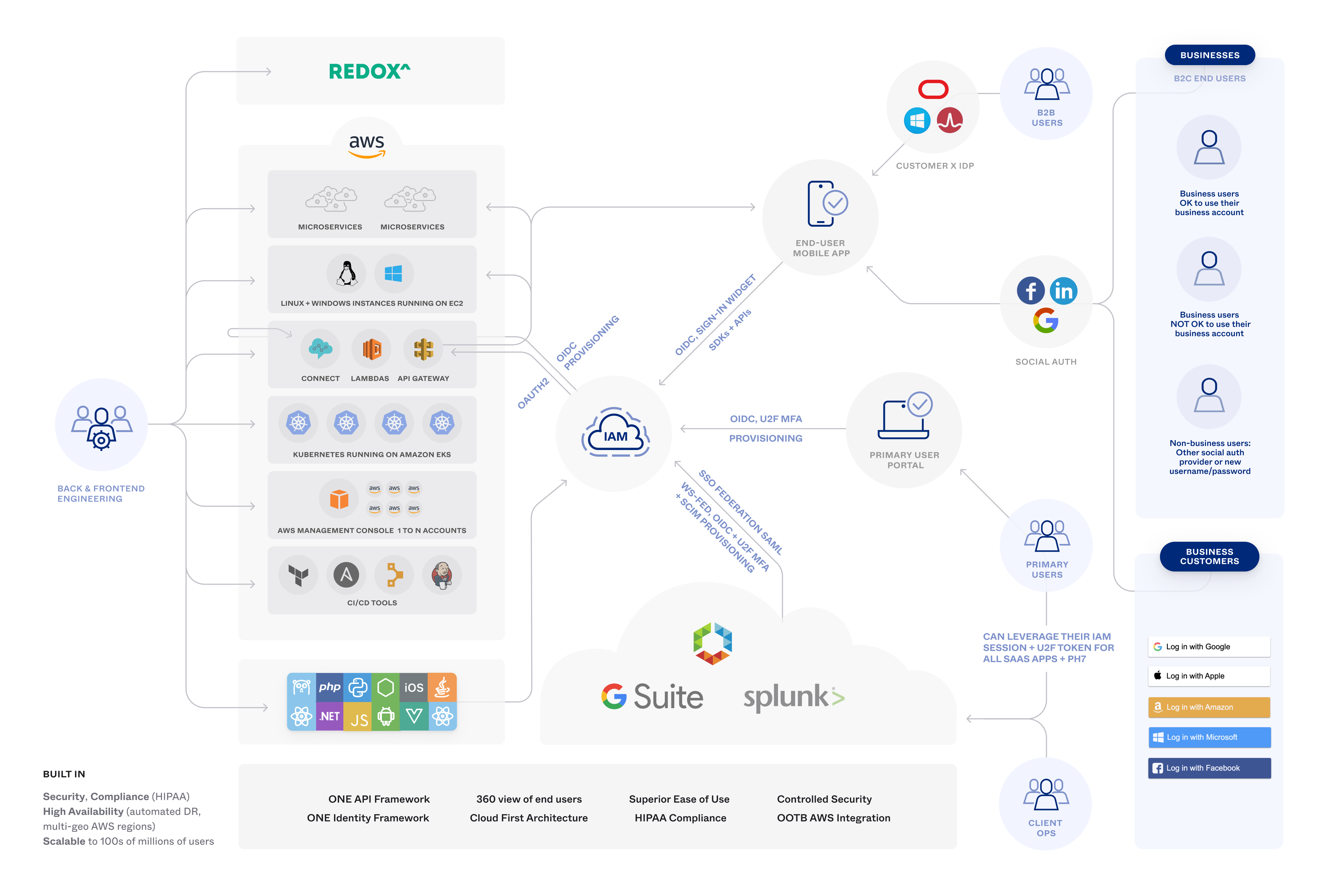
Many modern enterprises use Azure for their corporate directory (due to existing Microsoft 365 footprints) but run their infrastructure workloads on AWS. In this scenario, the most effective architecture is Identity Federation.
By setting up Microsoft Entra ID as the Identity Provider (IdP) and AWS as the Service Provider (SP), users can log into their Windows workstation and gain access to the AWS Management Console without ever typing an AWS-specific password. This is achieved using the Security Assertion Markup Language (SAML 2.0) or OpenID Connect (OIDC).
When a user federates into AWS, they assume a pre-defined IAM Role. This ensures that the user's permissions are still managed within AWS, but their authentication (proving who they are) is handled by Azure. This "Best of Both Worlds" approach simplifies offboarding; when an employee leaves the company and their account is disabled in Entra ID, they immediately lose access to AWS and all other federated services.
Governance, Compliance, and Cost Considerations
Governance involves maintaining oversight of your IAM environment to ensure it meets regulatory requirements like GDPR, HIPAA, or SOC2.
AWS Control Tower and AWS Organizations are essential for managing IAM at scale. They allow you to implement Service Control Policies (SCPs), which act as a "guardrail." For instance, an SCP can prevent any user in a sub-account—even an administrator—from disabling CloudTrail logging or launching resources in unauthorized geographic regions.
Azure Policy and Privileged Identity Management (PIM) provide similar oversight. PIM is a particularly powerful feature of Entra ID P2 licenses that allows for "Just-In-Time" (JIT) access. Instead of having permanent admin rights, a user must request activation for a specific role, provide a business justification, and perhaps receive approval from a manager. The permission then expires automatically after a few hours.
Regarding costs, AWS IAM is generally included at no additional charge, though specialized features like Private CA or advanced audit logs incur fees. Microsoft Entra ID uses a per-user, per-month licensing model. While there is a free tier, advanced security features like Conditional Access and PIM require Premium P1 or P2 licenses, which must be factored into the overall cloud budget.
Frequently Asked Questions
Is Microsoft Entra ID the same as Azure Active Directory?
Yes. Microsoft officially rebranded Azure Active Directory (Azure AD) to Microsoft Entra ID in late 2023. By 2026, the transition is complete, though many technical documents still refer to legacy protocols or underlying "Azure AD" service names. The functionality remains focused on cloud-based identity and access management.
Can I use AWS IAM to manage users in Azure?
Generally, no. AWS IAM is designed to manage access to AWS resources. While you can use AWS identities to access other services via OIDC, it is much more common for organizations to use a central directory like Microsoft Entra ID or Okta to manage users and then project those identities into AWS using IAM Roles.
What is the difference between RBAC and ABAC in cloud security?
Role-Based Access Control (RBAC) grants permissions based on a user's job function (e.g., "Database Administrator"). Attribute-Based Access Control (ABAC) grants permissions based on attributes or tags (e.g., "Allow access to all S3 buckets where the tag 'Project' equals 'Alpha'"). AWS supports both, while Azure focuses primarily on RBAC but allows for attribute-based conditions in certain storage scenarios.
Why are IAM Roles preferred over IAM Users in AWS?
IAM Users require long-term credentials (passwords or access keys) that must be rotated and can be stolen. IAM Roles use temporary security tokens provided by the AWS Security Token Service (STS). These tokens are short-lived and automatically rotate, which significantly reduces the impact of a potential credential compromise.
Does Azure have a feature similar to AWS Service Control Policies (SCPs)?
Yes, Azure Policy serves a similar function. While RBAC defines what a user can do, Azure Policy defines the "rules of the road" for the entire subscription or management group, such as restricting the types of virtual machines that can be deployed or ensuring that all disks are encrypted.
Final Recommendation for 2026
For organizations starting their cloud journey in 2026, the most resilient strategy is a hybrid identity model. Use Microsoft Entra ID as your "Source of Truth" for human identities to leverage its superior conditional access and enterprise integration features. Simultaneously, utilize AWS IAM Roles for all workload-to-workload communication within your AWS environment. By separating human identity management from machine access control, you create a robust, auditable, and scalable security posture that satisfies both operational needs and compliance mandates.
Image Gallery