P-nuff Crunch Net Worth 2026: The Business Evolution of a Shark Tank Success
As of 2026, the estimated net worth of P-nuff Crunch (Aroa Artisan Foods) is approximately $15 million to $20 million. This valuation reflects the company’s significant expansion from a niche health food startup to a mainstream snack b...
As of 2026, the estimated net worth of P-nuff Crunch (Aroa Artisan Foods) is approximately $15 million to $20 million. This valuation reflects the company’s significant expansion from a niche health food startup to a mainstream snack brand following a strategic $400,000 investment from Mark Cuban on ABC’s Shark Tank in 2020.
Contents
The Genesis of P-nuff Crunch: Science Meets Snacking
P-nuff Crunch was not born in a marketing office but in the laboratory of a seasoned food scientist. Dr. Juan Salinas, the founder of Aroa Artisan Foods, spent over 20 years working for major CPG (Consumer Packaged Goods) giants such as Kraft, Cadbury, and Nestlé. His expertise in product development and formulation was the catalyst for creating a snack that bridged the gap between nutritional density and "craveability."
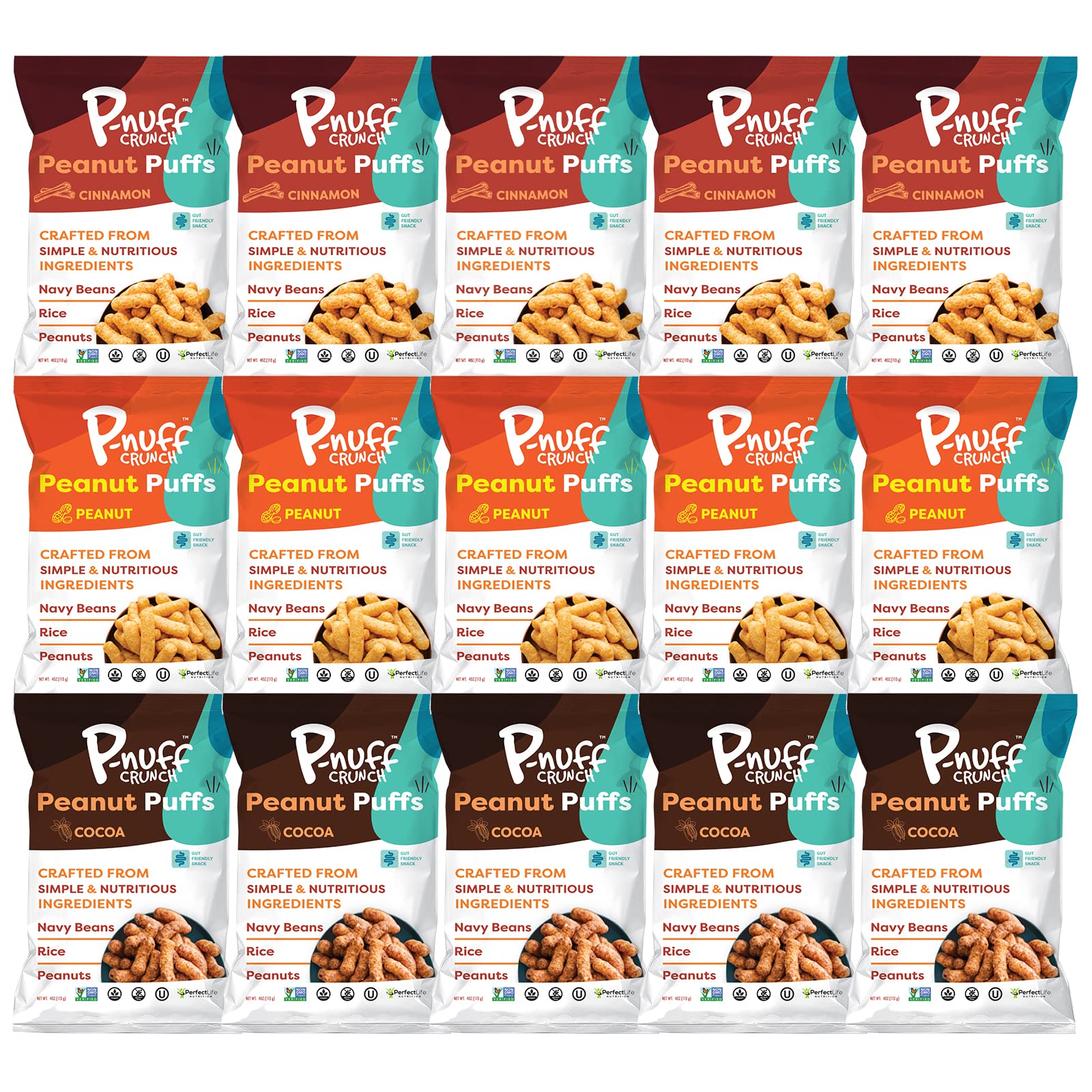
The primary subject of P-nuff Crunch is a baked peanut puff made from a unique blend of navy beans, brown rice, and peanuts. Unlike traditional corn-based puffs that offer high glycemic loads and minimal nutrition, P-nuff was engineered to be a "complete protein" snack. Dr. Salinas, a competitive bodybuilder as well as a PhD holder, recognized a gap in the market for plant-based snacks that provided high fiber and protein without the use of soy or whey isolates.
The company’s early days were marked by grassroots growth in the New Jersey area, where Dr. Salinas initially manufactured the product himself. The technical depth of the product—focusing on the amino acid profile of the legumes and grains—appealed to fitness enthusiasts, but the broader "Better-For-You" (BFY) snack market was the ultimate target.
The Shark Tank Inflection Point
The trajectory of P-nuff Crunch changed permanently during Season 12, Episode 4 of Shark Tank. Dr. Salinas entered the tank seeking $300,000 for a 10% equity stake in his company. At the time of filming, the company had generated approximately $104,000 in sales over the previous year, which was a modest figure that often leads to skepticism from the Sharks.
However, the "Shark Tank Effect" was amplified by the involvement of Mark Cuban. Cuban, who has a personal interest in healthy lifestyles and plant-based nutrition, saw the scalability of the brand. After a period of negotiation, the deal was struck: $400,000 for 25% equity.
This deal valued the company at $1.6 million at the time of the airing. The investment provided the capital necessary to move from small-batch production to high-volume manufacturing, which was essential for entering national retail chains. By 2026, the equity held by Mark Cuban Companies has appreciated significantly as the brand moved from a "startup" classification to an "established" market player.
Revenue Growth and Financial Trajectory
To understand the 2026 net worth of P-nuff Crunch, one must analyze the revenue milestones achieved since the Shark Tank appearance. In the immediate 24 hours following the broadcast, the company reported a massive surge in direct-to-consumer (DTC) sales, a common phenomenon for featured products. However, the true value was built in the subsequent retail rollout.
Post-Tank Revenue Milestones:
- 2021-2022: The company secured placement in over 450 Walmart stores and expanded its presence on Amazon. Annual revenue estimates during this period rose to between $2 million and $4 million.
- 2023-2024: Distribution expanded to regional grocery chains like Wegmans, Sprouts Farmers Market, and ShopRite. The introduction of new flavors (Cocoa and Cinnamon) helped increase the "velocity" of the product on shelves.
- 2025-2026: By the current year, P-nuff has solidified its position in the functional snack aisle. With an estimated annual revenue exceeding $8 million, the company is valued using a standard CPG revenue multiple of 2x to 3x, leading to the current $15M–$20M valuation range.
The brand's financial health is bolstered by its high retention rate among health-conscious consumers and its ability to maintain a premium price point in a competitive category.
Market Positioning and the "Better-For-You" Category
P-nuff Crunch operates within the "Better-For-You" (BFY) snack segment, which has seen explosive growth over the last decade. Consumers in 2026 are increasingly wary of ultra-processed foods and are looking for functional benefits like "high protein" and "low sugar."
Comparative Analysis of Snack Metrics
| Feature | Traditional Corn Puffs | P-nuff Crunch (Peanut) | Competitor (Chickpea Puffs) |
|---|---|---|---|
| Primary Base | Corn Meal | Navy Beans / Peanuts | Chickpea Flour |
| Protein Content | 1g - 2g | 5g (Complete) | 3g - 4g |
| Fiber Content | Low (<1g) | High (3g) | Moderate (2g) |
| Sugar Added | Often High | Low (2g) | Varies |
| Key Market | General Consumer | Fitness / Health Conscious | Vegan / Gluten-Free |
The technical advantage of P-nuff lies in its use of navy beans. Navy beans are highly digestible and offer a neutral flavor profile that allows the roasted peanut taste to dominate. This formulation prevents the "beany" aftertaste often associated with chickpea-based snacks, providing a competitive edge in taste tests.
Distribution and Operational Scaling
Scaling a food brand requires more than just a good recipe; it requires a robust supply chain. Dr. Salinas utilized the Shark Tank investment to optimize the extrusion process—the method used to create the "puff" shape. By refining the temperature and pressure settings during manufacturing, the company reduced waste and increased throughput.
By 2026, P-nuff has moved beyond Amazon and specialty stores into "Big Box" retail. This transition required significant investment in slotting fees and trade spend (promotions). The partnership with Mark Cuban provided not only capital but also the "Cuban brand" leverage, which assists in opening doors with category managers at major retailers.
Currently, the brand is available in:
- Mass Merchandisers: Walmart and Target.
- Specialty Grocers: Whole Foods (select regions) and Sprouts.
- E-commerce: Official website (DTC) and Amazon (FBA).
- Fitness Channels: Specialized gyms and health clubs.
Sustainability and Future Outlook
As we look at the company's status in 2026, sustainability has become a core component of its brand identity. Legumes, like the navy beans used in P-nuff, are nitrogen-fixing crops, meaning they improve soil health. This "eco-friendly" narrative resonates with the modern consumer and adds intangible value to the brand’s net worth by making it an attractive acquisition target for larger conglomerates like PepsiCo or Kellanova.
The "exit strategy" for a brand like P-nuff typically involves an acquisition by a major food corporation looking to diversify its portfolio with healthy options. Given the current growth rate and brand equity, a future acquisition could potentially exceed the current $20 million valuation, depending on market conditions and gross margin stability.
Frequently Asked Questions
Did Mark Cuban actually invest in P-nuff Crunch?
Yes, the deal officially closed following the airing of the episode. Unlike many Shark Tank deals that fall through during due diligence, Mark Cuban remains an active partner and shareholder in the company as of 2026. His team provides strategic guidance on marketing and distribution.
Where can I buy P-nuff Crunch in 2026?
P-nuff Crunch is widely available across the United States. You can find it in the "Healthy Snacks" or "Gluten-Free" aisles of Walmart, Sprouts Farmers Market, and various regional grocery stores. It is also available for international shipping through its official website and Amazon.
What is the primary ingredient in P-nuff Crunch?
The snack is built on a "tri-blend" of navy beans, white rice, and peanuts. This specific combination was chosen by Dr. Juan Salinas to ensure the snack contains all nine essential amino acids, making it a complete plant-based protein source.
Is P-nuff Crunch vegan and gluten-free?
Yes, P-nuff Crunch is certified vegan and gluten-free. It does not contain any animal products, dairy, or wheat. It is also Non-GMO Project Verified, which is a key requirement for placement in many high-end natural food stores.
How much protein is in a serving of P-nuff?
Each 1-ounce serving (approximately 28g) contains 5 grams of plant-based protein. While this may seem lower than a protein bar, it is significantly higher than traditional corn-based snacks, making it a "functional" snack choice.
Practical Recommendation for Consumers and Entrepreneurs
For consumers looking for a nutritionally balanced snack, P-nuff Crunch remains a top-tier recommendation in 2026 due to its low sugar content and complete protein profile. For entrepreneurs, the P-nuff story serves as a masterclass in leveraging deep technical expertise (food science) to solve a specific market problem (unhealthy snacks).
If you are tracking the brand for investment purposes, focus on its "velocity" (how fast it sells off the shelf) in major retailers. Sustained retail velocity is the most reliable indicator that P-nuff Crunch will continue to grow its net worth and potentially become a household name in the health food industry.
Image Gallery