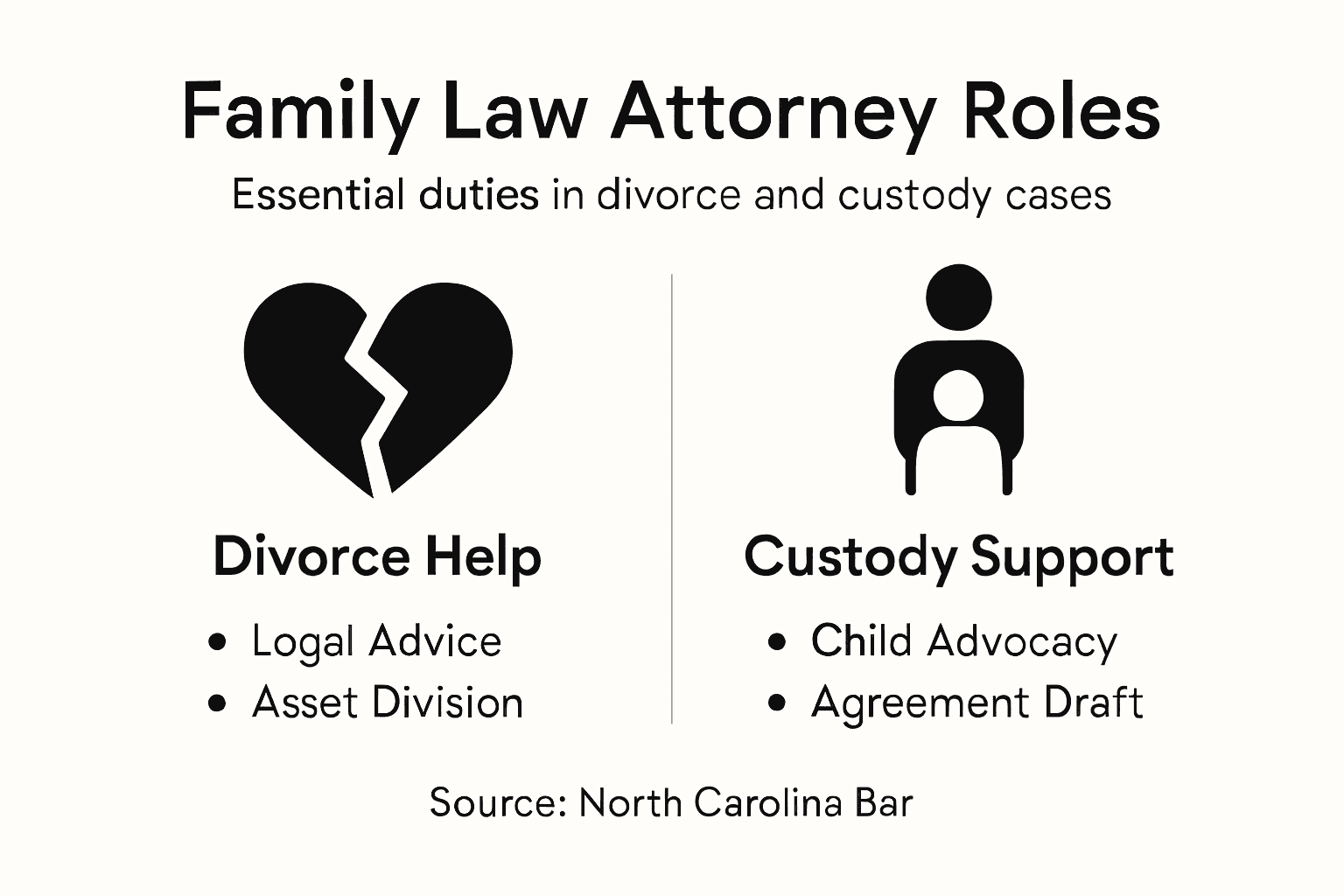
The Role of a Female Divorce Attorney in OKC: Navigating Oklahoma Family Law
The role of a female divorce attorney in OKC encompasses providing strategic legal representation, navigating Oklahoma’s equitable distribution and custody statutes, and protecting a client’s financial and parental rights. Beyond court...
The role of a female divorce attorney in OKC encompasses providing strategic legal representation, navigating Oklahoma’s equitable distribution and custody statutes, and protecting a client’s financial and parental rights. Beyond courtroom advocacy in the Oklahoma County District Court, female divorce attorneys frequently offer tailored communication styles, nuanced perspectives in high-conflict child custody disputes, and rigorous negotiation strategies.
Contents
The Legal Framework of Divorce in Oklahoma City
Divorce proceedings in Oklahoma City operate under the legal framework established in Title 43 of the Oklahoma Statutes. Family law matters within Oklahoma City fall primarily under the jurisdiction of the Oklahoma County District Court (7th Judicial District), located in downtown Oklahoma City, or neighboring county district courts such as Cleveland County or Canadian County, depending on client residency.
To file for divorce in Oklahoma, at least one spouse must have been an actual resident of the state for six months immediately preceding the filing of the petition. Furthermore, the action must be brought in the county where either spouse has resided for at least 30 days prior to filing.
Oklahoma recognizes both fault-based grounds and no-fault grounds for dissolution of marriage. The vast majority of petitions cite the no-fault ground of incompatibility, which acknowledges that the marital relationship has broken down past the point of reconciliation without requiring either party to prove wrongful conduct. However, statutory fault grounds—such as extreme cruelty, adultery, habitual drunkenness, abandonment for one year, or gross neglect of duty—remain available and can influence specific judicial determinations regarding support or property distribution under specific facts.
Oklahoma law mandates statutory waiting periods before a final decree of divorce can be granted:
- Cases without minor children: A divorce decree can be finalized after 30 days from the filing date.
- Cases involving minor children: A mandatory 90-day waiting period applies from the date of filing or service of summons. Oklahoma courts may waive this waiting period only under specific statutory exceptions, such as where neither party objects, parties have completed court-ordered divorce education classes, or where compelling safety issues are demonstrated.
Strategic Responsibilities of a Female Divorce Attorney in OKC
Navigating a marital dissolution involves procedural compliance, evidence collection, dynamic negotiation, and oral advocacy. A female divorce attorney serving clients in Oklahoma City executes distinct legal responsibilities across every stage of litigation:
Complex Financial Discovery and Asset Tracing
Oklahoma is an equitable distribution state, meaning marital property is divided in a manner that the court deems fair and reasonable, which is not necessarily a 50/50 split. A primary duty of counsel is distinguishing between marital property (assets acquired by either spouse during the marriage through joint industry) and separate property (assets owned prior to marriage, or acquired during marriage via individual gift or inheritance).
Female divorce attorneys conduct thorough financial discovery—utilizing interrogatories, requests for production, subpoenas, and depositions—to locate hidden assets, audit business operations, value real estate, and divide retirement accounts using Qualified Domestic Relations Orders (QDROs).
Child Custody and Parenting Plan Development
When minor children are involved, legal representation must focus on the statutory standard: the best interests of the child. Counsel works to structure workable parenting plans, whether advocating for sole legal custody or a Joint Custody Plan. In Oklahoma, joint legal custody requires both parents to share decision-making authority regarding healthcare, education, and religious upbringing, accompanied by a detailed schedule outlining physical custody and holiday visitation.
Support Alimony Determinations
Unlike child support, which is calculated using strict statutory guidelines based on combined gross monthly income, support alimony (spousal support) in Oklahoma is discretionary. The court evaluates two primary metrics: the demonstrated financial need of the recipient spouse and the paying spouse’s ability to pay, considered alongside the standard of living established during the marriage and the duration of the union. Counsel presents financial evidence to justify or contest spousal support requests.
High-Conflict Proceedings and Protective Orders
In cases involving allegations of domestic abuse, stalking, or harassment, representation extends to securing emergency relief. Attorneys handle emergency ex parte custody motions and Victim Protective Orders (VPOs) under Title 22 of the Oklahoma Statutes, ensuring client and child safety while preserving legal standing for upcoming domestic litigation.
Unique Advantages and Strategic Considerations
Choosing a female divorce attorney in Oklahoma City often reflects strategic considerations related to communication, emotional intelligence, courtroom perception, and client comfort.
- Strategic Role of Female Family Law Counsel (OKC)
- Client Comfort & Sensitive Claims Advocacy
- Nuanced Custody & Parenting Plan Framing
- Courtroom & Negotiation Dynamics
Client Comfort and Open Communication
Divorce cases frequently require individuals to share personal details, including intimate relationship dynamics, financial mismanagement, substance abuse issues, or physical mistreatment. Many clients—both female and male—find it easier to communicate transparently with a female attorney regarding sensitive personal disclosures. Open communication ensures that counsel possesses all relevant facts necessary to construct a sound trial strategy.
Balanced Representation for Male Clients
Male clients frequently retain female divorce attorneys in Oklahoma City to counter perceived gender biases in custody disputes. A female attorney arguing on behalf of a father seeking primary or equal physical custody can offer a persuasive courtroom dynamic, demonstrating to the bench that the father's claim is grounded strictly in the child's best interests rather than gendered conflict.
Nuanced Handling of High-Conflict Custody Disputes
Mother-child dynamics, maternal health concerns, and allegations of parental alienation require precise cross-examination and evidentiary support. Female attorneys bring rigorous scrutiny to custody evaluations, psychological assessments, and Guardian ad Litem reports, ensuring that parenting assertions are backed by admissible evidence rather than outdated stereotypes.
Core Practice Areas in Oklahoma Family Law
Family law practice in Oklahoma City covers several interrelated legal procedures:
| Practice Area | Primary Legal Standard | Key Oklahoma Statutory References | Typical Court Outcome / Resolution |
|---|---|---|---|
| Property & Asset Division | Equitable Distribution (Fair, non-taxable division of marital estate) | 43 O.S. § 121 | Court Decree / Marital Settlement Agreement dividing assets & debts |
| Child Custody & Visitation | Best Interests of the Child standard | 43 O.S. § 109; 43 O.S. § 112 | Sole Custody Decree or Court-Approved Joint Custody Plan |
| Child Support Calculation | Statutory Income Shares Model | 43 O.S. § 118A - 118I | Administrative Child Support Order based on income worksheet |
| Support Alimony | Demonstrated financial need vs. ability to pay | 43 O.S. § 121 | Term-limited spousal support payments or lump-sum award |
| Victim Protective Orders (VPO) | Reasonable fear of imminent physical harm or stalking | 22 O.S. § 60.1 et seq. | Temporary Ex Parte Order converted to Final Protective Order |
| Post-Decree Modifications | Permanent, substantial, and material change in circumstances | 43 O.S. § 115; Gibbons v. Gibbons standard | Modified Custody, Visitation, or Support Order |
Steps for Working with a Female Divorce Attorney in OKC
Navigating a divorce case systematically helps control costs, reduce delays, and protect vital legal interests.
1. Initial Case Evaluation and Strategy Session
The process begins with an initial consultation to review background facts, jurisdictional eligibility, asset profiles, and child safety concerns. Clients should arrive prepared with basic information regarding marriage dates, minor children, and income sources.
2. Document Gathering and Financial Disclosure
Clients work with legal staff to assemble financial records, including:
- Tax returns (federal and state) for the past three to five years.
- Recent pay stubs, W-2s, and 1099 forms.
- Bank, investment, and retirement account statements.
- Deeds, mortgages, and vehicle titles.
- Documentation of pre-marital assets or inheritances.
3. Filing and Service of Process
Counsel drafts and files the Petition for Dissolution of Marriage in the appropriate district court. The petition outlines requests regarding asset division, temporary custody, child support, and alimony. The opposing spouse is formally served with the petition and a summons, initiating a 20-day statutory window to file an Answer and Counter-Petition.
4. Automatic Temporary Injunction (ATI)
Upon the filing and service of a divorce petition in Oklahoma, an Automatic Temporary Injunction (ATI) goes into effect pursuant to 43 O.S. § 110. The ATI prohibits both parties from:
- Selling, encumbering, or hiding marital assets.
- Modifying insurance policies (health, auto, life).
- Removing minor children from the state of Oklahoma without written consent or court order.
- Disrupting utility services or opening/closing credit lines.
5. Temporary Orders Hearing (Pendente Lite)
Because divorce proceedings can take months or years, courts hold Temporary Orders hearings to establish operational rules while litigation is pending. The court enters temporary orders governing who remains in the marital residence, temporary child custody and visitation schedules, temporary child support, temporary alimony, and responsibility for ongoing debt service.
6. Discovery and Mediation
Once temporary stability is established, the case moves into formal discovery. Most Oklahoma County judges require parties to participate in court-ordered mediation before granting a trial date. During mediation, a neutral third-party mediator assists the parties and their attorneys in negotiating a mutually acceptable Marital Settlement Agreement.
7. Trial and Final Decree Entry
If mediation fails to resolve all contested issues, the case proceeds to a bench trial before a District Judge (Oklahoma does not utilize jury trials for divorce proceedings). Counsel presents witness testimony, expert valuation reports, and physical evidence. The judge issues a ruling, which is drafted into a final Decree of Dissolution of Marriage.
Frequently Asked Questions
What is the difference between sole legal custody and joint legal custody in Oklahoma?
Joint legal custody means both parents share equal authority to make major life decisions regarding their minor child’s education, medical care, and general welfare, governed by a court-approved Joint Custody Plan. Sole legal custody grants one parent the exclusive legal right to make these major decisions without requiring the other parent's approval, though the non-custodial parent usually retains visitation rights and access to medical/educational records.
How is child support calculated in Oklahoma City divorce cases?
Oklahoma utilizes the statutory Income Shares Model (43 O.S. § 118). The gross monthly incomes of both parents are combined to determine a base child support obligation using statutory tables. That base amount is allocated proportionally based on each parent's percentage contribution to the combined income. Adjustments are made for health insurance premiums, work-related childcare expenses, and the number of overnight visits spent with each parent (parenting time adjustment).
Can a male client benefit from hiring a female divorce attorney in OKC?
Yes. Male clients frequently select female attorneys to ensure strong representation in custody and visitation disputes. A female attorney effectively challenges biased assumptions regarding paternal involvement, presenting evidence focused entirely on the father's parenting capability and the best interests of the child.
How long does it take to finalize a divorce in Oklahoma County?
An uncontested divorce without minor children can be finalized in as few as 30 days. Contested divorces involving minor children require a mandatory 90-day waiting period, though complex cases involving business valuations, extensive discovery, or custody evaluations often take between 6 and 18 months to reach settlement or trial.
How does marital misconduct affect alimony awards in Oklahoma?
While Oklahoma permits no-fault divorce, marital misconduct (such as adultery or financial dissipation) can occasionally influence trial proceedings. Fault does not serve as an automatic penalty to award alimony; spousal support decisions remain tied to demonstrated financial need and ability to pay. However, if a spouse depleted marital assets to support an extramarital affair or gambling habit, courts may adjust property division to compensate the injured spouse.
Selecting Legal Representation in Oklahoma City
Selecting an attorney for a family law matter in Oklahoma City requires evaluating local court experience, communication practices, and fee structures. Individuals preparing for divorce proceedings should consider the following actions:
- Verify Oklahoma Bar Credentials: Ensure the attorney is an active member in good standing with the Oklahoma Bar Association and has focused experience in Oklahoma County family law practice.
- Evaluate Courtroom Practice: Look for counsel familiar with the local rules and judicial practices of the 7th Judicial District Court.
- Prepare Financial Documentation: Assemble recent tax returns, bank statements, and debt summaries prior to your initial consultation to allow counsel to assess your case accurately.
- Clarify Fee Agreements: Confirm whether the attorney bills on a hourly retainer basis or flat-fee arrangement, and discuss how litigation expenses (such as expert witnesses or court reporters) are managed.
Legal Disclaimer: This article provides general informational coverage of Oklahoma family law procedures and should not be construed as formal legal advice. Family law statutes and judicial procedures are subject to legislative updates and local administrative rule changes. Consult a licensed attorney in Oklahoma for legal advice regarding specific domestic relations matters.
Image Gallery