Mercedes-Benz C55 AMG Engine Specifications: Detailed M113 V8 Technical Analysis
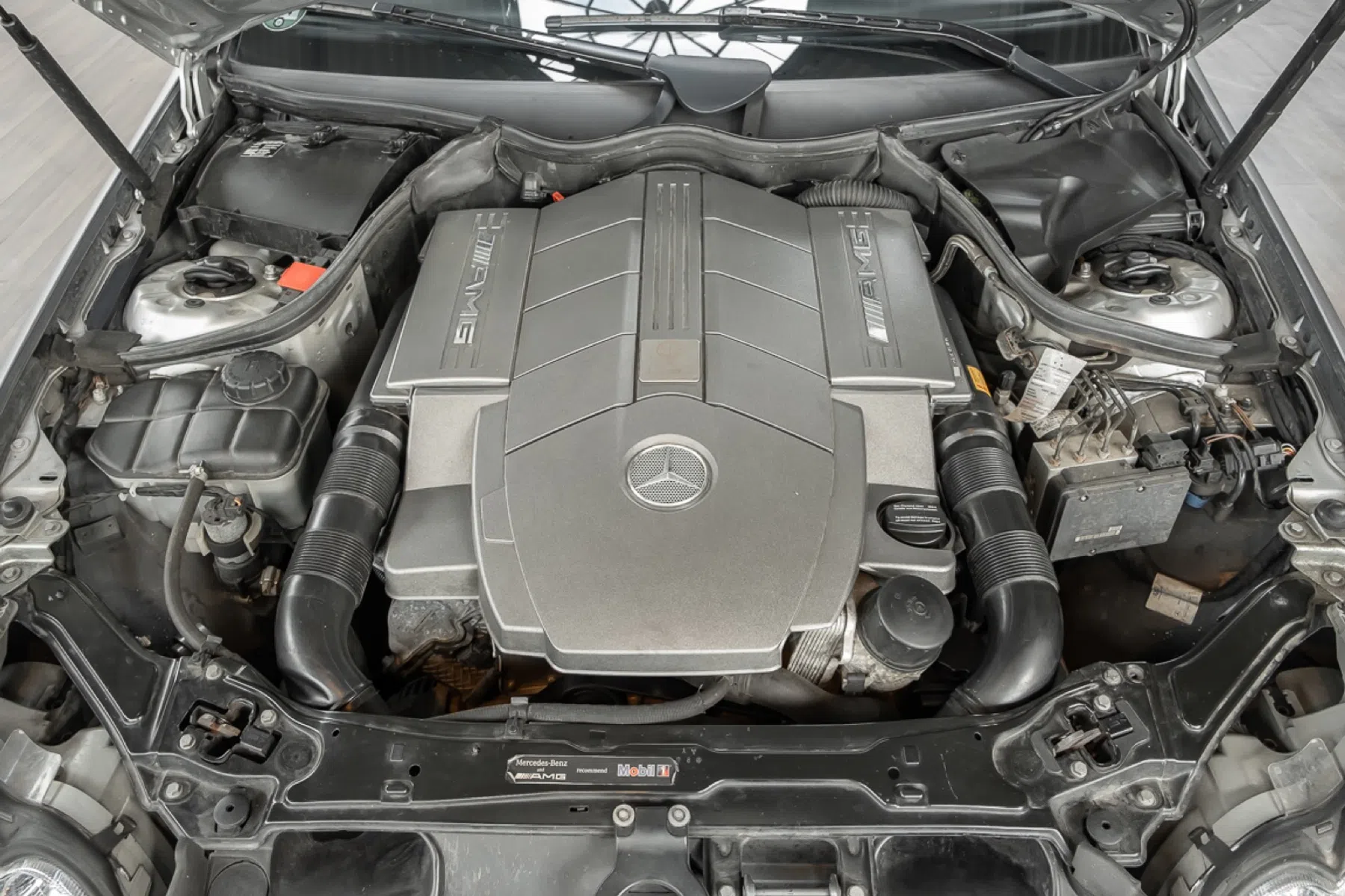
The Mercedes-Benz C55 AMG (W203) is powered by a naturally aspirated 5.4-liter M113.988 V8 engine producing 362 horsepower at 5,750 RPM and 376 lb-ft of torque at 4,000 RPM. Featuring a single overhead camshaft design, three valves per...
The Mercedes-Benz C55 AMG (W203) is powered by a naturally aspirated 5.4-liter M113.988 V8 engine producing 362 horsepower at 5,750 RPM and 376 lb-ft of torque at 4,000 RPM. Featuring a single overhead camshaft design, three valves per cylinder, and twin-spark ignition, it routes power through an AMG Speedshift 5-speed automatic transmission.
Contents
Technical Specifications Overview
Produced for the 2005 through 2007 model years (with initial introductions in late 2004), the C55 AMG marked a major structural pivot for the W203 platform. Replacing the supercharged 3.2-liter V6 (M112K) used in the preceding C32 AMG, Mercedes-AMG opted for high-displacement, natural aspiration. The heart of this vehicle is the M113 E55 engine variant—specifically designated as the M113.988.
| Specification | Technical Value / Detail |
|---|---|
| Engine Code | M113.988 (M113 E55 naturally aspirated) |
| Configuration | Longitudinal 90° V8 |
| Displacement | 5,439 cc (5.4 Liters / 331.9 cu in) |
| Bore x Stroke | 97.0 mm × 92.0 mm (3.82 in × 3.62 in) |
| Block / Head Material | Aluminum Alloy / Aluminum Alloy |
| Valvetrain | SOHC, 3 valves per cylinder (24 valves total) |
| Compression Ratio | 11.0:1 |
| Peak Power Output | 362 hp (367 PS / 270 kW) @ 5,750 RPM |
| Peak Torque | 376 lb-ft (510 Nm) @ 4,000 RPM |
| Specific Output | 66.55 hp / Liter |
| Engine Redline | 6,700 RPM |
| Ignition System | Microprocessor-controlled dual-spark (16 spark plugs) |
| Engine Management | Bosch ME 2.8 Motor Electronics |
| Recommended Fuel | 91+ AKI / 98 RON Premium Unleaded |
| Oil Capacity | 8.5 Liters (9.0 US Quarts) with filter change |
| Engine Oil Specification | MB 229.5 approval (e.g., 0W-40 or 5W-40 synthetic) |
Architectural Design and Engine Metallurgy
The M113 V8 family was engineered with an emphasis on thermal efficiency, structural rigidity, low internal friction, and compact physical dimensions.
Cylinder Block Construction and Silitec Liners
The crankcase of the M113.988 is cast from lightweight aluminum alloy. Rather than utilizing traditional heavy cast-iron cylinder sleeves, Mercedes-AMG employed Silitec (a high-silicon aluminum alloy) cylinder liner technology. During production, the cylinder bores are chemically etched to expose hard silicon crystals along the wall surfaces. This surface treatment provides exceptional wear resistance, reduced piston ring friction, and enhanced thermal conductivity, allowing heat to dissipate rapidly into the engine coolant jackets.
The engine features a deep-skirt crankcase design reinforced by a bedplate structure and main bearing caps secured by four bolts cross-bolted through the side of the block. This cross-bolted architecture minimizes bottom-end distortion under high thermal and torsional loading.
Rotating Assembly
- Crankshaft: A precision-forged steel crankshaft features counterweights designed to balance the primary and secondary inertia forces inherent to a 90-degree V8 configuration.
- Connecting Rods: Fracture-split forged steel connecting rods are used. The fracture-splitting manufacturing process creates an irregular mating surface between the rod body and bearing cap, ensuring exact realignment during assembly and preventing lateral movement under load.
- Pistons: Cast aluminum alloy pistons feature optimized skirts coated with anti-friction materials. The crown shape is machined to achieve an 11.0:1 compression ratio while facilitating efficient flame front propagation.
SOHC 3-Valve Geometry and Twin-Spark Ignition
Unlike many high-performance engines of its era that adopted dual overhead camshafts (DOHC) and four valves per cylinder, the M113 uses a single overhead camshaft (SOHC) per cylinder bank operating three valves per cylinder: two intake valves and one single exhaust valve.
[Intake Valve 1] [Intake Valve 2] \ / \ / [Spark Plug A] [Spark Plug B] | [Exhaust Valve 1]
This 3-valve layout offers several specific thermodynamic and mechanical benefits:
- Reduced Thermal Losses: A single exhaust valve presents less surface area than dual exhaust valves. This preserves heat energy within the exhaust gas stream, allowing the catalytic converters to reach light-off operating temperature faster during cold starts, significantly lowering cold-start emissions.
- Reduced Friction and Weight: Operating 24 valves and two camshafts yields fewer moving parts, lower valvetrain mass, and reduced parasitic frictional drag compared to a 32-valve DOHC setup.
- Phase-Shifted Twin-Spark Ignition: To ensure complete flame propagation within the large 97.0 mm cylinder bore, each cylinder contains two spark plugs positioned on either side of the exhaust valve. The Bosch ME 2.8 engine management system operates a phase-shifted ignition sequence, firing the two plugs sequentially rather than simultaneously under varying load conditions. This continuous modulation suppresses engine knock, optimizes combustion chamber pressure, and maximizes fuel economy.
Induction, Fueling, and Engine Management
Dual-Stage Variable Intake Manifold
The M113.988 utilizes a magnesium variable-length intake manifold positioned within the V-valley of the engine. Internal vacuum-actuated flaps alter the effective length of the intake runners based on engine speed and throttle position:
- Long Runners (Low-to-Mid RPM): At lower engine speeds, air travels through longer intake paths. This utilizes Helmholtz resonance principles to velocity-charge the incoming air column, bolstering low-end torque production (reaching 376 lb-ft at 4,000 RPM, with over 300 lb-ft available as low as 2,000 RPM).
- Short Runners (High RPM): Above roughly 4,700 RPM, internal flaps open to shorten the intake path length. This minimizes air intake resistance, maximizing volumetric efficiency and peak horsepower output at high engine speeds.
Fuel Delivery and Engine Management
Fuel is delivered via sequential multi-port electronic fuel injection operating at standard system pressures (approx. 3.8 to 4.2 bar). The system is governed by a Bosch ME 2.8 engine control unit (ECU). The ECU calculates injection duration and ignition timing using inputs from a hot-film mass air flow (MAF) sensor, twin knock sensors mounted in the engine valley, dual primary and secondary oxygen sensors, throttle position sensors, and dual camshaft/crankshaft position sensors.
Front-Clip Engineering: Fitting the V8 into the W203
A critical context behind the C55 AMG's engine specifications lies in chassis integration. The standard W203 C-Class engine bay was originally dimensioned exclusively for inline-four and V6 engines. The 5.4-liter M113 V8 was physically too wide and long to fit within the standard front engine cradle while maintaining mandatory crash deformation zones, cooling space, and accessory clearance.
To solve this spatial limitation, AMG engineers adapted the front structural frame, hood, fenders, headlights, and front bumper assembly from the W209 CLK-Class.
[Standard W203 Front End] ---> Insufficient length for M113 V8 [W209 CLK Front End] ---> +80 mm (3.15 in) longer engine bay [C55 AMG Hybrid Chassis] ---> W203 Cabin/Rear + W209 Front Clip = V8 Compatibility
This modification lengthened the front overhang by approximately 80 millimeters (3.15 inches) compared to a standard W203 sedan. This structural alteration allowed for:
- Adequate clearance for the accessory drive belt routing and front timing cover.
- Installation of a larger main radiator assembly and dedicated transmission oil cooler.
- Improved airflow dynamics across the front heat exchangers without compromising cabin safety features or chassis rigidity.
Drivetrain and Transmission Integration
The M113.988 engine routes its power through the heavy-duty AMG Speedshift 5G-Tronic (722.6) five-speed electronically controlled automatic transmission. The standard 7G-Tronic (7-speed) transmission used in non-AMG models at the time could not reliably handle the continuous torque output of the 5.4-liter V8, prompting AMG to retain and strengthen the proven 722.6 unit.
Transmission Gear Ratios
| Gear | Ratio |
|---|---|
| 1st Gear | 3.59:1 |
| 2nd Gear | 2.19:1 |
| 3rd Gear | 1.41:1 |
| 4th Gear | 1.00:1 |
| 5th Gear | 0.83:1 |
| Reverse (R1 / R2) | 3.16:1 / 1.93:1 |
| Final Drive Ratio | 3.06:1 |
Speedshift Software and Control Features
The AMG Speedshift calibration includes specific operational programming:
- Manual Mode ("M"): Allows full manual gear selection using steering wheel-mounted buttons or the touch-shift gear lever. In "M" mode, the transmission holds gears at the 6,700 RPM redline without executing an forced upshift.
- Torque Converter Lockup: The lockup clutch engages in all forward gears past 1st gear under heavy throttle application, eliminating torque converter slip to provide immediate throttle response.
- Faster Shift Speed: Shift times are shortened by up to 35% compared to standard non-AMG 722.6 implementations.
Maintenance, Reliability, and Known Issues
The naturally aspirated M113 V8 is widely recognized among automotive engineers as one of the most reliable performance powerplants produced by Mercedes-Benz. However, specific component degradation occurs as vehicles age.
Key Maintenance Requirements and Common Failures
Crankshaft Position Sensor (CPS) Failure:
- Symptom: Engine crank-no-start conditions when hot, unexpected stalling during operation that clears after the engine cools down.
- Cause: Internal coil degradation inside the sensor due to heat cycles near the rear bellhousing.
- Remedy: Replacement of the CPS sensor (located on the driver-side rear of the engine block).
Valve Cover Gasket and Breather Cover Leaks:
- Symptom: Burning oil smell in the cabin, visible oil seepage along the exhaust manifolds.
- Cause: Hardening of the rubber valve cover gaskets and deterioration of the RTV sealant used on the small upper crankcase breather covers.
- Remedy: Replacement of the perimeter rubber gaskets and resealing of the breather chambers with fresh bedplate/RTV sealant, ensuring breather ports are cleaned.
Oil Filter Housing Gaskets:
- Symptom: Oil leaks down the front-driver side of the engine, contaminating the serpentine belt.
- Cause: O-rings connecting the aluminum oil filter housing to the timing cover dry out and fail over time.
- Remedy: Replace the oil filter housing O-rings and internal heat exchanger gaskets.
16-Spark Plug Service Interval:
- Service Note: Due to the twin-spark ignition system, the engine requires 16 spark plugs.
- Interval: Factory interval is 100,000 miles or 5 years. Standard double-platinum or iridium plugs are specified. Access to the lower spark plug boots near the frame rails requires an offset 17mm boot-removal wrench to prevent damage to the ignition wires.
Rear Main Seal Seepage:
- Symptom: Oil accumulation at the junction of the lower engine oil pan and transmission bellhousing.
- Remedy: Requires transmission removal to replace the rear main radial shaft seal and re-seal the rear main cover plate.
Engine Oil Specification:
- The M113 engine requires synthetic engine oil meeting MB 229.5 operating standards. Recommended viscosities include SAE 0W-40 or 5W-40. The engine oil sump capacity is 8.5 liters (9.0 US quarts).
Performance Metrics and Comparative Analysis
The M113 engine transformed the characteristics of the C-Class AMG lineup. Below is a comparison of performance specs between the C55 AMG and its immediate predecessor and successor.
| Metric / Parameter | C32 AMG (W203) | C55 AMG (W203) | C63 AMG (W204) |
|---|---|---|---|
| Production Years | 2002–2004 | 2005–2007 | 2008–2015 |
| Engine Code | M112.960 Supercharged | M113.988 N/A | M156.985 N/A |
| Displacement | 3.2 L (3,199 cc) | 5.4 L (5,439 cc) | 6.2 L (6,208 cc) |
| Configuration | Supercharged V6 | Naturally Aspirated V8 | Naturally Aspirated V8 |
| Power Output | 349 hp @ 6,100 RPM | 362 hp @ 5,750 RPM | 451 hp @ 6,800 RPM |
| Torque Output | 332 lb-ft @ 3,000 RPM | 376 lb-ft @ 4,000 RPM | 443 lb-ft @ 5,000 RPM |
| 0–60 mph Acceleration | 4.9 seconds | 4.7 seconds | 4.3 seconds |
| Quarter-Mile Time | ~13.3 sec @ 106 mph | ~13.1 sec @ 108 mph | ~12.3 sec @ 116 mph |
| Top Speed | 155 mph (limited) | 155 mph (limited) | 155 mph (limited) |
Performance Character
While the earlier C32 AMG offered strong forced-induction torque down low, its twin-screw supercharger introduced heat soak issues during extended track or high-temperature driving. The naturally aspirated 5.4L M113 in the C55 AMG eliminated heat-soak limitations, providing consistent power delivery, instantaneous throttle response, and a distinct V8 exhaust note.
Frequently Asked Questions
Is the C55 AMG engine supercharged?
No. The C55 AMG uses the naturally aspirated 5.4-liter M113 V8 engine. The supercharged version of this engine (designated as the M113K) was reserved for larger AMG models such as the E55, S55, CL55, and SL55.
What is the difference between the M113 engine in the C55 AMG and the E55 AMG?
The C55 AMG features the naturally aspirated M113.988 producing 362 hp and 376 lb-ft of torque. The W211 E55 AMG features the supercharged M113.990 (M113K) equipped with a Lysholm twin-screw supercharger, lower compression pistons (9.0:1 vs 11.0:1), reinforced internals, and dual intercoolers, yielding 469 hp and 516 lb-ft of torque.
Can you fit a supercharger to the C55 AMG engine?
Yes. Aftermarket forced-induction kits (such as bolt-on supercharger systems from Weistec Engineering or Kleemann) can be installed on the naturally aspirated M113. However, because the engine runs an 11.0:1 high compression ratio, boost pressures must be limited (typically between 5 to 7 PSI) on stock internal engine components to prevent detonation.
How often should spark plugs be changed on the C55 AMG?
Mercedes-Benz recommends replacing the spark plugs every 100,000 miles or 5 years, whichever comes first. Because the engine features a twin-spark system, a complete service requires 16 spark plugs.
Why does the C55 AMG have a different front end than other W203 C-Class models?
The standard W203 C-Class engine bay was too short to fit the 5.4-liter M113 V8 engine. AMG engineers extended the front clip by 80 mm (3.15 inches) using structural components, hood, fenders, and lighting adapted from the W209 CLK-Class.
What type of oil does the M113 V8 engine take?
The engine requires synthetic oil that meets MB Approval 229.5. The standard factory recommendation is Mobil 1 European Car Formula 0W-40 or 5W-40. Total oil capacity with a filter change is 8.5 liters (9.0 US quarts).
Summary Guidance for Owners and Buyers
The M113.988 V8 in the Mercedes-Benz C55 AMG remains an exemplary modern classic powerplant, balancing mechanical simplicity with durable performance. When evaluating or servicing a C55 AMG, focus maintenance priorities on the following verification steps:
- Inspect for Oil Leaks: Check the valve cover perimeter, upper breather covers, front oil filter housing, and rear main seal area.
- Verify Ignition Maintenance: Confirm when all 16 spark plugs and ignition leads were last replaced; incomplete plug changes (such as replacing only 8 accessible plugs) can cause subtle misfires.
- Check Cooling System Integrity: Ensure the radiator side tanks and primary expansion tank are free of hairline heat stress fractures.
- Enforce Lubrication Standards: Always use MB 229.5 certified synthetic lubricants to protect the Silitec cylinder bore surfaces and hydraulic valve lifters.
Image Gallery