How to Become a Certified Process Server in Miami-Dade County
To become a certified process server in Miami-Dade County, you must be at least 18 years old, pass a background check, and complete a specialized examination administered by the 11th Judicial Circuit of Florida. The process involves su...
To become a certified process server in Miami-Dade County, you must be at least 18 years old, pass a background check, and complete a specialized examination administered by the 11th Judicial Circuit of Florida. The process involves submitting a formal application, obtaining a $5,000 surety bond, and being sworn in by the court.
Contents
Understanding the Role of a Process Server in the 11th Judicial Circuit
A process server is a vital component of the Florida judicial system, specifically within the 11th Judicial Circuit, which encompasses all of Miami-Dade County. Their primary responsibility is to deliver legal documents—such as summons, subpoenas, complaints, and writs—to individuals or entities involved in legal proceedings. This ensures that the "due process" requirement of the U.S. Constitution is met, providing parties with official notice of legal actions against them.
In Miami-Dade, process servers operate under the strict guidelines of Florida Statutes Chapter 48 and Chapter 92. The profession requires more than just delivering envelopes; it demands a deep understanding of legal procedures, residency rules, and the technical requirements for a "Return of Service." If a document is served incorrectly, a court case can be delayed or dismissed, making the accuracy of the process server's work essential to the local legal infrastructure.
Professionalism is paramount in this high-stakes environment. Miami-Dade is a diverse and densely populated region, ranging from the high-rises of Brickell to the suburban reaches of Homestead. A successful server must navigate these varied environments while maintaining a neutral, non-confrontational demeanor, often in situations where the recipient is hostile or evasive.
Eligibility and Prerequisites for Miami-Dade Certification
Before initiating the application process for the 2026 calendar year, candidates must ensure they meet the foundational requirements established by the Administrative Office of the Courts (AOC). These requirements are designed to ensure that only individuals of high moral character and competency are authorized to serve the court’s process.
- Age and Residency: You must be at least 18 years of age. While you do not strictly have to live in Miami-Dade, you must be a permanent resident of Florida or have authorization to work in the United States.
- Legal Standing: Applicants must not have any mental or legal disabilities that would impair their ability to perform the duties of the office.
- Criminal Record: A clean criminal history is mandatory. The 11th Judicial Circuit conducts a rigorous background check through the Florida Department of Law Enforcement (FDLE) and the FBI. Convictions for felonies or crimes involving moral turpitude are generally disqualifying.
- Professional Integrity: You must be able to demonstrate honesty and reliability. Because process servers are officers of the court (for the limited purpose of serving process), the judiciary expects a high level of ethical conduct.
Step-by-Step Guide to the Certification Process
The path to certification in Miami-Dade is a multi-stage process that typically takes several weeks to complete, depending on the speed of background check processing and the scheduling of the mandatory examination.
Step 1: Complete the Official Application
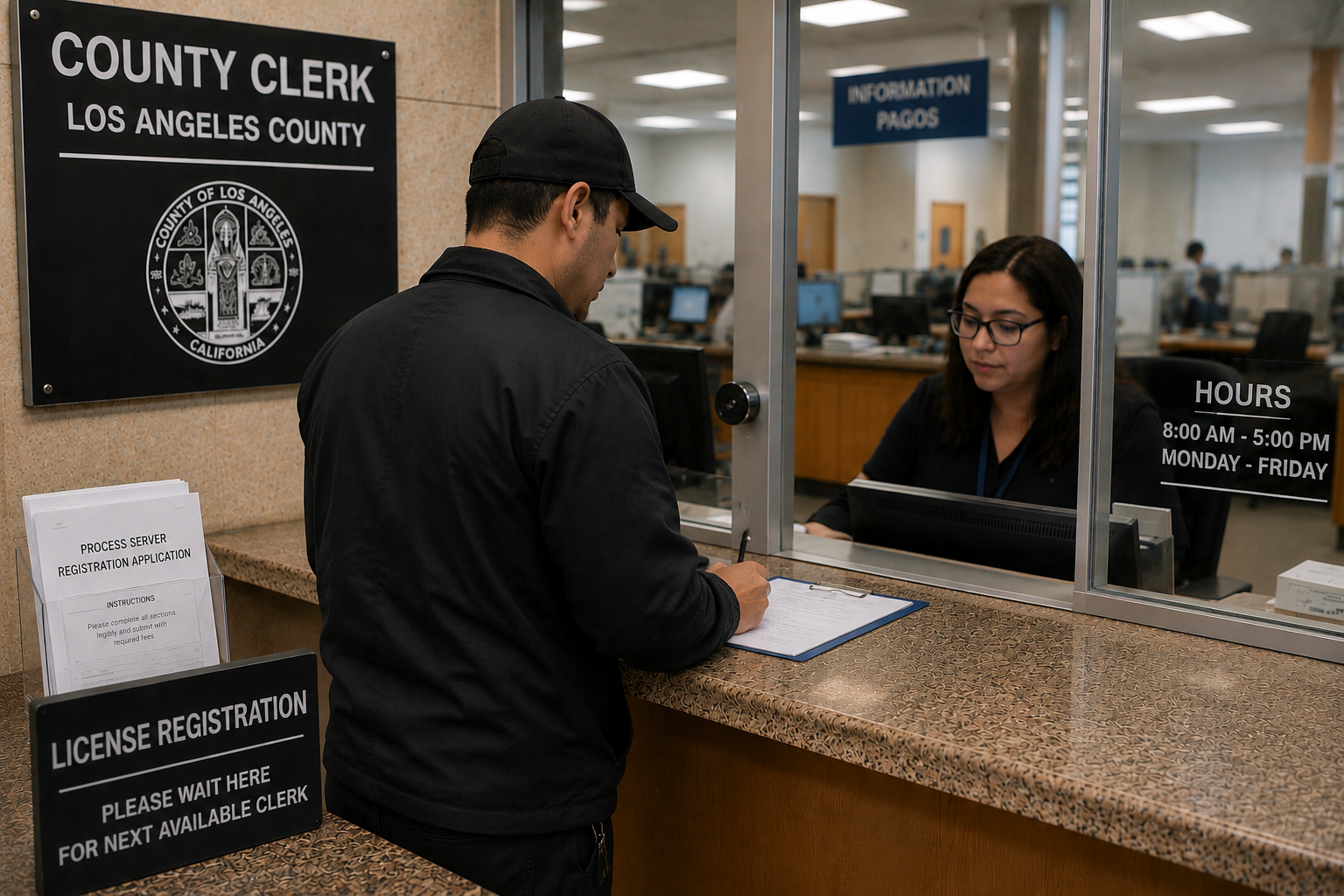
The first step is obtaining the application packet from the 11th Judicial Circuit's Certified Process Server Office. In 2026, most applications are processed digitally through the circuit's portal, though physical submissions may still be required for certain notarized documents. You will need to provide personal identification, employment history, and references.
Step 2: Undergo Fingerprinting and Background Screening
Once your initial application is reviewed, you will be directed to undergo a Level 2 background screening. This involves electronic fingerprinting at an authorized Livescan provider. These prints are sent to the FDLE and the FBI to ensure there are no disqualifying criminal records. It is important to use the specific ORI number (Originating Agency Identifier) provided by the Miami-Dade AOC to ensure the results are sent to the correct judicial department.
Step 3: Attend Training and Pass the Examination
Miami-Dade requires all new applicants to pass a written examination. This test covers the Florida Rules of Civil Procedure and specific sections of the Florida Statutes regarding the service of process. Topics include:
- Substituted Service: When and how you can leave papers with a relative or roommate.
- Service on Corporations: Identifying the registered agent or officers authorized to receive documents.
- Time Constraints: Understanding "non-service" days, such as Sundays (with specific exceptions).
- Return of Service: The technical requirements for the affidavit that proves service was completed.
A passing score of 80% or higher is typically required. Many local professional associations offer preparatory courses, which are highly recommended given the technical nature of the legal language.
Step 4: Secure a Surety Bond
Before you can be sworn in, you must obtain a $5,000 Surety Bond. This bond protects the public and the court from any damages resulting from your performance or non-performance as a process server. This is not insurance for you; it is a financial guarantee for the court. The cost for this bond is usually a small annual premium paid to a bonding company or insurance agency.
Step 5: The Oath and Inclusion on the Certified List
After passing the exam and providing proof of your bond, you will be scheduled for a swearing-in ceremony. A judge or authorized court official will administer an oath of office. Once sworn, your name is added to the "List of Certified Process Servers" for the 11th Judicial Circuit. Only individuals on this list (or the Sheriff) are authorized to serve process within Miami-Dade without a special motion for appointment for each individual case.
Associated Costs and Financial Considerations
Starting a career as a process server involves several upfront costs. While these fees are subject to change, the 2026 schedule reflects the standard administrative overhead for the circuit and state.
| Expense Item | Estimated Cost (2026) | Frequency |
|---|---|---|
| Application/Processing Fee | $300.00 | Initial / Annual Renewal |
| Fingerprinting/Background Check | $50.00 – $75.00 | Initial / Every 5 Years |
| Mandatory Examination Fee | $50.00 | Per Attempt |
| $5,000 Surety Bond Premium | $50.00 – $100.00 | Annual |
| Notary Fees for Documents | $10.00 – $30.00 | Per Document |
| ID Badge / Certification Card | $15.00 – $25.00 | Annual |
Beyond these administrative fees, new process servers should budget for professional tools, including a reliable vehicle, GPS software, and mobile scanning technology for immediate filing of service proofs.
Maintaining Certification and Renewals
Certification in Miami-Dade is not a one-time achievement; it must be renewed annually. The renewal period typically begins in the fourth quarter of the year (October through December) for the following calendar year.
To maintain your status, you must:
- Submit a Renewal Application: Update the court on any changes to your contact information or legal standing.
- Pay Renewal Fees: These fees support the administration of the Certified Process Server program.
- Maintain Your Bond: Ensure your surety bond remains active and that proof of renewal is filed with the Clerk of the Courts.
- Continuing Education: While not always mandatory every year, the 11th Judicial Circuit may require periodic "refresher" courses or updated testing if Florida Statutes regarding service of process undergo significant legislative changes.
Failure to renew by the deadline will result in your removal from the certified list, meaning you will lose your legal authority to serve documents until you repeat the full application process.
Practical Strategies for Success in Miami-Dade
Becoming certified is the legal hurdle; building a business is the operational hurdle. Miami-Dade is a highly competitive market for legal services.
Specialization and Networking: Many successful servers specialize in specific types of law, such as evictions (Landlord/Tenant) or family law. Networking with local law firms in the downtown Miami area or joining the Florida Association of Professional Process Servers (FAPPS) can provide a steady stream of contract work.
Safety and Ethics: Miami-Dade can be a challenging environment. It is essential to stay updated on safety protocols. Never "trespass" in a way that violates Florida law, and always carry your official 11th Judicial Circuit ID badge. Ethical violations—such as "sewer service" (claiming you served someone when you didn't)—can lead to permanent decertification and potential criminal charges for perjury.
Technological Integration: In 2026, the legal industry relies heavily on digital tracking. Using software that provides time-stamped GPS coordinates of your service attempts can protect you from "motions to quash" service, where a recipient claims they were never served.
Common Challenges and Troubleshooting
The most common difficulty new process servers face is "evasive service." In Miami-Dade’s many gated communities and high-security condominiums, gaining access to the recipient can be difficult.
- Gated Communities: Florida law (Statute 48.031) provides process servers with certain rights of access to gated communities for the purpose of serving process. Knowing how to cite this statute to security guards is a critical skill.
- Incorrect Addresses: Often, the information provided by the attorney is outdated. Successful servers use "skip tracing" tools to find the current whereabouts of a recipient.
- Technical Errors in Returns: The most frequent reason a service is rejected by the Clerk of Courts is a technical error in the Affidavit of Service. Always double-check that the date, time, manner of service, and recipient description are perfectly accurate.
Frequently Asked Questions
Can I serve process in Broward or Palm Beach with a Miami-Dade certification? No. Florida does not have a "statewide" process server certification. Each judicial circuit (e.g., the 17th in Broward, the 15th in Palm Beach) has its own application process and certified list. However, many servers maintain certifications in multiple neighboring circuits to expand their service area.
How long does the background check take? The FDLE and FBI background checks usually take between 7 and 14 business days. However, delays can occur if there are issues with fingerprint clarity or if the state is experiencing a high volume of requests. It is best to start the process at least 60 days before you intend to begin working.
Do I need a private investigator's license to be a process server? No. In Florida, certified process servers do not need a private investigator license to deliver legal documents. However, if you plan to conduct extensive surveillance or "stakeouts" that go beyond the scope of serving process, you should consult the Florida Department of Agriculture and Consumer Services (FDACS) regarding PI licensing requirements.
What happens if someone refuses to take the papers? If a person is identified and refuses to physically take the papers, you can generally "drop service" by placing the documents at their feet or in their immediate vicinity while stating, "You are being served." You must then record this specific interaction in your Return of Service.
Is there a minimum number of papers I must serve to keep my license? The 11th Judicial Circuit does not currently mandate a minimum volume of service to maintain certification. As long as you meet the renewal requirements, pay your fees, and maintain your bond, your certification remains valid regardless of how many documents you serve.
Professional Advice Limitation: The information provided in this guide is for educational purposes regarding the certification process. Legal requirements and court rules are subject to change. For specific legal advice regarding the Florida Rules of Civil Procedure or Chapter 48 of the Florida Statutes, consult with a qualified attorney.
Final Recommendation
If you are ready to begin, your next step should be to download the latest application packet from the 11th Judicial Circuit Administrative Office of the Courts website. Prioritize the background check immediately, as this is the most common cause of administrative delay in the certification pipeline.
Image Gallery