Mallory Pugh’s Rise to the U.S. Women’s National Team: From Prodigy to Powerhouse
Mallory Pugh (now Mallory Swanson) rose to the U.S. Women’s National Team (USWNT) as a historic teenage prodigy, debuting at just 17 years old in 2016. Her ascent was characterized by elite speed, technical dribbling, and a record-brea...
Mallory Pugh (now Mallory Swanson) rose to the U.S. Women’s National Team (USWNT) as a historic teenage prodigy, debuting at just 17 years old in 2016. Her ascent was characterized by elite speed, technical dribbling, and a record-breaking transition from youth standout to a cornerstone of the senior international roster.
Contents
The Foundation of a Colorado Phenom
The story of Mallory Pugh’s rise begins long before her first senior cap. Born in Littleton, Colorado, Pugh became a household name in youth soccer circles while playing for Real Colorado in the Elite Clubs National League (ECNL). Unlike many prospects who rely solely on physical dominance, Pugh combined a rare "track-star" explosive speed with an innate understanding of space and timing.
During her time at Mountain Vista High School, she was not just a standout; she was an anomaly. By her junior year, she was already the captain of the U-20 U.S. National Team, leading players who were several years her senior. Her ability to unbalance defenses with a single touch earned her the Gatorade National Girls Soccer Player of the Year award in 2015. This period was crucial because it established her as the "next big thing" in American soccer, a title that carries immense pressure within the USWNT ecosystem.
The technical depth of her game at age 16 was comparable to many NWSL veterans. She possessed a "low center of gravity" that allowed for rapid changes in direction, making her nearly impossible to contain in 1v1 situations. This technical foundation ensured that when the senior team call-up finally arrived, she was physically and mentally prepared for the jump in intensity.
The Historic 2016 Debut: A Record-Breaking Entry
On January 23, 2016, Mallory Pugh officially transitioned from a prospect to a senior international. In a friendly against Ireland, she was subbed on in the 58th minute, replacing veteran Alex Morgan. At 17 years, 269 days, she became the youngest player to debut for the USWNT in 11 years (since Heather O'Reilly in 2002).
Pugh’s debut was more than just a symbolic appearance. In the 83rd minute, she headed home a cross from Christen Press, becoming the 19th USWNT player to score in her debut. This moment effectively ended the debate regarding whether she was "too young" for the senior level. Head coach Jill Ellis recognized that Pugh offered a verticality and directness that the team needed as they transitioned away from the 2015 World Cup winning roster.
Impact on the 2016 Olympic Roster
Following her debut, Pugh’s rise accelerated at an unprecedented pace. She bypassed the typical multi-year "apprenticeship" phase, securing a spot on the 18-player roster for the 2016 Rio Olympics. By scoring against Colombia in the group stage, she became the youngest player in U.S. history to score a goal in the Olympic Games.
This rapid integration served as a blueprint for how the USWNT would later handle other "Gen Z" talents like Sophia Smith and Trinity Rodman. Pugh proved that if a player’s tactical intelligence matched their physical tools, age was secondary to impact.
The Professional Leap: Foregoing the College Route
One of the most defining aspects of Pugh’s rise was her decision regarding her professional career. After initially committing to UCLA, she made the ground-breaking decision in 2017 to forego her college eligibility and turn professional. At the time, this was a rare move for female American players, who traditionally utilized the NCAA system as a mandatory bridge to the pros.
By signing with the Washington Spirit via the NWSL distribution process, Pugh signaled a shift in the landscape of American women’s soccer. Her rise forced the league and the federation to create better pathways for elite youth players to enter professional environments earlier. This decision was a testament to her maturity; she recognized that to remain a starter for the USWNT, she needed to be tested daily by world-class defenders in a professional league rather than dominating the collegiate level.
Evolution of Playstyle: From Winger to All-Around Attacker
Throughout her early years (2016–2019), Pugh was primarily utilized as a pure winger. Her instructions were simple: use her pace to get to the end line and provide service or cut inside to shoot. However, as international opponents began to scout her more heavily, she had to evolve.
By the time the 2019 FIFA Women’s World Cup arrived, Pugh had added a layer of playmaking to her repertoire. Though she was often utilized as a "super-sub" during that tournament, her efficiency remained high. She contributed a goal in the record-breaking 13-0 win against Thailand and provided tactical flexibility that allowed the U.S. to maintain a relentless high press.
Winning the World Cup at age 21 cemented her status as a global star, but it also marked the beginning of a challenging chapter that would eventually lead to her most impressive transformation.
Adversity and the "Swanson" Renaissance
No rise is linear, and Pugh’s journey faced a significant hurdle between 2020 and 2021. A combination of recurring injuries and a dip in form led to her being left off the roster for the Tokyo Olympics. For a player who had been the "golden child" of the federation since age 17, this was a moment of reckoning.
The transition from "Mal Pugh" to Mallory Swanson (following her marriage to MLB star Dansby Swanson) coincided with a complete physical and mental reset. By 2022 and early 2023, she had reclaimed her spot as arguably the most dangerous player in the world.
In 2023, she embarked on a scoring tear, netting seven goals in her first six games of the year. Although a severe patellar tendon injury sidelined her for the 2023 World Cup, her comeback in 2024 and 2025 has been the definitive "second act" of her rise. As of 2026, she is no longer just a "fast prospect"—she is a sophisticated tactical leader who anchors the U.S. attack.
Career Milestone Comparison
The following table highlights the key stages of Mallory Pugh Swanson’s rise and her statistical impact during those phases.
| Phase | Years | Key Achievement | Role/Status |
|---|---|---|---|
| Youth Prospect | 2013-2015 | U-20 World Cup Captain | ECNL Standout / Prodigy |
| The Breakthrough | 2016 | Youngest Olympic Goalscorer | Teenage Starter |
| Professional Transition | 2017-2018 | Turned Pro (Washington Spirit) | Trailblazer for Youth Pathways |
| World Champion | 2019 | FIFA World Cup Title | Tactical "Super-Sub" |
| The Reset | 2020-2021 | Dropped from Olympic Roster | Injury Recovery / Development |
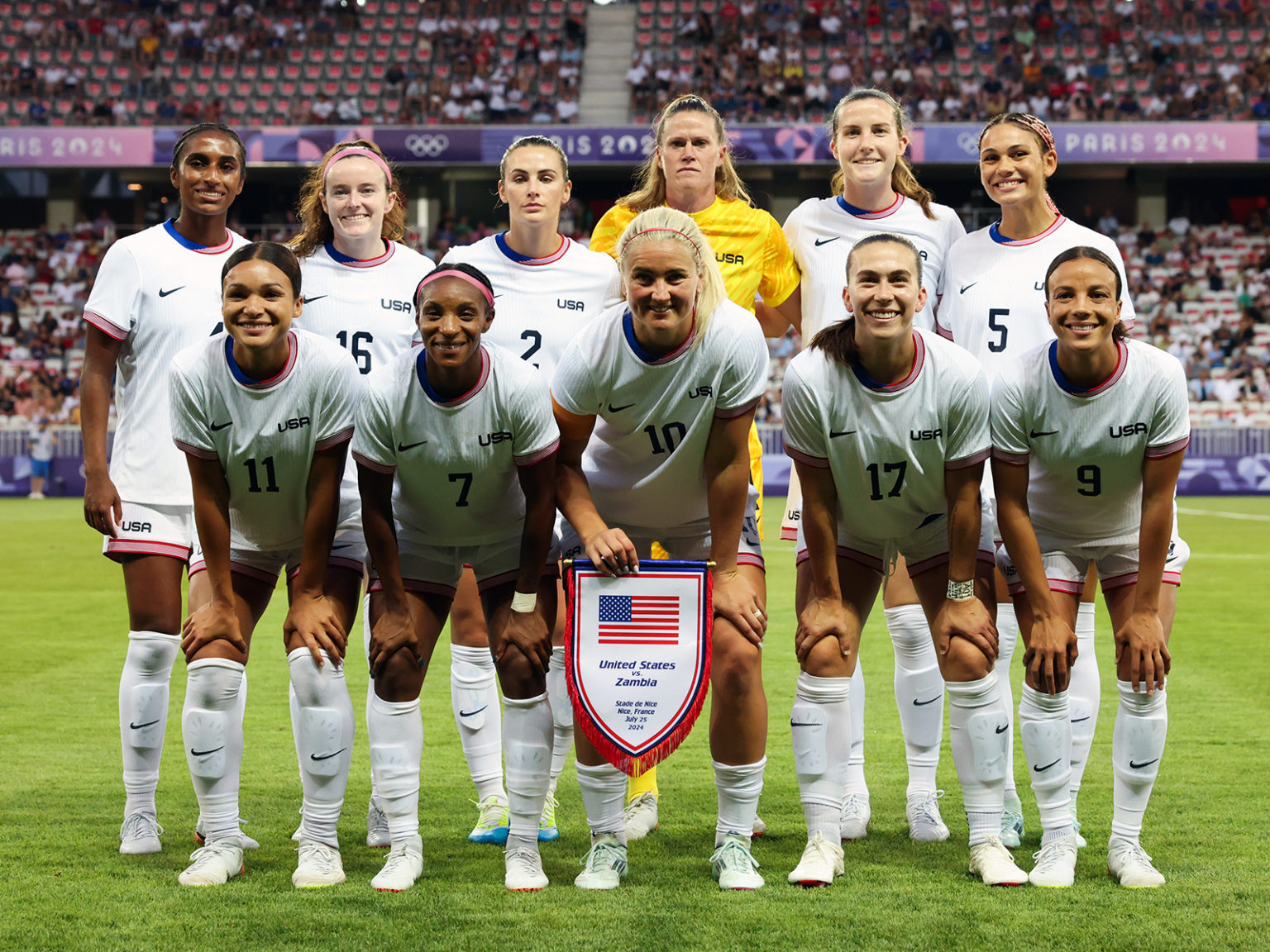
| The Veteran Leader | 2024-2026 | Olympic Gold (Paris) | Focal Point of USWNT Attack |
Technical Specifications of Her Game
To understand her rise, one must look at the specific metrics that separate her from other elite attackers. Coaches often cite her "acceleration with the ball" as her primary weapon. Many players are fast off the ball, but Swanson maintains nearly 95% of her top speed while dribbling, a trait usually reserved for players like Lionel Messi or Kylian Mbappé.
- Shot Creation: Swanson ranks in the 90th percentile for "shot-creating actions" per 90 minutes.
- Defensive Work Rate: Unlike many traditional forwards, her rise was sustained by her willingness to track back. Her "pressures in the attacking third" are consistently among the highest for USWNT forwards.
- Versatility: While she started as a Left Winger (LW), she has successfully transitioned to a Central Attacking Midfielder (CAM) and a "False 9" when tactical shifts require it.
FAQ
How old was Mallory Pugh when she first played for the USWNT?
She was 17 years and 269 days old. She made her debut on January 23, 2016, against Ireland, where she also scored her first international goal. This made her one of the youngest players to ever represent and score for the United States senior team.
Did Mallory Pugh play college soccer?
No. Although she was heavily recruited and initially enrolled at UCLA in early 2017, she decided to leave school and turn professional before playing a single game for the Bruins. This made her a pioneer in the "straight-to-pro" movement for female American soccer players.
Why did she change her name to Mallory Swanson?
She married professional baseball player Dansby Swanson in December 2022. Following the marriage, she began using her married name for both her club (Chicago Red Stars) and the U.S. Women’s National Team.
What is Mallory Swanson's role on the USWNT in 2026?
As of 2026, Swanson is considered one of the primary leaders and veteran presence on the squad. She typically operates as a dynamic winger or forward, providing the clinical finishing and creative playmaking necessary for the team's success in the current World Cup cycle.
How did her 2023 injury affect her career?
She suffered a torn patellar tendon in April 2023, which caused her to miss the 2023 FIFA Women's World Cup. However, her recovery and subsequent performance in the 2024 Olympics proved her resilience, as she returned to her peak physical form and regained her status as a locked-in starter.
Final Recommendations for Following Her Career
For fans and analysts looking to track the next phase of Mallory Swanson’s career, focusing on her assist-to-goal ratio is essential. While she was once a pure scorer, her 2026 form shows a player who is increasingly focused on playmaking and organizing the young attacking core around her. To see her impact firsthand, watching the NWSL match replays and official USWNT highlights provides the best insight into her tactical evolution from the "teenager with speed" to a world-class technician.
Image Gallery